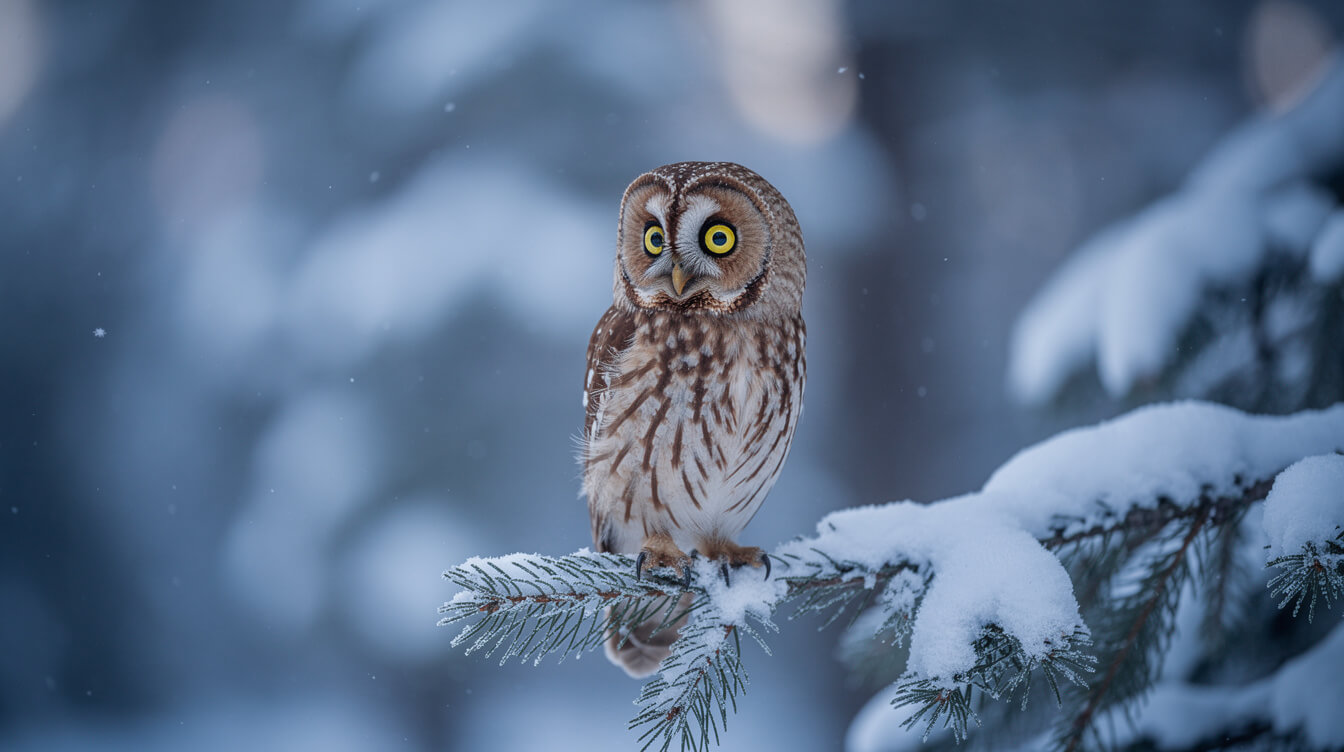
Cute owl: why owls have the most human face in the bird world
A cute owl does something almost no other bird can do. It looks straight back at you, with both eyes, from a flat round face, and for a second it feels like being looked at by a person in a very good sweater. That feeling is not an accident, and it is not only about fluff. It comes from the strange way an owl’s head is built, and once you know how it works, every owl photo you have ever saved makes a little more sense.
This is a gentle guide to why owls look the way they do, which owls are the smallest and roundest, how much of an owl is actually owl, and how to see one this winter without bothering it. No owl is “wise” in these pages, and no owl is a pet. They are just extraordinary, slightly ridiculous birds, and we think they deserve to be understood as well as adored.
What makes a cute owl look so cute
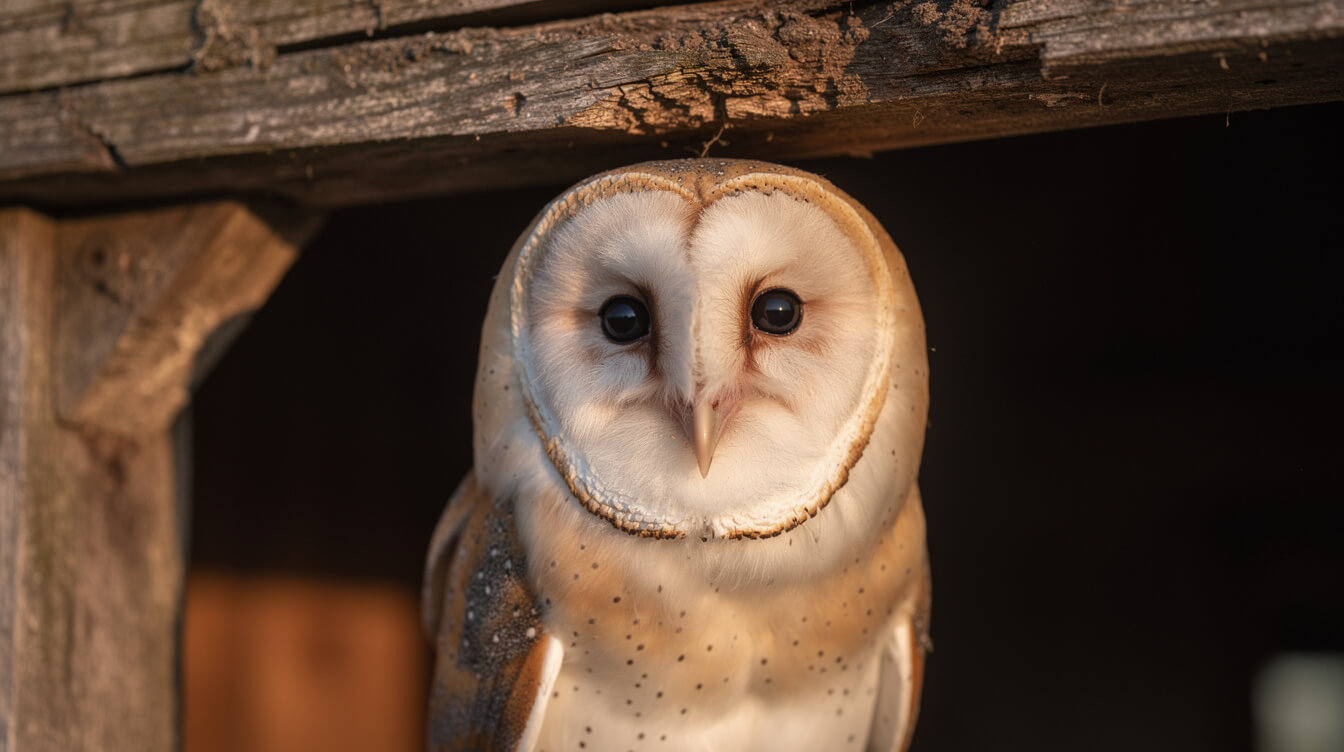
Most birds wear their eyes on the sides of their heads. A robin or a pigeon sees a wide sweep of the world, which is perfect for spotting danger, but it means you never quite get a face-to-face look. Owls broke that pattern. Their large eyes sit on the front of a flat face, both pointing the same way, and owls are generally regarded as having the most forward-facing eyes of any bird. When an owl looks at you, it is looking at you with both eyes at once, the way a person or a cat does.
Around those eyes sits the second piece of the puzzle: the facial disc. That soft circle (or heart, on a barn owl) of stiff, fanned feathers is not decoration. It works like a satellite dish, gathering sound and funneling it toward the owl’s ears, which in many species sit at slightly different heights on the skull so the owl can pinpoint a mouse under snow in two directions at once. To us, though, the disc reads as something simpler. It reads as a round face with a clear outline, and our brains are very quick to love a round face.
The round face, the big eyes, the tiny beak
Put the pieces together and an owl ticks almost every box of what researchers call baby schema: a large rounded head, big low-set eyes, a small “mouth” (the beak is mostly tucked into feathers), and a soft, compact body. We wrote about this shape in more detail in our piece on why weird cute animals win our hearts, so we will not re-teach it here. The short version is that an owl’s face happens to be built from the same ingredients that make a human brain go soft, even though every one of those features evolved for hunting in the dark.
That is the quiet joke at the center of every cute owl. The face that makes you say “aw” is a precision instrument for finding dinner. Both things are true at once, and we like that about them.
Ear tufts are not ears
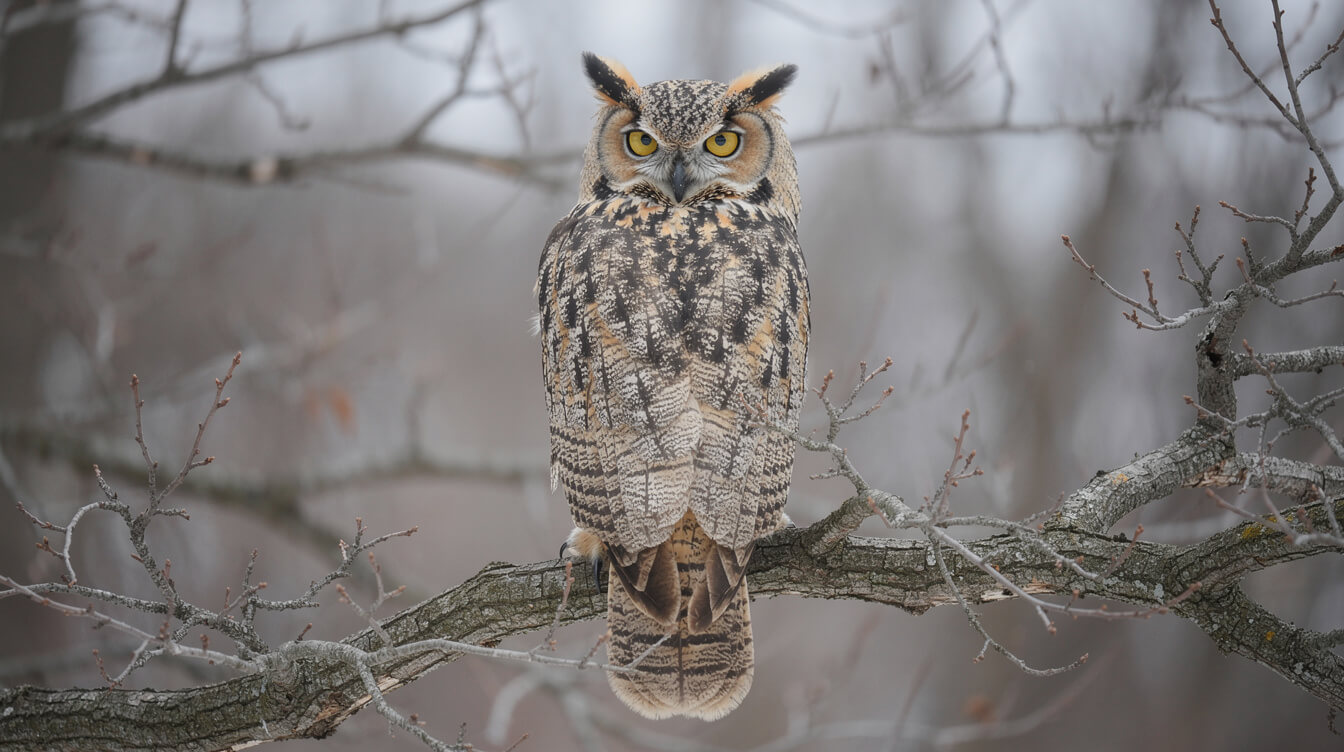
One more detail that changes how you see them: the little “ears” on a great horned owl or a screech-owl are just feathers. The real ears are hidden openings on the sides of the head, under the facial disc. The tufts seem to help with camouflage and with signaling mood, and they raise and lower depending on how relaxed or alert the owl feels. So when a cute owl looks like it has perked up its ears at you, it has really adjusted its eyebrows.
Why an owl turns its head instead of its eyes
Here is the fact that surprises people most. An owl cannot roll its eyes. It cannot glance sideways either. According to Audubon, owl eyes are not true eyeballs at all. They are long and tube-shaped, held in place by bony rings called sclerotic rings, and they are completely immobile in their sockets.
There is a good reason for this. Owl eyes are enormous for the size of their skulls, because a big eye gathers more light at night. A round eyeball that large simply would not fit, so over time the owl eye stretched into a tube. The trade is that the eye no longer moves. To look at something new, the whole head has to turn.
About 270 degrees, without fainting
And turn it does. Owls can rotate their heads up to about 270 degrees, which is why a cute owl can sit facing one way and calmly look straight behind itself. Owls have 14 neck vertebrae, twice as many as we do, which gives the neck its range. The more remarkable part is the plumbing. Twisting your own neck that far would pinch the arteries feeding your brain. In owls, the openings in the vertebrae that the arteries run through are much wider than the arteries themselves, and Audubon notes a blood-pooling system that keeps the brain and eyes supplied while the neck is turned.
There is a cozy side effect to all of this. Because an owl moves its head instead of its eyes, it watches the world in slow, deliberate swivels. That steady, considered head turn is a lot of what makes owls feel calm and thoughtful to us. It is not wisdom. It is anatomy. But it is lovely to watch.
The head bob
If you have ever seen an owl bob or sway its head side to side while staring at something, that is the same story from a different angle. With eyes fixed in place, an owl moves its whole head to get a slightly different view, which helps it judge distance. It looks like curiosity, and in a way, it is.
The smallest, roundest owls worth knowing
If you love a cute owl, the small ones are where your heart will go. North America has a handful of owls that are smaller than you probably imagine. Sizes below come from the Cornell Lab of Ornithology’s All About Birds guide.
Elf owl
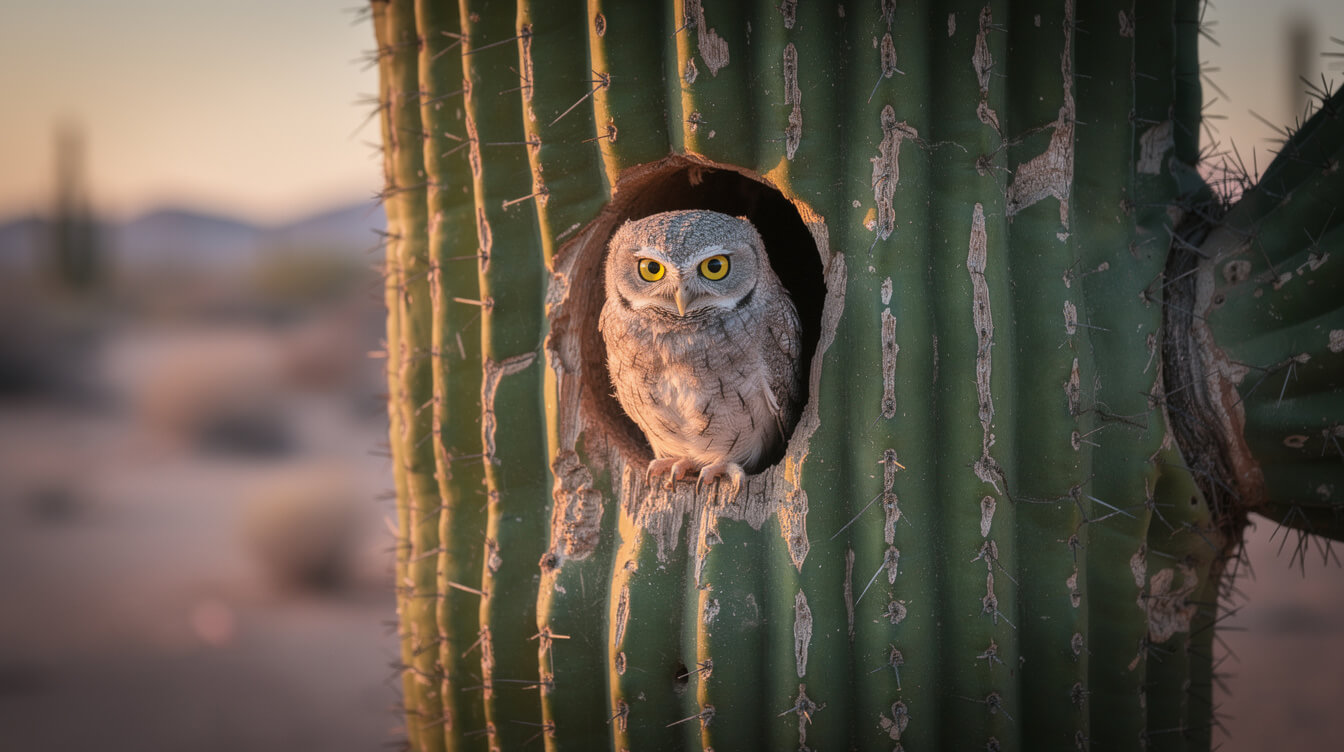
The elf owl is about 5 to 5.5 inches long and weighs roughly an ounce and a half, about as much as a golf ball. It is often called the smallest owl in the world. It has no ear tufts, a short tail, pale eyebrows, and yellow eyes, and it nests in old woodpecker holes in saguaro cactus and desert trees in the Southwest. It mostly eats insects, catching moths and beetles at night, and it spends the winter in Mexico.
Northern pygmy-owl
About 6 to 7 inches long and around 2 ounces, the northern pygmy-owl is a small, round, long-tailed owl of western forests. Unlike most owls, it hunts in daylight, often at dawn and dusk. It also has a famous trick: two dark patches on the back of its head that look like a second pair of eyes. Cornell notes that during snowy winters, pygmy-owls sometimes hunt at backyard bird feeders, which is a reminder that small does not mean gentle to a chickadee.
Northern saw-whet owl
If you only learn one small owl, make it this one. The saw-whet is about 7 to 8 inches long, with a catlike face, an oversized head, and bright yellow eyes. Cornell describes it as one of the most common owls in forests across northern North America, and across much of the US in winter, yet it is so nocturnal and so quiet that very few people ever see one. Each fall, banding stations across the continent count thousands of them on migration. It is the owl that is probably closer to you right now than you think.
Eastern screech-owl
About 6 to 10 inches tall with little ear tufts, the eastern screech-owl comes in gray and rusty red versions and lives comfortably in suburbs and city parks across the East. It readily uses nest boxes and will even visit birdbaths. Despite the name, its common call is a soft, descending whinny and a long, even trill, not a screech.
Burrowing owl
A little taller, around 7.5 to 10 inches, on long legs, the burrowing owl lives in open grasslands and deserts and nests underground in burrows dug by prairie dogs, ground squirrels, or tortoises. You can often see it in daylight, standing at the burrow entrance like someone waiting at their front door. Unlike most owls, where the female is larger, male and female burrowing owls are the same size.
Mostly feathers: how big a cute owl really is
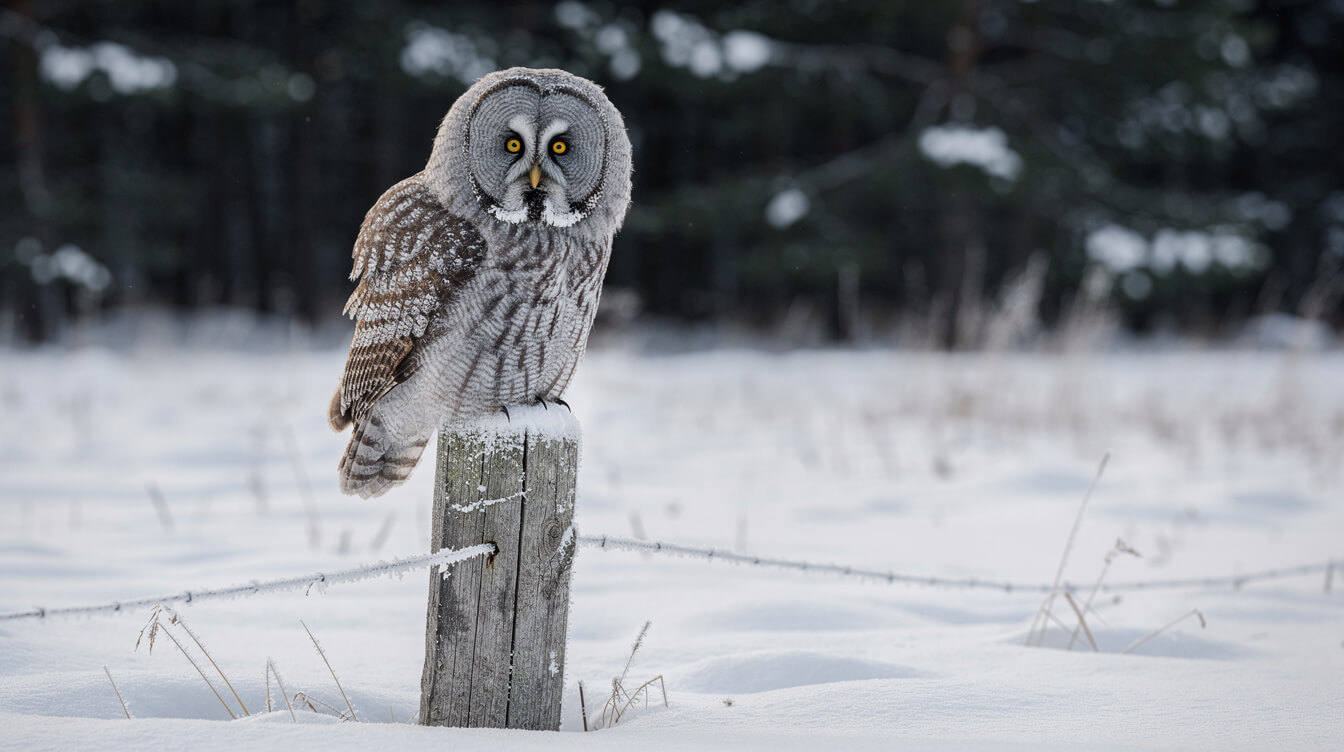
Part of what makes a cute owl look so round is that a good share of the owl is not owl. It is air, trapped in very soft feathers. Owl feathers are larger and fluffier than most birds’ feathers, and their edges are soft and fringed, which is what lets owls fly almost silently. That same softness makes them look like a pillow with a face.
The best example is the great gray owl. It is one of the tallest owls in North America, 24 to 33 inches long with a wingspan of up to five feet, and its facial disc is enormous. And yet Cornell says it plainly: the great gray owl is “just a ball of feathers.” Both the great horned owl and the snowy owl weigh more than a great gray, and they have bigger feet and talons. The snowy owl, North America’s heaviest owl at around four pounds, weighs about twice as much as a great gray.
We find this quietly comforting. The biggest-looking owl in the woods is mostly a very good coat. If you have read our piece on the manul, the round wild cat that is mostly fur, you will recognize the pattern. Animals built for cold places often look rounder than they are, because roundness and thick insulation are how you keep warm when the wind comes off the snow.
Why the round shape reads as gentle
Soft outlines and rounded silhouettes tend to read as safe and approachable to us, while sharp corners and spikes read as a warning. An owl at rest is almost all curves. It tucks its feet into its belly feathers, fluffs up, and sinks its neck down until it looks like a loaf. That shape is about saving heat, but it lands on us as pure comfort.
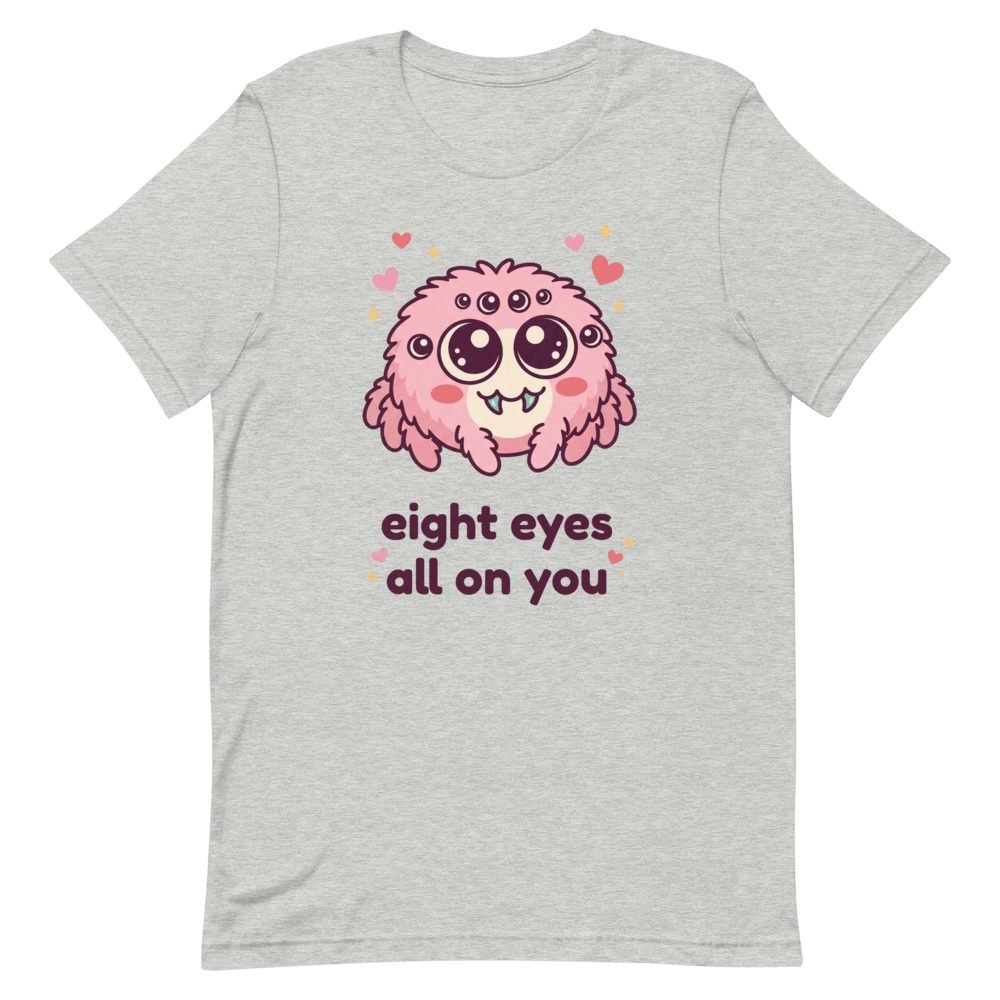
That is the same reason we love drawing animals with big, forward-facing eyes. We do not have an owl in the shop yet, but the closest in spirit is our Eight Eyes All On You Cute Jumping Spider T-Shirt, another small, round creature whose whole charm is that it looks right at you. It is not an owl, and we would not pretend it is. It is the same feeling, with a few more eyes.
The cutemerch letter
A small good thing, once a week
One short, kind email with our coziest posts and new round animals from the shop. No spam. Unsubscribe anytime.
Do owls show affection? The honest answer

One of the most common questions about owls is whether they are affectionate. The honest answer is yes, in an owl way, and mostly with each other.
Many owls form pair bonds that last through a breeding season, and in many species pairs stay together over several years, often using the same territory. Great horned owl pairs call to each other in duets, and Cornell notes you can hear the difference in pitch between the male and female. The most tender thing owls do, though, is called allopreening: one owl gently nibbling and grooming the feathers on another owl’s face and head. Researchers who studied it in owls back in the 1970s suggested it helps with grooming the spots an owl cannot reach itself, with recognizing a mate, and with smoothing over tension. Owl siblings in the nest preen each other too.
What that affection does not mean
It does not mean an owl wants to be held by a person. Wild owls are predators with sharp talons, they are easily stressed by people, and their affection is aimed at other owls. Videos of owls being petted are usually captive birds in situations that are not great for them, and it is worth watching those with a little skepticism.
It also matters that in the US, native owls are protected under the Migratory Bird Treaty Act. The US Fish and Wildlife Service explains that the law prohibits taking protected birds, which includes capturing, selling, and transporting them, without a federal permit. That protection extends to their feathers and nests too. So a cute owl is never a pet. The best way to love one is from a respectful distance, which is also, happily, the best way to see one.
If you are drawn to animals whose faces we tend to misread, our guide to the quokka and its famous smile is a good companion read. An owl’s steady stare and a quokka’s grin are both expressions we invent for them.
For people who love a face that looks right back
No owl in the shop yet, so here is the next best thing: a soft, round jumping spider with big forward-facing eyes, all of them on you. A small good thing for anyone who loves being noticed by tiny creatures.
How to see a cute owl this winter, kindly
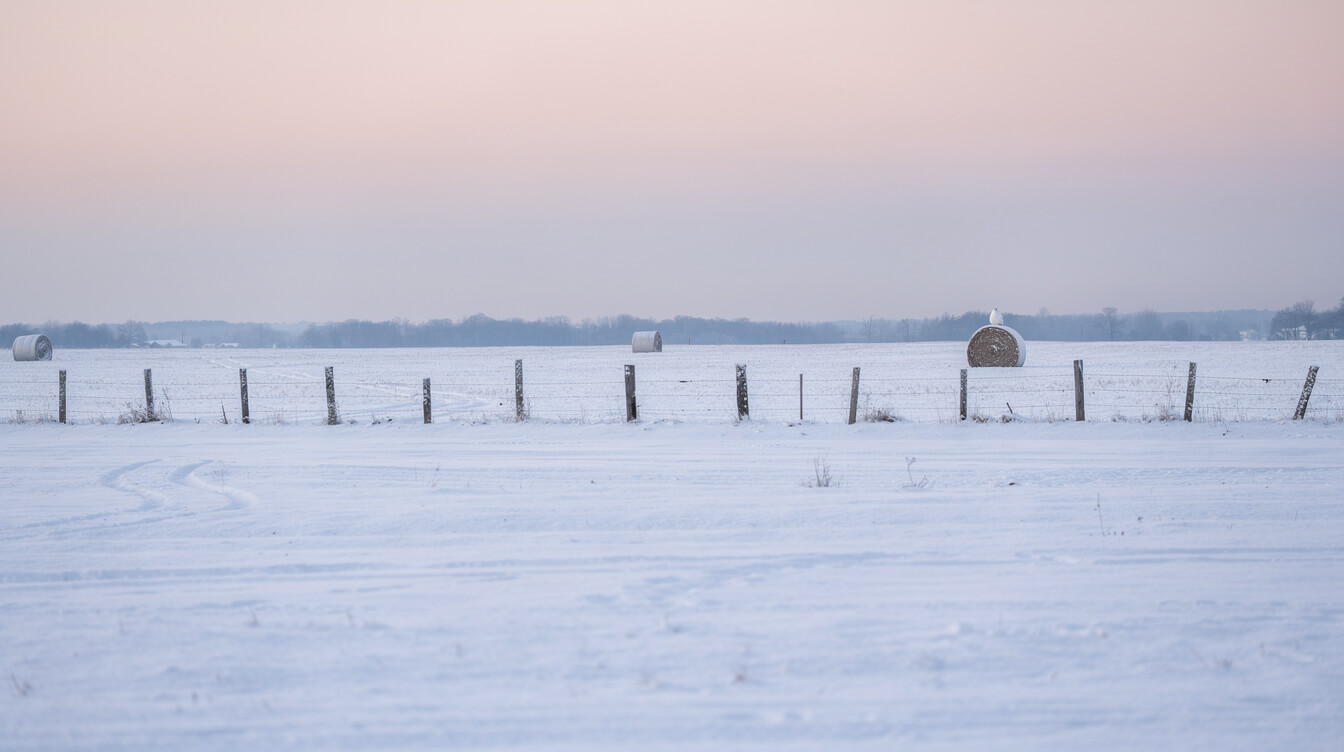
Late fall and winter are a good time for owl watching in much of the US. Trees are bare, many owls are on the move, and some, like the saw-whet and the snowy owl, show up in places where they are not found in summer. A few gentle tips for finding one, and for leaving it exactly as happy as you found it.
Where and when to look
- Open country for snowy owls. Cornell suggests scanning wide open places like fields and shorelines in winter, and checking high points like fence posts, hay bales, and telephone poles. Snowy owls are regular in winter in the northern plains, New York, and New England, and appear only in some years elsewhere.
- Dense evergreens for saw-whets. They roost by day in thick conifers, often at eye level, and are very hard to spot. Joining a local bird club or watching for a banding station’s open house is often the easiest way to see one up close in good hands.
- Dawn and dusk. Many owls are most active as the light changes. A quiet walk along the edge of a meadow at dusk is a lovely way to spend a winter evening even if no owl appears.
- Listen first. You will hear far more owls than you see. Learning two or three calls is the single best upgrade to an owl walk.
- Follow the crows. A noisy group of crows mobbing one spot in a tree is often harassing a great horned owl.
How to watch kindly
- Keep your distance. If the owl turns to watch you, shifts its feet, or opens its eyes wide, you are too close. Step back. An owl that has to fly off in daylight burns energy it needs for winter.
- Never bait. Cornell advises against using mice or any food to lure owls in, for any species.
- Skip call playback. Playing recorded calls to draw an owl out stresses the bird, and Cornell specifically recommends against it for sensitive species like the great gray owl.
- No flash, no spotlights. Owl eyes are built for darkness. A soft red light for walking is fine. A flash in the face is not.
- Be careful about sharing locations. A roosting owl posted online can draw a crowd by the next morning. Many birders share owl sightings privately for exactly this reason.
Owl watching is a slow hobby, and we think that is part of its gift. You stand still, you listen, you look at the shape of every branch. If you go home without an owl, you still had an hour of cold air and quiet. Pair it with a warm drink and a blanket and it is about as cozy as winter gets, which is very much the mood of our cozy christmas aesthetic guide.
Cute owl FAQ

What is the cutest owl?
That is a matter of heart, but the small round owls usually win: the northern saw-whet owl with its huge head and catlike face, the tiny elf owl, and the eastern screech-owl tucked into a tree hollow. For sheer fluff, nothing beats a great gray owl.
What is the smallest owl?
The elf owl, about 5 to 5.5 inches long and around an ounce and a half, is often called the smallest owl in the world. A few tiny owls in other parts of the world are close in size.
Can owls really turn their heads all the way around?
Not quite all the way, but close. Owls can turn their heads up to about 270 degrees. They need to, because their tube-shaped eyes cannot move in their sockets.
Do owls show affection?
Yes, toward each other. Mated pairs often call together and preen each other’s face feathers, and owl siblings preen each other in the nest. Wild owls do not seek affection from people.
Can you keep an owl as a pet?
No. In the US, native owls are protected by the Migratory Bird Treaty Act, and keeping one requires a federal permit that is generally only given to licensed rehabilitators and educational facilities. If you find an injured owl, contact a local wildlife rehabilitator rather than handling it yourself.
Why do owls look so serious?
Their forward-facing eyes, steady gaze, and slow head turns make them look thoughtful. That impression comes from anatomy rather than mood. Owls are not wiser than other birds; they are just built to look at things carefully.
Are baby owls called owlets?
Yes. Young owls are called owlets, and many are covered in soft white or gray down that makes them look even rounder than their parents. If you find an owlet on the ground in spring, it is often a healthy “brancher” learning to climb, with its parents nearby. Watch from a distance and call a wildlife rehabilitator if you are unsure.
Final thoughts
A cute owl is a little lesson in how much a face can carry. The round disc, the forward eyes, and the slow swivel of the head all exist for hunting in the dark, and every one of them happens to look, to us, like gentleness and attention. We do not have to choose between the two readings. An owl can be a silent, precise hunter and also the softest-looking thing in the winter woods.
If you take one thing with you, let it be this: the next time you see an owl photo, look at the edge of its face and imagine the tube-shaped eyes behind those feathers. It makes the cuteness stranger, and somehow even better. And if you get the chance to see a real one this winter, stand still, keep your distance, and enjoy being looked back at. For more round, cozy creatures, our cute capybara and cutest seal guides are good next reads for a cold evening.
Before you go
Want the next one in your inbox?
We write something soft every day. The best of it lands in one gentle weekly note, for you or for the friend who needs it.