Blue poison dart frog: the bright little frog whose poison comes from its dinner
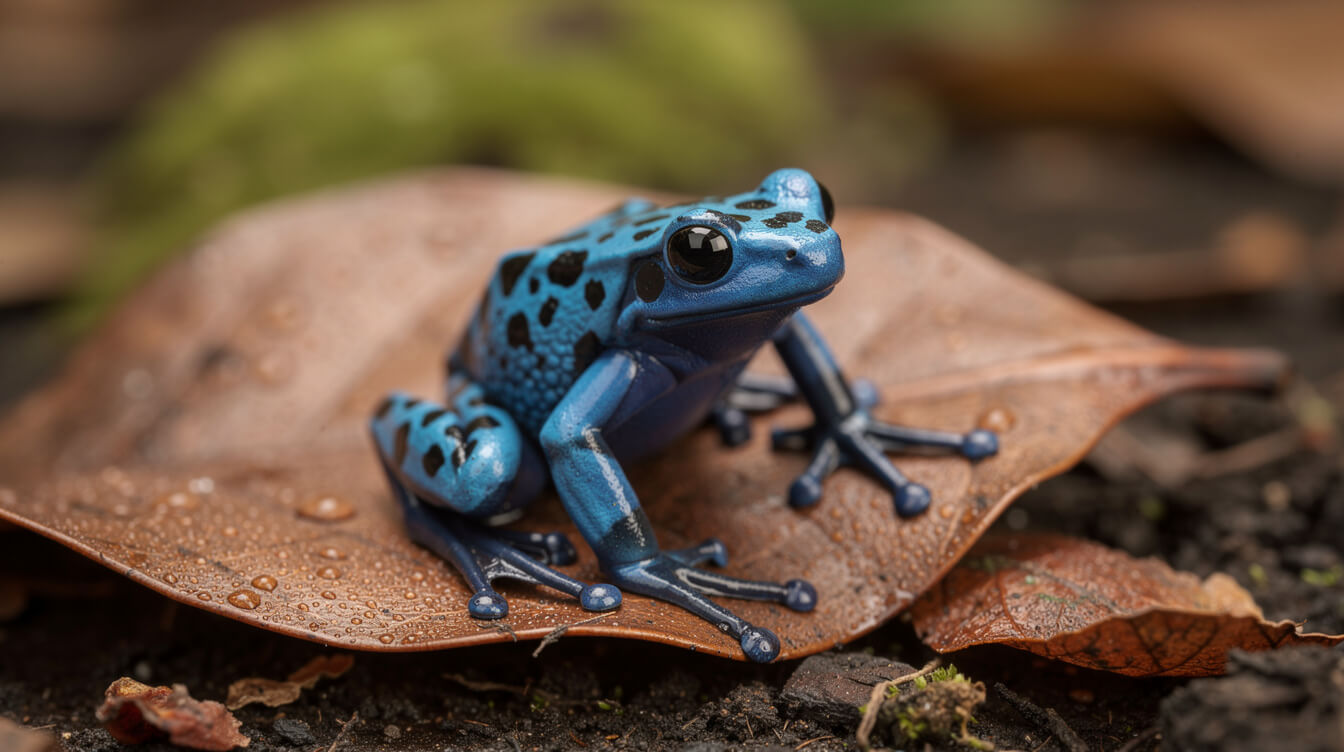
The blue poison dart frog looks like something a child would paint if you asked for “the bluest frog in the world”. It is a little cobalt jewel with black spots, about the size of a walnut, sitting on a dark leaf like it was placed there on purpose. It also carries one of the scariest names in the animal world.
Here is the kind truth underneath that name. This frog does not make its own poison. It eats it. A blue poison dart frog raised on ordinary fruit flies is about as dangerous as a houseplant. And the “dart” part of its name mostly belongs to a few other frogs entirely.
Below is the full, honest picture: what this frog actually is (the answer is more interesting than “a species”), where it lives, whether it can hurt you, why it is so blue, how it raises its tadpoles, and whether it can live in your home. We checked the facts that the usual fact cards disagree about, so you do not have to.
What is a blue poison dart frog? The short answer
A blue poison dart frog is a small, bright blue frog from a tiny corner of southern Suriname in South America. Adults measure about 3 to 4.5 centimeters from snout to rump, roughly 1.2 to 1.8 inches, and weigh around 8 grams, a little over a quarter of an ounce. They are active by day, they live on the forest floor, and they are one of the most photographed frogs on earth.
The color is unmistakable. The back is a bright sky to cobalt blue, the legs and belly are usually a deeper navy, and the whole frog is scattered with black spots. Those spots are different on every frog, like a fingerprint, which is how researchers tell individuals apart in the field without tagging them.
A species, or a blue look of another frog?
This is the part most fact cards skip. When scientists first described the blue frog in 1969 (the specimens were collected in 1968), they named it as its own species, Dendrobates azureus. Most authorities today see it differently. They treat it as a color form, or morph, of a larger species called the dyeing poison dart frog, Dendrobates tinctorius.
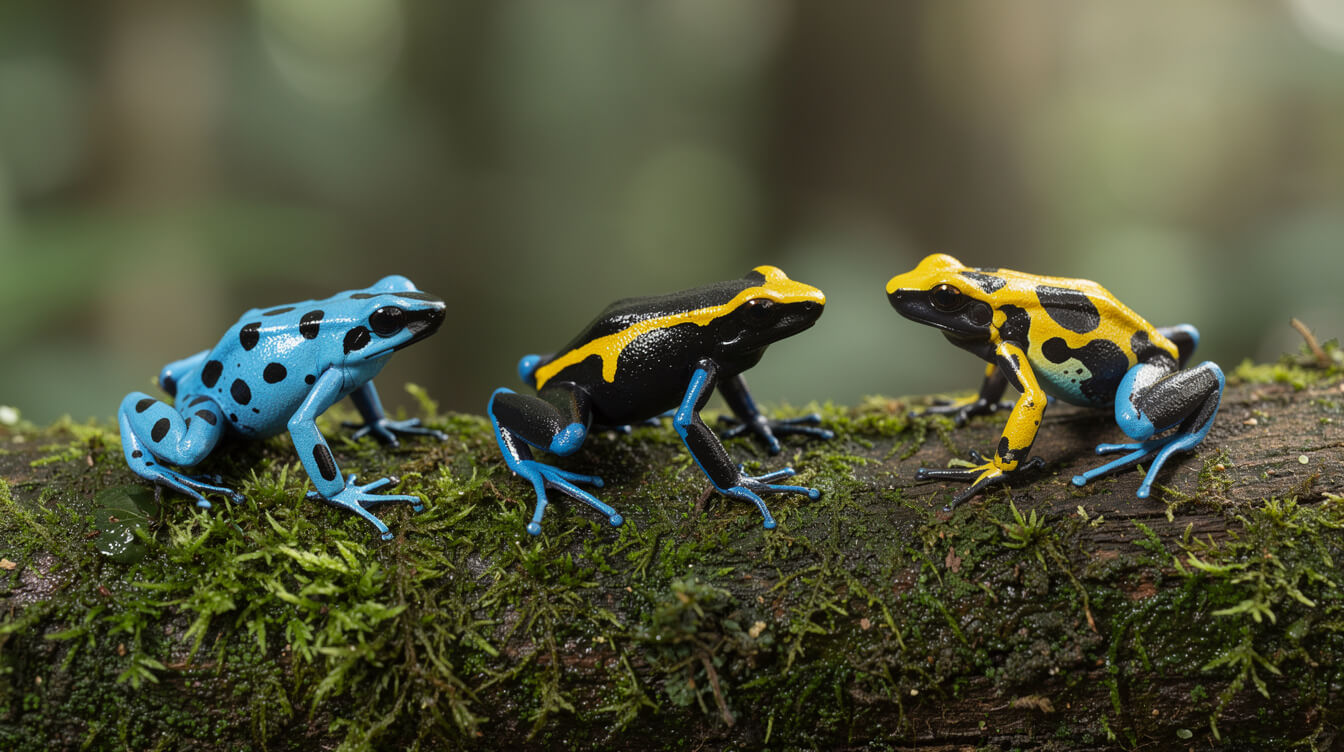
That larger species is one of the most variable frogs alive. It comes in more than 30 recognized color forms across the Guianas and northern Brazil: black with yellow stripes and blue legs, mostly yellow, mostly white, orange, and, in one small region of Suriname, almost entirely blue. Despite all that variety, studies have found the genetic differences between these populations to be quite small. The blue frog is a real, distinct-looking population. It just may not be a separate branch of the family tree.
So when you see a blue poison dart frog, you are looking at one outfit of a frog that owns a whole wardrobe. A few scientists still treat it as a species or subspecies, and hobbyists often label any all-blue tinctorius as “azureus”, so you will see both names. Both point at the same lovely frog.
Its oldest name
Long before it had a Latin name, the frog had a local one. In Tiriyó, the language of the Indigenous people who live in that part of Suriname, it is called okopipi. It is a much gentler name, and we think it suits it better.
Forest islands in a grassland: where blue poison dart frogs live
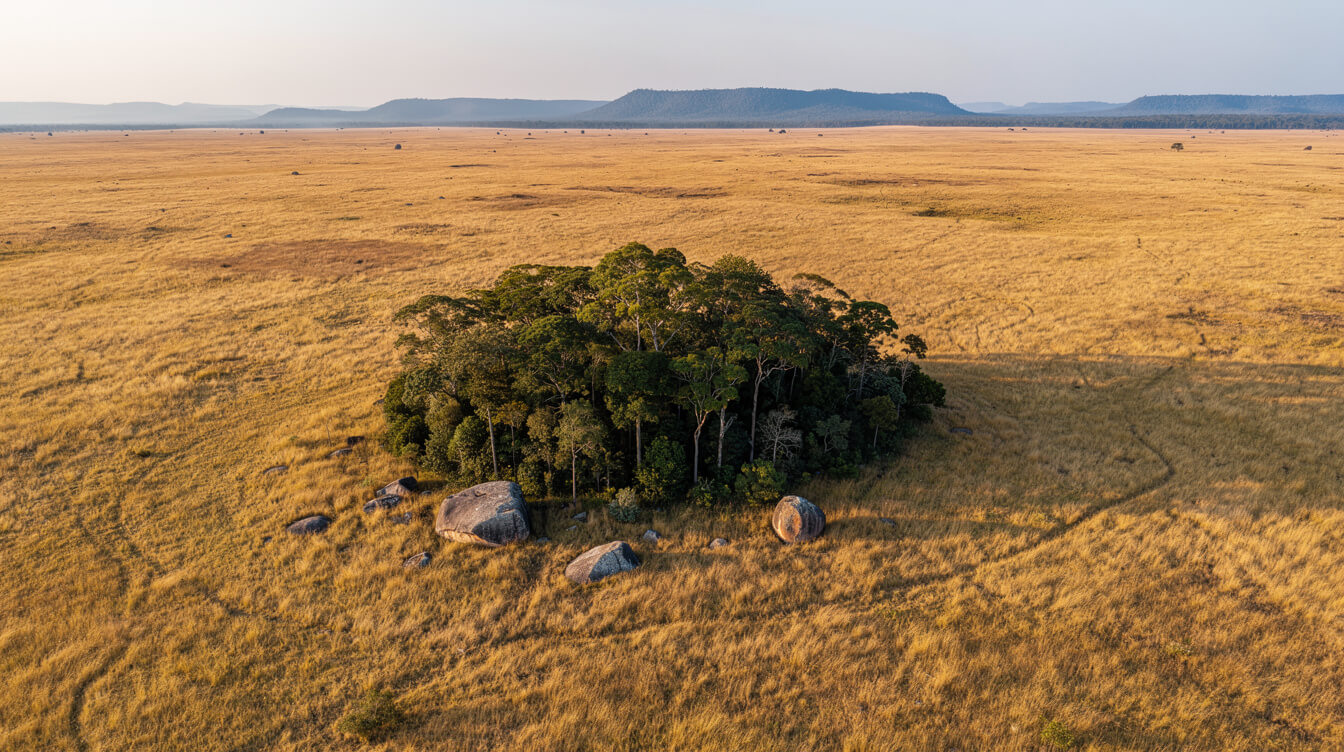
Most poison dart frogs live in big, continuous rainforest. The blue poison dart frog lives somewhere much stranger: small islands of forest standing in the middle of a grassland.
The place is the Sipaliwini savanna in the far south of Suriname, near the border with Brazil. Today it is mostly open grass. Scattered across it are patches of rainforest, in the few places where enough groundwater survives to keep the old trees alive. The National Aquarium in Baltimore, which keeps these frogs, describes these patches as relics. Long ago the region was much more forested. Around the last ice age the climate shifted, the grassland spread, and the forest shrank back to the wettest spots. The frogs living in those spots stayed with them.
That gives the blue frog a quietly moving backstory. Each population is a small group that has been living on its own little island of shade for thousands of years, surrounded by a sea of grass it cannot cross.
Life on the forest floor
Inside those patches, blue poison dart frogs live low. They hop through leaf litter, sit on boulders and fallen logs near streams, and shelter among roots and debris. They have no webbing between their toes and are poor swimmers, so despite liking damp places, you will not find them in the water. Each foot has four slender toes ending in small, rounded pads that help them grip wet rock and bark. Males tend to have wider toe pads than females, and females tend to be a little bigger overall.
Because the habitat is so remote, nobody has a confident count of how many blue frogs there are. The aquarium’s keepers point out that a species with such a tiny, broken-up range is vulnerable to drought and to anything that disturbs those few forest patches. A 2019 field survey published in Amphibian & Reptile Conservation confirmed that the blue frogs are still there, which is good news, and also tells you that someone felt the need to go and check.
If you love frogs shaped by one very particular place, you might also like the Lake Titicaca frog, which lives at the bottom of a single high mountain lake, and the African rain frog, which skips ponds entirely.
Are blue poison dart frogs poisonous to humans?
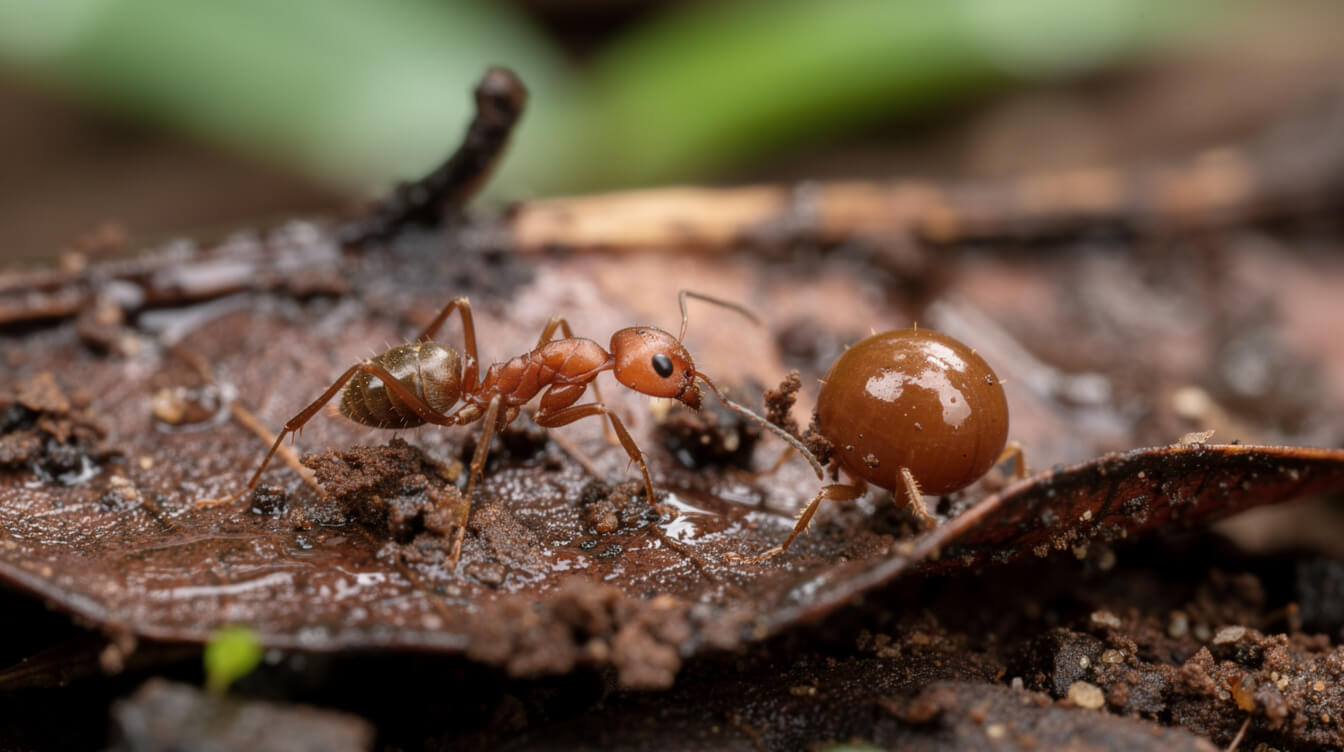
A wild blue poison dart frog is poisonous, yes. A captive-bred one, raised on the usual insects, is not. The difference is entirely about dinner, and it is the most surprising thing about these frogs.
The poison comes from what they eat
Poison dart frogs do not build their toxins from scratch. In the wild, they eat huge numbers of tiny invertebrates from the leaf litter, especially ants and mites, and some of those prey animals carry chemical compounds called alkaloids. The frog absorbs the alkaloids and stores them in glands in its skin. Scientists call this sequestration. In the blue frog, the main compounds are pumiliotoxins, which interfere with how nerves and muscles signal.
The frogs do add one clever step of their own. Research on frogs in the genus Dendrobates, published in the Proceedings of the National Academy of Sciences in 2003, found that some can chemically convert a pumiliotoxin they have eaten into a related compound, allopumiliotoxin, that is several times more potent. So they borrow their poison and then sharpen it.
Take away the toxic prey and the poison never arrives. Frogs bred in captivity and fed fruit flies, springtails, and small crickets do not develop toxins. Wild-caught frogs kept in captivity slowly lose theirs over time. Interestingly, captive frogs keep the ability: give them an alkaloid-rich diet again and they can start storing toxins again.
What happens if you touch a wild one?
Blue poison dart frogs are not the deadly frogs of legend. That title belongs to the golden poison frog, Phyllobates terribilis, a different genus with a far stronger toxin. But wild tinctorius frogs can still affect people. A 2021 medical report from the Brazilian Amazon described two wildlife photographers who handled a wild dyeing poison dart frog. One held it in his hands for about five seconds; the other pressed his hands on top of it to keep it still. Twenty minutes later, the first felt numbness in his forearm, and the second, who had touched his mouth without washing his hands, felt a slight numbness in his lip. Both recovered within the hour. The report’s authors noted it could have been worse with longer contact or a cut on the skin.
So the honest answer is: not dangerous to look at, mildly risky to handle, and not worth touching anyway. Frog skin is delicate and absorbs whatever is on our hands, from lotion to sunscreen, so not touching protects the frog as much as it protects you.
The “dart” part belongs to someone else
The name comes from Indigenous peoples in western Colombia, including the Emberá, who have used frog toxin to tip blowgun darts. But of the roughly 200 species of poison dart frog, only a few are documented as being used this way, and all of them belong to the genus Phyllobates. The blue frog was never one of them. It inherited a dramatic name from its cousins, the way a gentle dog might inherit the name of its breed’s more famous ancestor.
Why so blue? Warning colors, worn openly
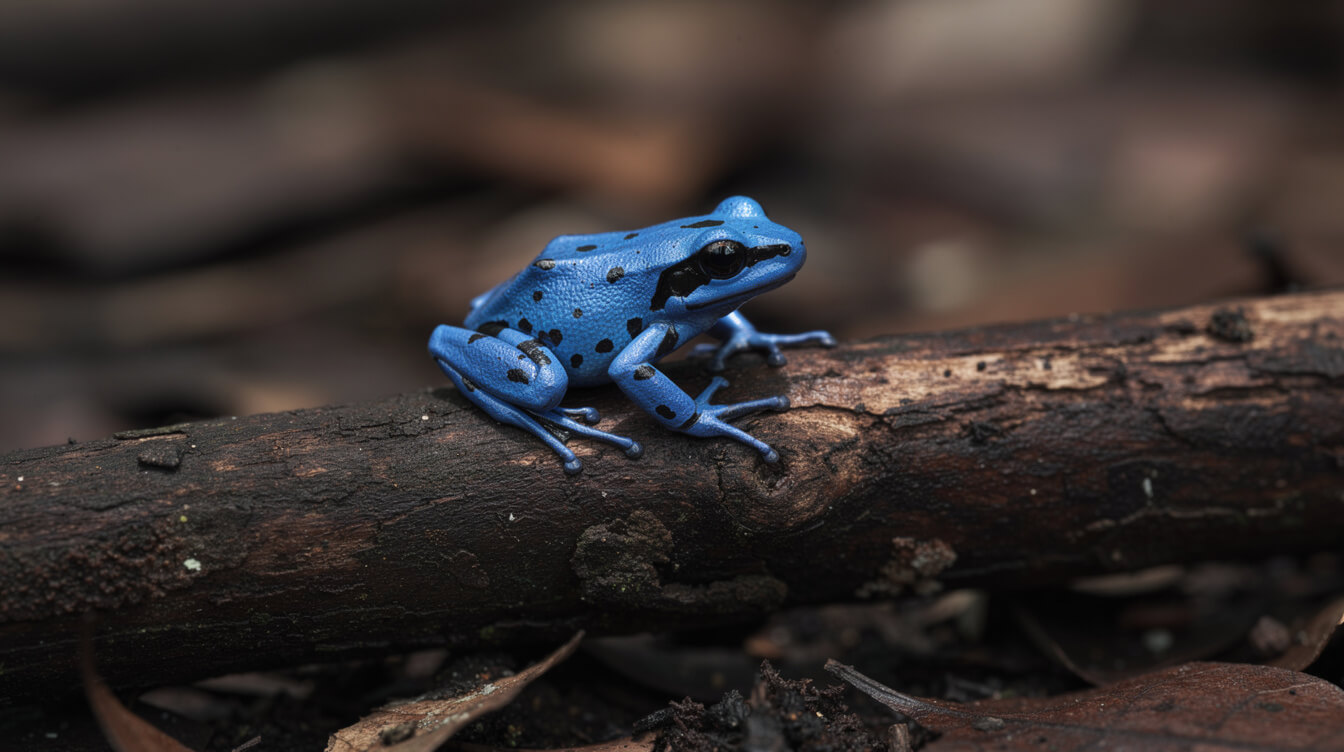
Most small frogs try very hard not to be seen. They are brown, green, and blotchy, and they freeze when something moves. The blue poison dart frog does the opposite. It sits in the open during the day, wearing a color that practically glows against the dark forest floor.
The reason is a strategy called aposematism, or warning coloration. A bright, memorable color paired with a bad taste teaches predators a fast lesson: try one, regret it, and remember the look. After that, the frog’s color does the work of keeping it safe, and it can forage in daylight without hiding. Across the poison dart frog family, bright color tends to go along with stronger chemical defenses, while the dull brown species in related groups are generally harmless.
We have written about warning colors before, in our piece on nudibranchs, the sea slugs that also wear their defenses on the outside, and why the story is more complicated than “bright means dangerous”. The short version for this frog: its blue is a signal, not a decoration, and the signal works because it is honest in the wild.
Why blue, and not yellow or orange?
Here is where the morph story matters. Other populations of the same species wear yellow and black, or orange, or white, and they are protected just as well. Predators in each area learn whatever local look goes with a bad meal. Nobody can say exactly why the Sipaliwini frogs ended up blue. Isolation is likely part of it: a small group cut off on its forest islands for a very long time can drift toward its own look. It is less that blue is the best warning, and more that blue is what this particular group of frogs ended up saying.
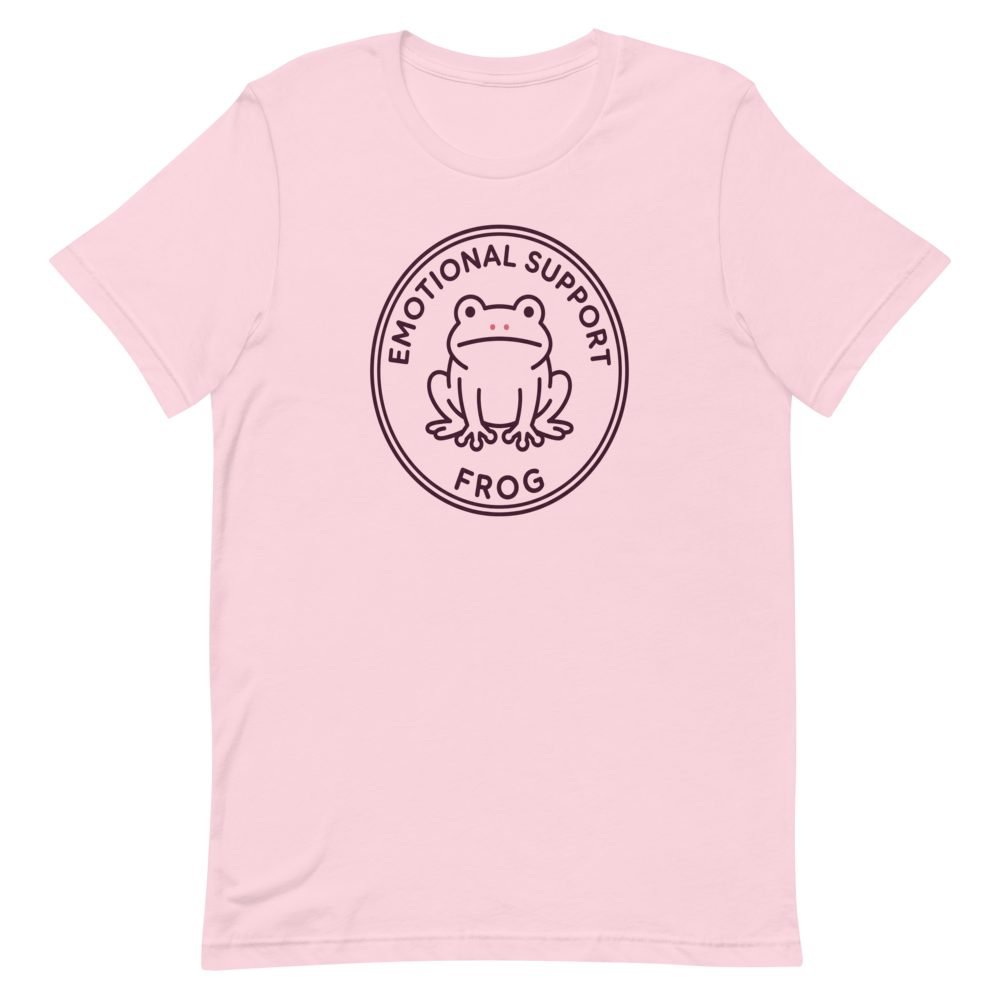
It is a lovely thing to sit with, a frog whose brightest feature exists to say “please leave me alone”. If you are drawn to frogs that keep their distance and still make you feel better just by being around, our Emotional Support Frog tee is a quiet nod to exactly that kind of frog.
The cutemerch letter
A small good thing, once a week
One short, kind email with our coziest posts and new round animals from the shop. No spam. Unsubscribe anytime.
Quiet buzzes, wrestling matches, and tadpole piggyback rides
For such a small frog, the dyeing poison dart frog has a full and surprisingly tender social life. Much of what we know comes from a long field study in French Guiana by Bibiana Rojas and Andrius Pašukonis, published in PeerJ in 2019, which followed more than 600 individually identified frogs. Their frogs were a different color form from the blue ones, but they are the same species, and the behavior is a good guide.
A nearly voiceless frog
Most frogs advertise for mates with loud, repeated calls. This species barely does. The researchers titled their paper “natural history of a voiceless poison frog”, because males do not make the usual advertisement call at all. When they do vocalize, it is a very soft buzz, mostly during courtship. Some older descriptions picture male blue frogs calling from rocks; the closer field work suggests that if you are standing in the forest, you are unlikely to hear one.
Courtship is led by the female
Courtship is slow and gentle and can last for hours. The female starts it by repeatedly placing one of her front feet on the male’s legs, back, or head. The male turns to face her, then walks off to look for a place to lay eggs, and she follows. If she wanders off to snack, he often comes back and buzzes softly. Both frogs also do something called toe trembling, a fast flutter of one toe on the back foot. Nobody is entirely sure what it means, which makes it even more charming.
And then there is the wrestling
Not every interaction is sweet. Both males and females defend their space, and fights can involve kicking, jumping on each other’s backs, and pressing a rival flat against the ground. In the study, female-against-female fights were slightly more common than male-against-male ones, sometimes because a second female tried to interrupt a courting pair. A frog this small wrestling over romance is very easy to love.
The piggyback ride
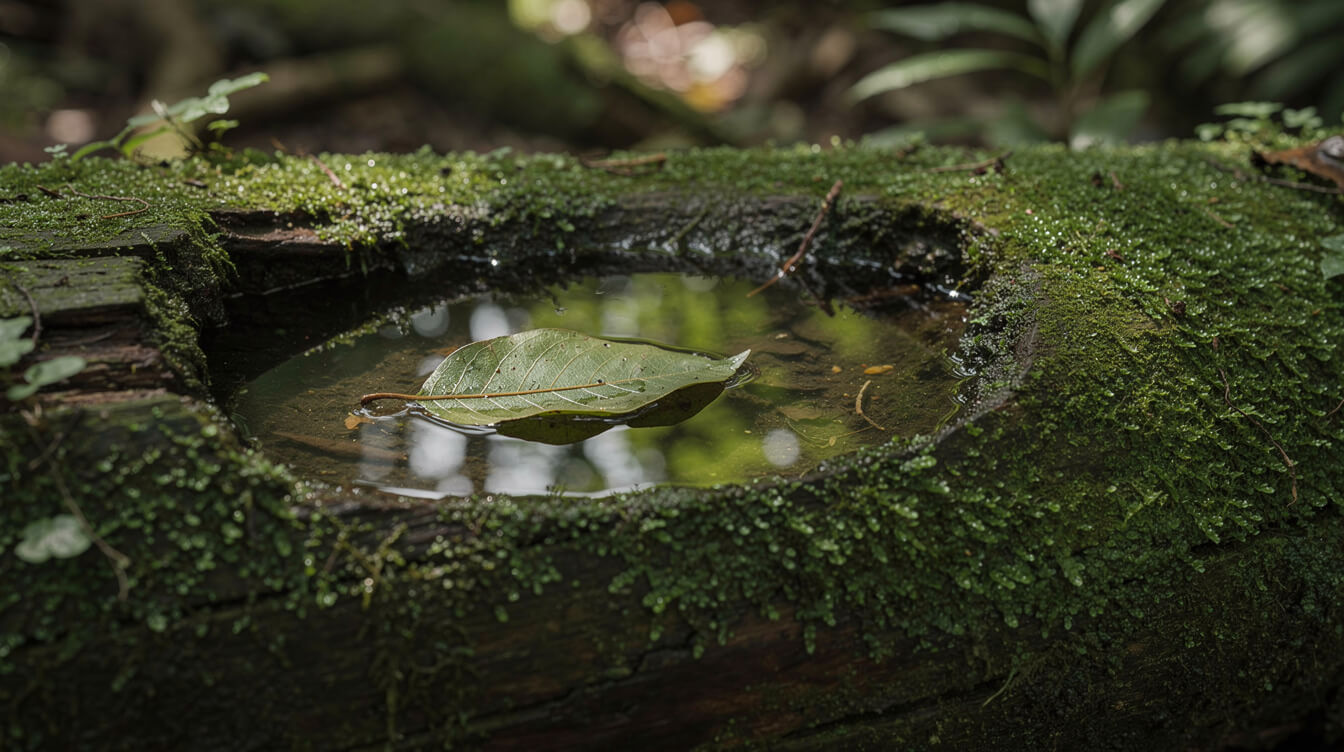
Eggs are laid on land, in a damp, sheltered spot, in small clutches. The National Aquarium reports clutches of about five or six. When the tadpoles hatch, the father lets them wriggle onto his back, where they stick, and carries them off to water. Not to a pond, but to tiny pools: rainwater caught in tree holes, in fallen palm fronds, or in the hollows of fallen trees. Many of these pools are tiny, sometimes just a few spoonfuls of water. The tadpoles stay there, on their own, for roughly two months until they become froglets.
Spreading tadpoles across separate little pools makes sense, because poison frog tadpoles can be cannibals. One tadpole per puddle keeps everyone safer. Tadpoles also carry no toxins of their own, so they rely on being hidden. It is the same kind of patient, unshowy parenting we love in the glass frog, whose fathers guard their eggs through the night.
A frog who is softer than he looks
One calm little frog in a plum line badge on a soft pink tee, with a tiny pink nose. No poison, no darts, just steady company, a bit like a captive-bred dart frog on a quiet shelf.
Can you keep a blue poison dart frog? An honest answer
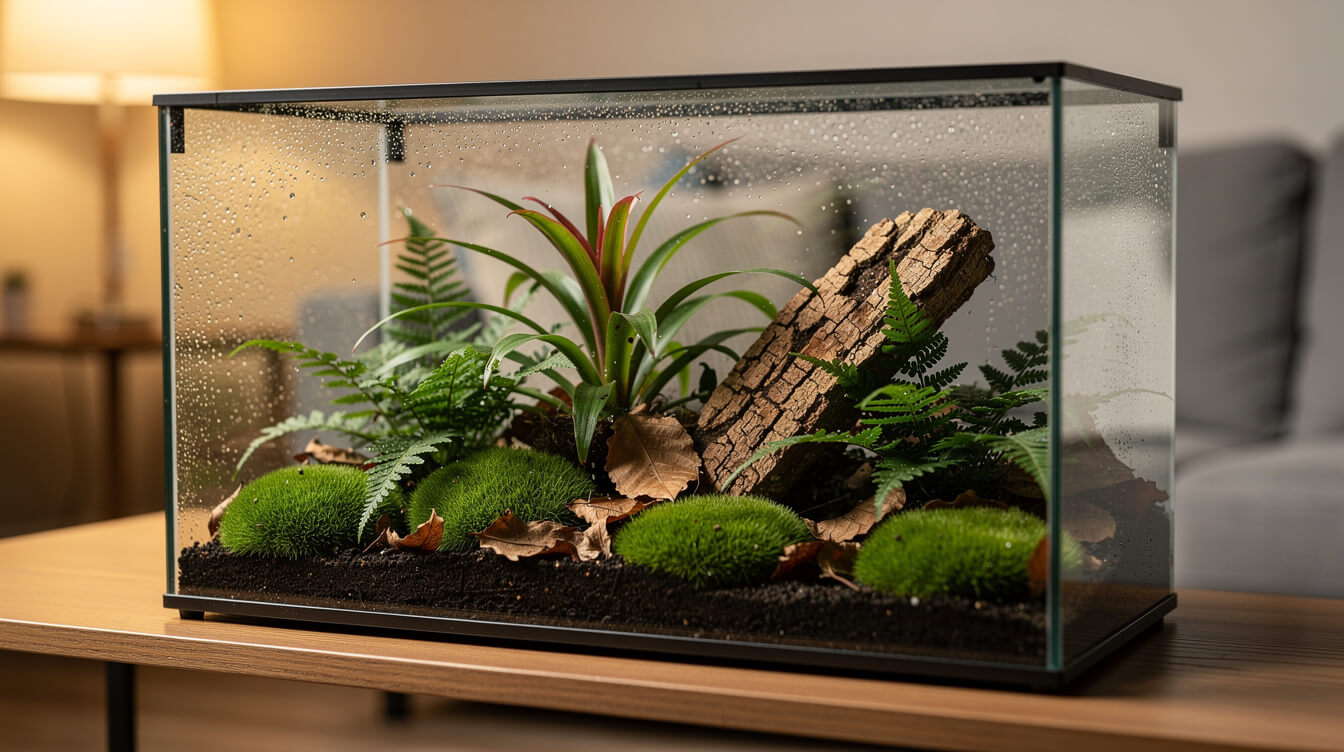
Yes, this is one of the frogs where keeping one can be done responsibly, which is not something we get to say often in these posts. Blue poison dart frogs have been bred in captivity for decades, and captive-bred animals are widely available from specialist breeders. They are a real hobby with experienced keepers, not a novelty.
That said, “can” and “should” are different questions, and the honest answer depends on what kind of pet you want.
What a blue poison dart frog actually needs
- A planted, humid enclosure. Poison dart frogs generally do well with humidity kept around 80 to 100 percent, daytime temperatures of about 72 to 80°F, and nights no colder than the low 60s. In practice that means a glass terrarium with live plants, moss, leaf litter, and a misting routine.
- Tiny live food, every few days, for years. Captive dart frogs eat fruit flies, springtails, pinhead crickets, and small isopods. Many keepers end up culturing their own fruit flies at home.
- A long commitment. Captive frogs commonly live around 10 years, and the National Aquarium reports 10 to 15, with one of its blue frogs reaching 23.
- Thought about company. Remember the wrestling. These frogs are territorial, and keeping several together needs care and space.
Who it suits, and who it does not
A blue poison dart frog is a pet to watch, not to hold. It is perfect for someone who loves the idea of a small living rainforest on a shelf and enjoys the slow, absorbing work of keeping one healthy. It is not a good fit for anyone hoping for an animal that likes being handled, or for a child’s first pet. We went through the general questions about frogs as pets in our cute frogs piece, and all of it applies here.
Two non-negotiables if you do go ahead. Only buy captive-bred frogs from a reputable breeder, never wild-caught ones. The species is listed on CITES Appendix II, which means international trade is regulated precisely because wild collection can harm populations. And check your local rules before you buy, since some places restrict keeping amphibians.
If you love these frogs but a terrarium is not right for your life, that is a completely valid place to land. Plenty of frog people keep the frog in their hearts and their wardrobes instead. Our cute frog gift guide is full of ways to do exactly that.
Blue poison dart frog FAQ

Is the blue poison dart frog endangered?
The IUCN Red List assesses the dyeing poison dart frog, the species the blue frog belongs to, as Least Concern. You will see some zoo signs and fact cards list the blue frog as Vulnerable, but that does not match the current Red List entry. The blue population on its own does have a very small, patchy range, so it is worth caring about even if the species as a whole is doing fine.
What sound does a blue poison dart frog make?
Very little. This species does not make the loud advertisement calls most frogs use. Males produce a soft, quiet buzz, mostly during courtship. If you hear a confident, chirping frog in a dart frog video, it is probably a different species.
How long do blue poison dart frogs live?
It depends on who you ask and where the frog lives. Commonly cited figures are about 4 to 6 years in the wild and around 10 years in captivity. The National Aquarium, which has kept them for a long time, says its frogs generally live 10 to 15 years, and one lived to 23.
How many species of poison dart frogs are there?
About 200, spread across roughly 16 genera in the family Dendrobatidae, all from Central and South America. The number shifts often as scientists revise the family, so treat any exact figure as a snapshot.
How big is a blue poison dart frog?
Small. Adults are about 1.2 to 1.8 inches long from snout to rump and weigh roughly a quarter of an ounce. Females are usually a little larger than males.
Can a blue poison dart frog swim?
Not well. It has no webbing between its toes and lives on the forest floor near water rather than in it. Even its tadpoles are placed in tiny pools rather than streams.
Is it the same as the blue tree frog I saw online?
Probably not. Many striking blue frogs online are other species or edited photos. The blue poison dart frog is stocky, slightly hunched, spotted in black, and lives on the ground, not in trees.
Final thoughts
The blue poison dart frog is a good reminder that names are not the whole story. Its name promises danger, darts, and venom. The frog itself is a small blue walnut that borrows its poison from ants, barely makes a sound, courts with a gentle tap of the foot, and carries its tadpoles one by one to little pools of rain.
It is also a living piece of very old history, a population that has stayed put on its forest islands while the grass grew up around it. That is worth a moment of quiet admiration the next time you see one glowing on a leaf in a photograph.
If you want to keep exploring the frog world, start with our guide to why cute frogs are so cute, then visit the see-through glass frog. There is a frog for every mood, and most of them are kinder than they look.
Before you go
Want the next one in your inbox?
We write something soft every day. The best of it lands in one gentle weekly note, for you or for the friend who needs it.