
Cutest seal: which seals win, and why their faces melt us
If you have ever typed “cutest seal” into a search bar, you know what comes back: a wall of photos, a few videos, and almost nothing that answers the question. So here is an answer. The cutest seal, for most people, is the young harp seal in its white coat. It is the one on the postcards for a reason. But the full answer is more fun than that, because seals are cute in different ways, and the reasons behind those faces are worth knowing.
Below you will find the short answer, why seal faces work on us the way they do, seven seals ranked gently with one true detail each, why seal youngsters grow up so astonishingly fast, and the one thing to remember if you ever meet a seal on a beach. Pour something warm. This is a soft one.
What is the cutest seal? The short answer
The cutest seal is the harp seal in its first few weeks of life, when it is covered in fluffy white fur and looks like a small cloud with eyes. That is the popular answer, and it is a fair one. Few animals manage to look so round, so soft, and so quietly surprised all at once.
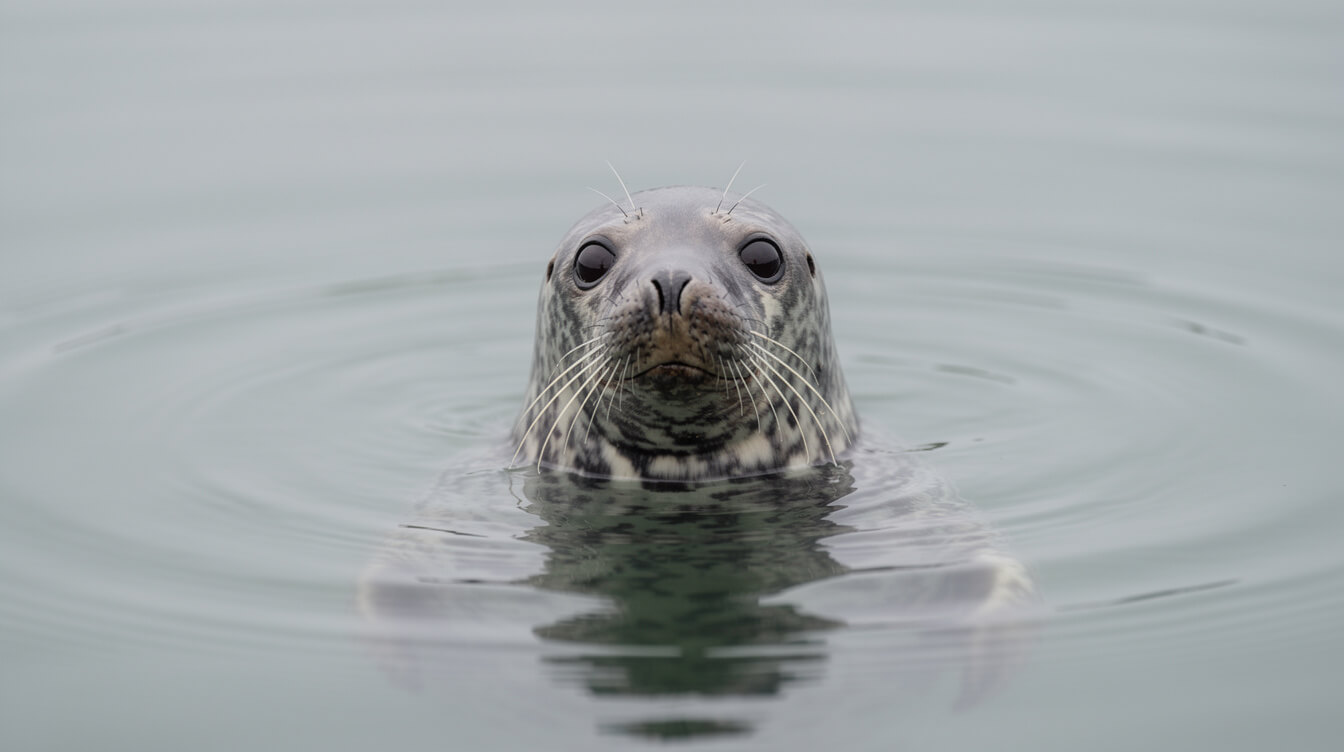
But “cutest” depends on what kind of cute you like. If you like tiny and round, the ringed seals and the Baikal seal are hard to beat, since they are among the smallest seals in the world. If you like a face that seems to be paying attention to you, the harbor seal, bobbing upright in the water with its head tilted, wins easily. If you like a little drama, the internet has a soft spot for the leopard seal, which is a fearsome Antarctic predator with a mouth that looks, from certain angles, like it is smiling.
Here is our honest take from the cutemerch desk: the cutest seal is the one you are looking at right now. That sounds like a dodge, but it is mostly true, because nearly every seal shares the same handful of features that our brains read as sweet. Once you know what they are, you start seeing them everywhere.
A quick note on names before we go on. Seals and sea lions get mixed up all the time. The simplest tell is the ears: the seals in this post are “true seals,” which have no ear flaps, only small holes, while sea lions have little visible ear flaps and can walk on their flippers. That one difference turns out to matter a lot for cuteness, as you will see.
Why seal faces look so cute

We have written before about the shape our brains go soft on, the set of baby-like features that make us want to protect something. Seals happen to carry almost all of them into adulthood, and a few extra besides. Here is what is going on in that face.
The eyes are huge, dark, and wet
Seals hunt in dim water, so their eyes are large for their heads and built to gather as much light as possible. In most seals the eye looks almost entirely dark, with very little white showing. On land, seal eyes often look glossy and a little teary, because a steady film of tears keeps them protected in salt water. Big, dark, shiny eyes in a round face are about as close to a cartoon as real anatomy gets.
There are no ear flaps
This is the quiet secret of the seal face. Without ear flaps breaking up the outline, a seal’s head is one smooth curve from the top of the skull down to the shoulders. It reads as a ball. Sea lions, with their small visible ears, look a little more like dogs. True seals look more like a polished stone that has decided to have feelings.
The whiskers frame the face
Seal whiskers are long, stiff, and very sensitive. Researchers have found that some seals can track the faint swirls of water left behind by a swimming fish using their whiskers alone. To us, though, they mostly look like a generous, slightly untidy mustache, and they make the muzzle look softer and rounder than it is.
The body is all soft curve
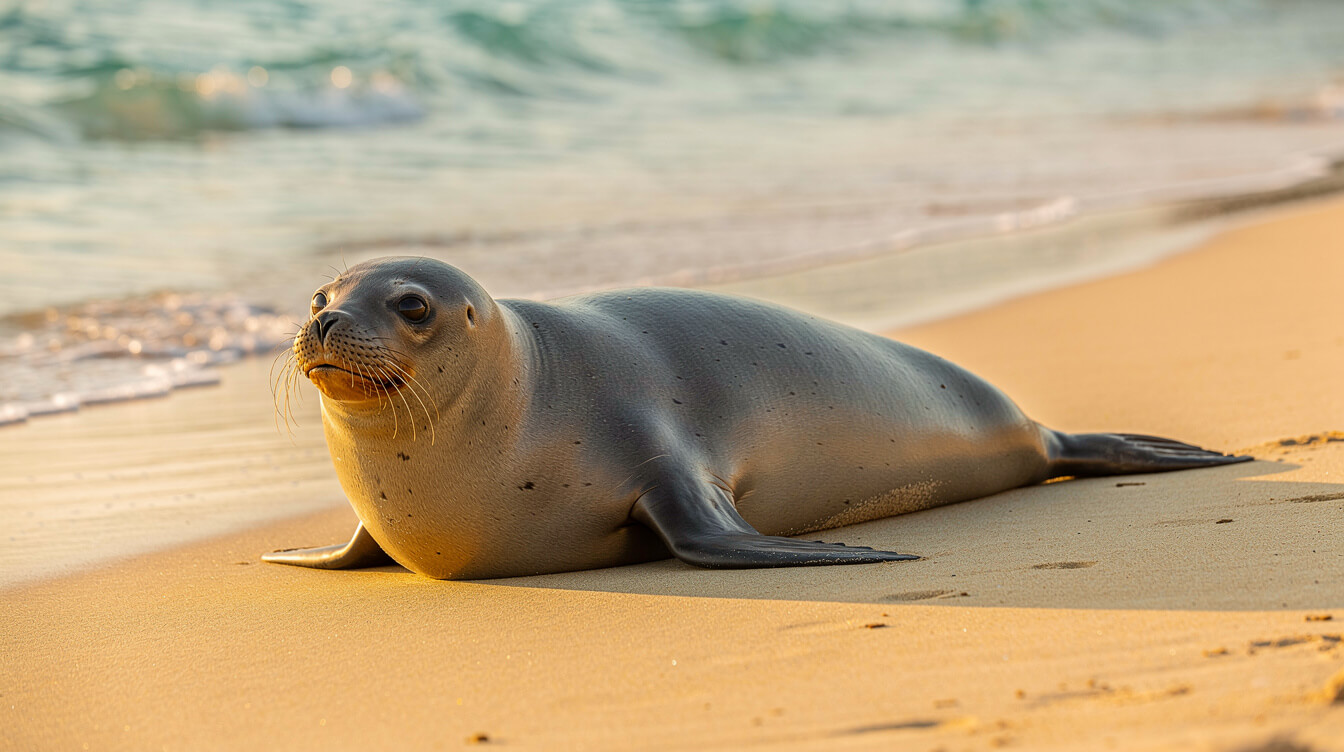
A seal is shaped like a teardrop with flippers. There are no sharp angles anywhere, and a thick layer of blubber smooths out every bump. On land, true seals cannot rotate their back flippers forward to walk, so they move by wriggling and scooting on their bellies. It is not graceful. It is very, very endearing.
Put those four things together and you get an animal that looks round, soft, attentive, and a little clumsy, which is more or less the recipe for cute. It is the same reason a capybara can look so calm or a quokka can look like it is smiling: we read faces through our own expressions, and seal faces happen to land on sweet.
The cutest seals, ranked gently
Every seal on this list is lovely, so think of the ranking as affectionate rather than final. Each one comes with a single true detail, because a cute animal is always more charming once you know something real about it.
1. Harp seal, in its white coat
Harp seals are born on the sea ice of the North Atlantic and the Arctic, and for the first two to three weeks of life they wear a coat of thick white fur. That white coat is the image most people have in mind when they picture a cute seal. Mothers nurse for only about twelve days, and during that time the youngster puts on weight fast, over 2 kilograms (more than 4 pounds) a day. Then the white coat sheds and a speckled silver-grey one comes in. Canada banned the hunting of white-coated harp seals in 1987, and today the species is listed as Near Threatened, largely because the ice it depends on is changing.
2. Saimaa ringed seal
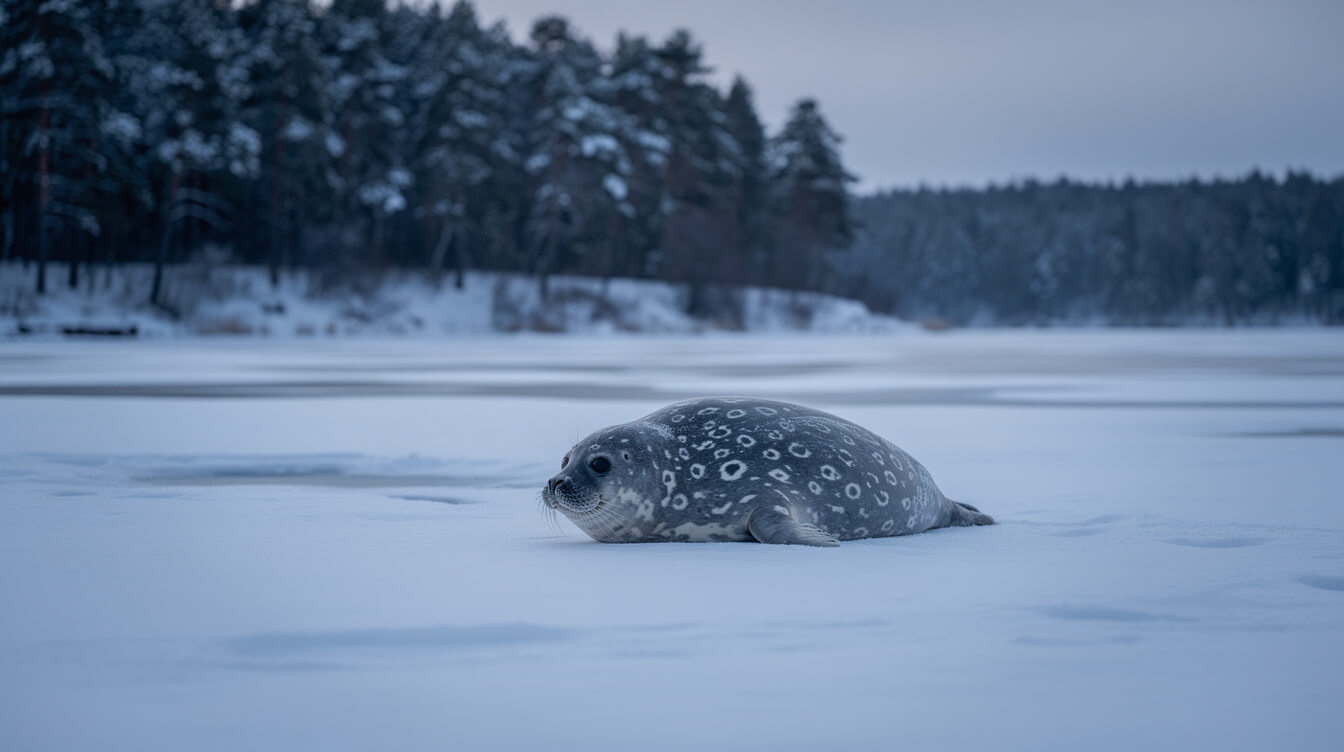
This one lives in a single lake in Finland and nowhere else on Earth. Its ancestors were cut off from the sea when the land rose after the last ice age, about 9,500 years ago, and they simply stayed. It is one of the rarest seals in the world: the population fell to somewhere between 100 and 150 animals in 1983 and has since grown to around 500, thanks to careful protection. Saimaa ringed seals give birth in dens of snow on the frozen lake, so a good snowy winter really matters to them. A small, round, freshwater seal with a whole lake to itself is about as storybook as real life gets.
3. Baikal seal
The Baikal seal lives only in Lake Baikal in Siberia, which makes it one of very few seals that spend their whole lives in fresh water. It is also one of the smallest true seals, about 1.1 to 1.4 meters long as an adult. Mothers dig dens under the ice for their young, and in those snug dens the youngsters can grow to five times their birth weight. Small, round, and raised in a snow cave: it is hard to argue with that.
4. Harbor seal
Harbor seals are the seal most people in the US are likely to actually see, on rocky coasts and sandy beaches on both sides of the country. Look for the V-shaped nostrils and the habit of floating upright in the water with just the head showing, like someone peeking over the edge of a bathtub. Each harbor seal has its own unique pattern of spots, so no two coats are quite alike. And the youngsters are remarkably capable: they can swim and dive within hours of being born.
5. Spotted seal
The spotted seal lives on the edges of the sea ice in the North Pacific, including the Bering Sea off Alaska, which holds the only population in the US. Its coat is silver to grey, scattered all over with dark irregular spots, like a pebble someone dotted with ink. It is a close cousin of the harbor seal and looks a lot like one, just a little more speckled and a lot more remote.
6. Hawaiian monk seal
The only seal native to Hawaii, and one of only two mammals found naturally nowhere else but those islands. Native Hawaiians know it as ʻīlio-holo-i-ka-uaua, “dog that runs in rough water,” which is a lovely name and also a fair description. Its youngsters are born in a thick, woolly black coat that they shed after about six weeks, revealing a sleek silvery grey one. There are only around 1,400 of them, and the population is slowly recovering with a lot of human help.
7. Leopard seal, the reddit pick
Every list needs a wild card. The leopard seal is a large Antarctic predator with massive jaws, and it eats penguins, fish, krill, and even other seals. It is not cute in the usual sense. And yet, seen side-on, the long curve of its mouth looks like a wide, satisfied grin, and seal fans online have a real soft spot for it. One famous story adds to the charm: a wildlife photographer reported that a female leopard seal spent four days bringing him penguins, possibly trying to feed him. Fearsome, yes, but apparently also a little bit of a host.
Why seal youngsters grow up so fast

Here is the part of seal life that surprises people most. That fluffy, helpless-looking stage is short. Very short. Many seal mothers raise their young in a few weeks or less, and some in a matter of days, by making milk so rich it is closer to heavy cream than to anything we would recognize as milk.
The four-day record
The hooded seal holds the record for the shortest nursing period of any mammal: about four days on average. In that time the youngster roughly doubles in size, gaining around 7 kilograms (about 15 pounds) a day. It is possible because hooded seal milk is about 60 percent fat. Hooded seals are also born already looking grown-up, in a slate blue-grey coat with a pale belly, which is why they are nicknamed “bluebacks.” Sadly the species is now listed as Endangered, as the Arctic ice it breeds on shrinks.
Three weeks for a gray seal, twelve days for a harp seal
Gray seals nurse for about three weeks on milk that is also around 60 percent fat, according to keepers at the Smithsonian’s National Zoo, who watched one grow up in 2017. Harp seal milk starts at about 25 percent fat and climbs to around 40 percent by the end of the twelve-day nursing period, as the mother fasts and pours her own reserves into her young. By the time nursing ends, the youngster has a thick layer of blubber and the mother heads off to sea.
Why the rush?
Ice is not a safe or stable place to raise a family. It can break up, drift, or melt, and a seal resting on it is exposed to predators. So the strategy many ice-breeding seals use is to transfer as much energy as possible, as fast as possible, and then let the youngster live off its own fat while it learns to swim and hunt. Seals that pup on land tend to take longer: Hawaiian monk seal mothers nurse for five to seven weeks and fast the entire time.
We find this genuinely moving. The round, chubby phase that makes seals look so cute is not just decoration. It is a packed lunch, built in a hurry by a mother who knows she cannot stay. If you love round water animals with soft, gentle faces, our Emotional Support Axolotl Badge T-Shirt is the closest thing we make right now. It is not a seal, and we would not pretend it is, but it has the same calm, wide-eyed, in-the-water sweetness.
The cutemerch letter
A small good thing, once a week
One short, kind email with our coziest posts and new round animals from the shop. No spam. Unsubscribe anytime.
Cute, but not cuddly: what to do if you see a seal on the beach
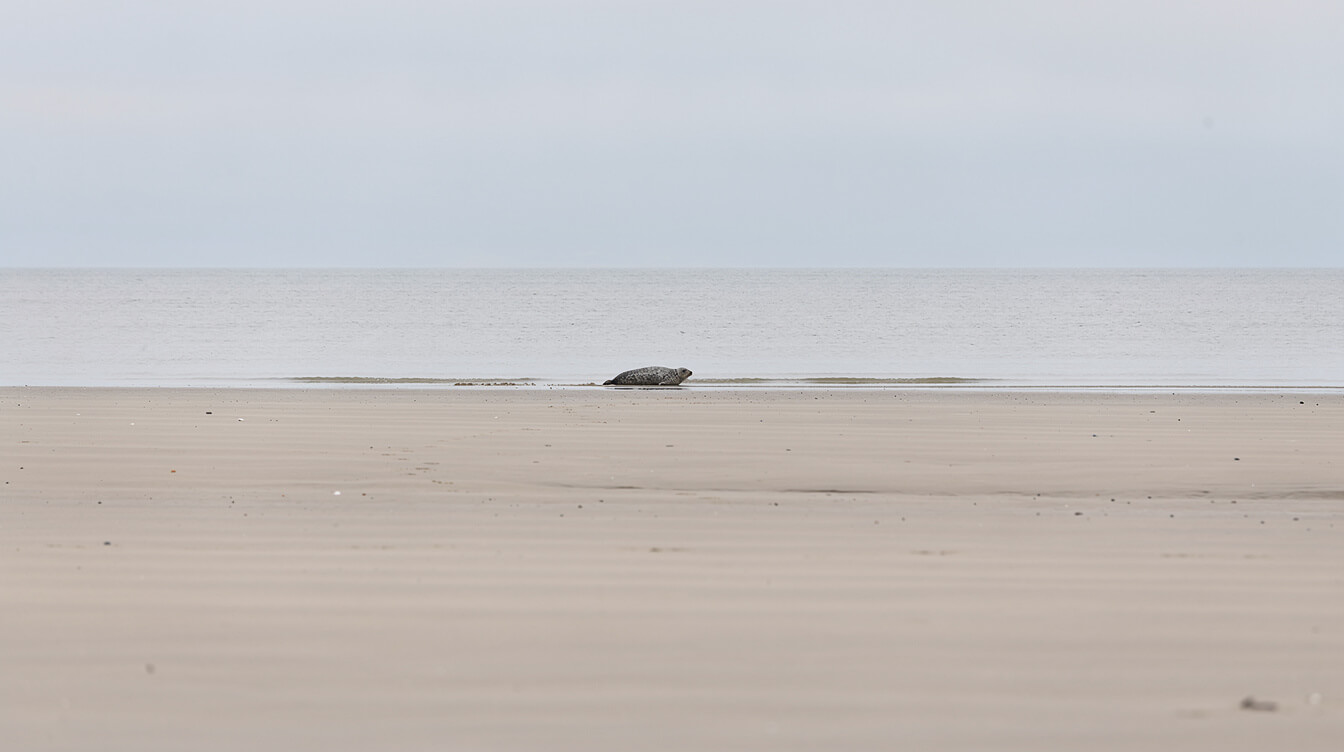
This is the most useful part of the post, so we will keep it simple. If you see a seal resting on a beach, especially a young one on its own, the kindest thing you can do is leave it alone and give it plenty of room.
A seal alone is usually not abandoned
This is the big one. NOAA Fisheries, the US agency that looks after marine mammals, says harbor seal mothers often leave their young on shore for long stretches while they go off to hunt. A youngster resting alone on the sand is usually just that: resting. Later, during weaning, young seals also haul out on their own as they learn to feed themselves. The real risk comes from us. If people crowd around, the mother may stay away, and a youngster disturbed before it is weaned has a much harder time surviving.
How far is far enough?
- At least 50 yards (150 feet) from seals and sea lions in general. That is NOAA’s standing recommendation, for the animal’s safety and yours.
- At least 150 feet from a Hawaiian monk seal mother and her young, on land and in the water. NOAA notes that monk seal mothers can be famously defensive.
- Dogs on a leash, and kept well back. NOAA asks that dogs stay at least 50 feet from all monk seals.
- No feeding, ever. It is illegal to feed marine mammals in the wild in the US, and it teaches them to approach people.
A good rule of thumb: if the seal lifts its head to look at you, or starts to shuffle away, you are too close. Back up slowly.
When to call someone
If a seal looks injured, tangled in fishing line or net, or is in a spot where people or dogs keep bothering it, call your local marine mammal stranding network rather than trying to help yourself. They are trained, they are usually happy to hear from you, and they would much rather check on a healthy seal than miss one that needed them. Seals are wild animals with real teeth, and even the cutest one can bite.
Keepers at the National Zoo said much the same thing about the gray seal born there: adorable to look at, but not a cuddler, and “pretty feisty” up close. Loving seals well means loving them from a distance, the same way we suggested for otters.
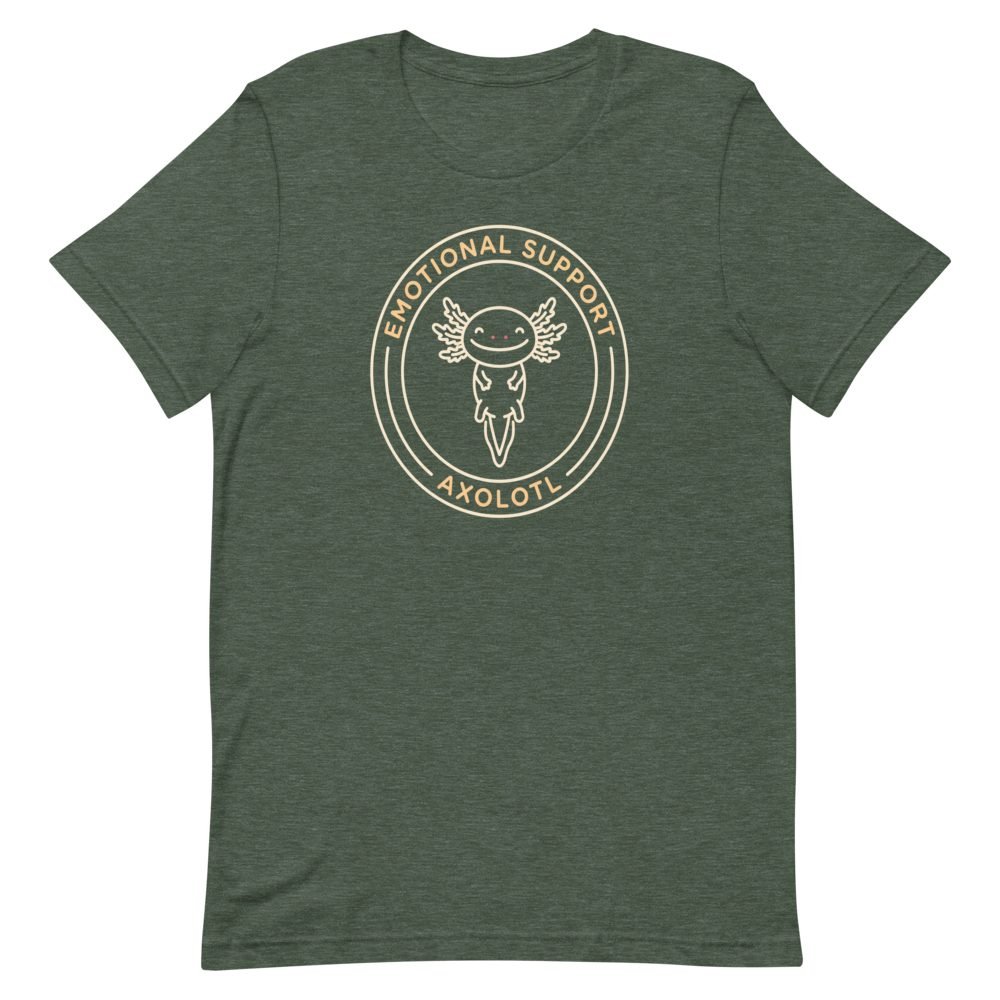
A calm water friend for the seal fans
We do not make a seal shirt yet. This is the next best thing: one round, wide-eyed axolotl in a cream line-art badge, with the same soft, unbothered face that makes seals so easy to love.
Cutest seal FAQ
What is the cutest species of seal?
Most people would say the harp seal, because of the fluffy white coat its young wear for their first two to three weeks. If you prefer small and round, the Baikal seal and the ringed seals, including the rare Saimaa ringed seal of Finland, are strong contenders. The honest answer is that nearly every true seal is cute in the same way: big dark eyes, no ear flaps, long whiskers, and a body that is all soft curve.
What is the cute seal called?
Usually, people mean a young harp seal, sometimes called a “whitecoat” because of its fluffy white fur. Once that white coat starts to shed, the youngster has a patchy look, and when the new coat is fully in it is called a “beater,” a name that comes from the sound young harp seals make slapping the water as they learn to swim. The internet also has its own fond nicknames for seals in general, and “sea puppy” is a popular one, which fits nicely with the Hawaiian name for the monk seal, “dog that runs in rough water.”
Which baby seal is the cutest?
The white-coated harp seal is the classic answer. The woolly black Hawaiian monk seal youngster is a close and less famous second, and the blue-grey hooded seal “blueback” is a lovely surprise if you have never seen one. Harbor seal youngsters deserve a mention too, since they are the ones you might actually meet on a US beach (from at least 50 yards away).
Are seals friendly?
Seals can be curious, and some will come close to look at divers or kayakers in the water. But curious is not the same as friendly, and they are wild animals that can bite. On land, a resting seal is trying to save energy and stay warm, so being approached is stressful for it. Enjoy them from a respectful distance.
Are seals endangered?
It depends on the seal. Many common species, like the harbor seal, gray seal, Baikal seal, spotted seal, and leopard seal, are listed as Least Concern. Others are in real trouble. The hooded seal is listed as Endangered and the harp seal as Near Threatened, mostly because the Arctic sea ice they breed on is shrinking. The Hawaiian monk seal numbers only around 1,400 animals, and the Saimaa ringed seal around 500.
What is the difference between a seal and a sea lion?
The quickest tell is ears: true seals have only small ear holes, while sea lions have little visible ear flaps and can turn their back flippers forward to walk on land. It is a bigger topic than one answer can hold, so we will give it a post of its own soon.
Final thoughts
The cutest seal is easy to name and hard to settle. The white-coated harp seal has the postcard, the Saimaa ringed seal has the story, the harbor seal has the tilted head, and the leopard seal, somehow, has the grin. What they all share is a face built for cold water that happens to look, to us, like pure sweetness: big dark eyes, a smooth round head, a soft mustache of whiskers, and a body with no sharp edges at all.
What makes them even more lovable is knowing what is behind the cute. That round, chubby youngster is a race against melting ice, fed in days by a mother who cannot stay. The seal snoozing alone on the sand is usually just waiting for her to come back. And the best way to love any of them is the gentle one: look, smile, and leave them plenty of room.
If seals have you thinking about other soft faces in the water, the sea bunny is a very different kind of round, and just as easy to fall for. A little something to make an ordinary day softer, as always.
Before you go
Want the next one in your inbox?
We write something soft every day. The best of it lands in one gentle weekly note, for you or for the friend who needs it.