Kawaii accessories worth actually carrying around
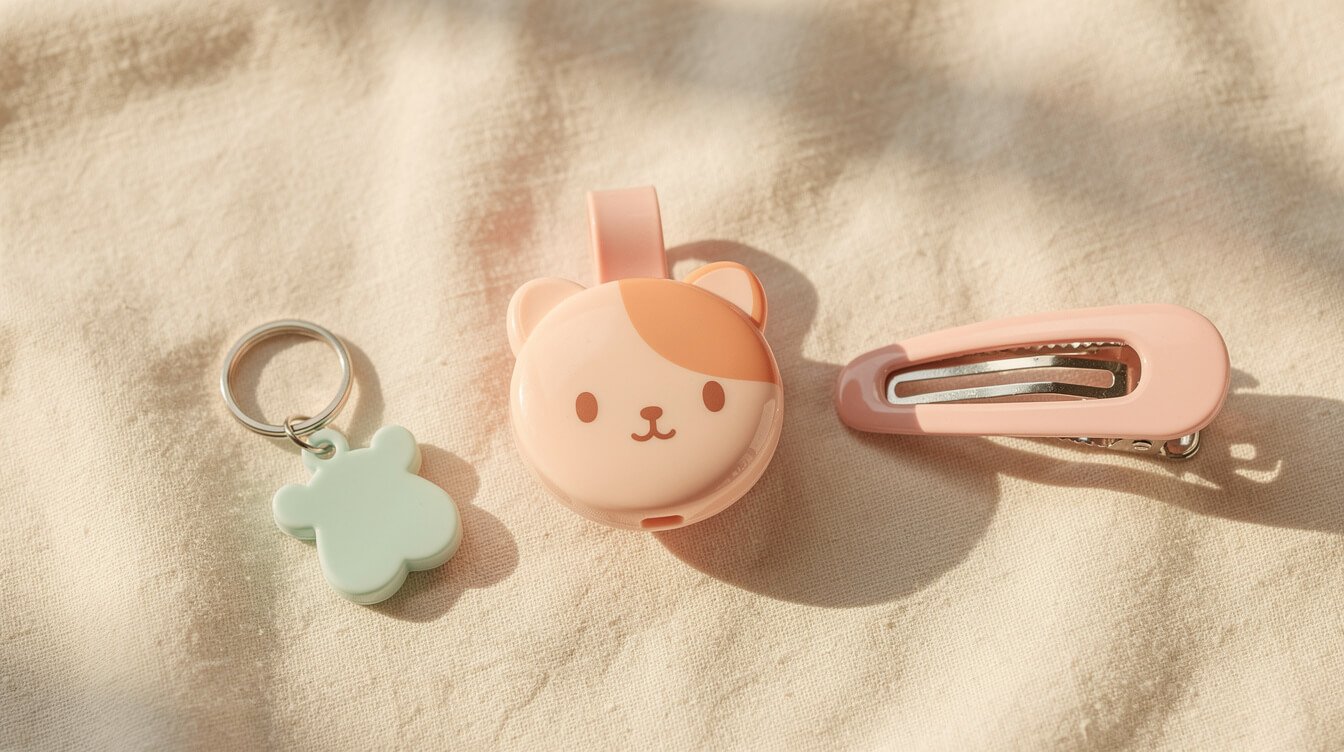
Kawaii accessories are the small stuff. A charm on a zipper pull, a clip in your hair, a keychain that makes your keys easier to find in the bottom of a bag. They are not a big purchase or a big statement. They are the little detail that makes an ordinary object feel like it is yours, and that is exactly why they are worth choosing on purpose instead of grabbing whatever is closest to the register.
Most guides to kawaii accessories assume you already know which character or franchise you are shopping for. That works if you do. It does not work if you just like round shapes, soft colors, and a small dose of joy on your everyday things, and you are not looking to become a collector of any one specific property. This guide sorts kawaii accessories by what they actually do and how you actually wear or carry them, so you can build a set that feels like you rather than like a fan club membership.
What makes kawaii accessories actually kawaii, not just small
Size is not the whole story. Plenty of small things are not kawaii at all, they are just small. What actually makes an accessory read as kawaii comes down to a handful of visual habits, and once you notice them you will spot them everywhere.
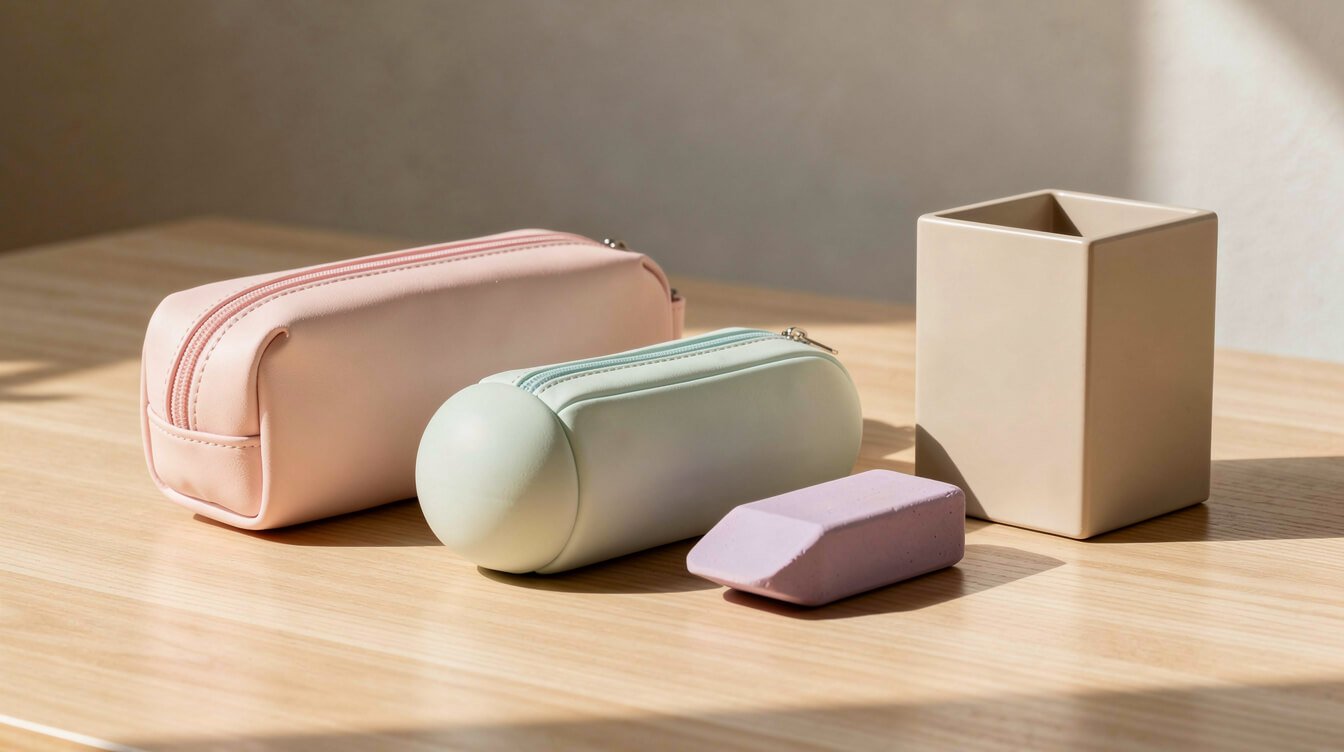
Rounded edges over sharp ones. A soft palette, pastels or warm neutrals rather than high contrast or neon. A single expressive detail, a face, a pair of ears, a little bow, rather than a busy pattern trying to do six things at once. And a sense of restraint, one charming idea done well beats five cute ideas fighting for space on the same object.
This is the same doctrine that shows up in kawaii room accessories and kawaii desk accessories, just shrunk down to something you carry instead of something you set on a shelf. The scale changes. The instinct does not.
You do not need a character to be kawaii
A round animal, a soft shape, a gentle color story, these do the emotional work on their own. A licensed character can absolutely be part of someone’s kawaii accessory collection, and there is nothing wrong with loving one. But it is worth knowing that the feeling does not require the license. If a specific franchise ever falls out of your rotation, or the story behind it stops mattering to you, a design built on shape and color instead of intellectual property keeps working.
Phone charms and bag charms, the easiest way in
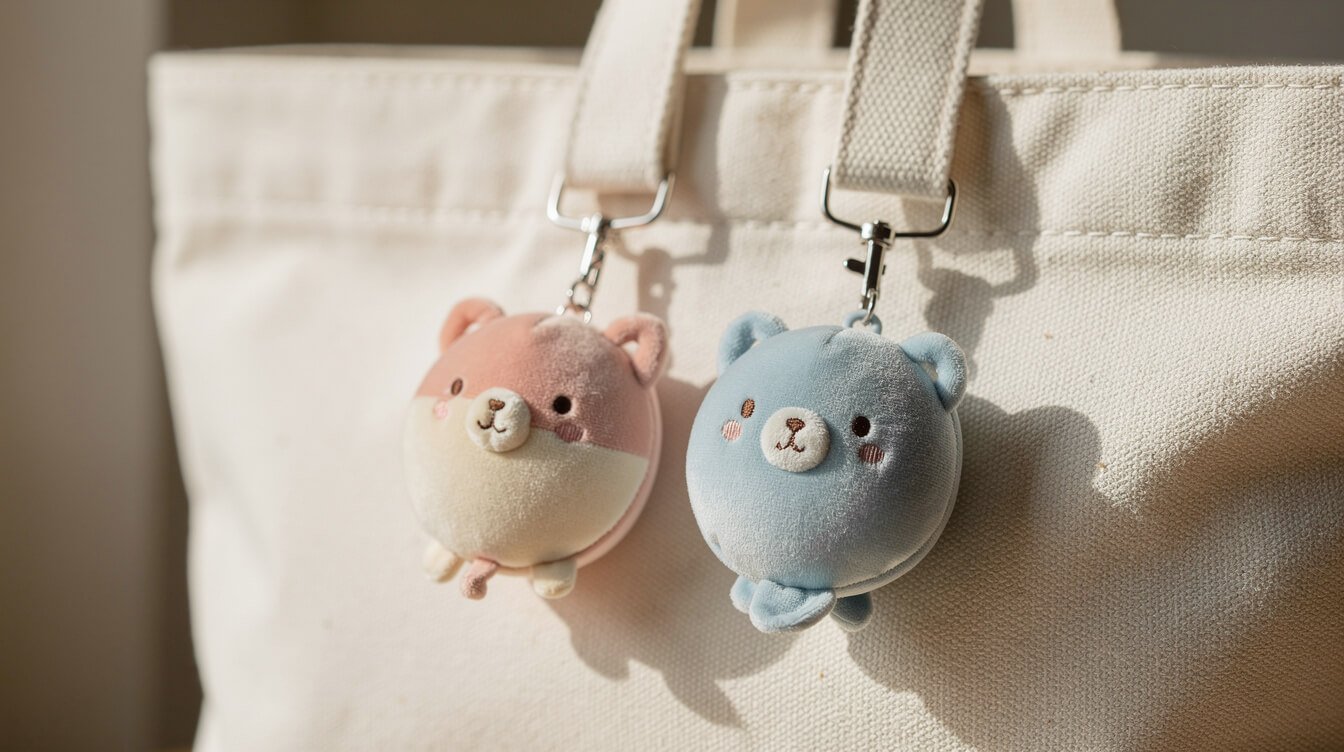
If you are new to kawaii accessories, start here. A phone charm or bag charm asks almost nothing of you. You attach it once, and then it is just there, doing its small job of making a very ordinary object slightly delightful every time you glance at it.
A few things separate a charm that lasts from one that snaps off in a coat pocket by February. Look at the attachment loop first, a soldered metal ring holds up far better than a thin fabric cord. Check the material of the charm itself, soft rubber and enamel both wear well, while a cheaply cast resin piece can chip if it takes a hard knock against a table edge. And weight matters more than people expect, a charm that is too heavy for its clasp will slowly work the attachment loose, so bigger is not automatically better.
Bag charms get a slightly easier life than phone charms since they are not being handled ten times an hour, which means this is a good place to be a little more adventurous with size or a slightly heavier design if something genuinely delights you.
Keychains and lanyards, made for actual use
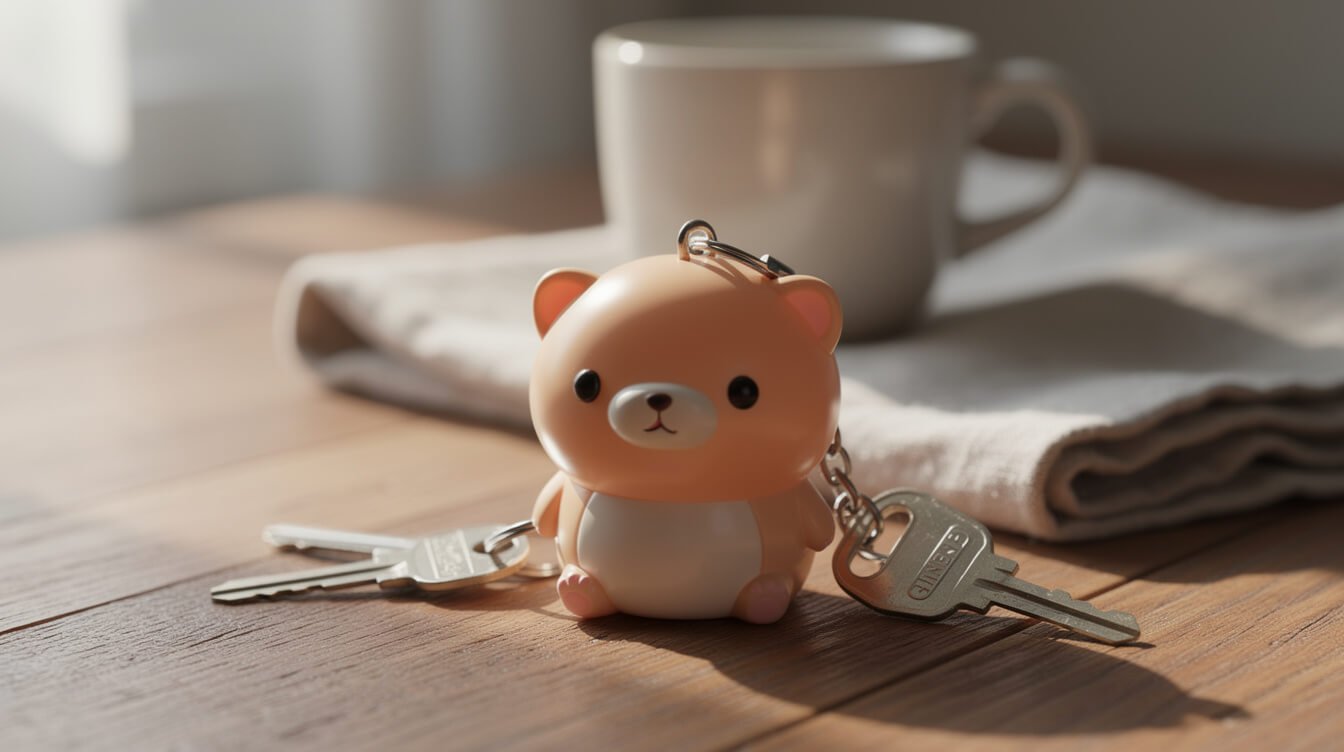
A keychain has one job that a phone charm does not: it needs to survive being fished out of a bag, jammed into a pocket, and occasionally dropped on concrete. That changes what to look for.
A split ring keychain (the kind you have to work a key onto with your thumbnail) holds far more securely over time than a simple lobster clasp, even though the clasp version is easier to swap in and out. If you tend to lose keys, prioritize security over convenience and go with the split ring. If you rotate keychains often, the clasp style earns its keep.
Material-wise, a solid vinyl or acrylic keychain with a protective coating will outlast a printed one, since printed designs can fade or scratch with the daily friction of living in a bag. A keychain is also one of the few kawaii accessories that gets handled by other people, whoever borrows your keys, so it is a nice low-stakes way to introduce a friend to a design without asking them to wear or carry anything themselves.
Lanyards work by the same logic but live around your neck instead of on a ring, which means the print quality matters even more since it is at eye level all day. A woven lanyard with the design built into the weave will hold up longer than one where the pattern is printed on top and can rub off.
Hair clips and pins, worn instead of carried
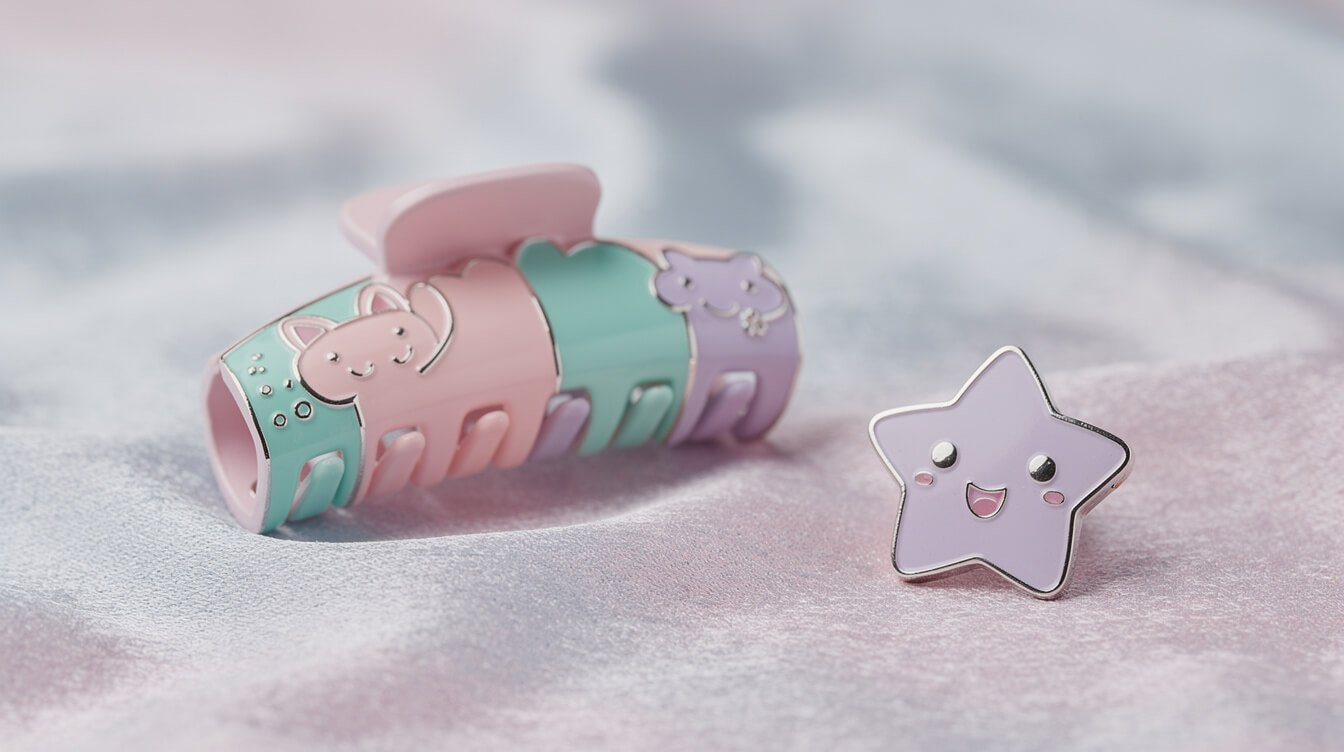
Hair clips and enamel pins sit in a different category entirely, because they are worn on your body rather than attached to an object. That raises the bar a little. A design you would happily clip to a bag might feel like too much clipped into your hair at a family dinner, and that is worth thinking through before buying.
For hair clips, look at the spring mechanism, not just the decorative front. A weak spring will pop open under the weight of thicker hair, and a clip that constantly slips is a clip you will stop reaching for no matter how cute the front is. A small, well-made clip in a shape you love beats a large, elaborate one with hardware that cannot hold its own weight.
Enamel pins are the most understated entry point here, since a single small pin on a jacket collar or tote strap reads as a quiet detail rather than a statement. This makes pins a good choice if you love the kawaii aesthetic but work somewhere that is not especially receptive to it. A cloisonne finish (raised metal lines separating each color) tends to hold its shape and shine longer than a soft enamel finish, which can dull with handling.
Pouches, straps, and the accessories that do a job
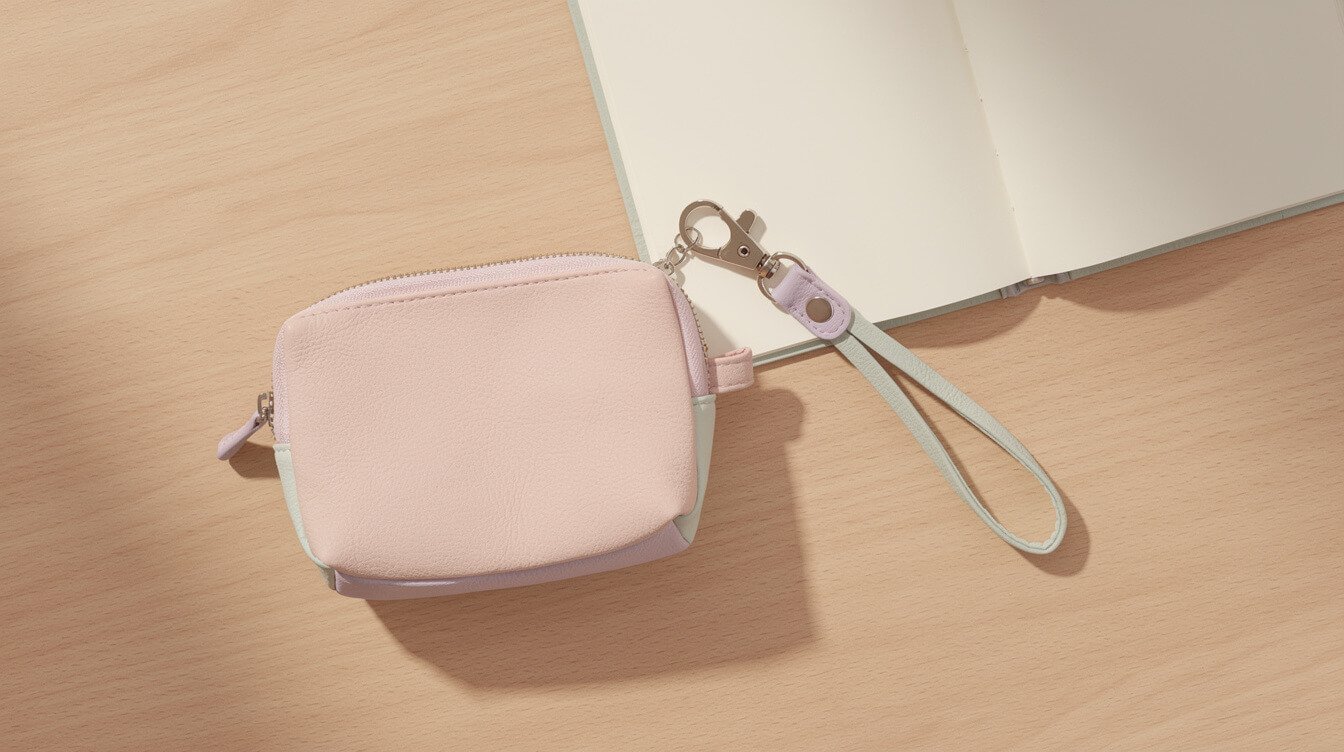
Some kawaii accessories are not purely decorative, they are decorative and functional at once, which makes them some of the best value in the category. A pouch holds cords or coins. A wrist strap keeps your phone from becoming an expensive skipping stone. A card holder keeps a transit pass from disappearing into the depths of a bag.
Because these get real daily use, treat them the way you would treat any small piece of gear. Check the zipper on a pouch by working it back and forth a few times before buying if you can, a stiff or misaligned zipper only gets worse. Check that a wrist strap’s clasp is rated for the weight of your actual phone, not just any phone, since a slim strap that looks fine can strain under a phone in a thick case. These are the pieces most likely to earn a permanent place in daily use rather than a drawer, so it is worth spending a little more for one that will not fail in month two.
Choosing accessories that fit your actual budget and pace
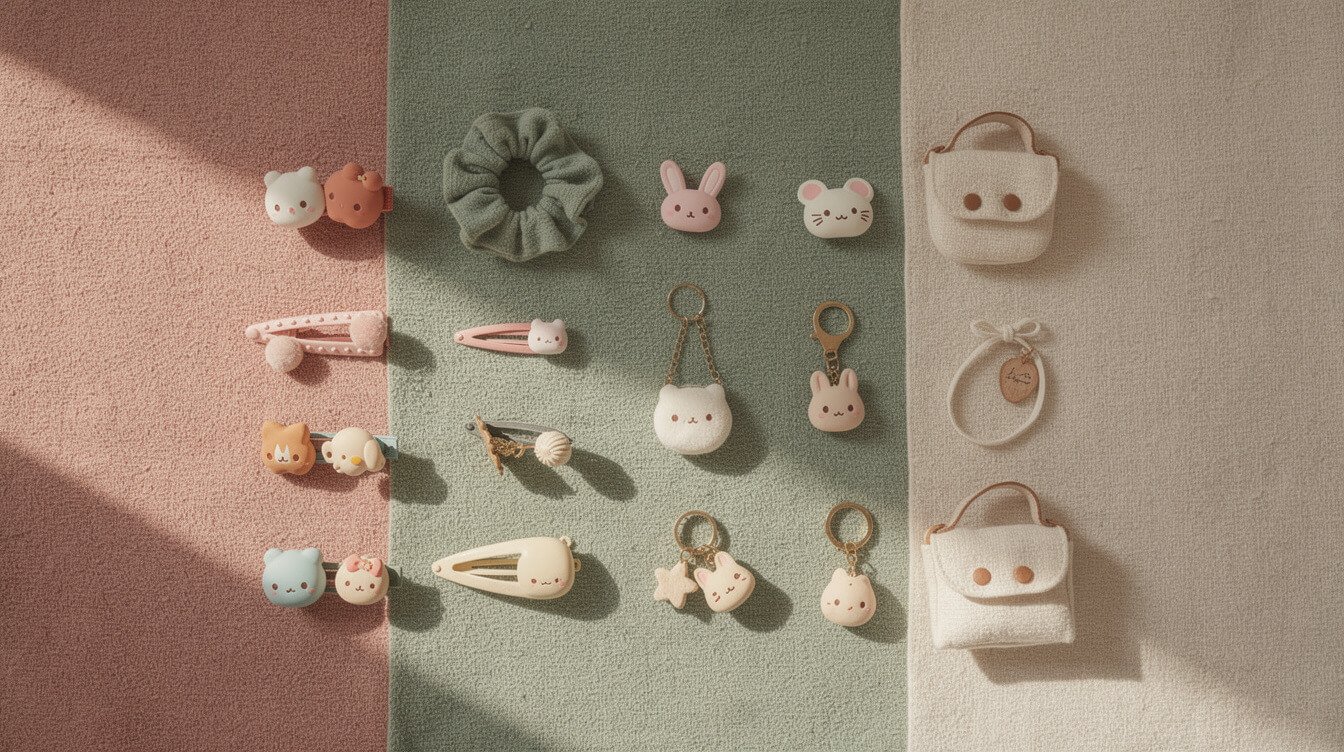
Kawaii accessories span a wide price range, and the price does not always track with how much joy a piece will bring you day to day, so it is worth being deliberate about where you spend more and where you do not.
At the low end, a simple rubber phone charm or a single enamel pin is a fine way to try a new color palette or a new claimed animal without much risk. These are the pieces to buy on a whim, they cost little enough that if the shine wears off in a month, nothing is lost.
In the middle, a well-made keychain, a woven lanyard, or a hair clip with real spring hardware is where it makes sense to spend a bit more, since these are the pieces that get handled daily and a cheap version will fail exactly when you are relying on it. Read the material description before buying rather than just the photo, a listing that specifies zinc alloy or solid vinyl is telling you something a vague “cute keychain” listing is not.
At the higher end, a well-constructed pouch, a wallet-style card holder, or a bag in a genuinely cute print earns its price by replacing something you would have bought anyway, a plain pouch or a plain card holder, so treat that spend as a functional purchase that happens to also be adorable, not as an impulse buy.
Pace matters as much as price. Buying one thoughtful piece a month builds a collection that feels curated by you over time. Buying eight pieces in one order because they were all in the same sale tends to produce a pile of accessories that never quite gets used, since nothing had the chance to prove it earns a permanent spot in your rotation.
Building a set that feels like you, not a fandom
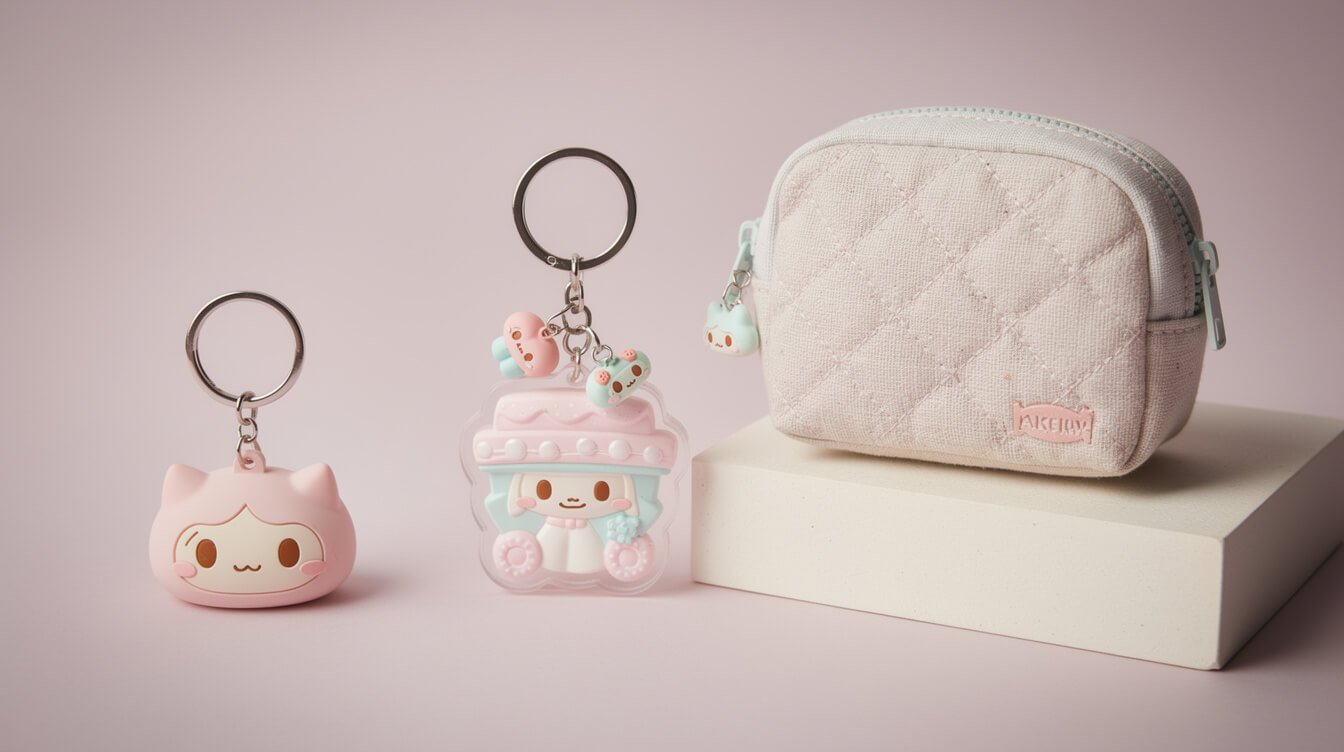
Once you have more than one or two kawaii accessories, the question shifts from “is this cute” to “does this belong with the others.” Here is the sorting method that tends to hold up over time, whether or not any of the pieces involve a licensed character.
Pick a lane and let it be the thread that connects everything. That lane could be a color palette (everything in your rotation lives somewhere in dusty pink, sage, and cream), a single animal you have claimed as yours, or a texture (soft fabric and matte finishes, nothing glossy or hard-edged). One consistent lane makes an eclectic mix of charms, clips, and keychains look intentional instead of random. Without one, even genuinely cute individual pieces can start to look like they were bought at five different stores with five different moods.
If a specific franchise is part of your lane, that is completely fine, plenty of people build a whole aesthetic around one character they love. Just know that a lane built on shape, color, or a claimed animal (the same instinct behind our own round animal t-shirt designs) tends to age better, since it is not tied to whichever property happens to be popular this year.
Here is what that looks like in practice. Say your lane is “soft amphibians and warm neutrals.” A frog phone charm, a mushroom-shaped keychain in the same cream and moss palette, and a plain tan pouch all belong together even though only one of them is technically an animal design, because the color story and the general softness are doing the connecting work. Swap the frog for a licensed character in bright primary colors and the same keychain and pouch suddenly look mismatched, not because the character is not cute, but because it broke the one rule holding the set together. Test any new piece against your lane before buying it, not just against “is this cute on its own.”
Frequently asked questions about kawaii accessories
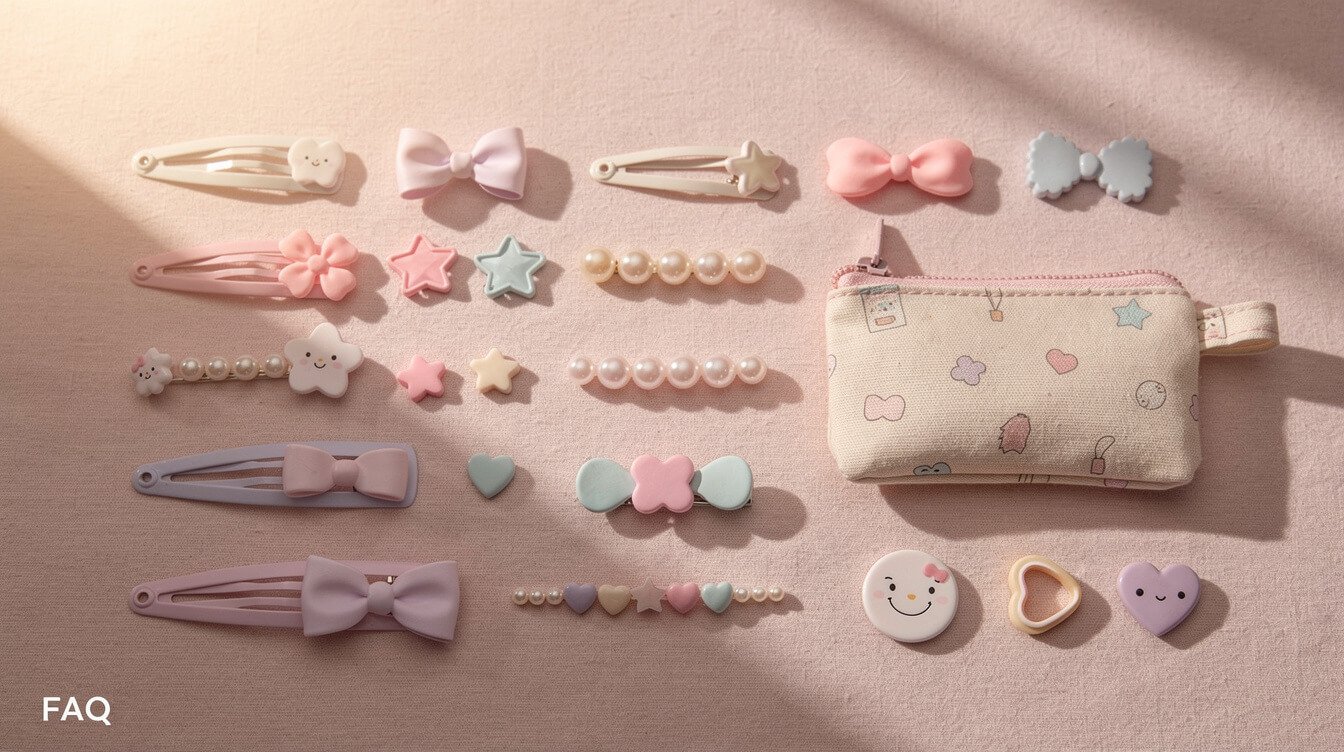
How many kawaii accessories is too many on one bag or keychain?
There is no hard number, but a useful rule of thumb is to stop before things start hiding each other. If you can no longer tell one charm from the next at a glance, or the added weight is making a zipper pull sag, that is your natural ceiling. Two or three well-chosen pieces almost always read as more intentional than eight competing ones.
Are kawaii accessories only for phones and bags?
Not at all. Once you notice the format, it shows up on laptop lids, water bottles, backpack straps, even the pull tab on a jacket zipper. Anything with an edge, a loop, or a flat surface can carry a small accessory. The same sorting logic in this guide (what does it need to survive, how is it attached) applies no matter where it ends up.
What is the most durable kawaii accessory to start with?
A well-made keychain, hands down. It is built to survive daily handling by design, it does not require any special care, and it can move between bags, keys, and even a backpack zipper if your habits change. It is also the easiest one to hand to a friend as a small gift without any guesswork about their style.
Do I need to match all my kawaii accessories to each other?
No, matching and mismatching can both work. What matters more is the lane described above, a shared color story, texture, or theme that ties otherwise different pieces together. A phone charm and a keychain in completely different shapes can still feel related if they share a soft, muted palette.
How do I keep a licensed-character accessory from feeling dated once a trend fades?
Rotate it into a supporting role rather than the centerpiece. A character piece works well as one accent among accessories built on more timeless shapes and colors, so if your enthusiasm for that one property shifts down the road, the rest of your set still holds together on its own.
What should I look for to make sure a kawaii accessory is actually well made, not just cute in the photo?
Read the material line in the listing before the reviews. Vague language like “high quality” or “premium” without naming an actual material is a small warning sign, while a listing that specifies zinc alloy, solid vinyl, or cloisonne enamel is telling you something concrete you can evaluate. If photos are available, zoom in on the attachment hardware specifically, the ring, clasp, or spring, since that is almost always where a cheaply made piece fails first, long before the design itself looks worn.
Is it better to buy kawaii accessories individually or as a themed set?
Individually, in most cases. A themed set locks you into someone else’s idea of what belongs together, and you often end up using two of the four pieces while the rest sit in a drawer. Buying one piece at a time and testing it against your own lane, as described above, produces a collection with a much higher use rate, even if it takes a little longer to build.
Final thoughts
Kawaii accessories are proof that you do not need a big purchase to make an ordinary day feel a little softer. A good charm, a clip that actually holds, a keychain you reach for without thinking, these are small decisions that add up to a version of your everyday things that feels considered rather than incidental.
Start with one piece that does an actual job, a keychain or a bag charm, and let your collection grow from things you genuinely reach for rather than things you felt obligated to buy because they were cute in a photo. If you want more ideas for building out a whole cute-with-taste rotation, our guides to kawaii room accessories and kawaii desk accessories use the same sorting logic for your space instead of your pockets, and if you are shopping for someone else, our guide to kawaii gifts for a best friend can help you pick well.
And if you already know you are a round-animal person before you are a franchise person, have a look through the shop, our designs are built on the same shape-and-color-first thinking as everything in this guide.