What Counts as Cottagecore Clothing (A Beginner’s Guide, No Corset Required)
Cottagecore clothing gets a reputation it does not fully deserve. Say the phrase and a lot of people picture a corset, a prairie dress, and a basket of eggs you definitely do not own. The truth is softer and a lot more wearable: cottagecore clothing is really just a color palette, a handful of fabrics, and a mood, applied to pieces you probably already have in your closet. You do not need a costume. You need a linen shirt, the right cardigan, and a little patience while you figure out what “cottage” actually means to your own wardrobe.
This guide is the one we wished existed when we started paying attention to the aesthetic: a plain-language answer to what cottagecore clothing is, what makes a piece read as cottagecore instead of just “vintage,” and how to build the look with everyday basics, thrifted finds, and a few new pieces, no corset required.
What is cottagecore clothing, really
At its simplest, cottagecore clothing is dressing like you spend your afternoons baking bread, tending a garden, and reading on a porch, even if your actual afternoon involves a laptop and a commute. It grew out of the broader cottagecore aesthetic, which romanticizes slow living, nature, and old-fashioned domestic comforts, and which took off hard in the early 2020s as a lot of people found themselves stuck inside and dreaming of somewhere quieter. If you want the fuller picture of where the aesthetic came from and what it touches beyond clothing, our guide to cottagecore aesthetic outfits is a good companion read to this one.
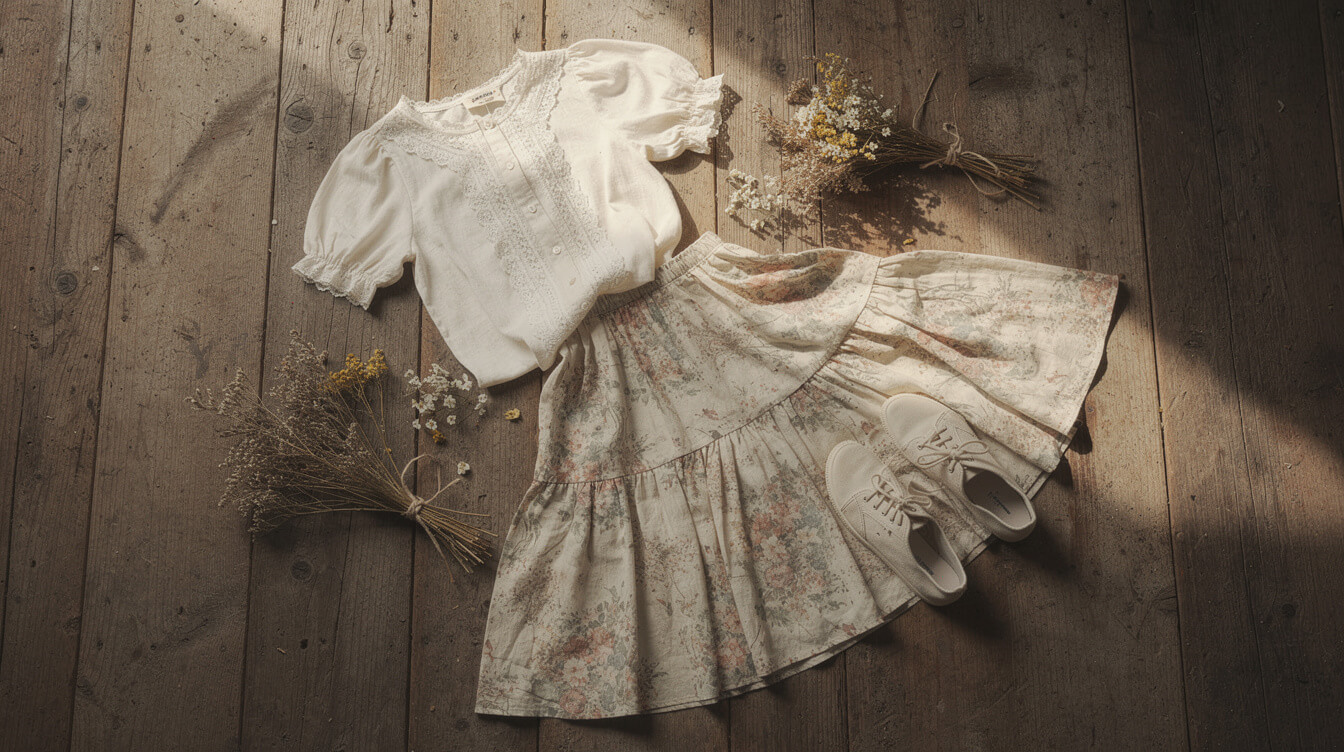
Clothing-wise, cottagecore borrows from a few real historical touchstones: Victorian and Edwardian countrywear, 1970s prairie dresses, French farm-girl workwear, and a good amount of Anne of Green Gables and Little House on the Prairie. But it is not a costume category, and it is not trying to recreate a specific decade. It is a mood board, loosely translated into things you can actually wear to the grocery store. The pieces that read as cottagecore today tend to share three qualities: natural fabrics, a soft and slightly muted color story, and silhouettes that feel unhurried rather than tailored. A puffed sleeve helps. So does a gathered waist, a scalloped hem, or a hand-knit texture. None of it is required. All of it is optional seasoning on top of clothes you can genuinely live in.
What it is not
It is not cosplay, it is not a themed dress-up event, and it is not exclusively dresses. Cottagecore clothing includes trousers, sweaters, cardigans, and tees, as long as the fabric and palette are doing the cottagecore work. You can build the whole look without ever buying a corset, a bonnet, or anything that requires lacing. It is also not a single, rigid uniform. Two people can both be dressed head to toe in cottagecore and look nothing alike, because the aesthetic is a set of instincts about color and fabric, not a checklist of required items.
The colors and fabrics that read as cottagecore

If you remember nothing else from this guide, remember this: cottagecore is a palette and a texture before it is a silhouette. Get those two things right and almost any simple piece will read as cottagecore, corset or no corset.
The palette
Think muted, warm, and a little faded, like a photograph left in the sun. Cream, butter yellow, sage, dusty rose, rust, terracotta, and soft browns all belong here. Florals are welcome, but small-scale and washed-out ones read more cottagecore than bold, saturated prints. Gingham checks, especially in cream and rust, are practically a cottagecore signature, showing up on everything from dresses to headscarves to tablecloths that somehow end up worn as skirts.
The fabrics
Natural fibers do almost all the heavy lifting. Linen is the unofficial mascot of the aesthetic, followed closely by cotton, wool, and anything with a hand-knit or crocheted texture. Look for fabric with a bit of visible weave or slub, the kind that looks like it was made by a person rather than a machine. Synthetic satin and anything glossy will fight the vibe every time, no matter how pretty the color, because shine reads as modern and cottagecore is chasing the opposite feeling.
Patterns worth knowing
Beyond gingham, keep an eye out for small ditsy florals, subtle stripes, and embroidered detailing, the kind you would find on a well-loved tablecloth or a grandmother’s blouse. Patchwork is having a real moment in the aesthetic too, since it visually says “made by hand” louder than almost anything else. What you want to avoid is anything that reads as a costume print, like an overly literal gingham apron dress with puffed shoulders and nothing else going on. The goal is a piece you would wear on a normal day, not a piece that only makes sense at a themed party.
A good rule of thumb: if the fabric would look at home drying on a clothesline in the sun, it will look at home in a cottagecore outfit.
You do not need a corset: everyday starting pieces
Most of the shops that show up when you search “cottagecore clothing” lead with corset-top prairie dresses, and for a special occasion, sure, that can be lovely. But it is not where you should start, and it is definitely not required to get the look right day to day. Here is what will actually get you dressed in cottagecore clothing on a Tuesday.
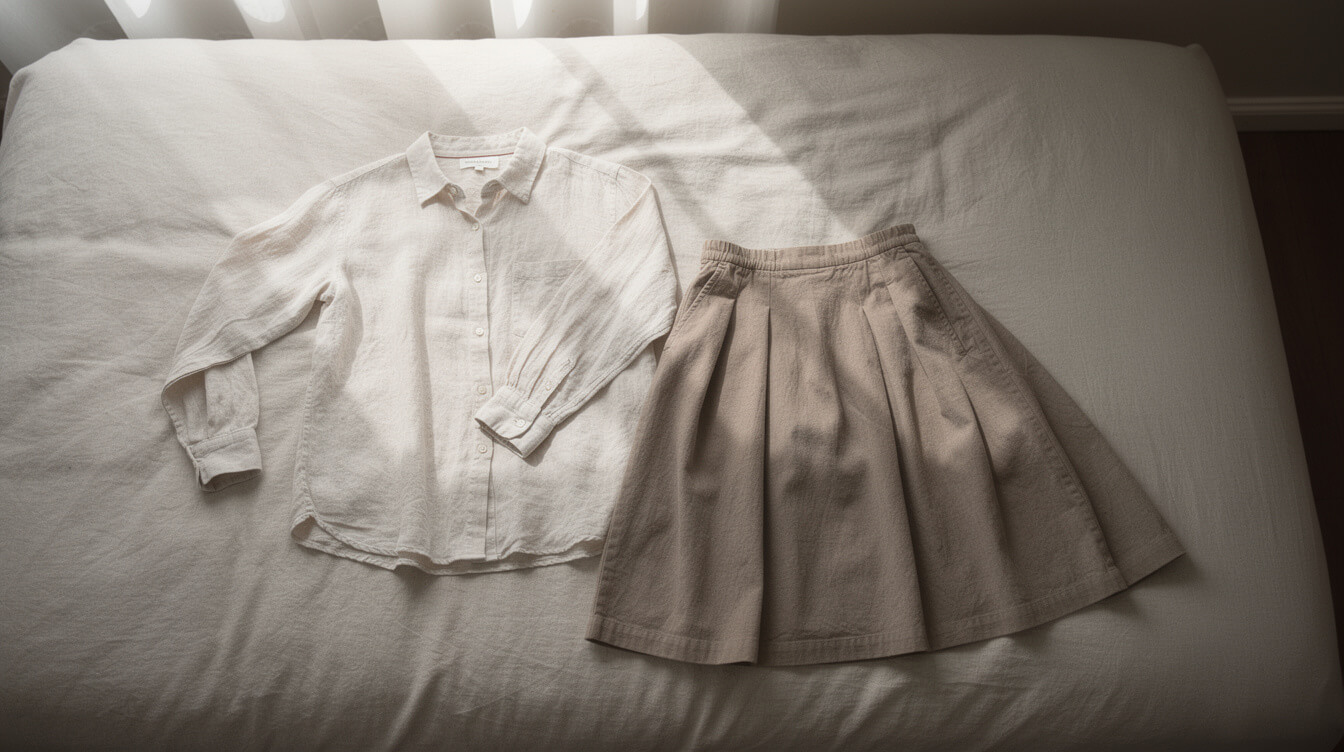
- A linen or cotton button-up shirt, ideally in cream, sage, or a soft check. This one piece does more work than anything else on this list, and it layers under nearly everything.
- A midi skirt with some movement to it, gathered or tiered, in a muted floral or solid earth tone. Look for one with pockets if you can find it, since a lot of the original historical inspiration for cottagecore clothing came from people who actually needed to work in it.
- A soft, round-neck tee in a warm neutral. This is where our own round animal t-shirt designs fit right in, since the round-animal motif is gentle and storybook in a way that leans naturally cottagecore, especially in a cream or dusty-rose colorway.
- A cardigan you would actually wear to bake in. Chunky knit, a little oversized, in oatmeal or rust, with sleeves you can push up without thinking about it.
- Wide-leg trousers or a simple cotton dress as your base layer for building outfits up or down, depending on the day.
Notice that none of those require lacing, boning, or a special occasion. They are clothes. They just happen to be clothes in the right fabric and the right color. A useful test when you are shopping, secondhand or new, is to imagine the exact same piece in polyester and neon orange. If it would still be flattering and wearable in that version, the silhouette is solid, and the cottagecore feeling is coming entirely from your fabric and color choices, which means you have more freedom than the corset-heavy shop grids would have you believe.
How to spot it while shopping
When you are actually standing in a store or scrolling a listing, run through three quick questions before you buy. First, what is it made of. Check the tag before you check the price, since a linen blend at a lower price point will read as more cottagecore than a full-polyester piece at a higher one. Second, what does the color remind you of. If your first thought is “garden” or “kitchen table,” you are on the right track, and if your first thought is “highlighter” or “traffic cone,” it is probably not the piece for this wardrobe. Third, would you wear it grocery shopping. If the answer is no because it is too fussy, too structured, or too obviously a costume piece, it belongs in the special-occasion pile rather than the everyday rotation this guide is focused on.
Mixing thrifted finds with new basics
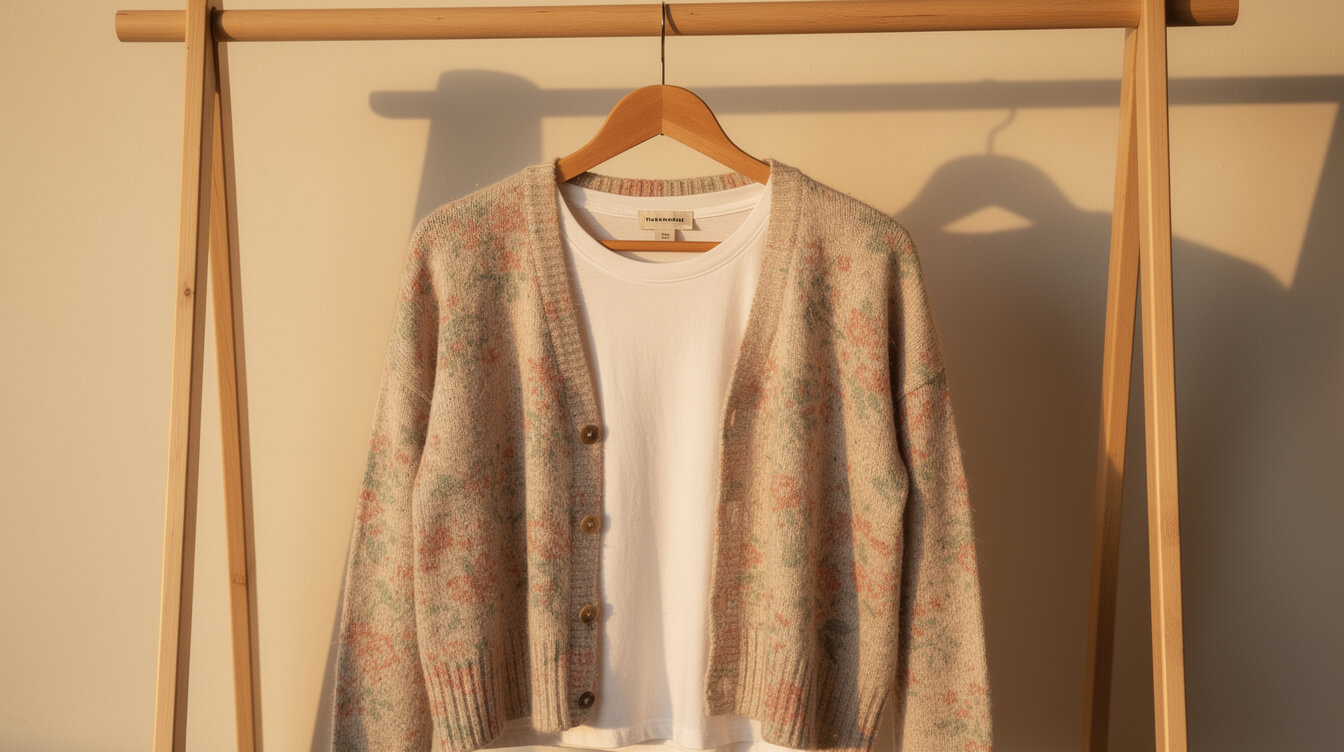
Cottagecore clothing and secondhand shopping were made for each other. Thrift and vintage stores are full of exactly the kind of natural-fiber, slightly faded, well-worn pieces the aesthetic is chasing, often for a fraction of what a “cottagecore” label charges for the same idea brand new.
A practical way to shop thrifted: look past the labels and go straight to fabric content tags. Anything marked linen, cotton, or wool goes in the maybe pile, and anything fully synthetic gets a pass, no matter how promising the print looks on the hanger. Faded, slightly worn pieces are a bonus here, not a flaw, since that lived-in softness is most of what makes the look feel authentic rather than costume-y. Church-run thrift shops, estate sales, and small-town secondhand stores tend to be especially good hunting grounds, since they often carry older, natural-fiber pieces that fast-fashion-heavy city thrift stores have already been picked over for.
Pair thrifted pieces with a few well-chosen new basics so the whole outfit does not feel like a scavenger hunt. A new, well-fitting cardigan or a fresh white tee gives worn-in thrifted pieces something clean to sit against, and it keeps the outfit from tipping into “costume drawer” territory. The mix of old and new, found and bought, is honestly part of the charm. Nothing about cottagecore is supposed to look brand new out of the box, and a wardrobe built half from thrift finds and half from thoughtful new basics usually reads more genuine than one bought all at once from a single “cottagecore” shop page.
The cutemerch letter
A small good thing, once a week
One short, kind email with our coziest posts and new round animals from the shop. No spam. Unsubscribe anytime.
Layering through the seasons

Cottagecore clothing is not just a warm-weather look, even though the sundress-and-basket version gets most of the attention. Here is how the palette and fabric rules translate across the year.
Spring
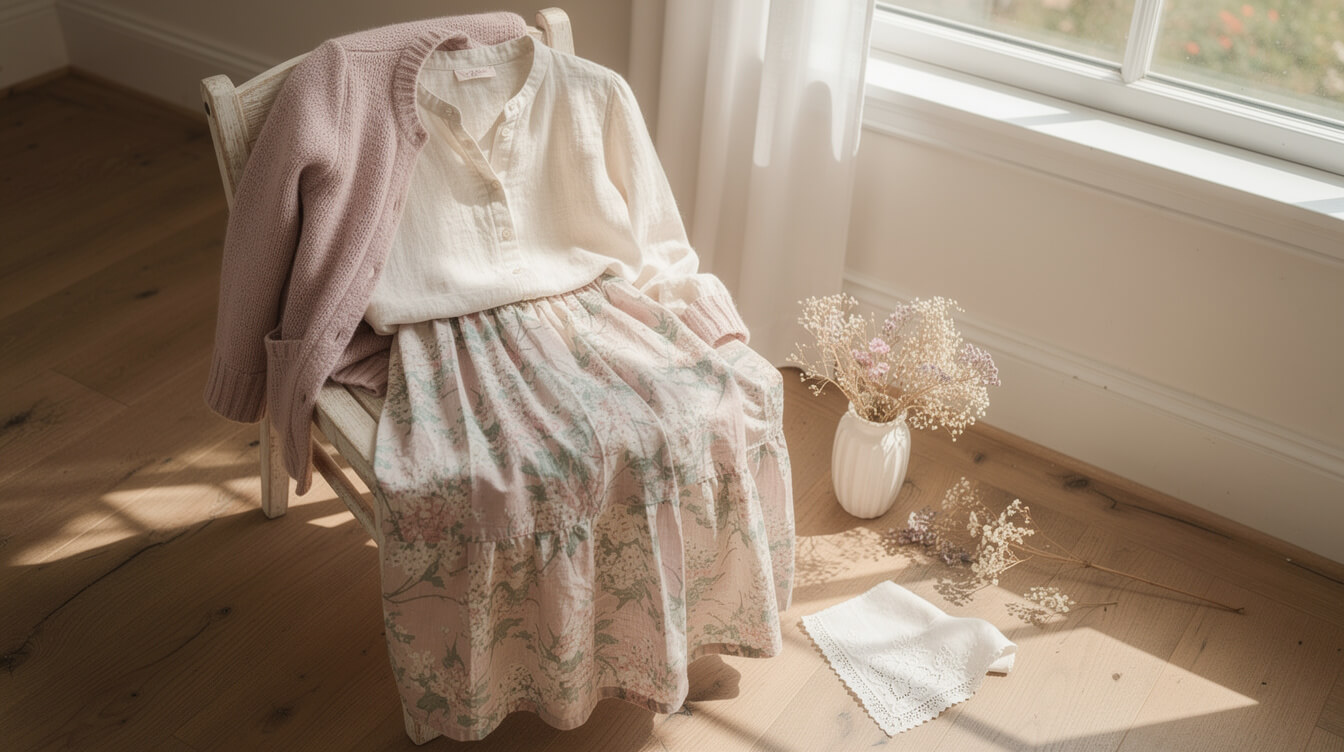
Light layers: a cotton dress with a cardigan over it, or a linen shirt tucked into a simple skirt. Pastel florals feel especially right here, and this is a good season to bring out any delicate embroidery or lace trim you own, since it will not feel too heavy against the warming weather.
Summer
This is cottagecore’s home turf. Breathable linen, short sleeves, bare ankles, a sun hat if you own one and a headscarf if you do not. Keep the palette light and let the fabric do the talking, since summer is when the “made a picnic, then wandered into a meadow” version of the aesthetic really clicks into place.
Autumn
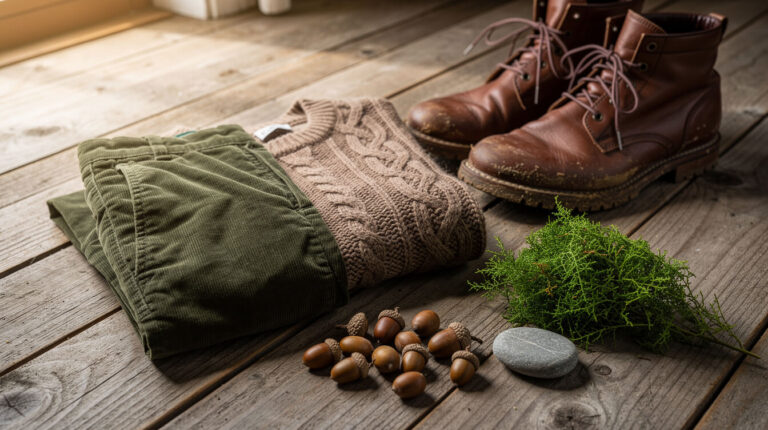
Swap the pastels for rust, mustard, and deep sage, and lean into wool and heavier knits. A chunky cardigan over a simple dress is doing almost all of autumn cottagecore by itself, and this is the season where patchwork and quilted textures earn their keep, layered over a plain base.
Winter
Wool coats, knit sweaters, and thick tights keep the palette going even when linen has to stay in the drawer. Look for wool in the same warm neutrals you have been wearing all year, and the look holds together across the seasonal wardrobe swap. A hand-knit scarf or mittens do a lot of quiet work here too, especially in a color that already exists somewhere else in your closet.
Small cottagecore touches to start with
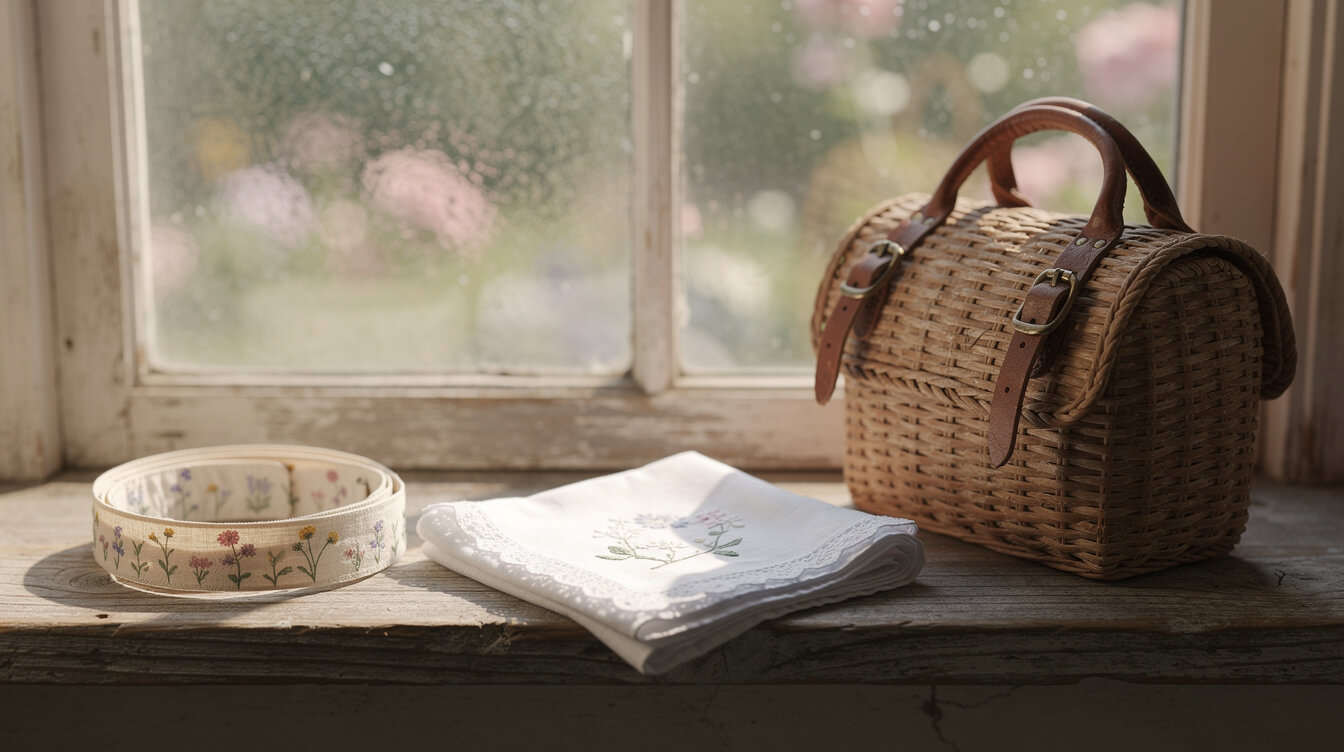
If a full wardrobe overhaul feels like a lot, start smaller. A few accessories can shift an ordinary outfit toward cottagecore without you buying a single new dress.
- A woven or crocheted bag in place of a structured handbag. Our cute tote bag designs guide has some gentle, everyday options if you want a bag that does this quietly rather than shouting about it.
- A headscarf tied back, farmhouse-style, especially in a small gingham or floral print.
- Simple gold or brass jewelry, nothing shiny or modern-looking, ideally something small enough that it reads as inherited rather than bought yesterday.
- A soft round-neck tee with a small, storybook-style print, worn under a cardigan or on its own on a warm day.
- Wool socks with clogs or simple flats, which somehow does more for the vibe than it has any right to.
- A basket bag instead of a tote for grocery runs, if you are ready to fully commit and genuinely do not mind the looks on the subway.
Speaking of soft, storybook-style tees: if you want a piece that leans into the cottagecore mood without asking you to buy anything you would not wear on a normal Wednesday, our Kawaii Prickly Hedgehog Approach With Care T-Shirt hits that exact note: pastel quills, a gentle expression, and a message that fits the whole “soft on the inside, minding my own business in a garden somewhere” energy perfectly.
Frequently asked questions
Is cottagecore clothing the same as vintage clothing?
Not exactly. Vintage means genuinely old, while cottagecore is a modern aesthetic inspired by certain vintage eras. A piece can be brand new and still read as cottagecore if the fabric, color, and silhouette are right, and a genuinely vintage piece can miss the mark entirely if it is the wrong color or fabric.
Can cottagecore clothing be casual or everyday wear?
Yes, and honestly, that is most of what this guide has been arguing. The corset-and-prairie-dress version you see in shop windows is the special-occasion end of the spectrum. The everyday end is a linen shirt and a good cardigan, and most people building a cottagecore wardrobe live almost entirely on that everyday end.
What colors should I avoid for cottagecore outfits?
Neon brights, glossy blacks, and anything with a hard, saturated shine tend to work against the aesthetic. Cottagecore prefers muted and warm over bold and sharp, so when in doubt, ask whether the color looks like it belongs in a garden or a farmhouse kitchen rather than under fluorescent lights.
Do I need to buy new clothes to try cottagecore?
No. Thrift stores are one of the best sources for cottagecore pieces, and you likely already own a few things, like a cream sweater or a floral skirt, that already fit the look without you having to change anything.
Is cottagecore clothing gendered?
Not inherently. While a lot of cottagecore imagery centers dresses, the underlying principles of natural fabric, warm palette, and unhurried silhouette apply just as easily to trousers, button-ups, and knitwear for anyone who wants to try it.
How do I avoid looking like I am in costume?
Mix cottagecore pieces with plain, ordinary basics rather than wearing every cottagecore signal at once. One gingham piece, one linen piece, and one plain neutral piece in an outfit will read as a considered personal style. Five cottagecore signals in one outfit, puffed sleeves and a corset and a basket and a bonnet, will read as a costume, even if every individual piece is lovely on its own.
Final thoughts

Cottagecore clothing is less a shopping list and more a set of instincts: reach for the linen over the polyester, the sage over the neon, the piece with a little texture to it over the perfectly smooth one. Once those instincts click in, you will start noticing cottagecore pieces you already own, and the aesthetic stops being a costume you have to assemble and starts being just how you get dressed. Start with one piece, maybe the cardigan or the round-neck tee, and let the rest of the wardrobe build itself slowly from there. If you are building out the rest of a cottage-leaning life alongside the wardrobe, our cottagecore gift ideas guide is a good next stop for the non-clothing half of the aesthetic.
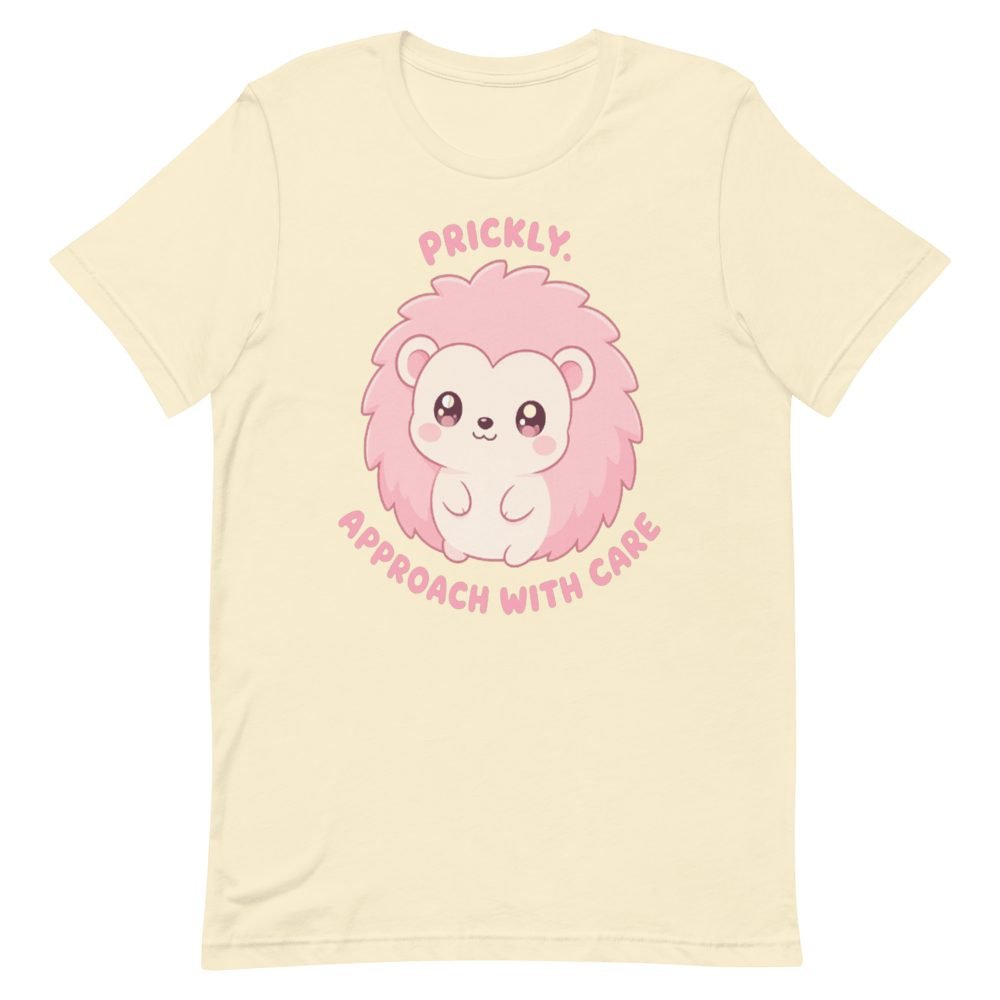
A soft tee for your cottagecore rotation
Pastel quills, a gentle expression, and a message that fits the whole soft-on-the-inside mood. An easy way to add cottagecore charm to an everyday outfit, no corset required.
Before you go
Want the next one in your inbox?
We write something soft every day. The best of it lands in one gentle weekly note, for you or for the friend who needs it.