The cutest jumping spider, and why eight eyes can look so sweet
Somebody once typed “cutest jumping spider breeds” into a search bar, got nothing useful back, and went to a spider forum to say so. We understand the feeling. The cutest jumping spider is a real question with real answers, and most of what turns up is a wall of photos with no names attached. So this is the page we wished existed: which jumping spiders are the sweetest to look at, what they are called, and why a small hunter with eight eyes can make a grown adult say “oh” out loud.
A small note before we start, for anyone who has been nervous about spiders their whole life. Nothing in here is creepy. These are some of the gentlest-looking animals on earth once you see what they are doing, and they are usually far more curious about you than you are about them.
What makes the cutest jumping spider so cute
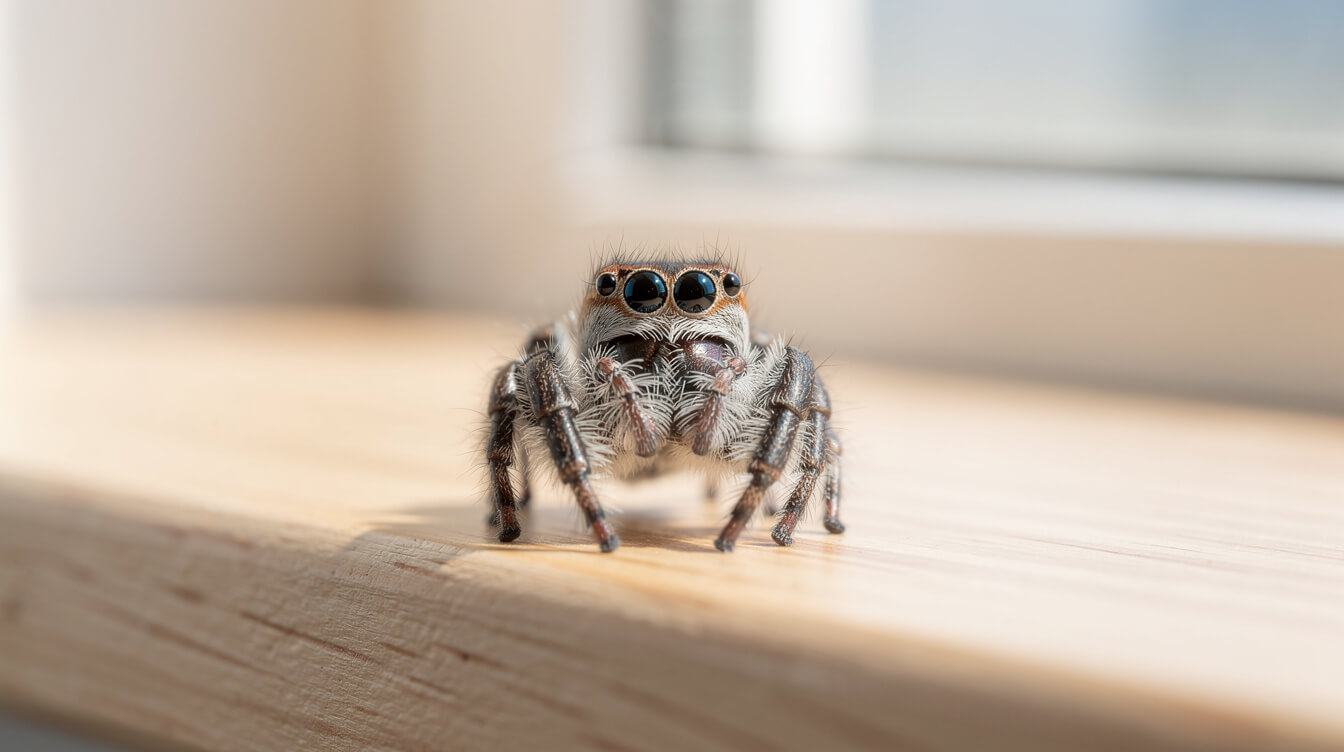
Jumping spiders are their own family, the Salticidae, and it is a big one: roughly 7,000 described species, which makes it the largest spider family in the world, about one in eight of every spider species known. Most are small. Body length runs from about 1 mm to 25 mm, and plenty of the ones you meet on a fence are no longer than a grain of rice is wide. Within all that variety, the cute ones share three things.
A face that is mostly eyes
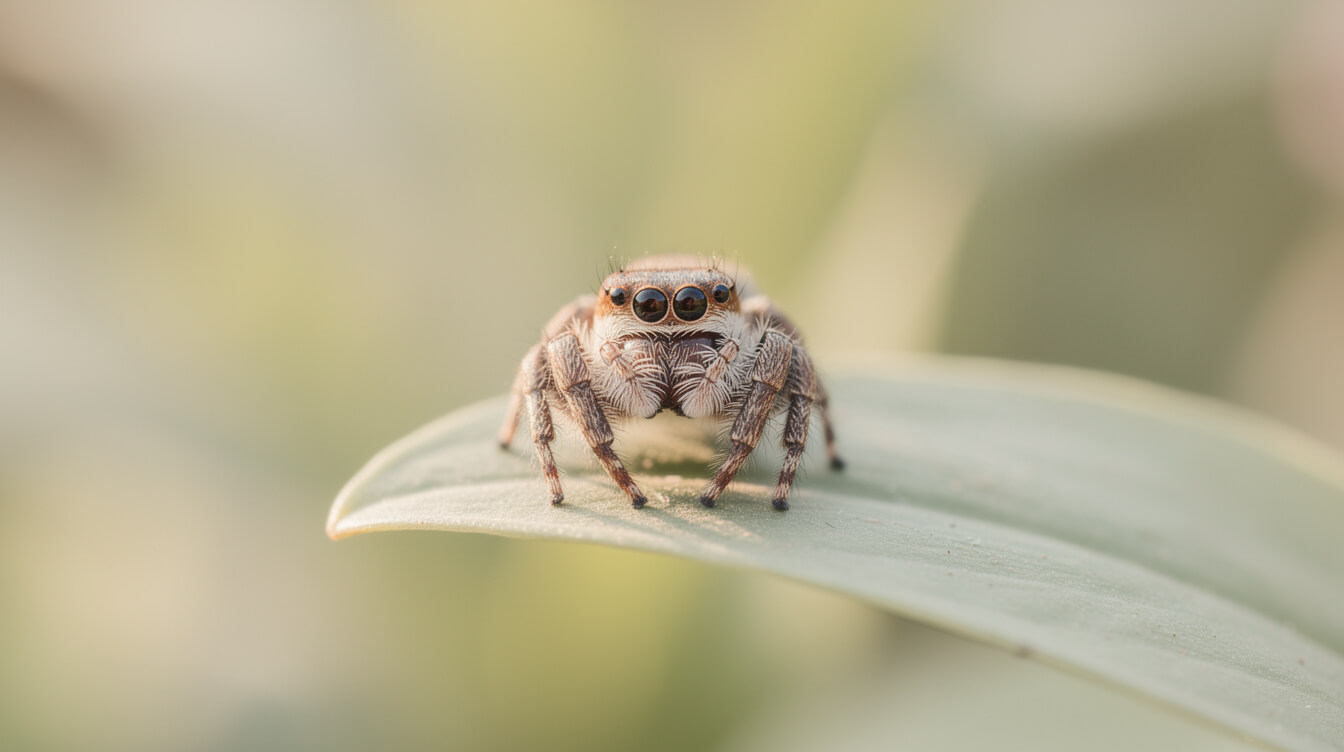
Most spiders have their eyes scattered across the top of the head. Jumping spiders wear theirs on the front, on a flat, squared-off face that points the same way they walk. The middle pair in the front row, called the anterior median eyes, are huge for the size of the animal, and they are the first thing you notice. Big round eyes on a small face is the same proportion our brains go soft for in owlets, kittens, and anything else with a round head. We wrote about that pull, which researchers call baby schema, in our piece on weird cute animals, so we will leave it at this: a jumping spider’s face lands squarely in that zone without trying.
Fuzz
Look closely at a jumping spider and you will see it is covered in fine hairs and scales. Some are pale and soft-looking, some are iridescent, and on a few species they form tiny tufts above the eyes that read like eyebrows. The fuzz rounds off the outline, so instead of the stick-and-joint shape people picture when they hear “spider,” you get something closer to a small, plush pom-pom with legs.
The head turn
This is the part that wins people over. When you move near a jumping spider, it stops, turns its whole body toward you, and looks. Sometimes it tilts upward to get a better angle on your face. It is not a threat display and it is not random. It is a small animal paying close attention, and being noticed by something so small is oddly touching.
The cutest jumping spider species, by name
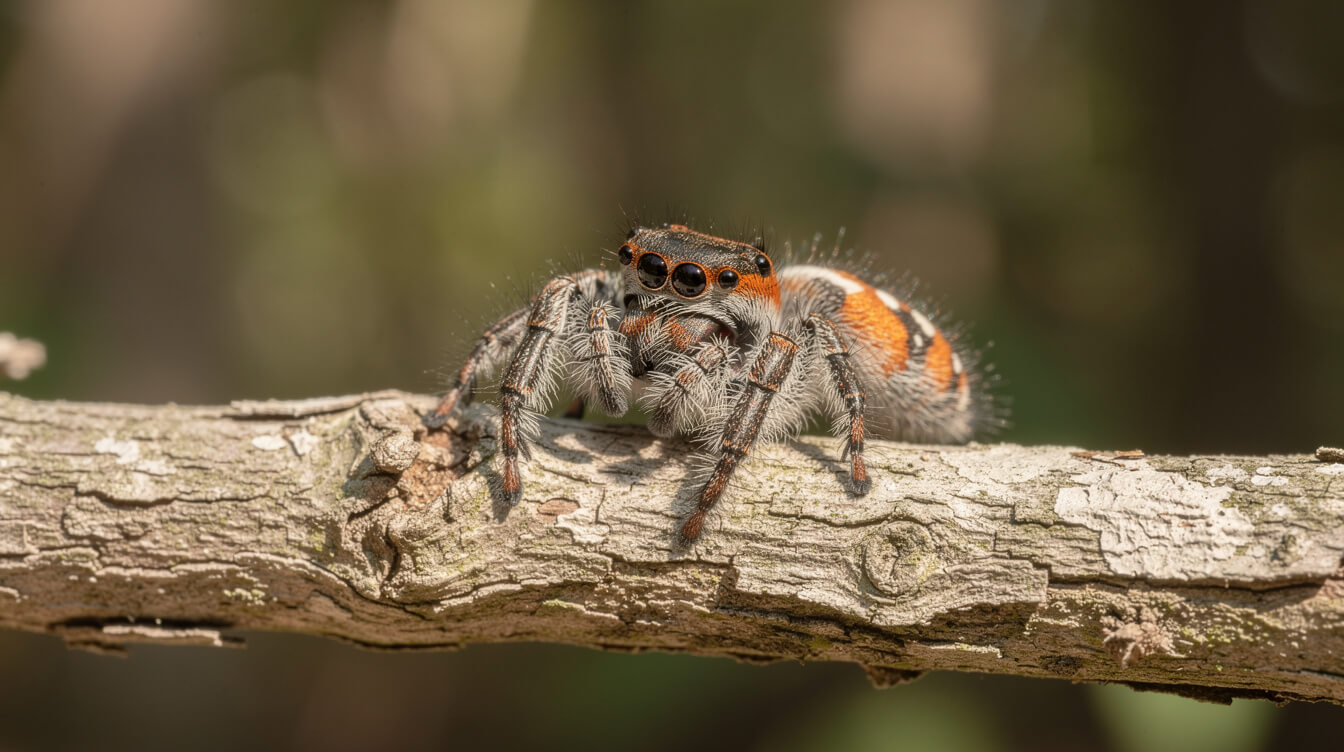
Here is the list we would have wanted that frustrated searcher to find. These are real, named species and genera, with what makes each one charming. Sizes are body length and they are approximate.
Regal jumping spider (Phidippus regius)
The regal jumper is the largest jumping spider in eastern North America, and it is the one many people mean when they say “the cute one.” Females average about 15 mm and can reach 22 mm, and they come in soft oranges, tans, grays, and browns, with small white or orange marks on the back and tufts of hair around the eyes. Males are smaller and crisp black and white, with a fringe of alternating black and white on their front legs. Both sexes have chelicerae (the mouthparts at the front of the face) that shine iridescent green, blue, or violet. You will find regal jumpers in the southeastern United States, most abundantly in Florida, as well as the Bahamas, Bermuda, and the Greater Antilles.
Bold jumper (Phidippus audax)
The bold jumper is black with a big white spot in the middle of its back and two smaller spots below it, plus those same jewel-green chelicerae. It is one of the most common spiders in its range and often lives right alongside people, on porches, fences, and garden plants. The name comes from an early description of the species as “very bold, often jumping on the hand which threatens it.” That sounds alarming until you meet one and realize “bold” mostly means “curious and unbothered.”
Peacock spiders (Maratus)
If you have ever seen a tiny spider raise a rainbow fan and wave its legs like it is at a very small concert, that was a peacock spider. There are more than 100 species, nearly all Australian, and most are only 4 to 5 mm long. The males carry a flap on the abdomen covered in brilliant, often iridescent scales, which they lift and show off during courtship. Some of those blues are not pigment at all. They come from nanostructures in the scales that reflect particular wavelengths of light. The females are plainer and harder to spot, which is a very sensible way to be a 5 mm animal.
Zebra jumper (Salticus scenicus)
This is the jumping spider most people in Europe and northern North America have already met without knowing its name. It is crisp black and white striped, only 5 to 9 mm long, and it loves sunny vertical surfaces: walls, fence posts, window frames. The scientific name is lovely, too. Salticus means “jump,” and scenicus means “theatrical.” A little striped actor, waiting on your windowsill for its cue.
Paradise spiders (Habronattus)
Habronattus is a mostly North American genus of about 100 species, nicknamed paradise spiders after birds-of-paradise, because the males court with colorful faces and legs and genuinely complicated dances. Many jumping spider males also add vibrations to the routine, little buzzes and drumrolls the female feels through the ground. If the peacock spider is a fan dance, Habronattus is a whole musical number.
And one for scale
The largest jumping spider in the world is Hyllus giganteus, which is still only around 25 mm long. “Giant,” in jumping spider terms, is roughly the size of a large grape.
Which one is the cutest jumping spider? Honestly, it depends on your taste. Regal females win on fluff and color, peacock spiders win on spectacle, and the zebra jumper wins on being the one you can actually go out and find this afternoon.
Why a jumping spider looks right at you
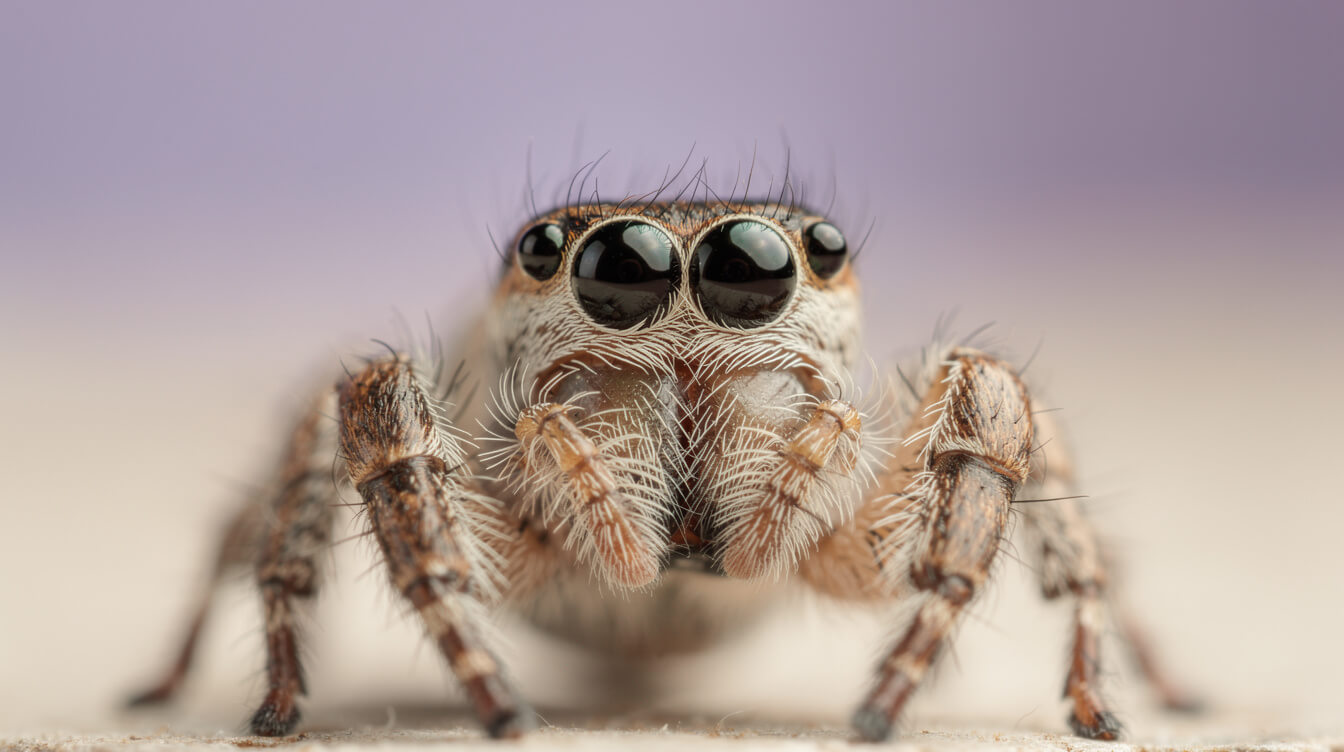
All jumping spiders have eight eyes in four pairs, and they divide the work the way a good team does. The eyes on the sides and back of the head are wide-angle motion detectors. Together they give the spider a nearly 360 degree view of the world, so it notices you moving long before you notice it.
The big front pair are the specialists. Each one is built like a small telescope, a tube with a lens at the front and a second lens behind it, focusing onto a narrow strip of retina. That gives them very sharp vision, some of the best of any arthropod, with color vision that likely reaches into ultraviolet. The tradeoff is a tiny field of view, only a few degrees wide. So when the side eyes catch movement, the spider has to turn its body to bring those front eyes to bear. That turn is the “look” that charms everyone. It is the spider pointing its best eyes at you so it can figure out what you are.
There is one more detail we love. The lenses of those front eyes are fixed to the shell, so to look around, the spider moves the retina inside the eye instead. In species with a translucent shell, you can sometimes watch the dark of the eyes shift and change as the spider shifts its attention. It looks a lot like the spider is thinking. In a small way, it is.
There is a lot more to say about jumping spider eyes, and we will give them a whole post of their own soon. For now, the short version is that the cute stare is real attention, not a trick of the light.
Spood, boops, and the small internet that loves them
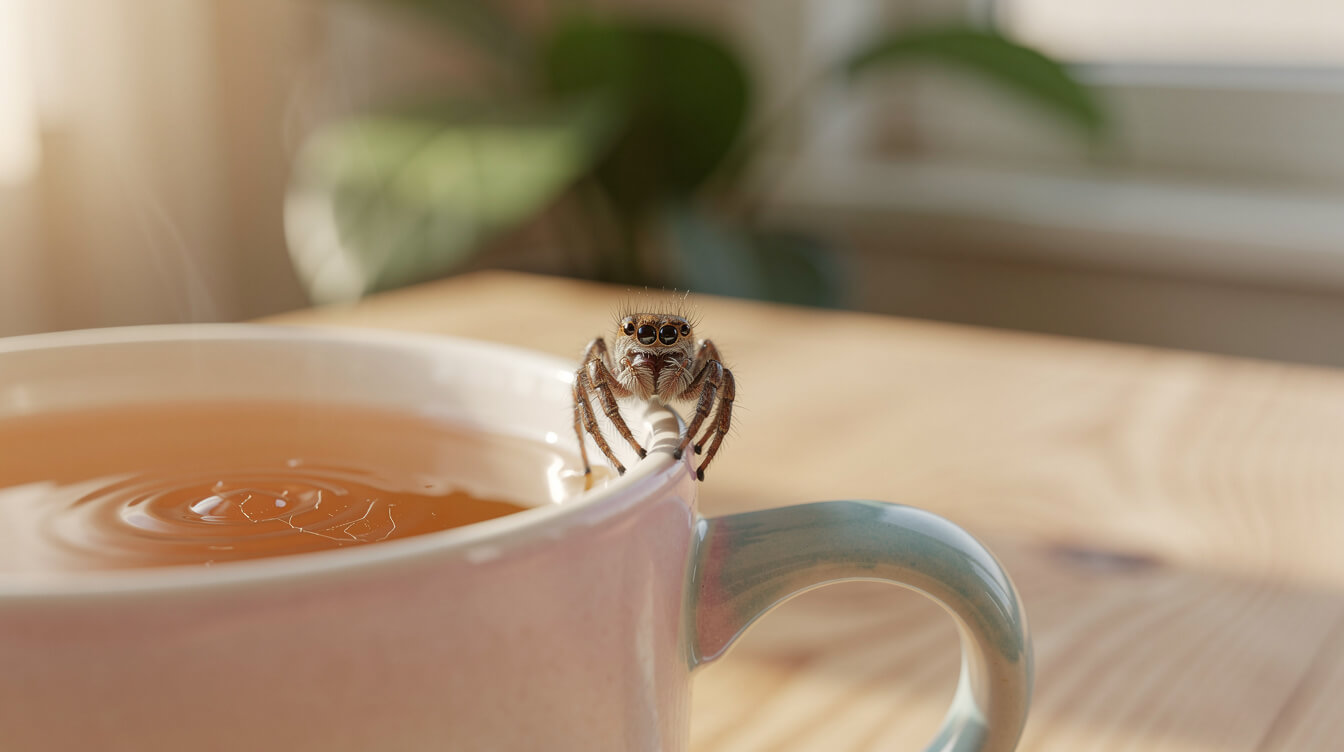
Spend five minutes in the corners of the internet where jumping spider people gather and you will learn a new vocabulary. A jumping spider is a “spood.” Touching one gently on the head, which you should not do to wild ones, is a “boop.” A photo of one staring into the lens gets captioned with something like “he is thinking about you,” and thousands of people agree.
We think the reason this little culture took off is the same reason the spiders are cute in the first place. Most people grow up being taught to fear spiders. Then one day they see a fuzzy face with two shiny eyes looking up at them, and the fear has nowhere to go. What is left is surprise, then fondness. It is the same creepy-cute turn we described in our guide to what kawaii means, where an animal people flinch at becomes, once you look closer, one of the sweetest things you have seen all week.
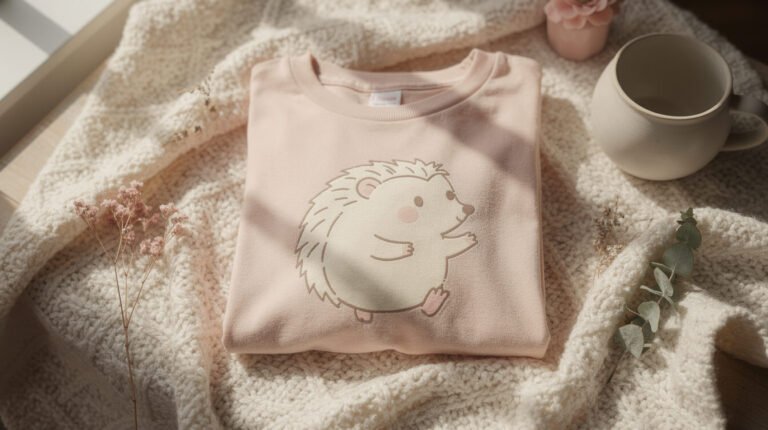
That is the whole idea behind our Eight Eyes All On You Cute Jumping Spider T-Shirt. It is a round, rosy-pink jumping spider with big glossy eyes and a few small hearts, drawn the way spood people already see them. It is for the friend who stops to say hello to the spider on the porch railing, and for anyone who has been converted.
The community has also become a gentle on-ramp for the spider-averse. If you know someone who is afraid of spiders but curious, a jumping spider is the right place to start. They do not sit in dark webs. They are out in the daylight, hunting and looking around, and they move in small, deliberate steps and hops instead of the sudden scuttle people dread. A lot of former arachnophobes will tell you a jumping spider was their first friendly spider.
The cutemerch letter
A small good thing, once a week
One short, kind email with our coziest posts and new round animals from the shop. No spam. Unsubscribe anytime.
Loving them without collecting them
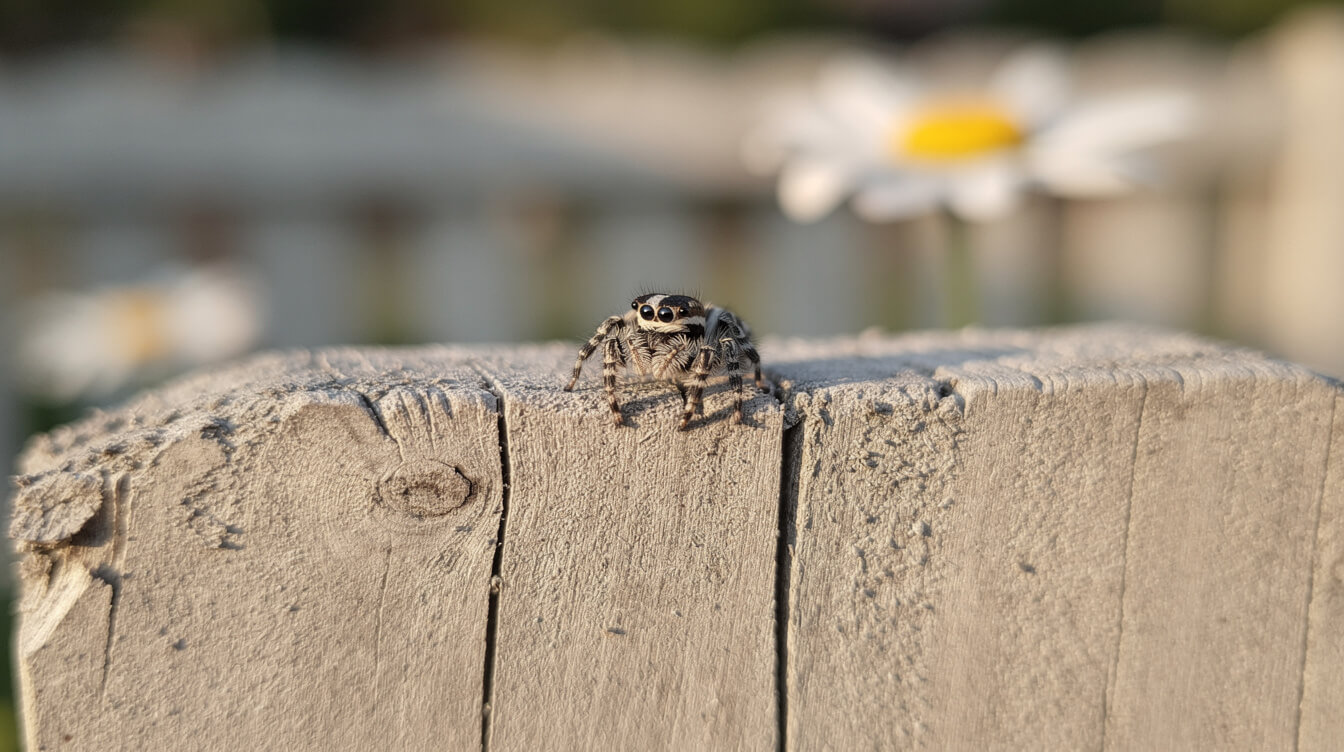
Here is the gentle part. When something is this cute, the first instinct is to want one. Regal and bold jumpers are now sold in pet stores across the US, and keeping one is a big, specific commitment that deserves its own careful research. This is not that guide. What we want to offer instead is the version of loving jumping spiders that anyone can do today, for free, without taking anything out of the garden.
Where to look
Jumping spiders hunt by sight, so they are out in the daytime, usually somewhere sunny. Check sunlit walls, fence posts, deck railings, window frames, and the tops of leaves on a warm afternoon. Zebra jumpers love walls and windowsills. Bold jumpers turn up on porches, garden plants, and tall grass. You are looking for a small, compact spider that walks in short stops and starts, then pauses to look around.
How to say hello
- Move slowly. Those side eyes are motion detectors, and a sudden hand looks like a predator.
- Get low and wait. If you stay still, a jumping spider will often turn to look at you. That is the moment everyone is waiting for.
- Bring a phone, not a jar. A photo lets you keep the moment and leave the spider where it lives, eating the small insects your garden would rather not have.
- Do not boop the wild ones. Handling stresses them, and they can fall. Watching is the whole gift.
Learn their names
If you get a good photo, upload it to a community science platform like iNaturalist, where people who know spiders well will help you identify it. Your observation also becomes a small data point that helps researchers understand where species live. It is the same spirit we hoped for in our post on what a quokka is: the best way to love a cute animal is usually to see it clearly and let it be.
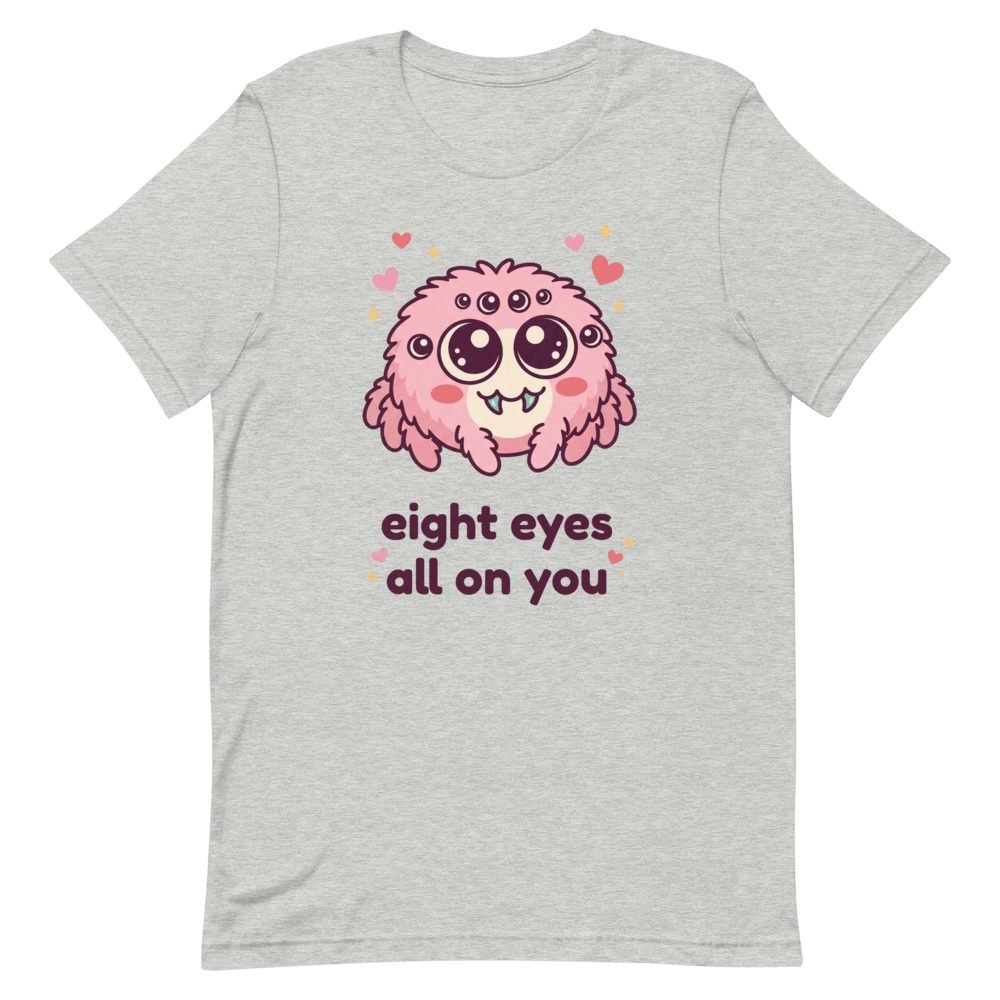
Eight eyes, all on you
A round, rosy-pink jumping spider with big glossy eyes and a few small hearts, printed on soft heather grey cotton. For the person who says hello to the spider on the windowsill, and the friend they finally converted.
Frequently asked questions about the cutest jumping spider
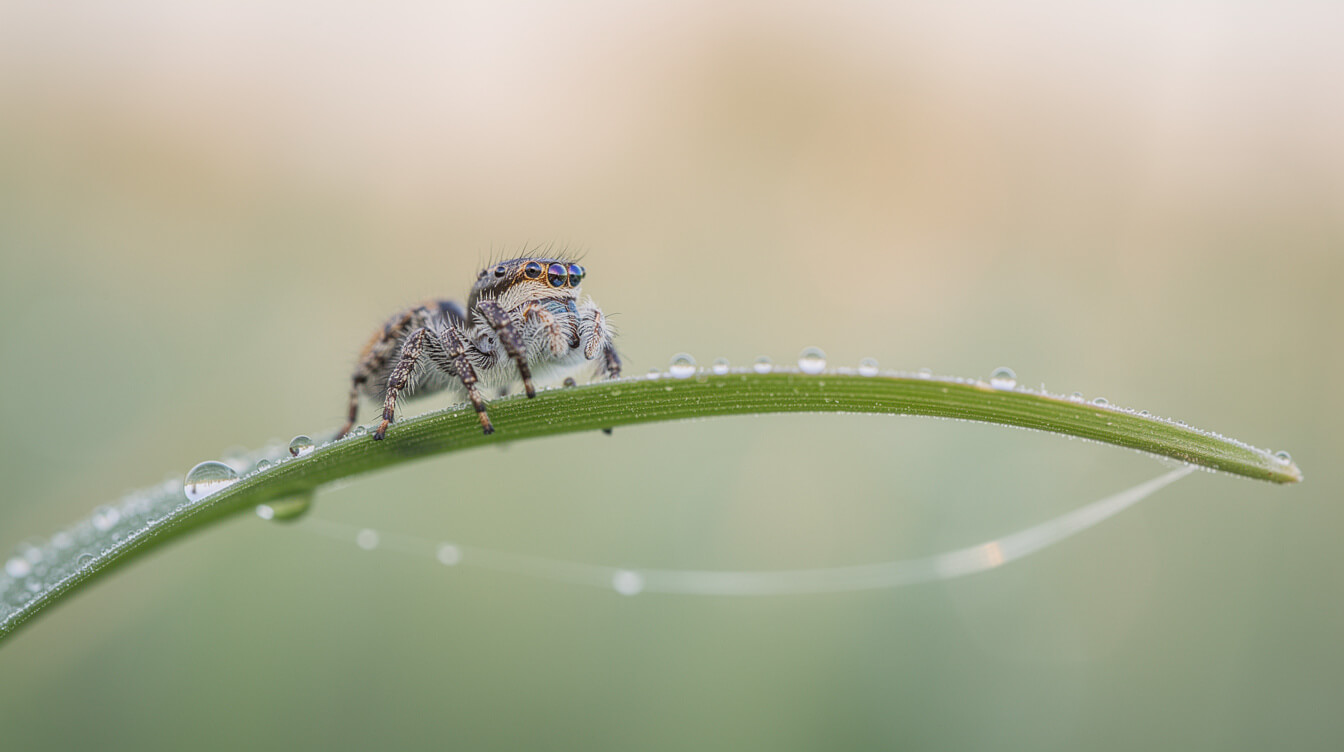
What is the cutest spider in the world?
There is no official ranking, but jumping spiders win most people’s vote, because of the big front eyes, the fuzz, and the way they turn to look at you. Within the family, the regal jumping spider, the peacock spiders of Australia, and the bold jumper are the names that come up most often.
What is the best jumping spider to have as a pet?
In the US, the regal jumper and the bold jumper are the species most often kept, and both are now sold in chain pet stores. Keeping any animal well takes real research into its specific needs, so if you are considering it, start with species-specific care sources. If you simply love them, watching the wild ones in your own garden is a lovely and much easier way in.
Are jumping spiders rare?
Not at all. Jumping spiders are the largest spider family on earth, with around 7,000 described species, and they live in tropical forests, temperate woods, grasslands, deserts, and even on city walls. The bold jumper is one of the most commonly seen spiders in its range. Some individual species are rare or very local, but as a group, there is probably one within a short walk of you right now.
Will a jumping spider bite you?
Very rarely, and almost always only if it is grabbed, squeezed, or feels trapped. Jumping spiders do have venom, which they use to subdue insects, but they are considered harmless to people. When a bite does happen, it is usually mild, though larger species like the regal jumper have occasionally caused a painful, bee-sting-like reaction in sensitive people. The easy answer is the kind one anyway: watch them, photograph them, and let them be. We will go deeper on their temperament in an upcoming post on whether jumping spiders are friendly.
Why do they jump instead of running?
Jumping is how they hunt, travel, and escape. Instead of big muscular legs like a grasshopper, they use a hydraulic trick, quickly raising the fluid pressure in their legs to snap them straight. Before most jumps they attach a silk safety line, so if they miss, they can climb back up. One species, Colonus puerperus, has been measured jumping 38 times its own body length.
Final thoughts
The cutest jumping spider might be a fluffy orange regal jumper in Florida, a peacock spider dancing in Australia, or a small striped zebra jumper on your own kitchen windowsill. What they share is a face built for paying attention, and that is what makes them so easy to love. When a jumping spider turns and looks up at you, it really is looking.
If spiders have been on your no list for a long time, we hope this nudges the door open a little. And if you already love them, we hope you learned a few new names. If you are collecting small cute animals people tend to overlook, our pages on cute frogs and soft, not scary Halloween shirts are good next stops. Go find a sunny wall this week, stand very still, and see who turns to look.
Before you go
Want the next one in your inbox?
We write something soft every day. The best of it lands in one gentle weekly note, for you or for the friend who needs it.