
Are jumping spiders friendly? What that curious little look really means
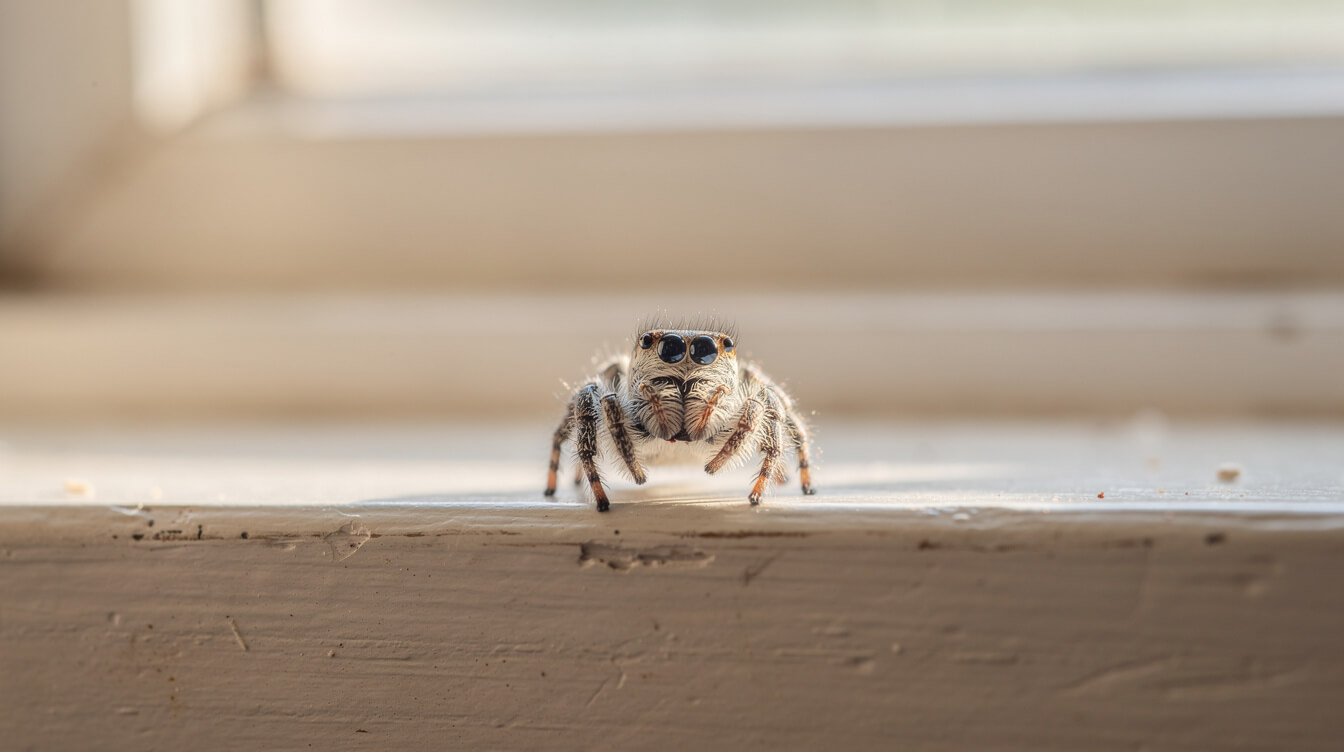
You are rinsing a mug at the kitchen sink when something small hops onto the window frame, turns, and looks straight at you. Most people’s next thought is a question, and it is usually this one: are jumping spiders friendly? The honest answer is warmer and more interesting than a simple yes. A jumping spider is not friendly the way a dog is friendly. It is curious, careful, and almost never interested in hurting you, and that turns out to be its own kind of sweet.
Most of what turns up on this question is written by people who would like you to keep one as a pet, so the answer tends to be a cheerful yes and a shopping list. This page is for everyone else: the person who just met one on a windowsill and wants to know what it is thinking, whether it bites, and what to do if it lands on a sleeve. We have kept every claim to what researchers and extension scientists have actually found, and we have cut anything we could not source.
Are jumping spiders friendly? The short, honest answer
When we call an animal friendly, we usually mean it seeks us out. A friendly dog comes to the door. A friendly cat climbs into your lap. It wants your company, and it is happier with you than without you.
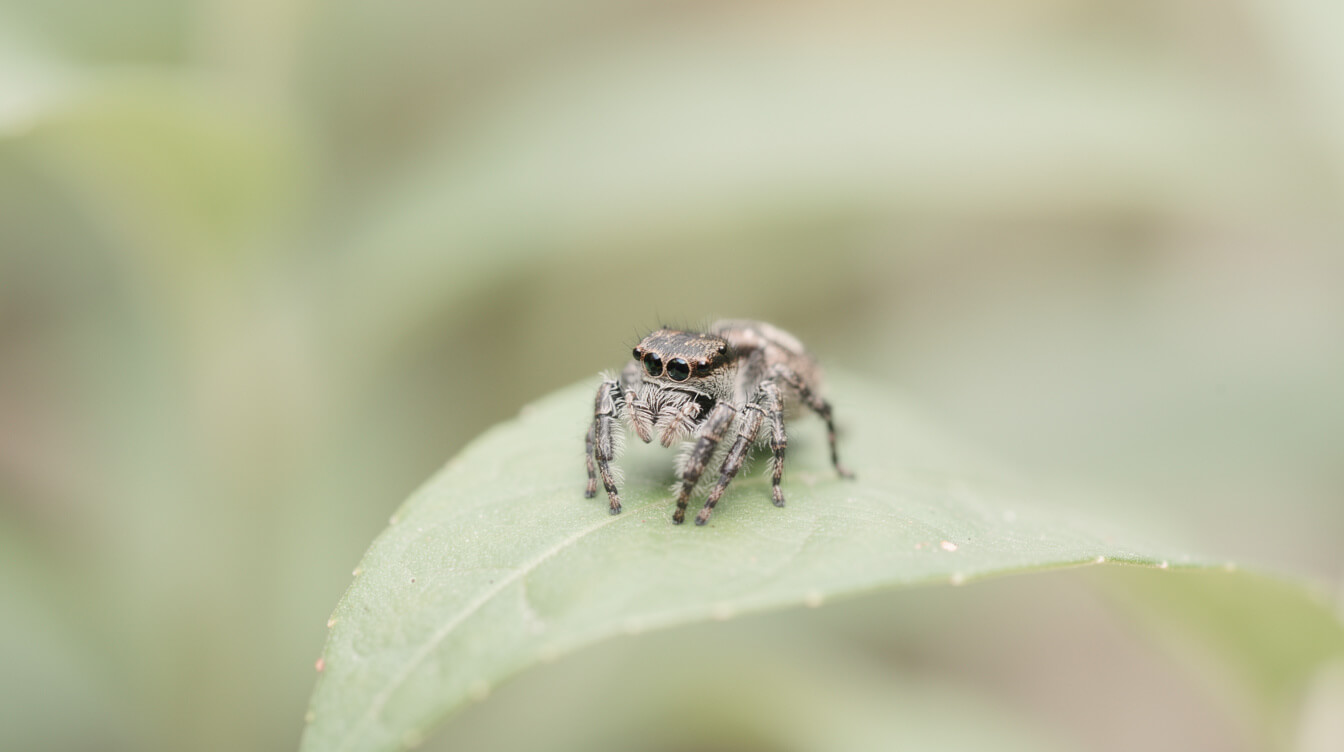
Jumping spiders do not work like that. They are solitary hunters, they spend their days stalking small insects in the sun, and there is no good evidence that a jumping spider seeks out human company or forms an attachment to a particular person. If one walks toward you, it is exploring a large new surface, not coming over to say hello.
But they are not unfriendly either, and this is the part that gets lost. Penn State Extension describes the common bold jumper as a shy spider that retreats from people when approached and generally does not bite even when handled. That is a remarkably gentle profile for a predator. Its whole strategy around something as large as you is to notice you early, look carefully, and leave if it needs to.
The better word is curious
What people read as friendliness is really attention. A jumping spider does not flee the moment you appear, the way many spiders do. It stops, turns to face you, and looks. Sometimes it tilts up for a better angle on your face. Sometimes it takes a few small steps closer before deciding you are not interesting after all. To a person who grew up being told spiders are scary, being calmly inspected by one feels like being greeted.
Individual spiders also differ. Researchers who study jumping spider behavior have measured consistent differences in boldness and exploration between individuals of the same species, so one spider on your windowsill may hold its ground and stare, while another slips behind the frame the moment you lean in. Neither one is being rude. They just have different temperaments.
So, are jumping spiders friendly? Not in the pet-mammal sense. They are curious, gentle, and very rarely a problem, and the kindest thing you can do in return is let them get on with their day.
Why a jumping spider looks at you, and what it is deciding
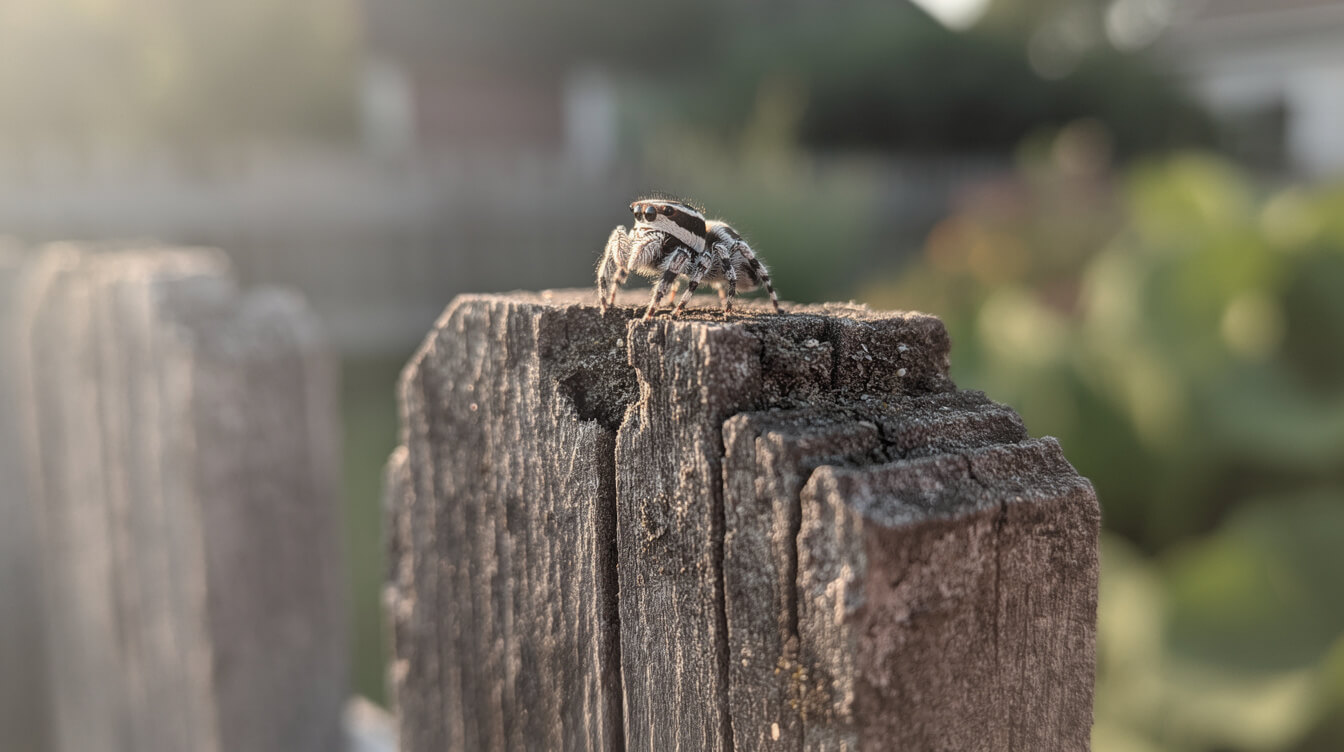
We walked through how those remarkable eyes work in our post on the cutest jumping spider, so here is the short version. The small eyes on the sides of the head catch movement almost all the way around. The big front pair see sharply, but only across a narrow window. When the side eyes spot you, the spider has to turn its whole body to bring the sharp eyes to bear. That turn is the look.
The more interesting question is what happens after the look. A jumping spider meeting something new is quietly sorting it into a few rough boxes: food, danger, another jumping spider, or nothing worth worrying about. You are far too big to be food. So most of what it is working out, while it stares at you, is whether you are a threat and what to do about it.
It can tell you are alive
There is lovely evidence that jumping spiders pay special attention to living things. In a 2021 study in PLOS Biology, Massimo De Agrò and colleagues showed jumping spiders of the species Menemerus semilimbatus simple animations made of moving dots, some arranged to move like the joints of a walking animal and some moving in ways no animal would. The spiders, held in place over a small air-supported ball so their steps could be tracked, turned to face these displays and responded differently to them. It was the first time this kind of biological motion perception had been reported in an invertebrate. It means that when a jumping spider turns toward you, it is very likely registering you as something alive and moving, not just a shape.
What usually happens next
After a moment of looking, most jumping spiders do one of three things. They carry on hunting, having decided you are scenery. They back away or hop to the other side of a leaf or a window frame. Or, if they are a bolder individual, they come a little closer to investigate. That last one is the moment people describe as friendly, and it is lovely to witness. It is a small animal gathering information about the biggest thing in its world.
We are very good at reading feelings into animal faces, which is part of why we love them. We wrote about that habit in our posts on the quokka’s smile and why hedgehogs look grumpy. The jumping spider is an unusual case because the look really is attention. It is not affection, but it is real, and being noticed by something so small is a good thing to feel.
Do jumping spiders bite, and are they dangerous to people?
Here is the clear version, because this is the question behind the question for a lot of people. Jumping spiders do have venom. They use it to subdue the insects they catch, so they are venomous animals, and it would be wrong to tell you otherwise. But they are considered harmless to people, and bites are rare.
The University of Michigan’s Animal Diversity Web puts it plainly for the bold jumper: the species is venomous, but the bite is not dangerous to humans. It notes that bold jumpers may bite in self-defense if grabbed or pressed, that this is very rare, and that bites are usually asymptomatic to slightly painful. Penn State Extension adds that when a bite does happen, minor pain, itching, swelling, and redness may last one to two days.
When bites actually happen
Almost every jumping spider bite has the same story behind it: the spider was squeezed. It was grabbed between two fingers, pressed against skin inside a sleeve or a glove, or trapped under a hand that came down without looking. For an animal that small, a fight with something your size is all risk and no reward. Biting is the last thing it tries, not the first.
People who handle many jumping spiders, including the hobbyist keepers who rank on this very question, describe the occasional bite as a pinprick. Larger species can give a sharper pinch than the tiny wall spiders most of us meet. As with any bite or sting, wash the spot with soap and water, and see a doctor if you notice signs of an allergic reaction or a wound that gets worse instead of better over the next few days.
The easy way to never be bitten
Do not squeeze them. That is truly the whole rule. If you never close your hand around a jumping spider and never swat one that has landed on you, the chance of a bite drops to almost nothing. Which brings us to the most common jumping spider encounter of all.
What to do when a jumping spider lands on you
Jumping spiders travel by jumping, and from their point of view a person is a large, warm, interesting surface to cross. Before most jumps they attach a silk safety line, so landing on your arm is not an attack and not a mistake. It is just the route.
If one lands on you, here is the calm, kind version:
- Hold still for a moment. Sudden movement looks like a predator, and a startled spider is more likely to leap somewhere awkward, like the inside of a collar.
- Do not slap or swat. Pressing a spider against your skin is exactly how the rare bite happens.
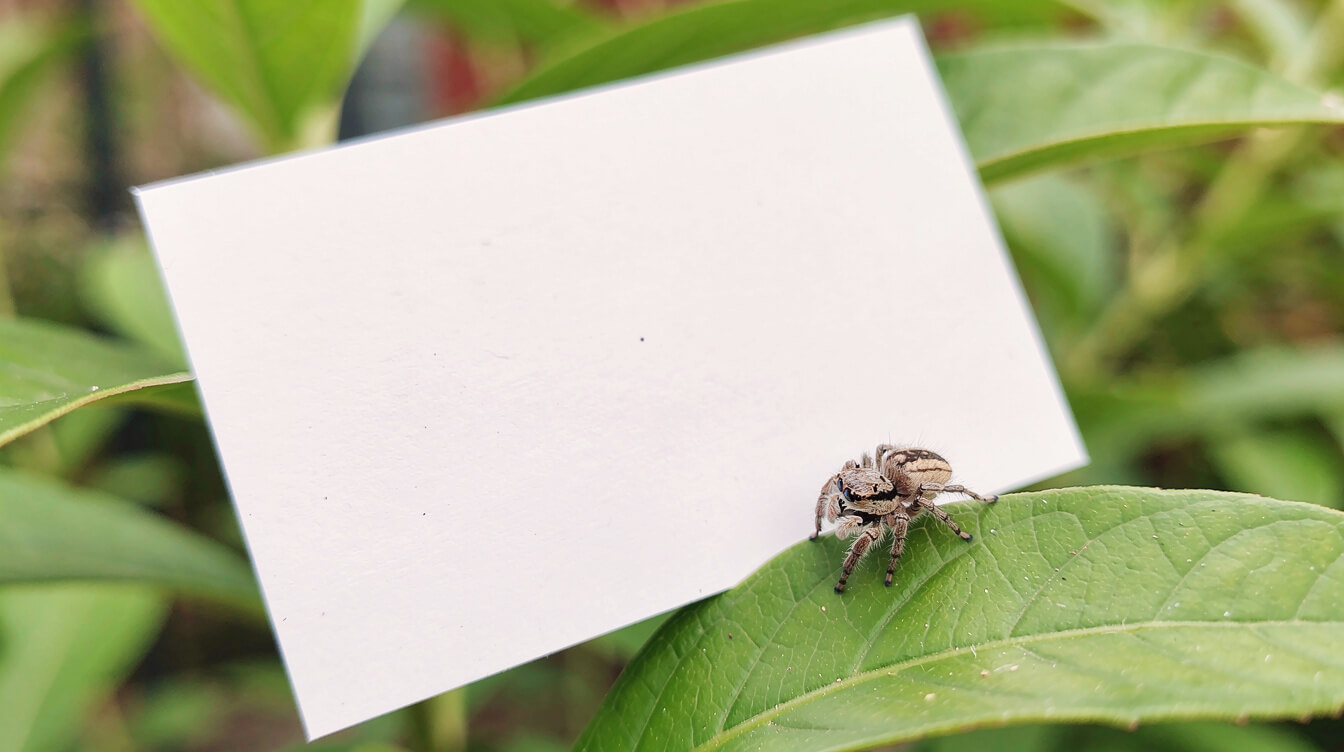
- Offer it a ramp. Hold your other hand flat, or a piece of paper or an index card, just in front of where it is walking. Jumping spiders tend to keep moving forward, and most will step or hop on within a few seconds.
- Set it down nearby. Put it back where it came from, on a plant, a wall, or a window frame, rather than somewhere new and exposed like the middle of a lawn.
Why you may see more of them this time of year
In autumn, a jumping spider on the window frame is a common sight. In colder places, young jumping spiders look for a sheltered spot to rest over winter. The Animal Diversity Web notes that bold jumper juveniles seek out protected refuges and go dormant where temperatures drop near freezing. A window frame, a door hinge, or a gap in siding can look like a perfect little cabin. If one has settled in, it is not looking for you. It is looking for somewhere to wait for spring.
Please do not keep a wild one in a jar to watch. They need to hunt, and a spider that would happily have spent the season eating gnats around your windows does not do well in a container. If you want a closer look, a phone camera does the job without costing the spider anything, and we gave a few gentle tips for that in our post on the cutest jumping spider.
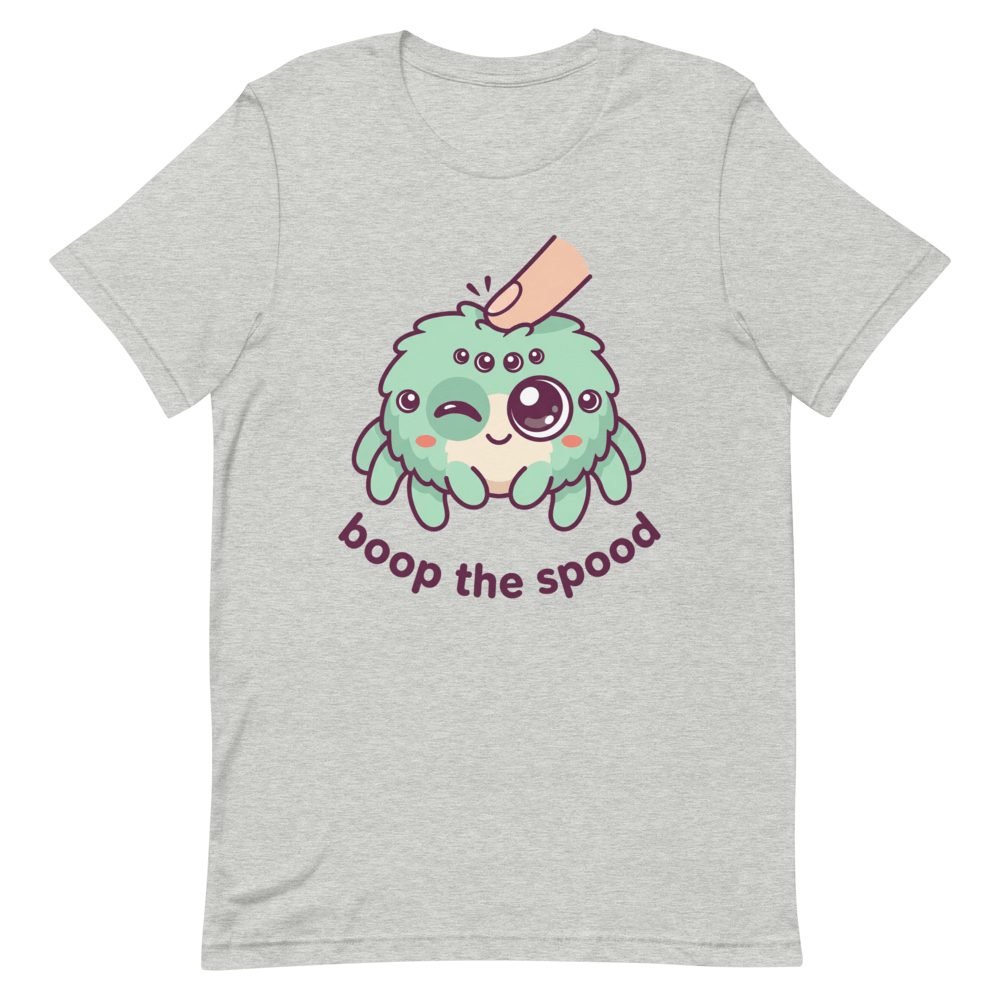
And about the boop. A boop is the internet’s word for a gentle tap on a jumping spider’s head, and it is very cute in a photo. It is also not something the wild ones enjoy, so we leave them unbooped. That is half the reason we love our Boop the Spood Cute Jumping Spider T-Shirt. It is the one boop that costs a spider nothing.
The cutemerch letter
A small good thing, once a week
One short, kind email with our coziest posts and new round animals from the shop. No spam. Unsubscribe anytime.
The small surprising science of a curious spider
Part of why jumping spiders feel like small persons is that the research keeps backing up the feeling. Here are three findings we found genuinely moving, each one sourced to the people who did the work.
They plan routes, even when they lose sight of the goal
Spiders in the jumping spider genus Portia are specialist hunters of other spiders, which is less adorable, but they are famous among biologists for their patience. In experiments by Michael Tarsitano and Robert Jackson published in 1997, Portia spiders looked at prey from a distance and then chose between two detour routes, only one of which actually led to the target. They picked correctly, even though the prey went out of view during the journey. A brain far smaller than a grain of rice was, in some practical sense, holding a plan. You can read more about this line of research in Knowable Magazine’s piece on spider intelligence.
They seem to have a sleep state that looks like ours
This is our favorite. In 2022, biologist Daniela Rößler and colleagues published a study in PNAS in which they filmed 34 newly emerged jumping spiders of the species Evarcha arcuata overnight with infrared cameras. Young spiders of this species have not yet pigmented their shells, so the researchers could actually see the retinas moving inside the eyes. They found regular bouts of retinal movement, accompanied by leg curling and small twitches, and the bouts got longer as the night went on. That pattern resembles the REM sleep we see in mammals and birds. The scientists are careful to call it a REM-like state, and nobody can say whether a spider dreams. But the University of Konstanz’s account of the work, which asks whether jumping spiders can dream, is a lovely read, and so is National Geographic’s write-up.
They get used to things
Habituation is the simple, important skill of learning that something repeated is not a threat. A study on Menemerus semilimbatus published in Animal Behaviour showed jumping spiders the same visual stimulus again and again and found that they stopped reacting to it, and that this happened whether an individual was bold or shy. It is the closest thing the science offers to a spider getting used to you. A spider that lives on your porch and sees you every morning may well stop treating you as an emergency. That is not friendship, but it is a quiet kind of peace, and we think it counts for something.
The boop you can actually give
A chubby mint-green jumping spider with rosy cheeks, getting the gentlest tap on the head. For the friend who says hello to the spider on the windowsill and knows to let the real ones be.
Are jumping spiders friendly to the people who keep them? Common questions
Do jumping spiders bond with their owners?
There is no evidence that jumping spiders bond with people the way dogs, cats, or parrots do. What keepers often describe is a spider that becomes calm around them, explores a hand without fuss, and stops hiding when they approach. That is real, and the habituation research above helps explain it. It is familiarity, a spider learning that you are not a threat, rather than affection as far as anyone has been able to show. You can enjoy it fully without needing it to be more than it is.
Are jumping spiders harmless?
To people, yes, in every practical sense. They are venomous animals, because venom is how they subdue insects, but extension scientists describe the bite as not dangerous to humans and bites as rare. Do not squeeze them and you are very unlikely to ever be bitten.
How long do jumping spiders live?
For many common species, about a year in the wild, with some living longer. Penn State Extension describes the bold jumper’s year neatly: eggs are laid in early summer, the young spiders overwinter nearly grown, then mature in April and May, mate, and lay the next generation’s eggs. A spider you meet on the window frame in October may well be the one laying eggs next June.
How do jumping spiders see humans?
Probably not all at once. You are enormous compared to the narrow, sharp window of their front eyes, so a jumping spider likely takes you in piece by piece, scanning across your shape while its side eyes keep track of any movement. They see color, and the sharp front eyes give them some of the best vision of any small animal. The fuller story of those eyes is in our post on the cutest jumping spider.
Should I move a jumping spider outside?
You do not have to. An indoor jumping spider eats small flying insects and does no harm. If you would rather it lived outdoors, carry it on a card to a sheltered spot nearby, like a shrub or a wall, especially in cold weather.
Final thoughts
So, are jumping spiders friendly? Not in the way we usually mean it. They will not miss you when you leave the room, and they are not looking for a lap. What they offer is something rarer: a small, wild animal that looks at you with real attention, decides you are fine, and goes back to its sunny little life without a fuss.
We think that is worth being friendly back to. Watch them. Photograph them if you like. Offer a card instead of a swat, and leave the window-frame spiders to their winter plans. If you have a soft spot for the creatures most people overlook, our guide to weird cute animals is a good next stop. And the next time something small hops onto the windowsill and turns to look at you, you will know what it is doing. It is paying attention, and so, now, are you.
Before you go
Want the next one in your inbox?
We write something soft every day. The best of it lands in one gentle weekly note, for you or for the friend who needs it.