
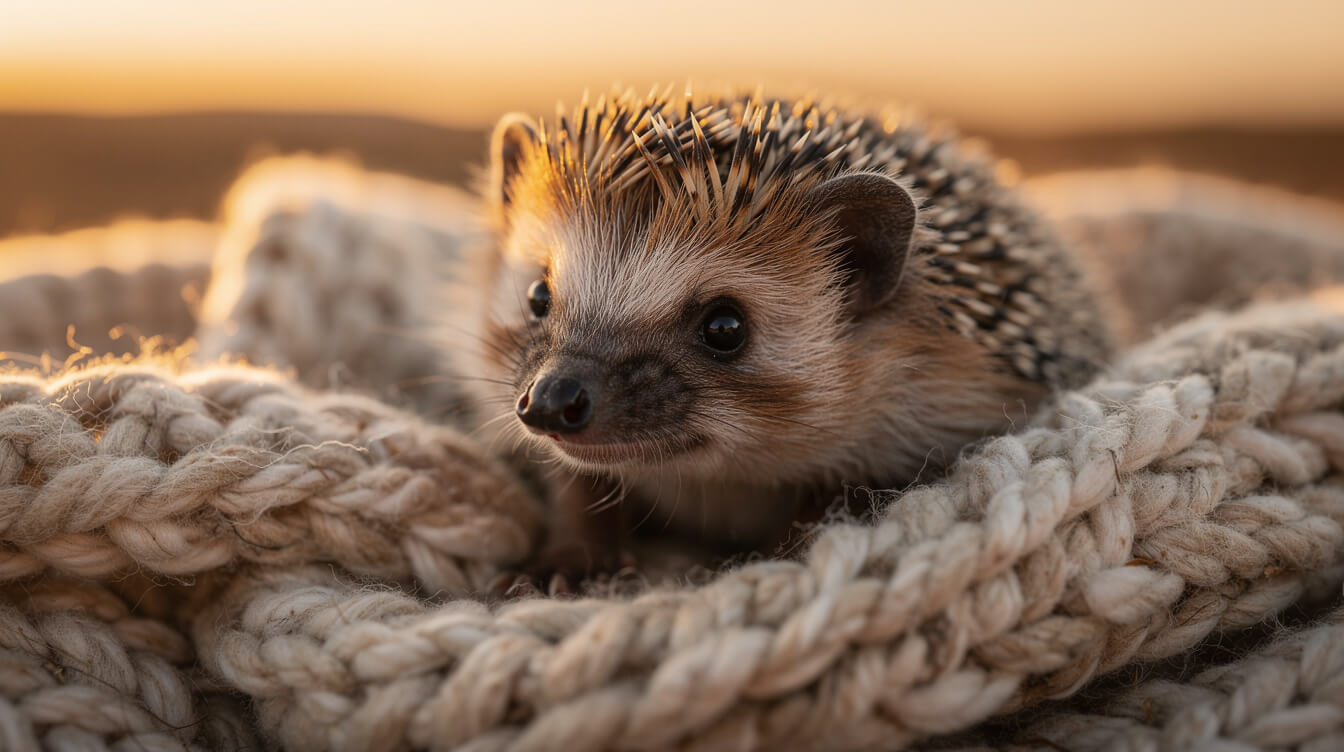
Why Hedgehogs Always Look a Little Grumpy (and Other Things Worth Knowing)
Look at almost any photo of a hedgehog and you will notice the same expression: a tiny, unimpressed squint, like it just found out the price of something it already regretted buying. That is not a coincidence, and it is not really an attitude either. There is a real, physical reason why hedgehogs look grumpy, and it has nothing to do with mood. Once you know it, you will never see a hedgehog face the same way again, and you may start to notice how much of what reads as bad temper in a small round animal is actually just the honest shape of its skull.
Why hedgehogs always look a little grumpy
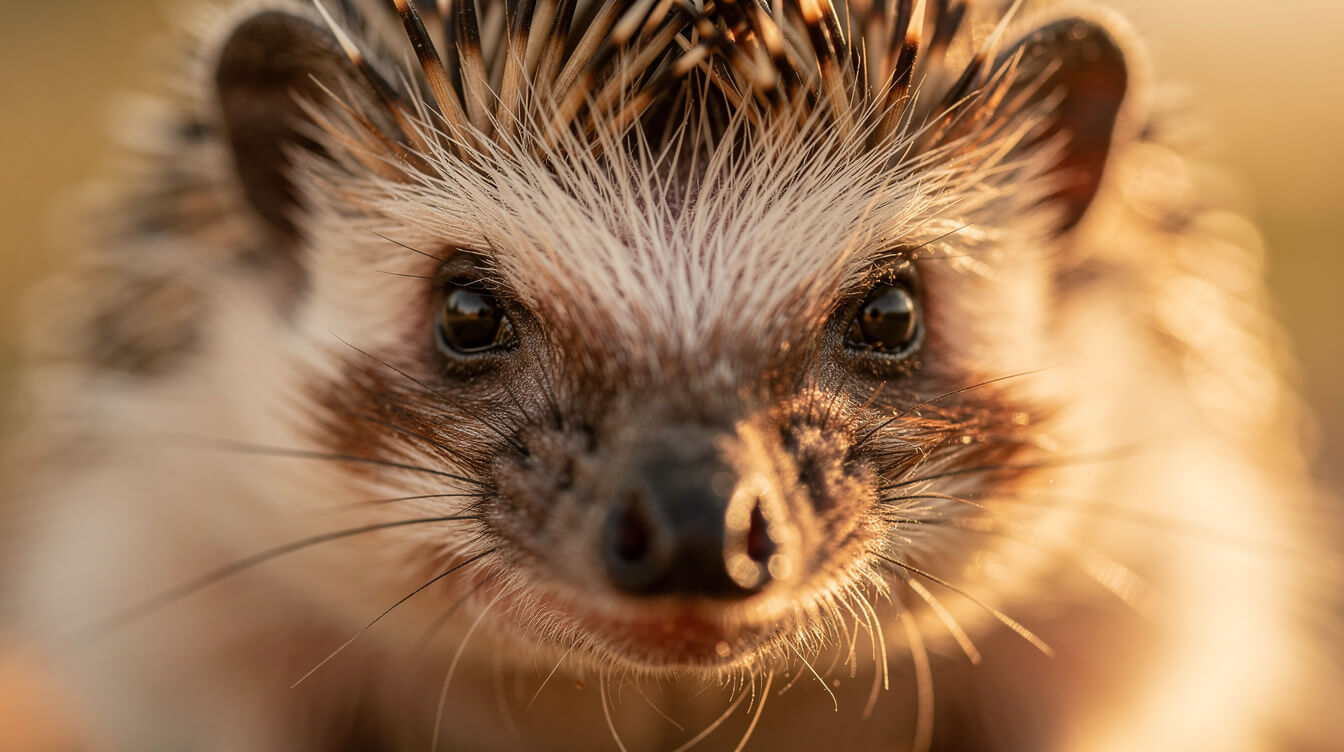
The squint is real, and it is built into the face rather than the mood. A hedgehog’s eyes are small and set deep in the skull, and just above the brow line sits a stiff shelf of forward-pointing spines that starts closer to the eyes than fur does on most mammals. That shelf shadows the top of the eye socket and narrows how much eye is visible from the front, the same visual effect a furrowed brow has on a person. Add a small, downturned mouth line and a long, twitchy nose that is almost always mid-sniff, and you get a face built to read as stern even when the animal underneath it is completely calm.
There is a second layer to this. Round faces and small features usually trigger the opposite reaction in us, the same soft pull that makes a human baby or a kitten look endearing. Researchers call this baby schema, a set of proportions, a big head relative to the body, large low-set eyes, that reliably reads as appealing across species. Hedgehogs have that round-faced, small-eyed shape too, which is part of why the internet finds them so appealing in the first place. The spines undercut it just enough to keep the face from tipping into pure cuteness, and that push and pull, adorable shape with a stern little expression sitting on top of it, is most of what makes a hedgehog’s face so easy to fall for.
It also helps to remember that a hedgehog’s face has almost none of the muscle range a dog or a primate uses to signal mood. Dogs raise their brows, cats flatten their ears, and both give us something closer to a real expression to read. A hedgehog’s face is mostly fixed, so whatever shape it was born with is the only shape it has. The grumpiness is not withheld affection or a bad morning, it is closer to a permanent, involuntary expression, the same way some people are born with a naturally serious resting face that has nothing to do with what they are actually feeling.
What a hedgehog actually is, and why the grumpy look is misleading
Despite the face, a hedgehog is not bad tempered, and it is not a rodent either, which surprises a lot of people. Hedgehogs belong to the family Erinaceidae, part of an order called Eulipotyphla that they share with shrews and moles, not with mice or rats. There are roughly seventeen species worldwide, native across parts of Europe, Asia, and Africa, with one species introduced to New Zealand by early settlers. They are not native to the Americas or to Australia, so the hedgehog kept as a pet in the United States is almost always a hybrid known as the African pygmy hedgehog, bred specifically for that purpose rather than caught from the wild.
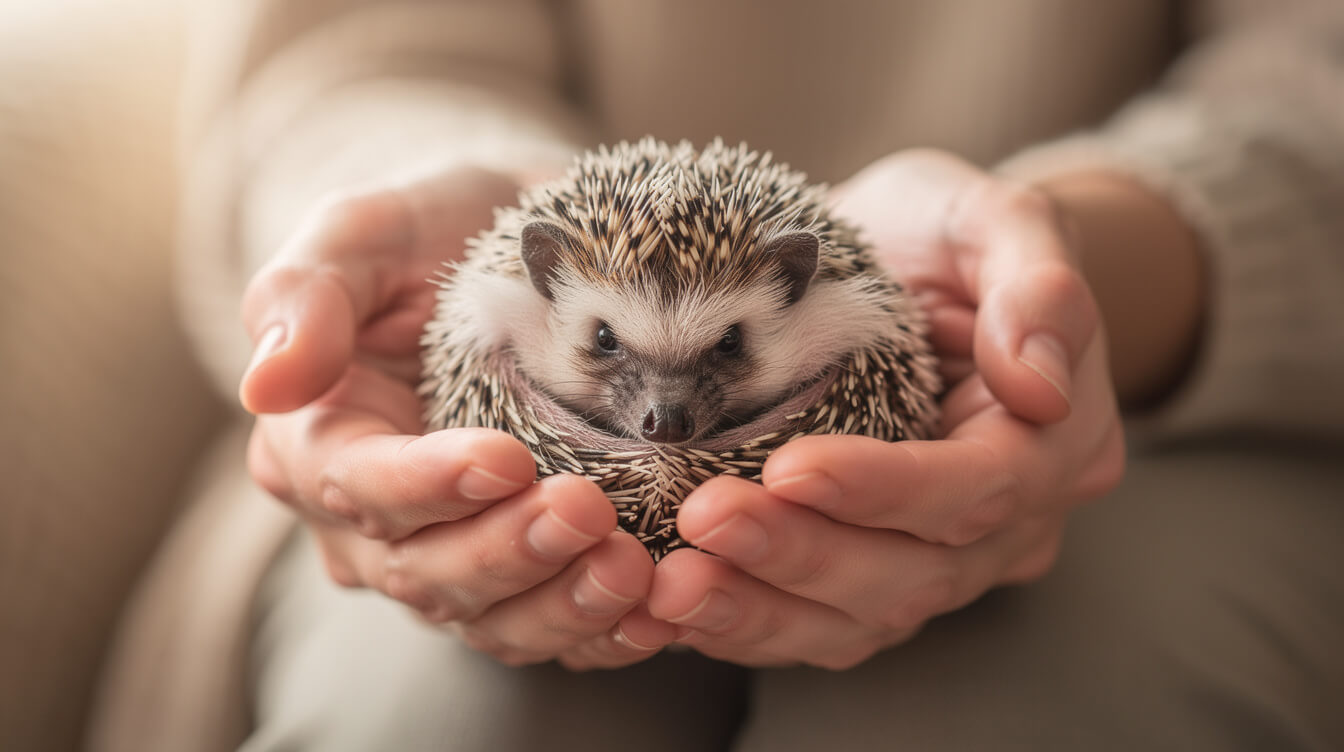
In size, a hedgehog is small enough to rest comfortably in two cupped hands, typically weighing well under a pound as a pet and up to a bit over two pounds for wild European hedgehogs fattening up before winter. They are solitary and nocturnal, spending the day curled up somewhere dark and quiet and coming out at night to hunt. Their diet leans heavily on insects, beetles, worms, and slugs, with the occasional bit of fruit or egg when the opportunity comes up, which makes them, among other things, a genuinely useful animal to have wandering a garden.
The seventeen species vary more than people expect, too. The long-eared hedgehog of Central Asia has ears noticeably larger than the familiar European hedgehog, an adaptation for shedding heat in a hot, dry climate. The four-toed hedgehog, the species behind most pet African pygmy hedgehogs, is smaller still and slightly paler. What unites all of them, regardless of ear size or range, is that same basic body plan: a spine-covered back, a soft furred underside, and a face built the way this whole piece has been describing.
Their senses lean the opposite direction from most people’s assumptions, too. Hedgehog eyesight is fairly poor, better suited to detecting motion and light than fine detail, which is part of why a startled hedgehog freezes first rather than looking around. What it lacks in vision it makes up for with an excellent sense of smell and hearing, both tuned for finding insects rustling in leaf litter well after dark. In the wild, a hedgehog typically lives two to five years, shorter than most people expect for an animal so widely kept as a pet, where good care and a controlled indoor environment can stretch that closer to six or eight.
The spines are not fur, but they used to be
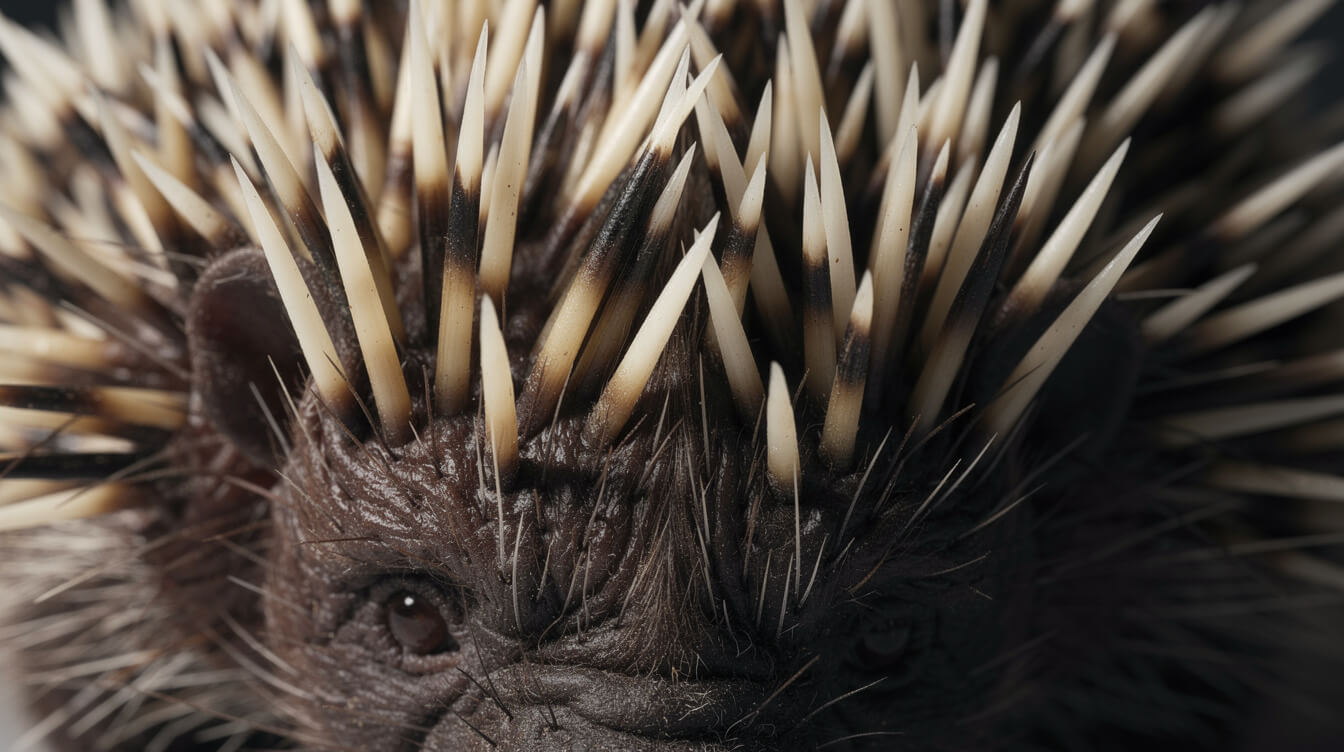
Every spine on a hedgehog is made of keratin, the same protein that makes up hair and fingernails. Structurally, each one is a stiffened, hollow-chambered guard hair, lightweight enough that a hedgehog can carry somewhere between five thousand and seven thousand of them without much added effort. That is worth sitting with for a moment: what looks like an entirely different material is, underneath it, the same stuff as any other mammal’s coat, just grown thicker and set at a different angle.
It is also worth clearing up a common mix-up. Unlike a porcupine’s quills, hedgehog spines are not barbed, and they do not detach and lodge in whatever touches them. Each spine is smooth, firmly rooted, and stays exactly where it grew. That changes the whole defense strategy: a hedgehog is not trying to stab or fling anything at a threat, it is trying to become a solid, unpleasant surface with nothing worth grabbing. Newborn hedgehogs actually arrive with a soft set of spines just beneath the skin, which emerge within hours of birth and are gradually replaced by the firmer adult set over the following weeks, a process sometimes called quilling.
One more myth worth retiring: hedgehog spines carry no venom. A small number of unrelated animals, certain shrews and the solenodon among them, do deliver a mild venomous bite, and people occasionally lump hedgehogs in with that group because of the shared spiky reputation. A hedgehog’s entire defense is mechanical, not chemical, texture and geometry doing the work rather than any toxin in the spine itself. The one place actual chemistry does enter the picture is the ritual in the next section, and it has nothing to do with the spines being dangerous on their own.
The strange ritual called self-anointing
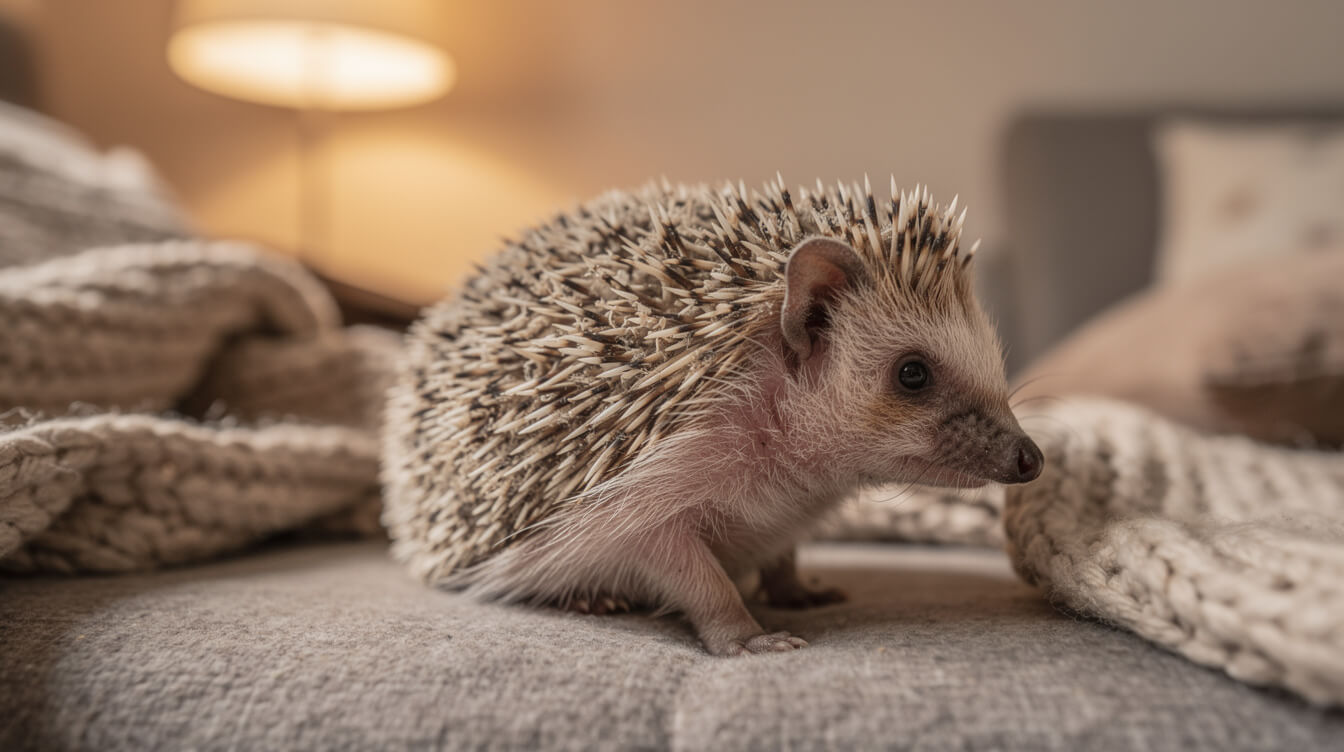
If you spend enough time around hedgehogs, or enough time watching hedgehog videos, you will eventually run into a behavior called self-anointing, and it looks alarming the first time you see it. When a hedgehog encounters an intense new smell or taste, something like a strong-scented plant, an unfamiliar food, or another animal’s shed skin, it will chew the item, work up a thick, frothy saliva, and then contort itself in a way that seems physically improbable to spread that foam across its own spines with its tongue, reaching along its back and flanks.
Researchers have documented self-anointing since the 1950s, when it was first formally described in Germany, and still do not have one confirmed explanation for it. The leading theories include using the foam as a kind of chemical camouflage against predators, transferring mild toxins from things like toad skin onto the spines as a defense boost, or a purely sensory response to something novel, closer to reflex than strategy. It has an odd cousin in the bird world, a behavior called anting, where some birds rub live ants across their feathers to spread the ants’ defensive acids through their plumage, and researchers studying both behaviors have wondered whether they solve a similar problem in different bodies. Hedgehogs also show some natural resistance to certain toxins found in toad and snake skin, which lends extra weight to the defense-boost theory without fully settling it. Whatever the reason, it captures the same instinct that makes the phrase approach with care feel so fitting for this animal, a mix of soft curiosity and genuine caution happening at the same time. Our Kawaii Prickly Hedgehog Approach With Care T-Shirt was drawn around exactly that mix, soft on the outside and a little guarded underneath, which is a fair description of the animal and a lot of the people who love it.
The cutemerch letter
A small good thing, once a week
One short, kind email with our coziest posts and new round animals from the shop. No spam. Unsubscribe anytime.
Why they curl into a tight, spiny ball
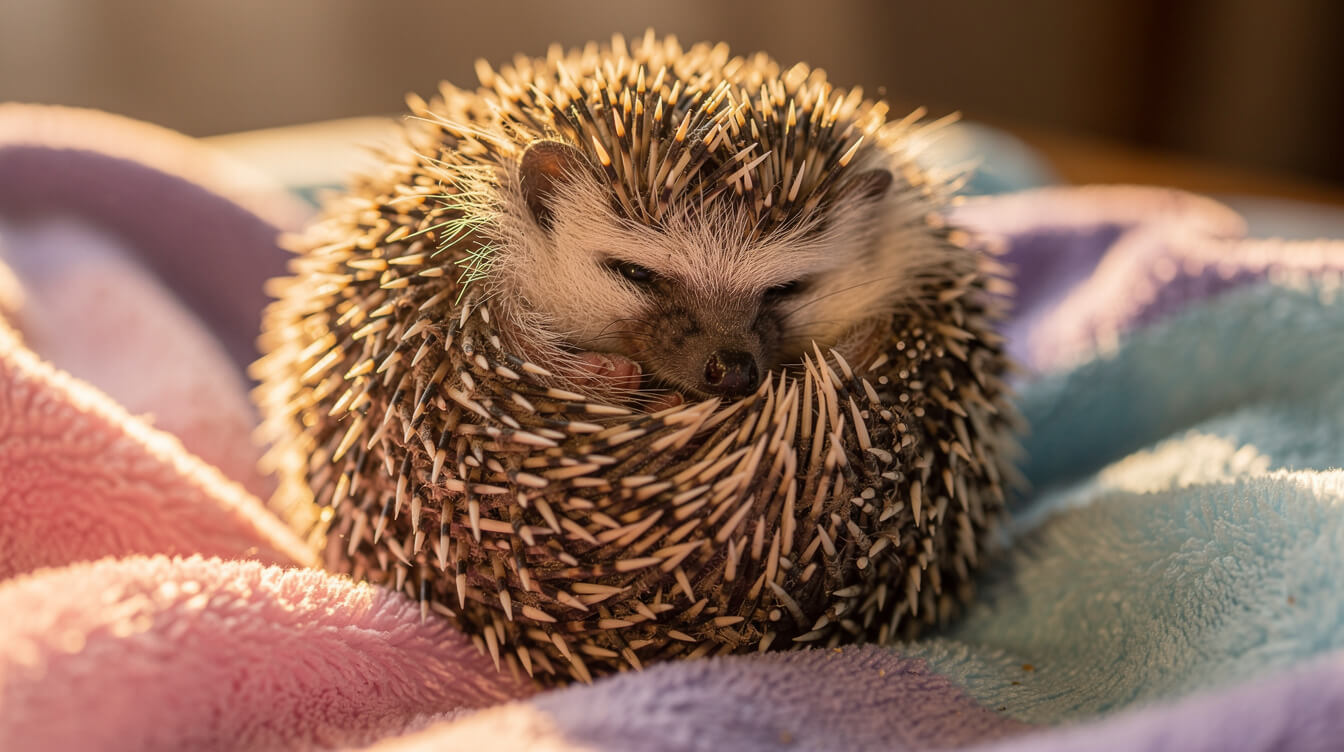
The curl is not a party trick, it is close to the hedgehog’s entire defense plan. A broad sheet of muscle called the orbicularis runs around the body like a drawstring, and when it contracts, it pulls the loose surrounding skin, spines and all, down and around the head, legs, and soft belly in one motion, closing over the animal’s only vulnerable parts. Since a hedgehog cannot outrun a fox, a badger, or a determined dog, curling tight into a near-solid ball of spines with no seam or grip point is often the only defense it needs.
It is also, not coincidentally, the exact shape that makes hedgehogs so easy to love. A small, round, self-contained animal that looks unbothered rather than threatening, holding its own shape without needing anything from the moment, is a pretty good description of the appeal at the center of this whole brand.
The curl is stubborn enough that a determined predator sometimes has to get creative to undo it. Foxes have been observed rolling a curled hedgehog toward water, since a hedgehog that senses it might drown will eventually uncurl on its own, which is about the only reliable way around the defense. People have clearly found this shape fascinating for a very long time, too. Hedgehogs turn up in Aesop’s fables and in European folklore going back centuries, almost always cast as the small, unassuming creature that turns out to be cleverer or tougher than it looks, which is not a bad summary of the actual animal.
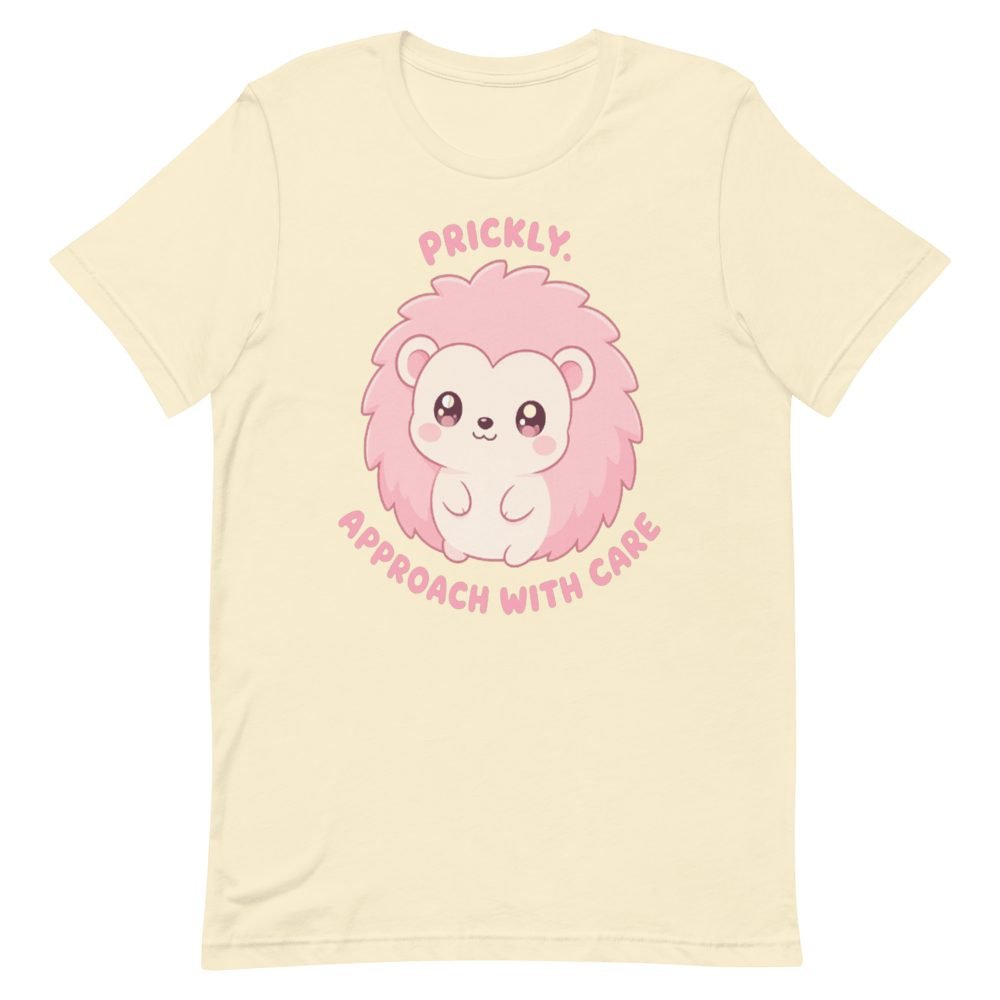
Kawaii Prickly Hedgehog Approach With Care T-Shirt
Pastel pink quills, a sparkling little face, and an honest warning label. Made for anyone who is soft on the inside and knows it is worth saying so.
Frequently asked questions
Is a hedgehog the same as a porcupine?
No. A porcupine is a rodent, closely related to mice and squirrels, and its quills are barbed and detach easily, which is how they end up stuck in curious dogs. A hedgehog’s spines are fixed in place and unbarbed, and hedgehogs are not rodents at all. They are also very different in size, a porcupine can weigh well over ten times as much as a hedgehog. If you are curious how hedgehogs stack up against the rest of the internet’s favorite round, prickly animals, our round animal t-shirt guide rounds up the whole cast.
Is a hedgehog related to an echidna?
No, and this one surprises people too. An echidna is a monotreme from Australia and New Guinea, part of the small group of mammals that lay eggs, and it sits on a completely different branch of the mammal family tree. The spiny look both animals share is a case of convergent evolution, two unrelated lineages independently landing on the same defense because it works so well, not evidence that they are cousins.
Do hedgehogs hibernate?
Wild European hedgehogs do, spending the coldest months in a state of deep torpor to survive when food is scarce. Pet hedgehogs, usually the African pygmy variety kept indoors in a warm climate, should never be allowed to attempt it. Without the fat reserves and controlled conditions a wild hibernation requires, a pet slipping into torpor is a medical emergency, not a season.
Are hedgehogs endangered?
Wild hedgehog populations in parts of their range, especially in the United Kingdom, have been declining for decades, driven mainly by habitat loss and busier roads. They are not yet classified as endangered across their full range, but the trend has been serious enough that several countries now track it closely and fund garden-corridor and hedgehog-highway programs to help.
Are hedgehogs legal to keep as pets?
It depends entirely on where you live. Several U.S. states and cities restrict or outright ban private ownership, so it is worth checking local law before considering one, rather than assuming it is fine everywhere. That legal patchwork is part of why so many hedgehog lovers wear the animal instead of keeping one, something we get into in our emotional support animal shirt trend piece.
Does it hurt to touch a hedgehog?
A calm, relaxed hedgehog with its spines lying flat feels more like a soft-bristled brush than anything sharp. The discomfort people describe usually happens when the animal is startled and pulls its spines upright and tight, which turns the same surface considerably more prickly. Slow, gentle handling almost always keeps things on the comfortable side of that line.
Why do so many wild hedgehogs get hit crossing roads?
Slow speed and that same all-or-nothing curl response work against a hedgehog on a road in a way they never would against a fox. Faced with an approaching car, a hedgehog’s instinct is to freeze and curl rather than run, which was an excellent strategy for millions of years and is a poor one for the last century. It is a real enough problem that parts of the United Kingdom have started building small hedgehog highways, gaps cut into garden fences, so the animals can move between yards without crossing open streets at all.
Final thoughts
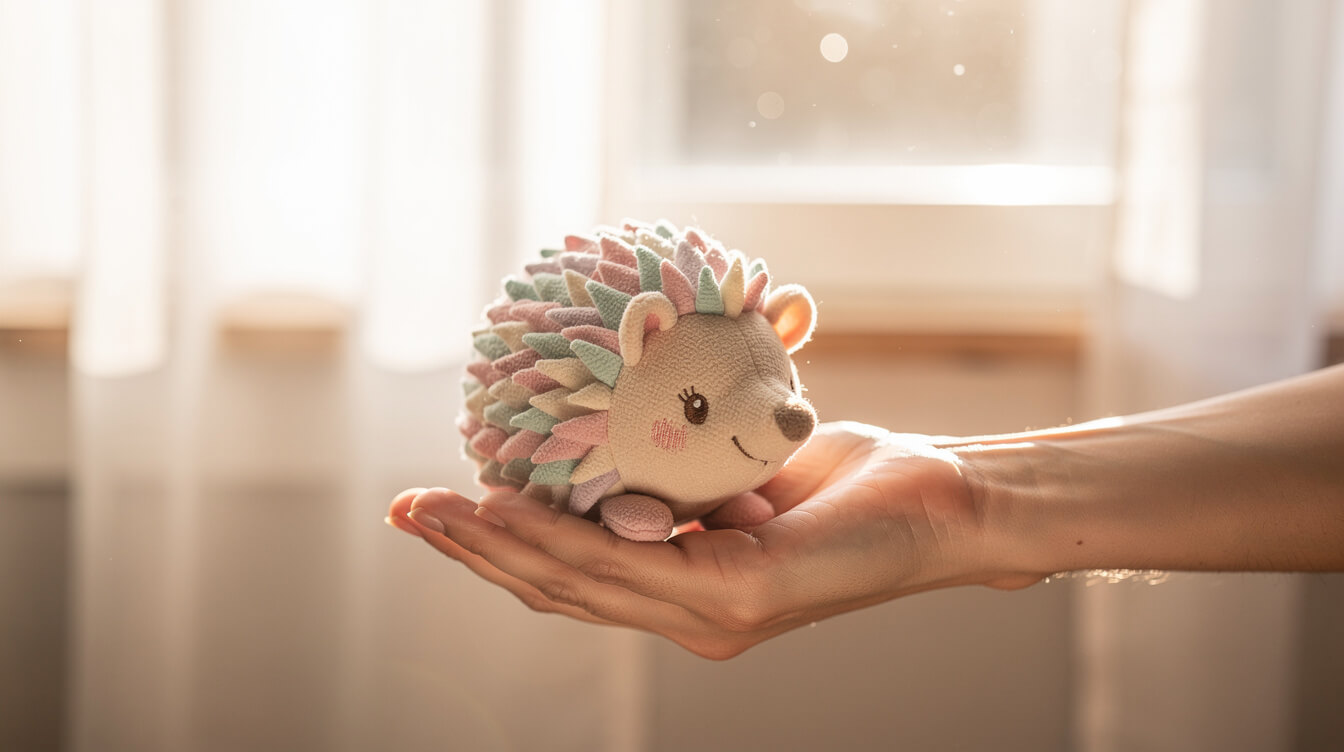
None of this makes a hedgehog any less grumpy looking, and that is more or less the point. The face is doing exactly what its bones and spines were built to do, and the animal underneath it is, by most accounts, curious, cautious, and mostly interested in bugs and a warm place to sleep. That gap between the expression and the actual animal, stern face, soft creature, is a small, honest kind of charm, and it is the same gap we tried to put on a shirt.
It is worth remembering the next time a hedgehog photo shows up looking personally offended by the whole day. There is no bad mood in there, just an animal built out of the same soft biology as anything else, wearing a face that happens to look sterner than it feels. A little something to make an ordinary day softer, grumpy face included.
Before you go
Want the next one in your inbox?
We write something soft every day. The best of it lands in one gentle weekly note, for you or for the friend who needs it.




One Comment