
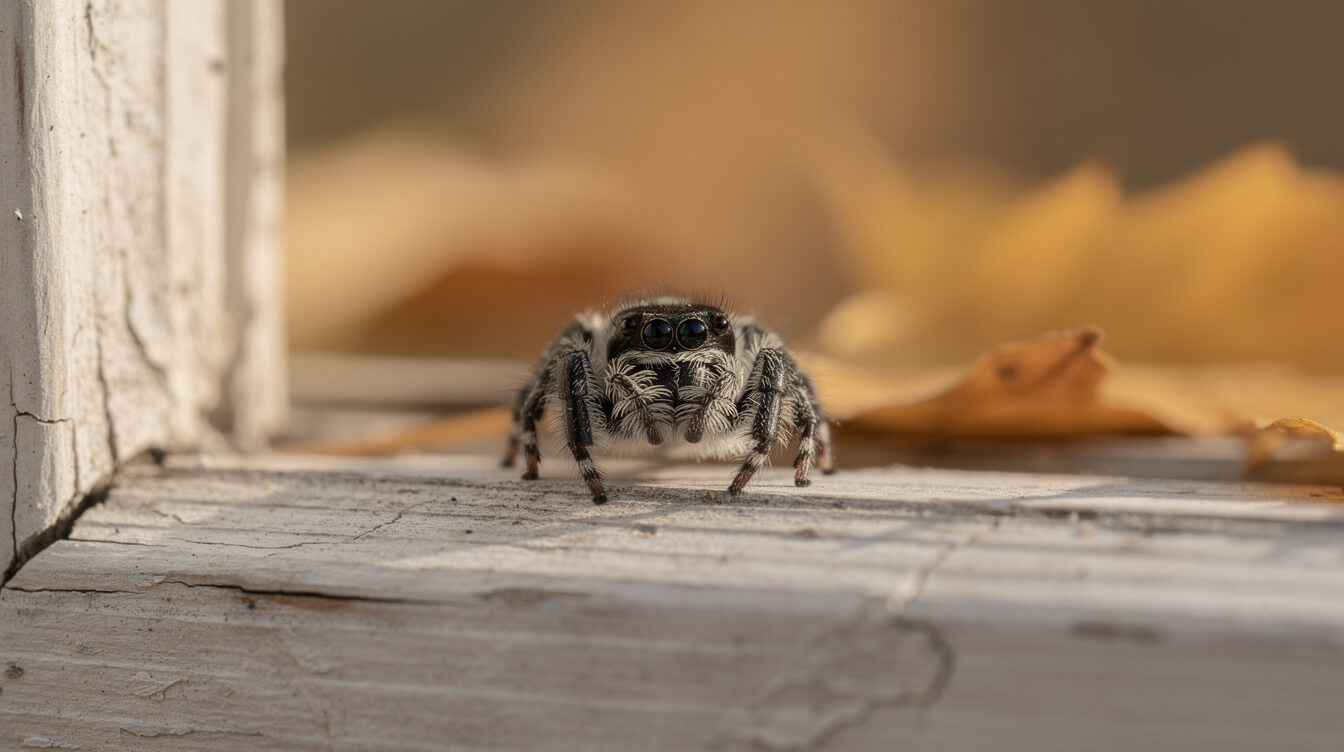
Jumping spider lifespan: the small, full year of a spood
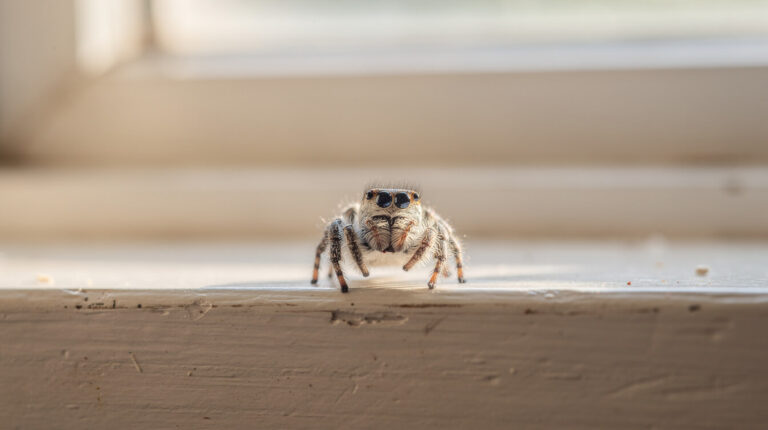
If a small fuzzy spider has been watching you from the window frame this month, you may have wondered how much time it has. The honest jumping spider lifespan is short: for most common species, about a year from egg to the end, and sometimes a little more. It sounds brief. But a jumping spider packs a whole careful life into that year, with a silk nursery, a string of molts, a winter tucked away in a tiny sleeping bag, and one bright busy summer as an adult.
This is a gentle guide to that year, written for anyone who has met one of these spiders on a windowsill and wanted to understand it a little better. We will cover how long jumping spiders live, how they grow, why the females usually outlast the males, and where your windowsill neighbor goes when the weather turns. There is no care sheet here, just the animal, seen kindly.
How long do jumping spiders live? The short answer

For many of the jumping spiders you are likely to meet, the answer is about one year. The bold jumping spider, Phidippus audax, is the fuzzy black and white one common across much of North America, and it is the best studied. In one laboratory study its lifespan was a little over a year, with females living a couple of months longer than males.
Across the whole family, the figure most often quoted is somewhere between six months and two years. That range is wide for a good reason. Jumping spiders are the largest spider family on Earth, with more than six thousand described species, and they live everywhere from rainforests to deserts to mountain slopes. A tiny species in a warm place and a larger one in a cold place will not keep the same calendar. The Animal Diversity Web notes that in warmer climates, breeding can run more continuously and adults may survive longer.
Spiders kept by hobbyists often live a bit longer than wild ones, commonly one to two years, and keepers occasionally report one reaching around three. That makes sense. A kept spider never meets a hungry wasp, a cold snap, or a dry week without food. In the wild, the year is fuller and riskier, and plenty of spiders do not finish it.
So the short version is this. A jumping spider lifespan is usually counted in seasons, not years. The more interesting question is what happens inside those seasons, because almost all of it happens out of sight.
The quick numbers
- Typical wild lifespan: about a year for common species like the bold jumper
- Range across species: roughly six months to two years
- Who lives longer: usually females, by a few weeks to a couple of months
- Time from egg to adult: about nine months for the bold jumper, including a winter pause
A jumping spider’s year, from egg sac to adult
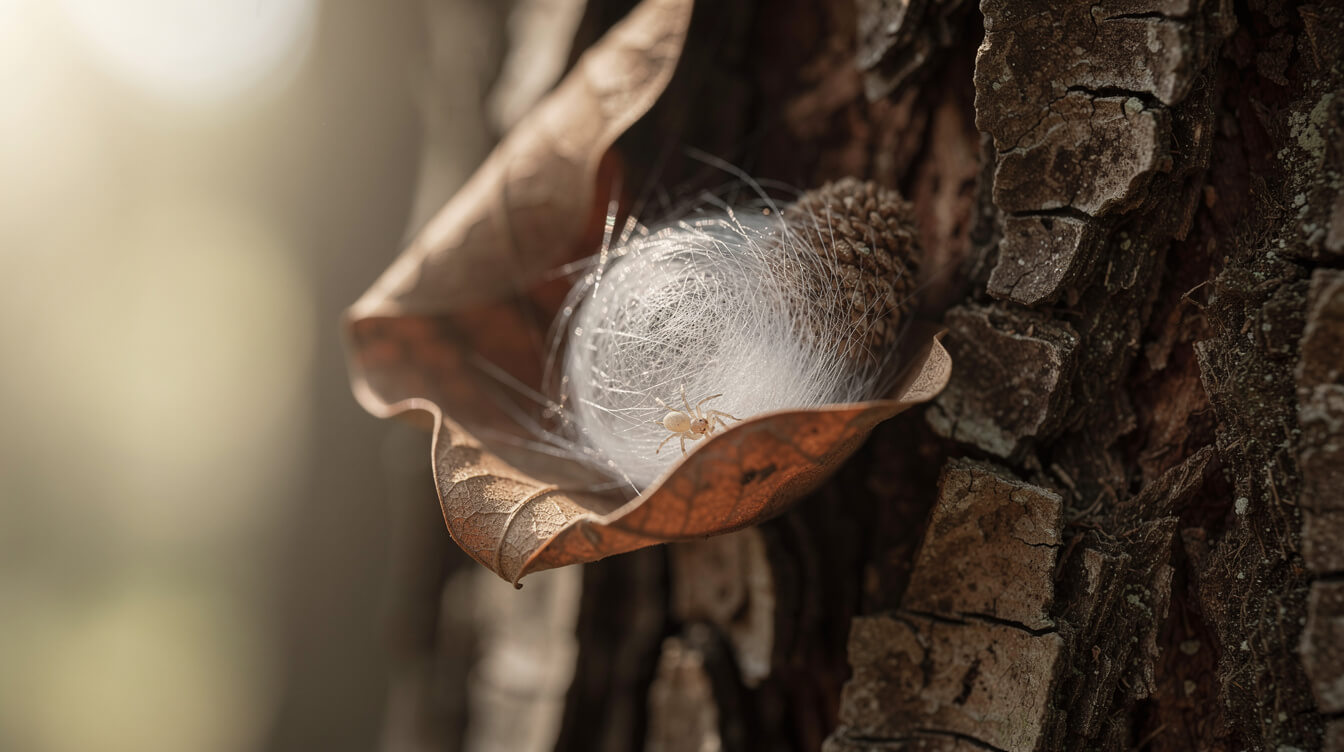
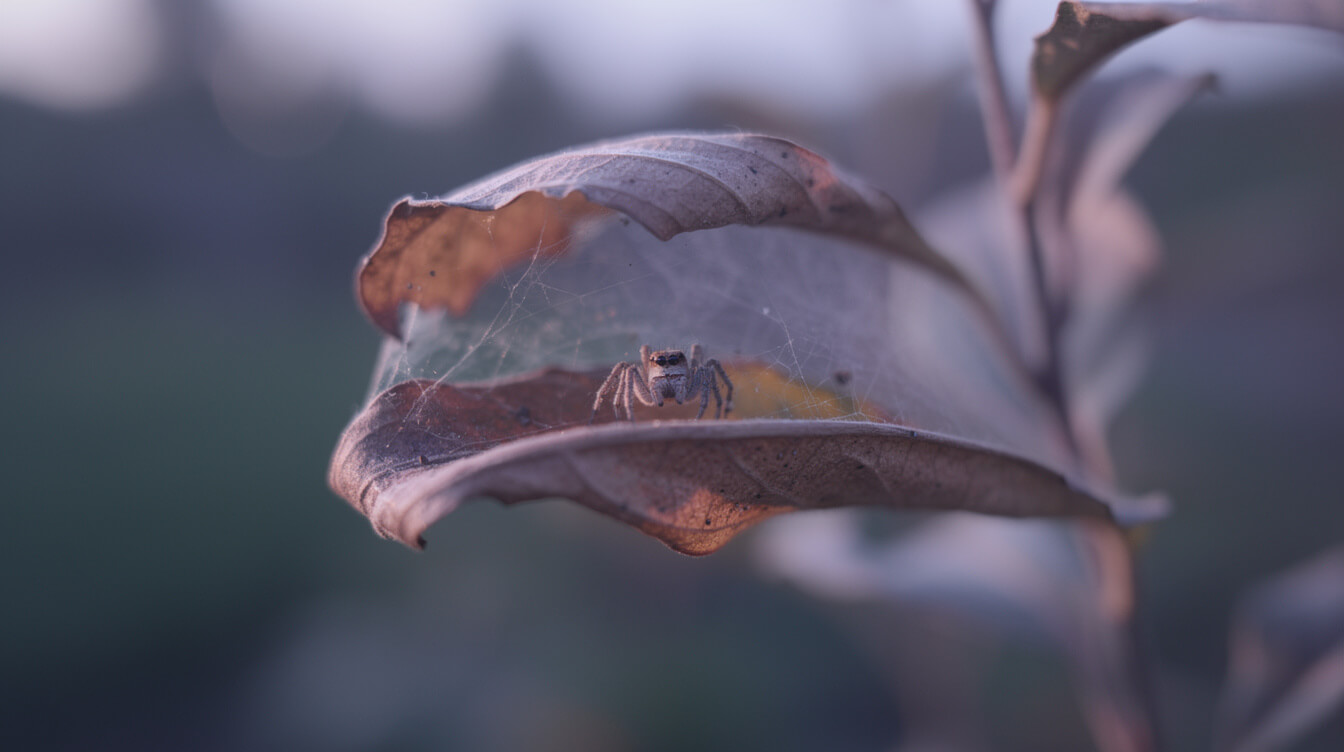
The year begins in summer, in a silk pocket the size of a fingertip. After mating, a female bold jumper finds a hidden spot under bark, a stone, or a curled leaf and weaves a thin sheet of silk. She lays her eggs inside, wraps them, and then stays with them in the same shelter. A single female can make as many as six egg sacs over one summer, each holding somewhere between thirty and a hundred and seventy eggs.
About ten days after the eggs are laid, the spiderlings hatch. They do not come out right away. Each one completes its very first molt inside the sac, still tucked in with its siblings, and only after another ten to fourteen days do they step out into the world. When they finally emerge, they are already small, complete hunters with the same big front eyes as their mother, just much tinier.
Leaving home on a thread
Soon after emerging, the young spiders spread out. Some simply walk. Others do something lovely called ballooning: a spiderling climbs to a high point, lets out a fine thread of silk, and lets the breeze carry it away. It is how a family of a hundred small spiders can end up in a hundred different gardens.
From there, the summer and autumn are about one thing, which is growing. The young spider hunts small insects by day, retreats into a silk shelter at night, and gets a little bigger each time it molts. For the bold jumper, it takes roughly nine months from the egg to a grown adult, and a good part of that time is spent waiting out the winter.
If you would like to meet the stars of the family before going further, our guide to the cutest jumping spider species introduces a few of them by name.
Molting: how a spider grows when its skeleton is on the outside
A spider cannot grow the way we do. Its skeleton is on the outside, a firm shell called an exoskeleton, and a shell does not stretch. So every time a jumping spider needs more room, it has to build a new, slightly larger skin underneath the old one and then climb out.
Each stage between molts is called an instar. The bold jumper goes through its first molt inside the egg sac, then six or seven more as it grows, which adds up to roughly seven or eight molts in its life. Females usually need one more molt than males, because they grow larger. Other species vary, so if you see a different number elsewhere, that is not a mistake, it is just a different spider.
A quiet, risky few hours
Molting is the most delicate thing a jumping spider ever does. Before it starts, the spider spins a small silk shelter, a little molting tent, and closes itself inside. The old skin splits, and the spider slowly works its legs free, which can take a while for an animal with eight of them. Afterward, the new skin is soft and pale, and the spider rests until it hardens. During that time it cannot hunt or defend itself well, which is why it molts out of sight.
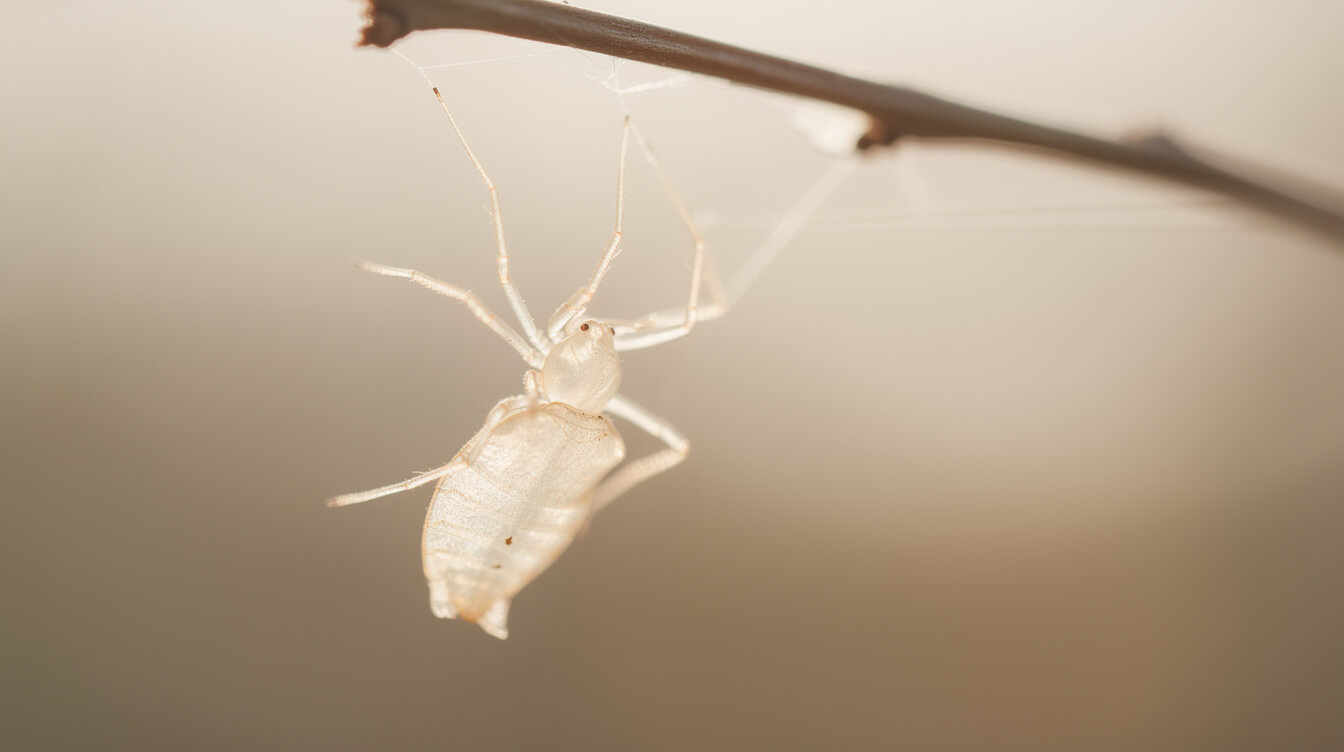
If you ever find a tiny, perfect, hollow spider shape hanging in a corner, that is very likely a shed skin, not a spider that has died. It is the outgrown jacket of a spider that is now somewhere nearby, a little bigger than before.
Why the last molt really is the last
Here is the part that shapes the whole jumping spider lifespan. Like most true spiders, a jumping spider stops molting once it becomes an adult. The final molt is the one that makes it mature, and after that its body size is fixed for good. Males often show the change most clearly. At their last molt they gain the enlarged, boxing-glove tips on their front appendages that they use for mating.
That final molt is a kind of turning point. Everything before it was about growing. Everything after it is about the next generation, and the clock for that part of life is short.
Why the jumping spider lifespan is longer for females
In most jumping spiders, the females outlive the males. In the bold jumper lab study, the gap was a couple of months. The reasons have less to do with toughness and more to do with what each one spends its adult life doing.
The males finish first and then go looking
Males need one fewer molt, so they reach adulthood a few weeks before the females do. Once grown, a male’s life turns into a search. He wanders across leaves, fences, and walls looking for a female, which means more time in the open and more chances to meet a bird, a lizard, a dragonfly, or a wasp. Some males find the silk nest of a female who has not finished growing yet, build a small nest of their own right beside it, and simply wait for her final molt. It is a patient, slightly endearing kind of courtship.
When a male does find a mature female, he dances. Jumping spiders court with waving legs, bobbing, and careful steps, all aimed at those big front eyes. After mating, a male has done the main work of his adult life, and he does not have the long season of guarding ahead that she does.
The females stay with the eggs
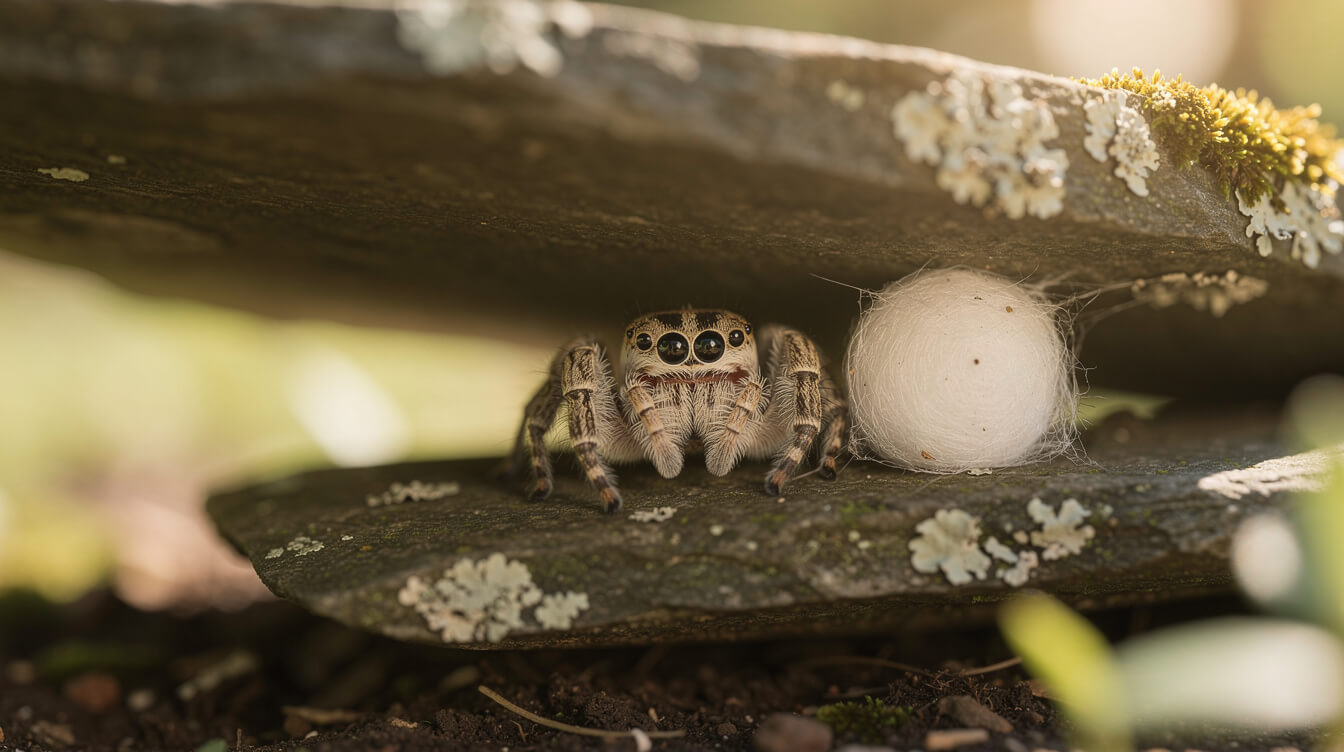
A female’s adult summer is spent making egg sacs and keeping watch over them. She stays in her silk shelter with each clutch and guards it until the spiderlings hatch and scatter. Because she may produce several clutches across the summer, her adult life naturally runs longer. She is, quite literally, keeping the next year’s spiders safe.
It is one of the reasons we have such a soft spot for the mothers of this family. Our Spood Mom Cute Jumping Spider T-Shirt is a small round lavender mama spider with a yellow bow, drawn for exactly this kind of quiet devotion.
The cutemerch letter
A small good thing, once a week
One short, kind email with our coziest posts and new round animals from the shop. No spam. Unsubscribe anytime.
Where a jumping spider goes in winter
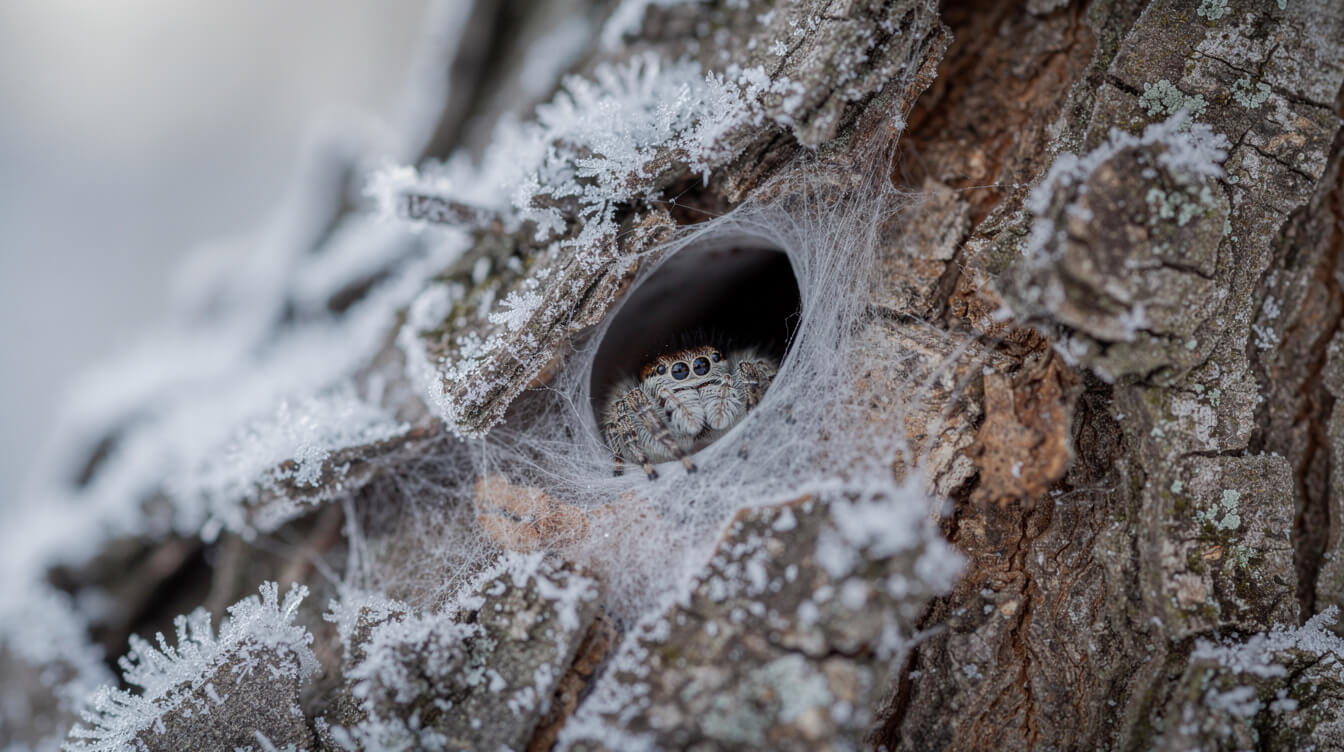
This is the part of the year most people never see. In the colder parts of their range, bold jumpers do not spend the winter as adults. They spend it as nearly grown youngsters, a molt or two away from being finished.
As the days get shorter and colder, the young spider looks for a sheltered spot. Under loose bark, beneath a flat stone, in a crack of a fence post, or in the gap of a window frame. There it spins a silk sac around itself, a soft sleeping bag that hides it from predators and buffers it against the weather. Then, as temperatures drop toward freezing, it goes still and enters a resting state called diapause, in which its development simply pauses.
The same silk tent, used all year
Jumping spiders do not build webs to catch prey. They hunt with their eyes. But they use silk constantly, and the little shelter they make is a kind of all-purpose home. They sleep in it at night, shelter in it from bad weather, molt inside it, keep their egg sacs in it, and spend the winter in it. If you want one image for a jumping spider’s life, it is that small white tent.
Spring, and the last two steps
When spring warms things up, the spiders wake, leave their shelters, and start hunting again. Over the following weeks they complete their final molts and become adults, usually ready to mate by late spring or early summer. Then the summer of courtship and egg sacs begins, and the whole year starts over.
For an animal that lives about a year, the winter takes up a surprisingly large share of it. A jumping spider spends a good part of its short life asleep, wrapped in silk, waiting for warm light. That feels like a very reasonable way to spend a winter.

For the ones who keep watch
A round lavender mama jumping spider with eight bright eyes and a small yellow bow, printed on a soft tee. Made for anyone who has ever thought a spider guarding her eggs all summer deserved a little recognition.
What the jumping spider lifespan means for the one on your windowsill
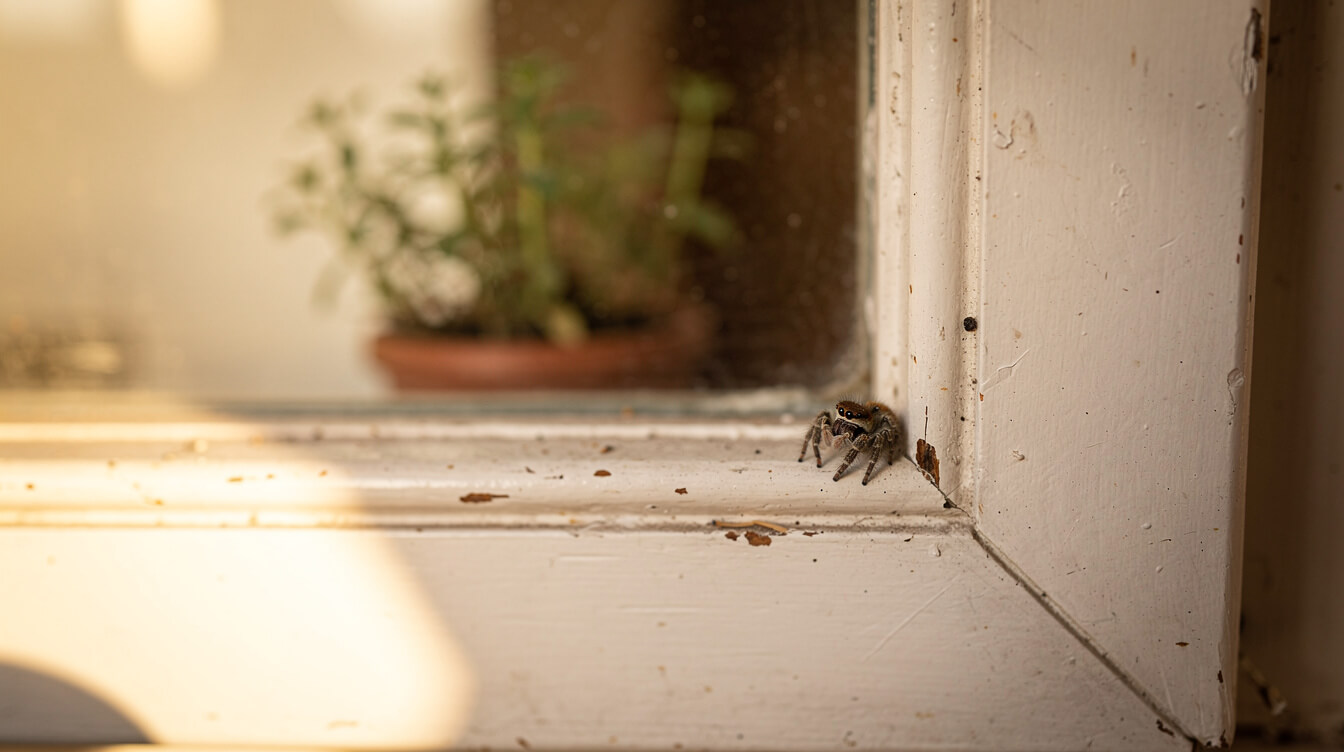
Autumn is when a lot of people notice jumping spiders for the first time. They show up on window frames, porch rails, and sunny walls, often turning to look right at you. Now that you know the shape of their year, that October visitor makes more sense.
If it is a bold jumper, the spider on your windowsill in October is most likely a young one, nearly grown, scouting for a good place to spend the winter. A window frame is warm, sheltered, and full of small cracks, which is exactly what it wants. If all goes well, it will tuck itself into silk for the cold months, finish growing in spring, and may be laying eggs of its own by next June. You are not watching the end of its life. You are watching it get ready for the most important part.
Leave it, it is busy
The kindest thing you can do is very little. Let it pick its spot. Do not worry if it vanishes for months. It has not gone anywhere, it is just asleep. A short life is not a sad life when every season has a purpose, and this one has a plan.
If one has wandered indoors and you would rather it lived outside, the gentle card-and-cup method in our guide to whether jumping spiders are friendly works well. Set it down somewhere sheltered, like a woodpile, the base of a hedge, or loose bark, where it can make its winter tent. That same guide covers why they stare at you and what to do when one lands on your sleeve, so we will not repeat it here.
The small lives worth noticing
Jumping spiders are part of a whole quiet crowd of small lives that run on short calendars right under our noses. If you like this kind of noticing, you might also enjoy meeting the isopod under your flowerpot, another small creature with a gentle, unhurried life, or our wider look at weird cute animals and why the unusual ones win us over.
Frequently asked questions about jumping spider lifespan
How long do jumping spiders live in the wild?
For common species like the bold jumper, about a year, with females usually living a little longer than males. Many wild spiders do not reach their full lifespan, because predators, weather, and food shortages all take a toll. In warmer places, adults may live longer than in places with hard winters.
How long does a jumping spider last in captivity?
Spiders kept by hobbyists commonly live one to two years. Keepers occasionally report individuals reaching around three years, though that is rare. The longer figures mostly reflect a life without predators or lean weeks, not a different kind of spider.
Do jumping spiders sleep?
They rest at night, usually inside their silk shelter or hanging from a silk line. A 2022 study of one European jumping spider found that during these night rests, the spiders showed bursts of eye-tube movement and small twitches of the legs, a pattern the researchers compared to the dreaming stage of sleep in other animals. Nobody knows yet what, if anything, a spider dreams about, but it is a lovely thing to wonder.
Why do male jumping spiders die sooner?
Males mature a few weeks earlier, then spend their adult lives roaming in search of mates, which exposes them to more danger. Females spend their adulthood making and guarding egg sacs across the summer, so their adult season naturally runs longer.
How many times does a jumping spider molt?
It depends on the species and the sex. The bold jumper has its first molt inside the egg sac and then six or seven more, so roughly seven or eight in total. Females typically need one more molt than males. Once a jumping spider reaches adulthood, it stops molting.
Where are jumping spiders found?
Almost everywhere. They are most diverse in tropical forests but also live in temperate woodlands, deserts, scrubland, shorelines, and high mountains. In towns, look for them on sunny walls, fences, porch rails, and window frames, especially in late summer and autumn.
Is that empty spider on my wall dead?
Often it is not a spider at all, just a shed skin. A molt looks like a pale, hollow copy of the spider, complete with legs. The spider that left it has usually moved on, one size larger.
Final thoughts
A jumping spider lifespan of about a year can sound like very little. But it holds a silk nursery, a long string of careful molts, a winter wrapped up in a tiny tent, and one warm summer of dancing and keeping watch. That is a full life, lived at a small scale and with a lot of attention.
So the next time a fuzzy little spider turns on the window frame to look at you, you will know a bit more about the year it is living. It is probably young, probably getting ready for winter, and probably has plans for next June. Give it a nod, let it be, and let it get on with its small, important season.
Before you go
Want the next one in your inbox?
We write something soft every day. The best of it lands in one gentle weekly note, for you or for the friend who needs it.

One Comment