What Kawaii Clothing Actually Means (and How to Wear It Without Full Cosplay)
Type “kawaii clothing” into a search bar and you mostly get two things: shop grids selling platform boots and lace dresses, or costume guides for people about to attend a convention. What gets left out is the actual question most people have. Kawaii clothing is a real, wearable style, not a costume you put on for one weekend a year, and it does not require a wig or a character reference sheet to pull off. This is a guide to what the aesthetic actually is, where it overlaps with cosplay and where it splits off entirely, and how to wear it in a way that reads as your own style rather than a look you borrowed for the day.
We make cute things for a living, so we spend a lot of time thinking about where “cute” tips into “costume” and how to stay on the right side of that line. None of what follows requires a big wardrobe overhaul. Most of it starts with one or two pieces and a little color sense.
What kawaii clothing actually means
Kawaii is a Japanese word that translates loosely to cute, but the fashion sense of it is narrower and older than a lot of the shop copy suggests. It grew out of Harajuku street style in the 1990s and 2000s, where soft colors, round silhouettes, and playful details became a way of dressing that pushed back against strict, muted formalwear. The through line across decades of kawaii fashion is not any single item. It is a set of instincts: soft over sharp, round over angular, one or two cheerful details rather than an outfit trying to say everything at once.
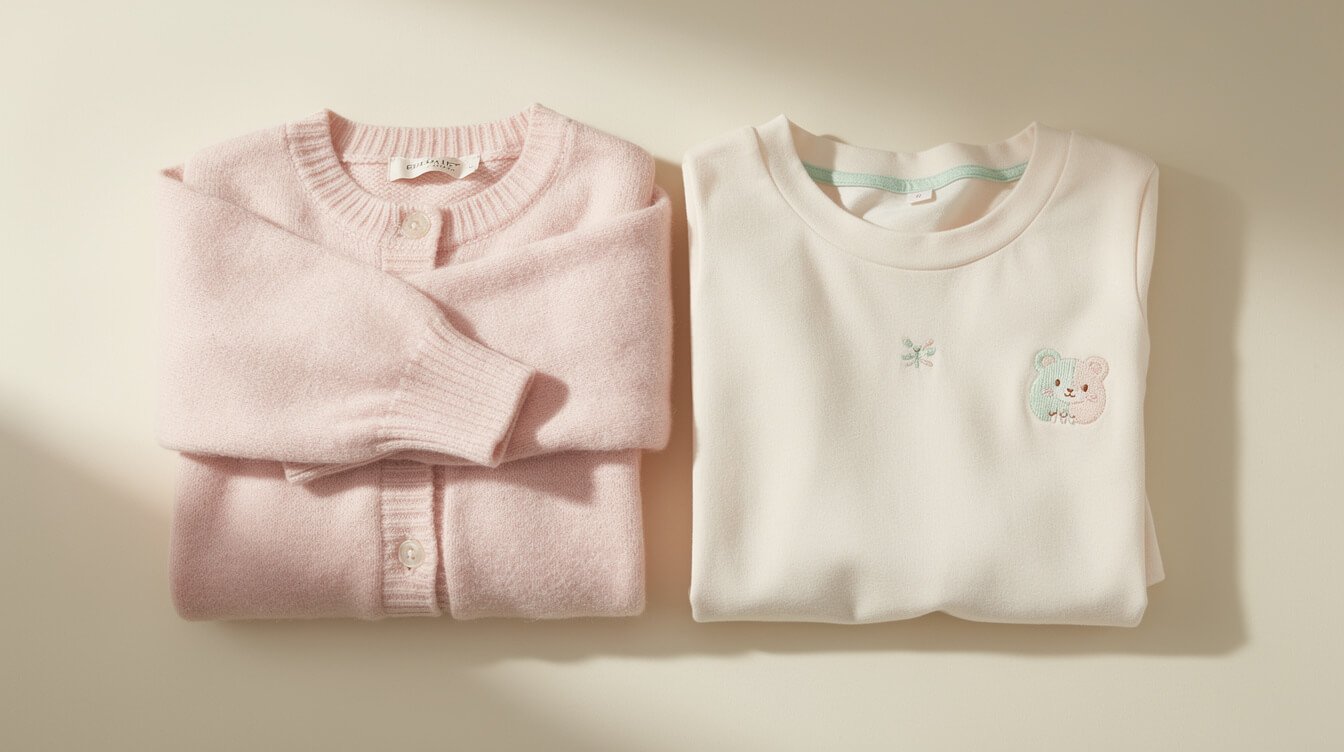
That is a very different thing from what most of the top search results show you. Big kawaii retailers tend to sell the loudest version of the aesthetic, heavy on lace, platform shoes, and character prints, because that version photographs well and sells fast. It is a legitimate corner of the style, but it is the costume end of the spectrum, not the whole picture. Kawaii clothing, at its center, is closer to a color and silhouette philosophy than a uniform. A soft pastel sweater, a round-collared blouse, or a t-shirt with one gentle illustrated animal on it can be just as kawaii as a full lace skirt, just quieter about it.
Understanding that range matters because it is what makes the aesthetic wearable past age twenty-two and past your first convention. You are not opting into a costume. You are opting into a palette and a mood, and you get to decide how loudly you want to speak it on any given day.
It also helps to know that kawaii has never been one fixed look, even within Japan. Over the decades it has branched into softer, more minimal expressions and louder, more maximalist ones, and both are legitimate versions of the same underlying instinct. What ties them together is not a shopping list of items but a shared belief that soft, round, gentle things are worth building a style around, rather than treating them as something you age out of. That belief is exactly what this guide is trying to make usable for an ordinary closet, not just a costume rack.
Kawaii fashion versus cosplay: where the line actually is
The confusion between kawaii fashion and cosplay is understandable, since both draw from Japanese pop culture and both love a soft color palette. The difference comes down to intent and specificity. Cosplay recreates a particular character, down to the wig color and the exact accessory placement, and it is meant to be recognized as that character. Kawaii fashion borrows a mood, not a script. Nobody looking at a soft pink cardigan and round sunglasses is meant to identify which anime you are referencing, because you are not referencing one.
This distinction is also where trademark lines matter, and it is worth being straightforward about it. A shirt with an original round-eyed cat design is kawaii fashion. A shirt with an unlicensed print of a specific, instantly recognizable character from a major franchise is a knockoff wearing kawaii as camouflage, and it is worth avoiding for reasons that go beyond style: it is usually lower quality, and it puts money toward whoever printed it rather than an actual artist. The aesthetic and the character are two different things, even though a lot of fast-fashion sellers blur them on purpose.
Once you separate the two, dressing kawaii without looking costumed gets much easier. You are not trying to become a character. You are choosing colors and shapes that feel gentle and a little playful, the same way someone else might reach for a monochrome palette or workwear silhouettes as their default mode.
If you have ever put together a cottagecore outfit before, this will feel familiar. Cottagecore and kawaii are cousins, not the same aesthetic, but they share the instinct to dress for softness over sharpness.
Everyday kawaii: wearing the aesthetic without overdoing it
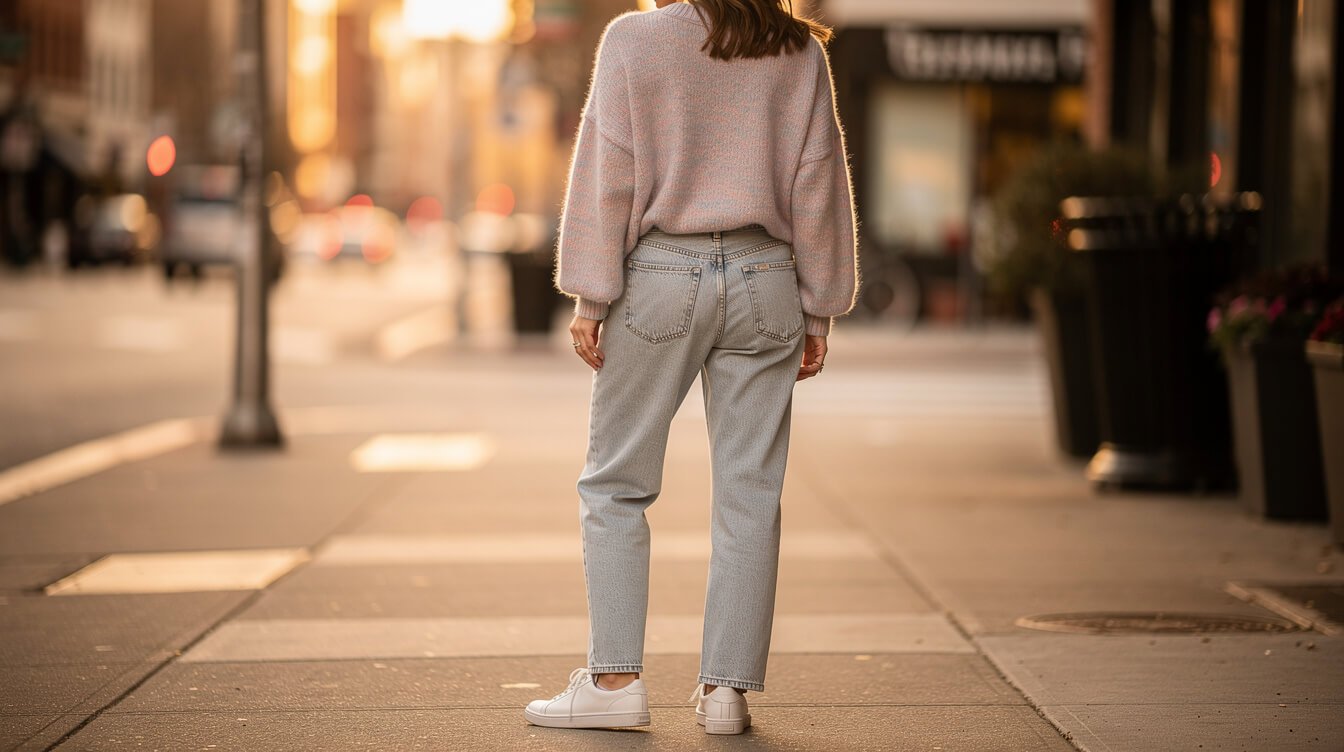
The easiest way to overdo kawaii is to treat it like a checklist: pastel top, printed skirt, character bag, bow in the hair, platform shoes, all worn at once. Any one of those pieces reads as a normal outfit choice. All five together read as a costume, even though none of them individually would.
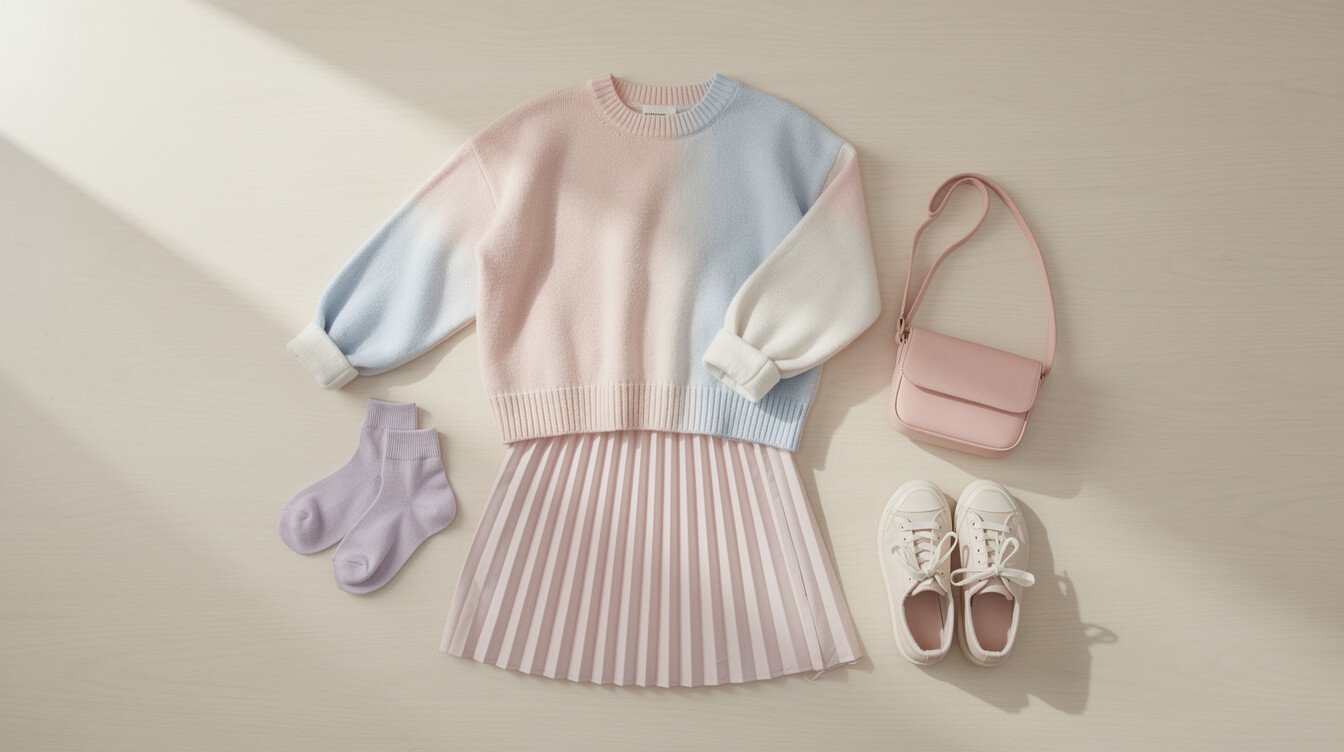
A more sustainable approach borrows a rule from a lot of good style advice regardless of aesthetic: pick one or two focal points and let the rest of the outfit support them quietly. If your shirt has a soft illustrated animal on it, let your jeans and shoes stay simple. If you are wearing a full pastel skirt, keep the top plain. This is the same one-subject instinct that makes a design feel considered instead of cluttered, and it works exactly the same way on a body as it does on a t-shirt or a tote bag.
Texture and fit do a lot of quiet work too. Kawaii fashion leans soft: knits, brushed cotton, a slightly oversized cut here and there. None of that requires anything unusual, since most closets already have a few soft, round-shaped basics sitting in them. The aesthetic is often less about buying new things and more about noticing which pieces you already own lean gentle, and building outward from those.
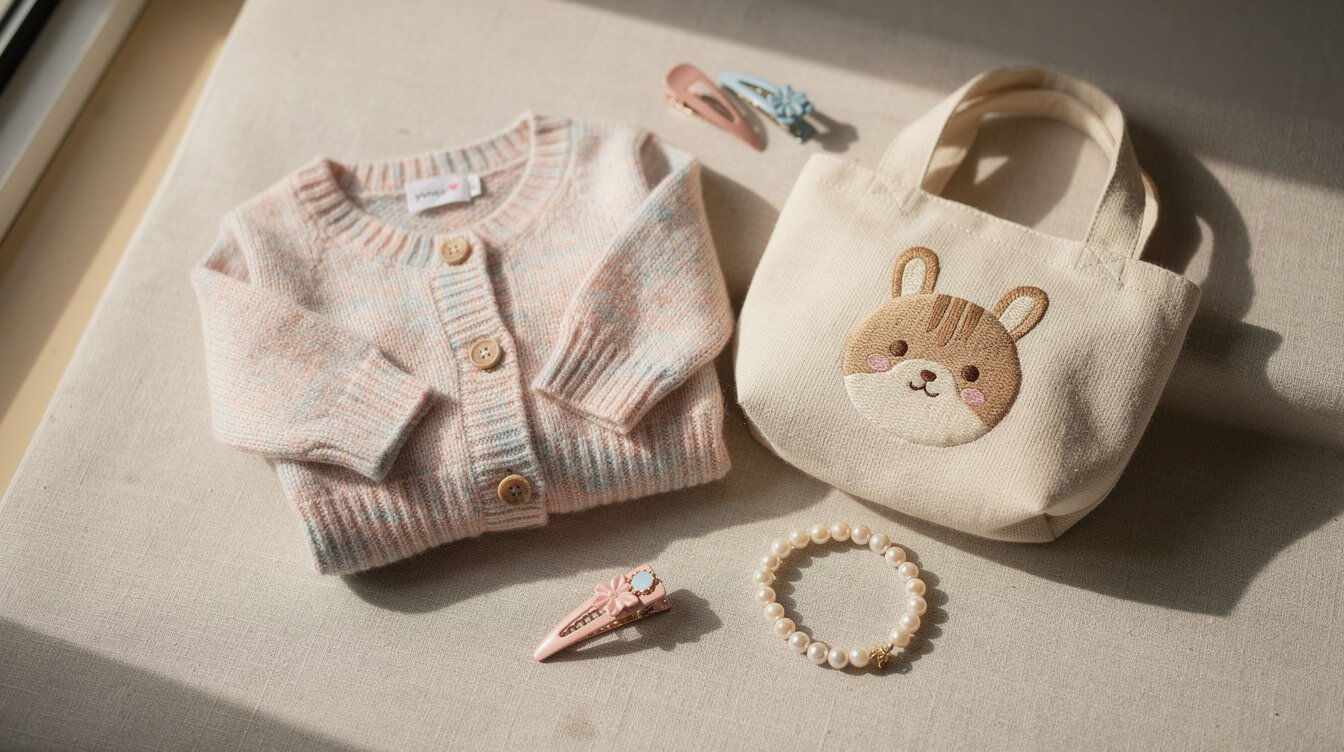
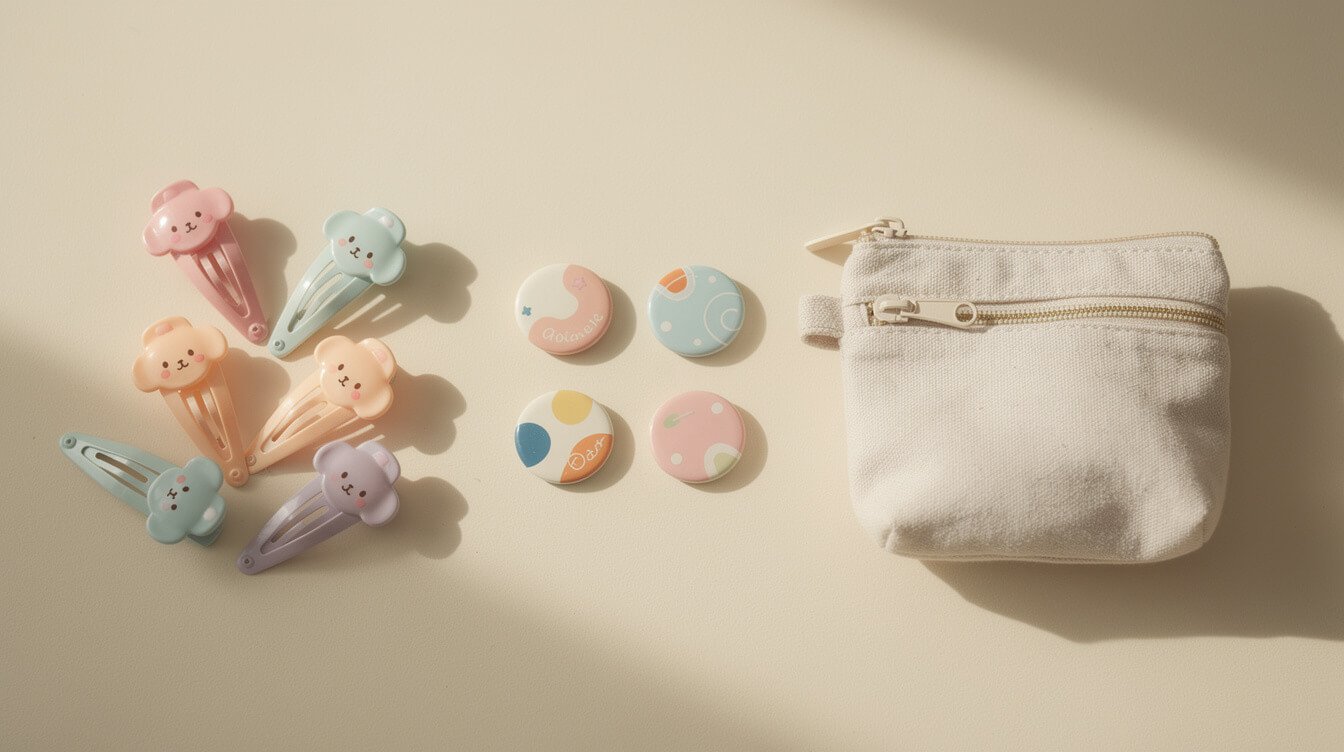
Accessories are where you can turn the volume up or down without touching your actual outfit. A single enamel pin, a round bag, or one hair clip can carry the whole kawaii mood on a day when your clothes are otherwise plain. That flexibility is part of what makes this aesthetic livable day to day rather than reserved for special occasions.
It is worth noticing how much this mirrors the logic behind cottagecore, its closest aesthetic cousin. Both styles ask you to soften a normal outfit rather than replace it outright, and both fall apart the moment every single piece is trying to make the same statement at once. If you already know how to dress cottagecore without looking like you raided a costume trunk, you already understand the core skill kawaii asks of you too. The palettes differ, muted earth tones for one and soft brights for the other, but the restraint underneath them is identical.
Weather and setting matter more than people expect too. A soft pastel sweater reads as effortlessly kawaii in a cozy cafe or on a slow weekend, and reads a little out of place at, say, a formal work meeting. That is not a rule against wearing it there, just a reminder that context does some of the styling work for you, the same way it would for any other aesthetic.
Kawaii color palettes and motifs worth starting with
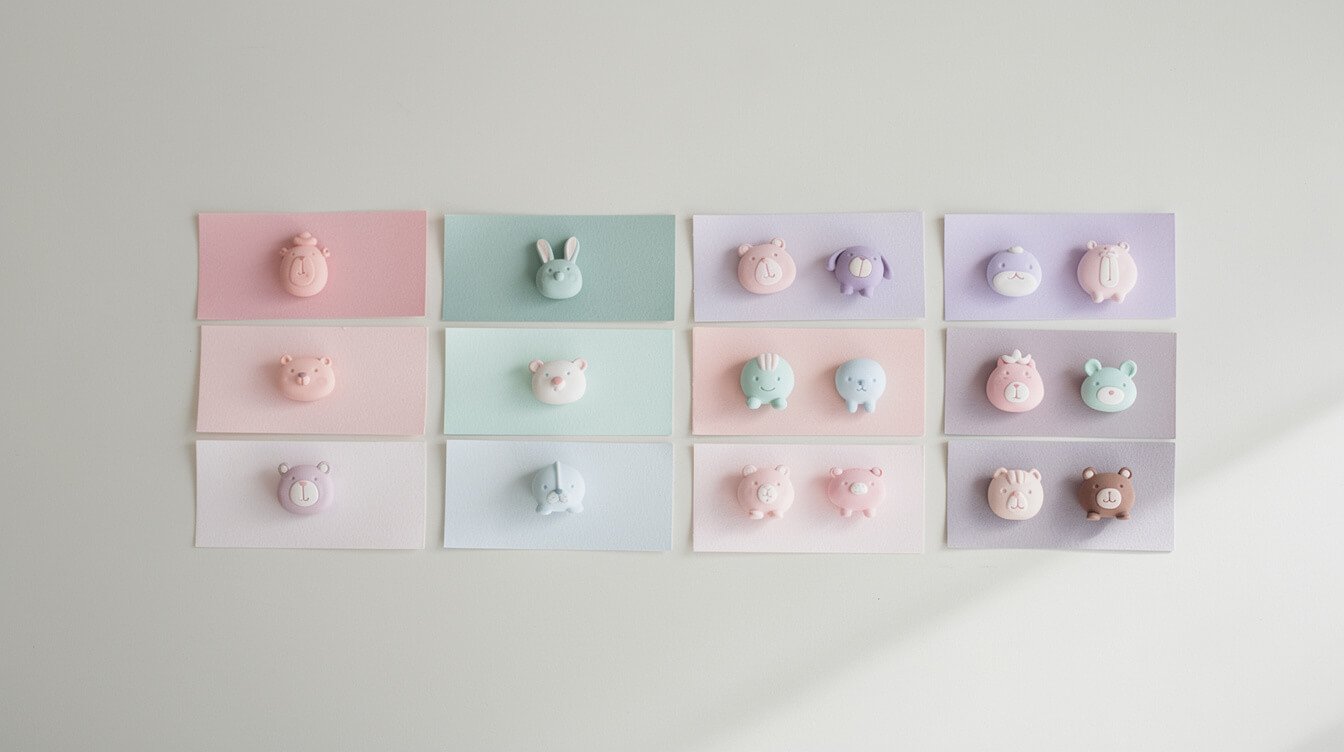
Color is doing more of the work in kawaii fashion than any specific garment shape. The classic palette leans soft and slightly desaturated: baby pink, lavender, mint, butter yellow, sky blue, and cream, usually two or three of those together rather than the whole set at once. Bright, saturated primary colors can still read as kawaii, but they tend to work better as a single accent against a soft neutral base than as the whole outfit.
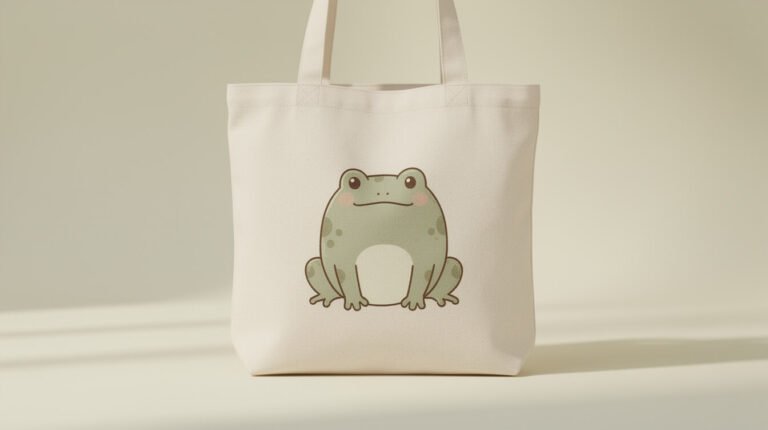
Motifs matter as much as color. Round animals are the most enduring kawaii motif for a reason: a rounded shape reads as gentle and approachable to the eye almost instantly, which is the entire emotional trick behind the aesthetic. Frogs, cats, bears, and bunnies show up constantly because their natural proportions are already round. Small food motifs, tiny mushrooms, and soft weather symbols like clouds or stars round out the rest of the usual vocabulary.
If you want a shortcut for building a palette you will not get tired of in three months, pick one neutral you already wear a lot, cream, white, or a soft gray, and pair it with exactly one pastel and one small motif at a time. That keeps every piece flexible enough to mix with things you already own, instead of locking you into buying an entirely matching wardrobe.
Seasonal color shifts are worth planning for too, since a palette that feels right in spring can feel out of place by late fall. Cooler months tend to suit deeper pastels, dusty rose, sage, and soft plum, paired with warmer neutrals like cream or oatmeal instead of stark white. Warmer months lean into the classic bright pastel set, sky blue, baby pink, and mint, since they sit naturally against lighter fabrics and more skin showing. Thinking of kawaii as a palette that shifts with the season, rather than one fixed set of colors, keeps the aesthetic from feeling stuck or costume-like year round.
Our guide to the round animal t-shirt trend goes deeper into why this specific shape works so well if you want to build a whole outfit logic around it.
Building a kawaii look from pieces you already own
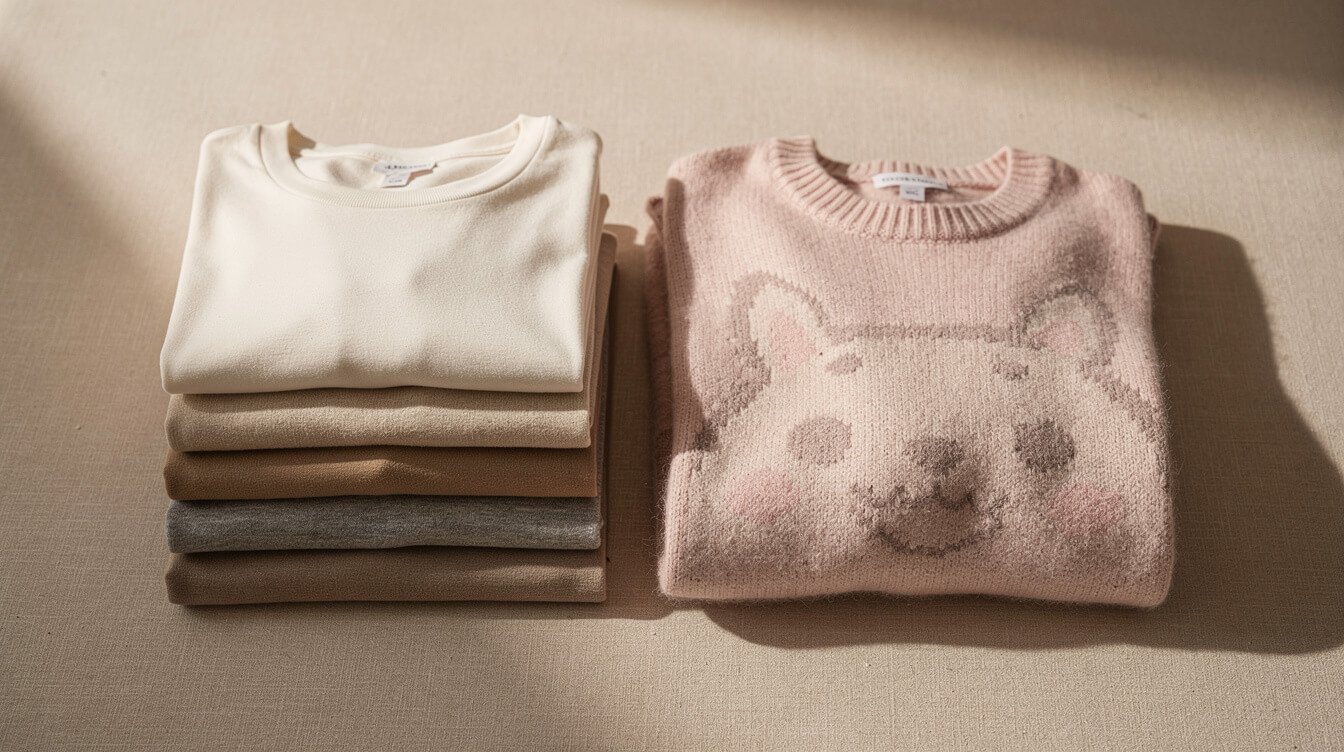
Most closets already have more kawaii potential in them than people expect. A plain white t-shirt, a soft knit cardigan, straight-leg jeans, and a pair of simple sneakers are all neutral enough to support a kawaii statement piece without any of it needing to be replaced. The fastest way into the aesthetic is usually one graphic tee with a single round, well-drawn animal on it, worn with whatever plain bottoms you already reach for most days.
This is exactly the gap we noticed when we designed our kawaii hedgehog tee: one soft, round subject, a quiet pastel palette, and a shape simple enough to wear with jeans on an ordinary Tuesday. It is a small, easy way to test whether the aesthetic suits you before committing to anything bigger.
From there, build outward slowly. A round tote bag, a pastel cardigan, or a single hair accessory each add one more kawaii signal without asking you to overhaul anything. The goal is a closet where the kawaii pieces slot in next to your normal clothes rather than living in a separate, occasion-only drawer.
A useful test before buying anything new: picture the piece worn on an ordinary errand day, not a photoshoot or a themed event. If it still feels like something you would reach for to grab groceries or meet a friend for coffee, it belongs in an everyday kawaii wardrobe. If you can only picture wearing it for a planned occasion, it is a costume piece, which is not a bad thing to own, just a different category from the everyday basics this guide is focused on.
Kawaii on a budget, without the costume-grade price tag
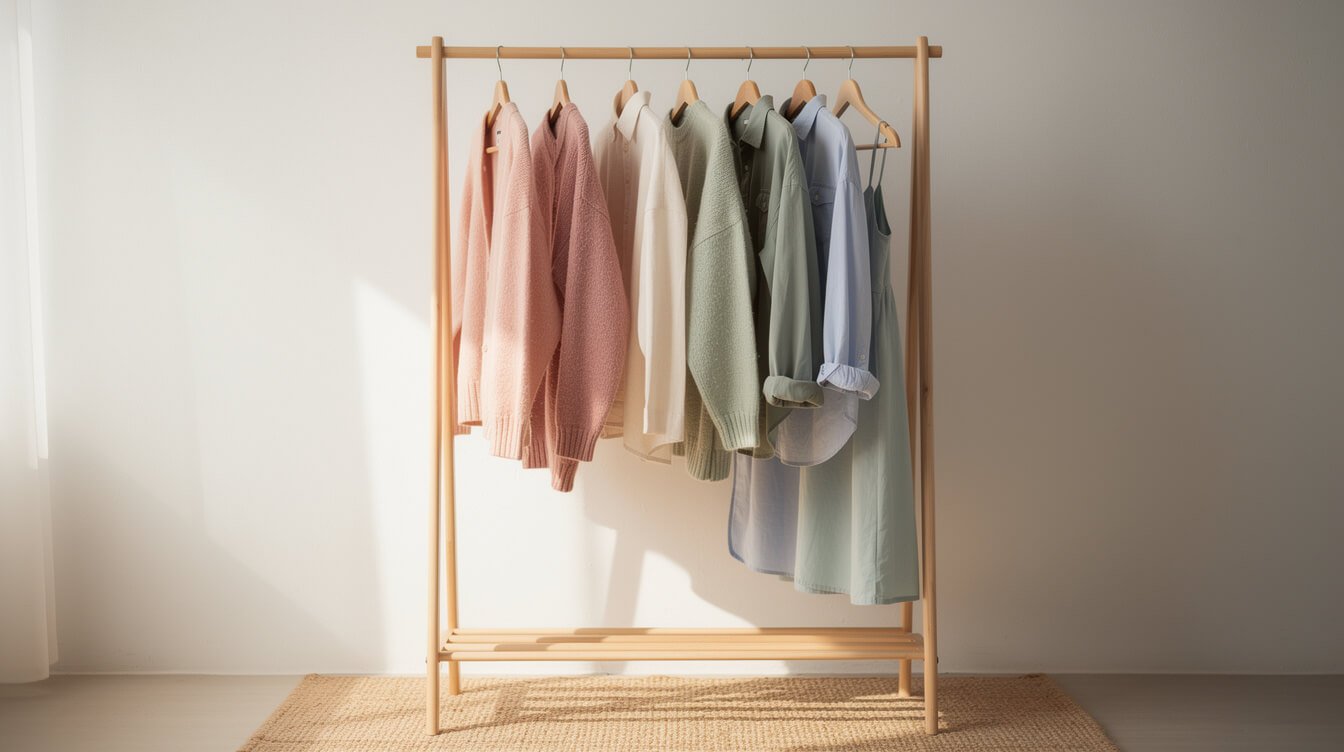
Full cosplay-adjacent kawaii, the platform boots and layered lace end of the spectrum, can get expensive fast, since specialty pieces are usually made in smaller runs. The everyday version of the aesthetic is much kinder to a budget, mostly because it leans on basics you can find almost anywhere: plain knits, simple tees, and denim in soft colors are not a specialty item, they are just normal clothing shopped with a slightly gentler eye.
Thrift and secondhand shopping is a genuinely good fit for this aesthetic, since pastel basics and soft knits show up in secondhand racks constantly, usually because someone bought a color they later decided did not suit them. That is a lucky break for anyone building a kawaii wardrobe, since the pieces just need to be soft and rounded in shape, not brand new.
Where it is worth spending a little more is on the one or two statement pieces that carry the aesthetic on a quiet day, a well-made graphic tee or a single accessory with real design behind it, rather than a fast-fashion print that fades after three washes. One well-made piece will outlast and outcharm five cheap ones, and it is the piece people will actually remember on you.
A quick way to sort quality from filler when you are shopping: check the print method before the price. Screen printing and direct-to-garment printing on a pre-shrunk cotton base tend to hold their color through repeated washes, while cheap heat-transfer vinyl on thin fabric cracks and peels within a month. A slightly higher price on a well-printed tee is almost always the better long-term value, since you will not be replacing it by spring.
Frequently asked questions about kawaii clothing
Is kawaii clothing the same as cosplay?
No. Cosplay recreates a specific character. Kawaii clothing borrows a general mood, soft colors and round shapes, without referencing any one character or franchise.
Do I need to buy a whole new wardrobe to dress kawaii?
Not at all. Most closets already have soft, neutral basics that pair well with one or two kawaii pieces. Start with a single graphic tee or accessory rather than replacing everything at once.
What colors count as kawaii?
Soft pastels lead the palette: pink, lavender, mint, butter yellow, sky blue, and cream. Bright colors can work too, usually best as a single accent against a soft neutral base.
Is it okay to wear kawaii clothing if I am not into anime?
Yes. The aesthetic grew out of Japanese street style broadly and has long since become its own thing, worn by plenty of people who have never watched an episode of anime in their life.
How do I avoid looking like I am in costume?
Pick one or two focal points and keep everything else simple. A single printed tee with plain jeans reads as personal style. Five kawaii signals worn together tend to read as costume, even if none of them are.
What is the difference between kawaii and cottagecore?
They are close cousins rather than the same aesthetic. Cottagecore leans on muted, earthy tones and a rural, storybook mood, while kawaii leans on brighter pastels and a playful, round-shaped mood. Both share the same underlying instinct toward softness over sharpness.
Final thoughts: kawaii is a wardrobe, not a costume
The most useful thing to remember about kawaii clothing is that it rewards restraint, the same soft, round, one-good-idea instinct that shows up everywhere else in cute design. You do not need to dress like a character to dress kawaii. You need one soft piece you actually like, worn with the plain basics you already own, and the confidence to let that be enough.
If you want a gentle place to start, our shop has a few small, considered pieces built for exactly that kind of everyday wear. No pressure to build a whole look today. One good piece is a fine place to begin.
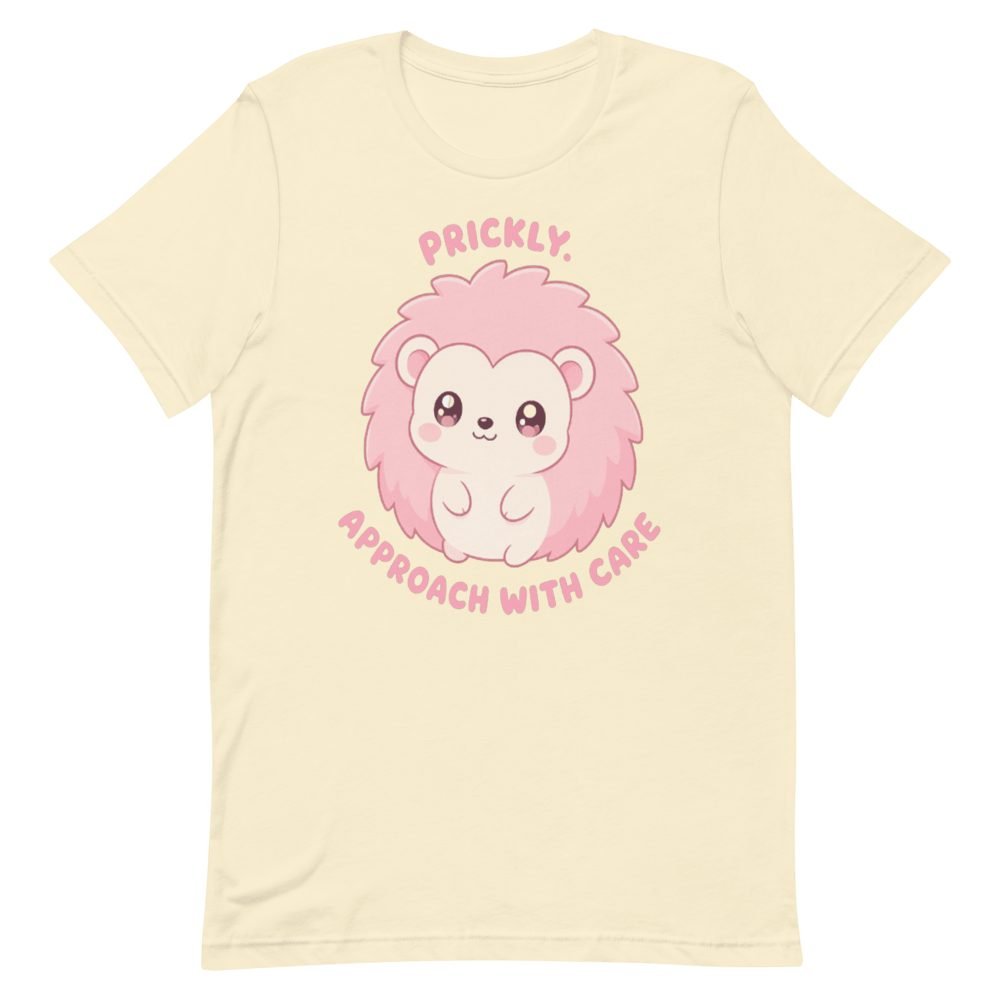
One soft piece to start with
A round, pastel hedgehog on soft cotton, easy to wear with the jeans you already own. A quiet, everyday way to try the aesthetic without committing to a whole new wardrobe.