Kawaii Room Decor That Feels Cozy, Not Cluttered
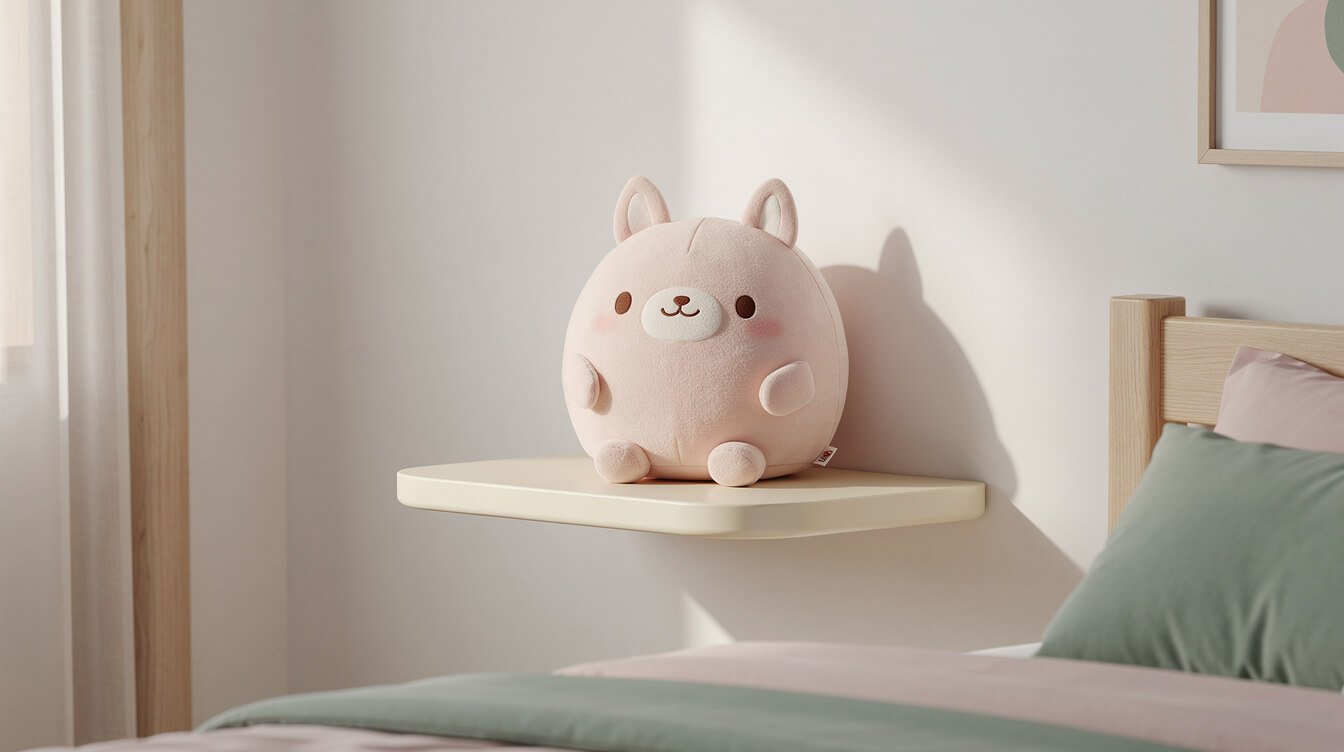
Kawaii room decor has a reputation problem. Type it into Pinterest and two kinds of results come back: rooms that look like a candy store overflowed in the best way, and rooms that look nearly identical to the last dozen you scrolled past. Somewhere between those two sits the room you actually want, cute enough to make you smile every time you walk in, put together enough that it still feels like yours. That is the version we build for here. Soft, round animal, made well, not a costume you outgrow by spring.
We will walk through the palette, the line between cute and cluttered, the pieces that will not cost you your security deposit, and how to build the room in stages instead of one overwhelming order. Grab a cup of tea. None of this needs to happen in a weekend.
What kawaii room decor actually means
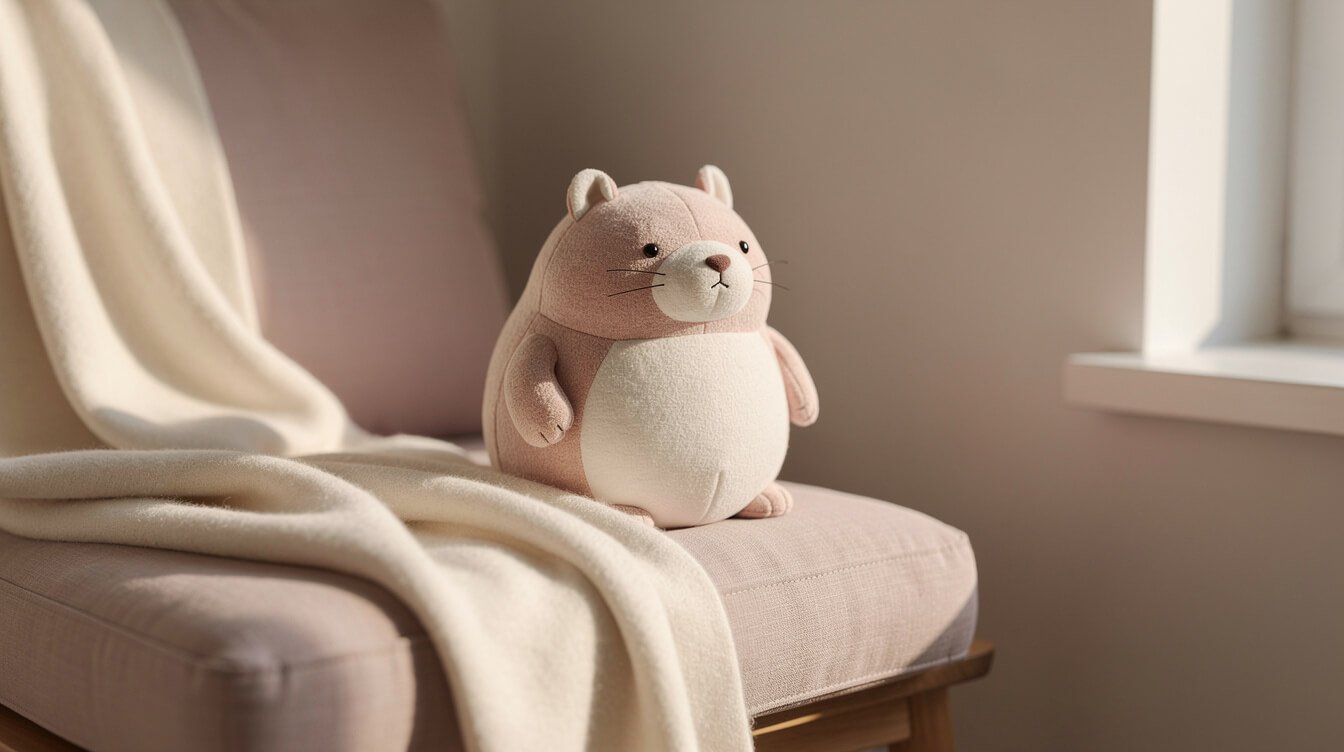
Kawaii is a Japanese word that translates loosely to cute, but the aesthetic built around it means something a little more specific. It is softness on purpose. Rounded edges instead of sharp ones, pastel and cream instead of stark white, small creatures with big feelings instead of anything trying too hard to look cool. A kawaii room borrows that same instinct. Nothing in it is trying to impress a stranger, it is built to make the person who lives there feel a little more at ease every time they walk in.
That is also where a lot of kawaii room decor goes wrong. Somewhere along the way it started to mean more, more pastel, more plushies, more string lights, more of everything stacked until the room reads as loud instead of soft. The rooms that actually work do the opposite. They pick a handful of things they love completely and let those pieces breathe. A single round animal on the shelf says more than ten scattered across every surface.
If you are starting from a blank room, good, you get to build this with intention from the first purchase. If you already have a room full of things that do not quite feel like you yet, also good. Most of what follows is about subtraction and a few well chosen additions, not starting over.
One more thing worth saying up front: kawaii is not just for teenagers. Anyone tired of decor that all matches the same beige moodboard can use a little of this. Cute is for everybody, at every age, and that includes your bedroom.
It also is not the same thing as a themed room built around a single character or franchise. Kawaii room decor, the version that actually holds up over years and not just one enthusiastic season, leans on shapes and colors rather than borrowed mascots: a round face instead of a specific one, a soft palette instead of a licensed print. That is partly a taste choice and partly a practical one. A room built around a color and a mood ages with you. A room built around whatever was trending the year you decorated it usually does not.
Start with the palette, not the shopping cart
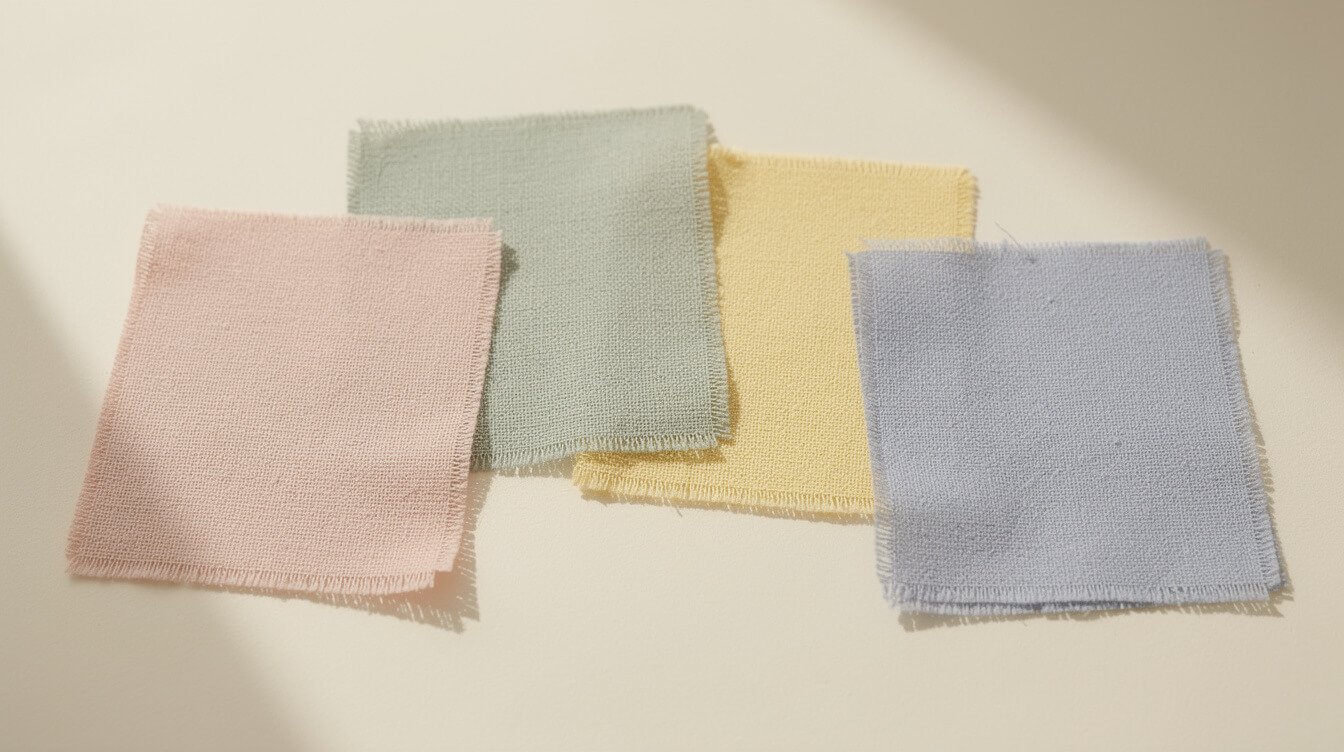
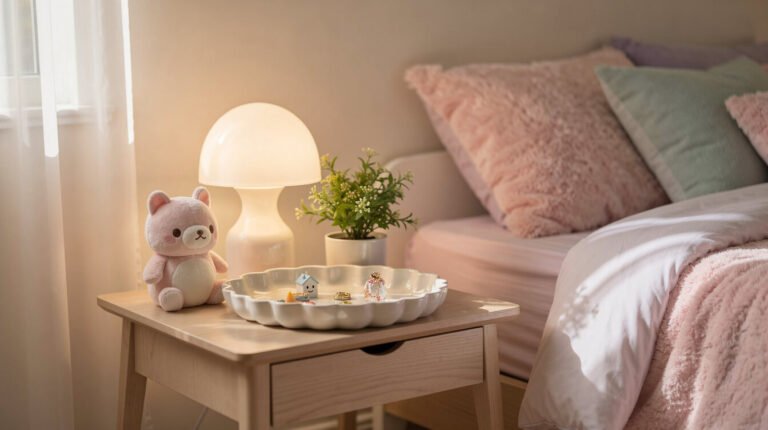
Before anything else, pick one color to build around. Not five, one. A soft blush pink, a sage green, a butter yellow, a periwinkle blue. Every other color in the room, from the bedding to the little dish on the desk, should feel like it is in conversation with that one shade instead of competing with it.
Pastels are the backbone of the aesthetic for a reason, they read as soft and unhurried. But pastel does not have to mean pale. You can go more saturated, a proper bubblegum pink or a deep lavender, as long as you stay consistent. What breaks a kawaii room is rarely the intensity of the color, it is usually having three or four unrelated color stories fighting on the same wall.
If you rent, or you simply do not want to commit to a paint color yet, start with textiles instead of walls. A pastel duvet cover, a set of curtains, a rug in your foundational color will carry the palette just as well as paint, and none of it needs a landlord’s permission. We will come back to renters with a full section below.
Do not overlook the desk corner while you are choosing your palette. It carries more of the room’s personality than people expect, and it is worth its own pass. We go deeper on that in our guide to cute office stationery that still feels grown up.
One last note: white walls are not the enemy. A warm off white or cream wall is one of the best backdrops for kawaii decor, because it lets the color you do bring in actually stand out instead of getting lost in a room that is already busy.
Metal and hardware finishes matter more than people expect too. Warm gold, brushed brass, or a soft matte white on lamp bases, drawer pulls, and picture frames sits far more comfortably in a kawaii room than cool chrome or dark black iron, which tend to read industrial and pull the eye away from the softness everywhere else. It is a small, cheap swap, a set of drawer knobs or a lamp base, but it quietly ties a room together in a way the bigger purchases cannot.
The line between cute and cluttered
Here is the part most kawaii decor guides skip. There is a real line between a room that feels curated and a room that feels like a craft fair exploded, and almost everyone crosses it by accident.
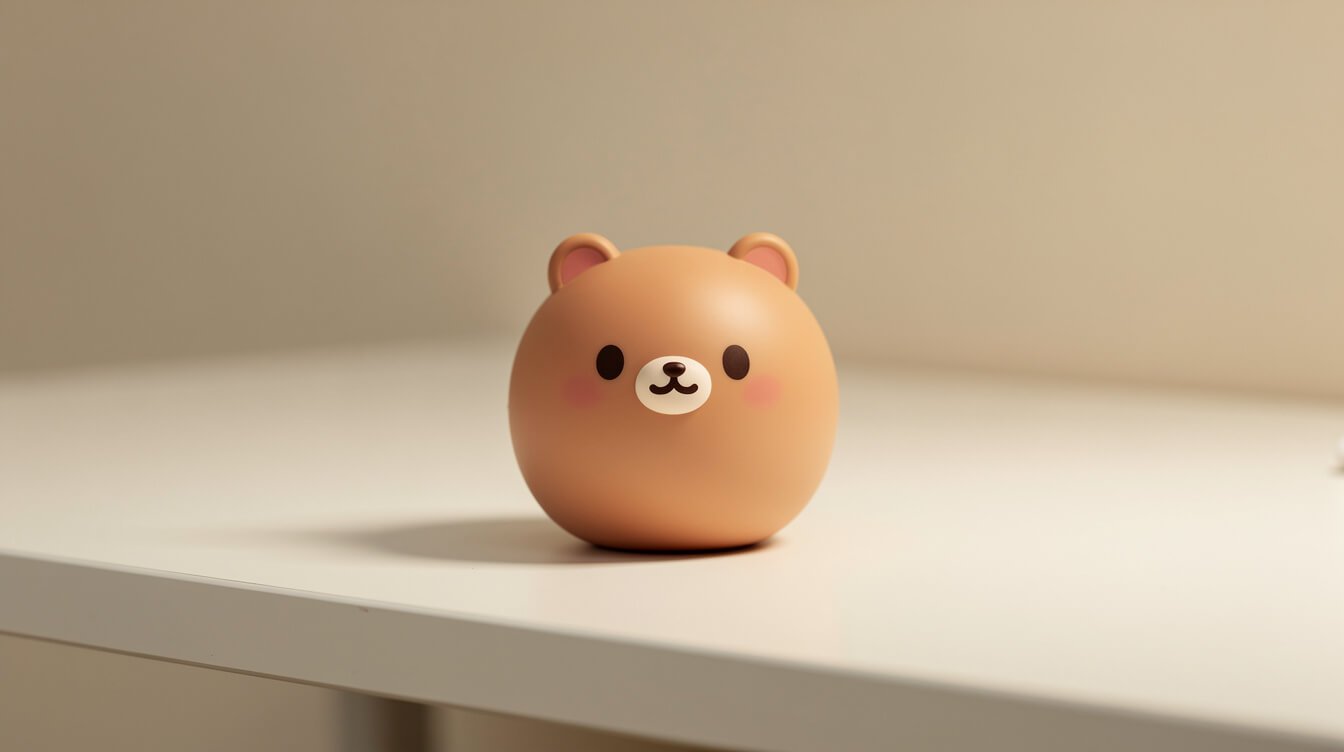
The tell is usually density. A desk with one well made round animal figure and a small dish for hair ties reads as sweet. The same desk with fifteen keychains, a dozen stickers, three plushies, and a string of lights all competing for attention reads as chaos, even though every individual piece might be lovely on its own. Cute has a ceiling. Past a certain point, adding more does not add more charm, it just adds more noise.
A simple rule that works: for every new piece you bring into the room, put one away, even temporarily. Rotate your plushies instead of displaying every single one at once. Keep one shelf for the pieces that mean the most to you, and let the rest live in a basket or a drawer, ready to swap in the next time you want a change.
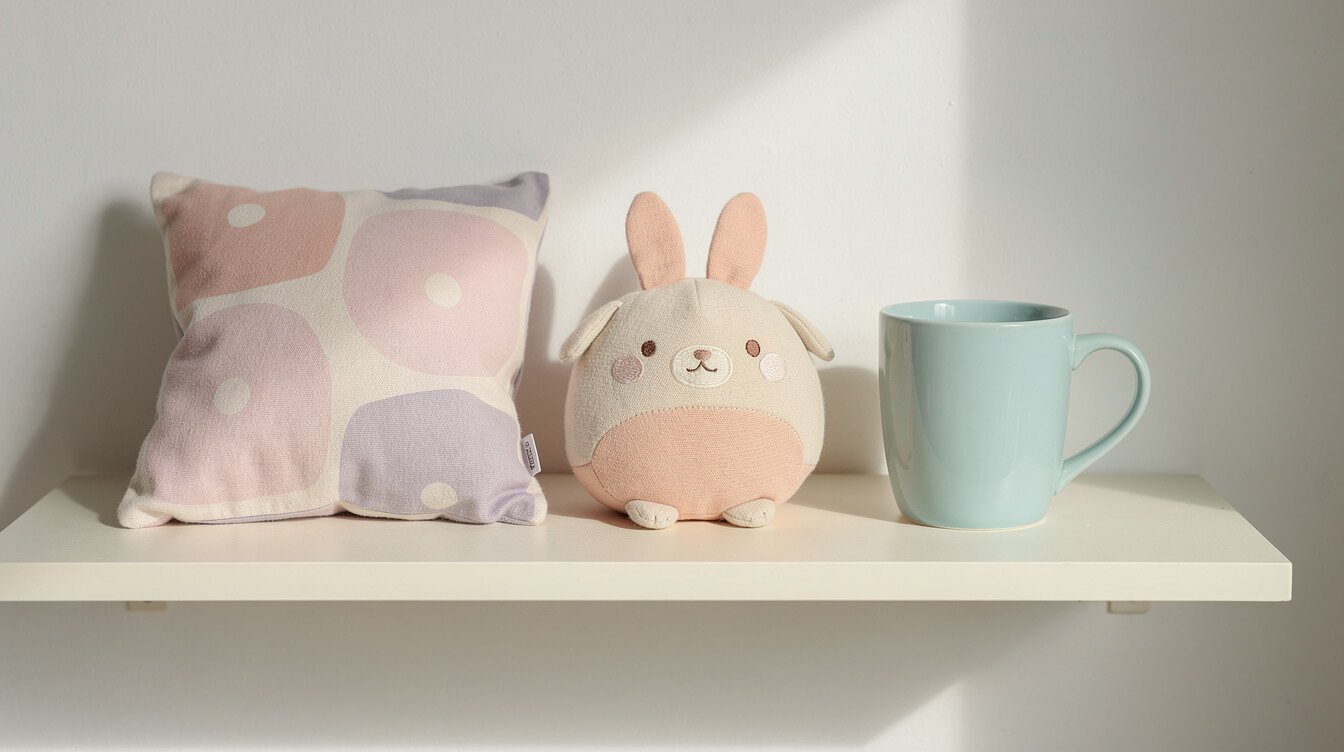
This is also, quietly, the difference between decor that looks cheap and decor that does not. A single well made mug on an otherwise clear shelf photographs, and lives, better than a shelf stuffed with a dozen dollar store trinkets. Quality over quantity is not just a nice idea here, it is the entire trick. If you want a place to start with that idea, our guide to choosing a mug that actually lasts covers what to look for so the one piece you keep out actually holds up.
If you love a lot of things, and many kawaii collectors do, give them a rotation instead of a permanent stage. A labeled bin for the plushies not currently on duty means you get to enjoy your whole collection over time instead of asking your room to display it all at once. It also keeps the room feeling intentional instead of accumulated.
A good test before buying anything new: picture where it will live a year from now, not just where it will look nice today. A piece that only works propped against six other pieces on a crowded shelf will struggle the moment your taste shifts even slightly. A piece that could stand alone on an empty shelf and still feel complete is the one worth the money. Most of the objects we would call genuinely well made pass that test easily. Most of the ones that end up in a donation box a year later do not.
Renter-friendly kawaii room decor, no drilling required
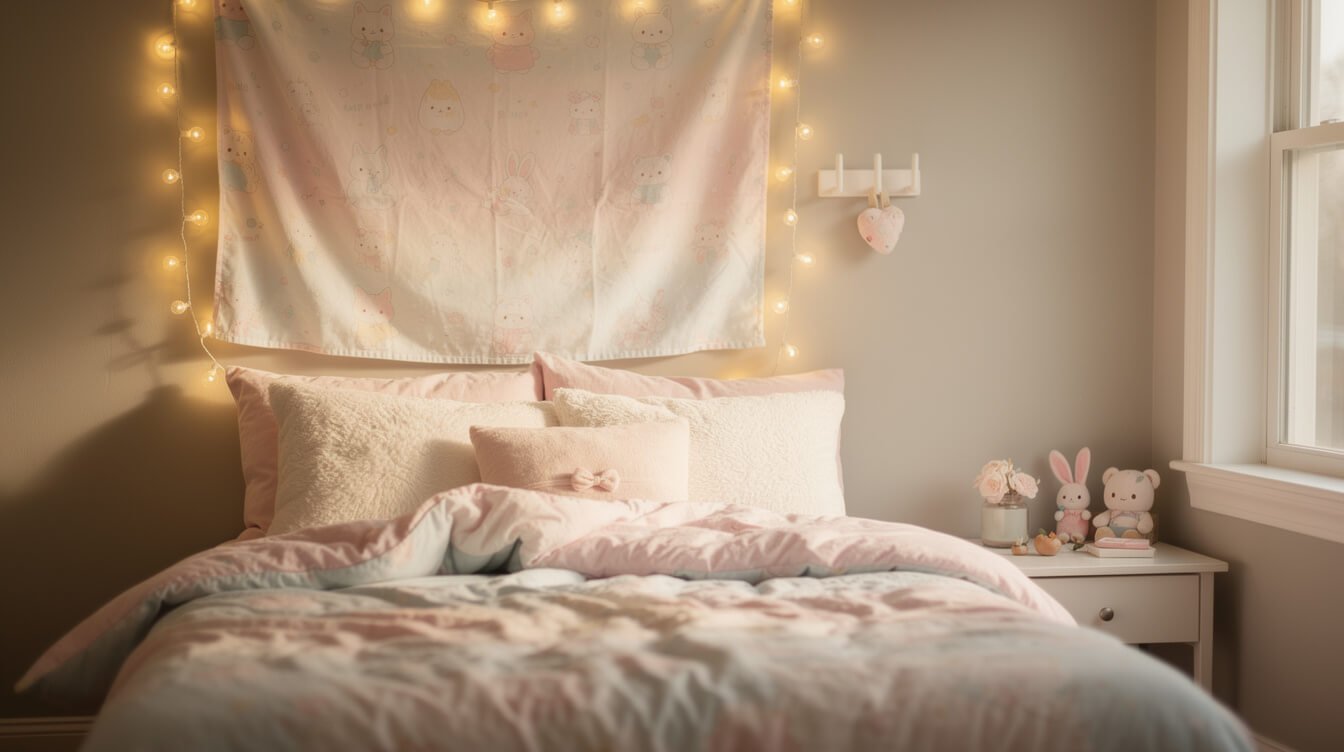
Renting does not have to mean beige and borrowed. Command hooks and adhesive strips hold most of what a kawaii room needs, tapestries, string lights, small shelves rated for the weight, without leaving a mark when you move out. Removable wallpaper can cover a single accent wall in an afternoon and comes off clean.
Bedding and textiles do the heaviest lifting for renters. A pastel duvet, a round animal shaped pillow, a soft rug in your foundational color, none of it needs the landlord’s blessing and all of it moves with you to the next place. Think of your bed and your desk as the two spaces you fully control, and let them carry the aesthetic while the walls stay neutral and easy to restore.
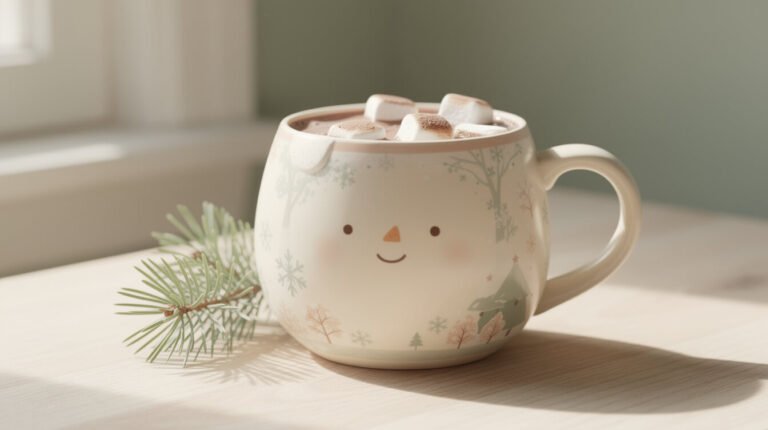
A small mug or two, chosen well, does a surprising amount of work on a renter’s desk or nightstand, something to hold pens, something to hold tea, both quietly on theme without a single nail. If you want a starting point, we keep a running edit of pieces like that in the drinkware corner of the shop, or you can browse everything at once over in the shop.
Battery powered string lights and plug in options mean you get the soft glow without an electrician. Look for warm white over cool white, it reads cozier and photographs better. And if you are worried about the damage deposit, photograph your walls before you start, hang everything with adhesive rated for the actual weight of what you are hanging, and you will get your deposit back with a much cuter room to show for the year.
Rugs are the other renter secret worth knowing. A soft rug in your foundational color covers a floor you cannot repaint or refinish, muffles noise for downstairs neighbors, and gives you somewhere to sit that is not the bed. Layer a smaller round or scalloped rug on top of a larger neutral one for texture without needing to buy a single large statement piece. Both roll up and travel with you the next time you move, which is more than most of a kawaii room’s furniture can promise.
Three budget tiers for building the room you actually want
You do not need to buy a room all at once, and honestly you should not. Kawaii rooms built in stages tend to feel more like the person living in them, and less like a single order that arrived and got unpacked in a hurry.
Under fifty dollars: start with one small textile change, a pastel pillowcase or a single throw pillow in your foundational color, and one object you genuinely love on the desk or nightstand. This is the tier where restraint matters most. Pick the one thing that makes you smile every time you see it, not the cheapest ten things you could find.
Fifty to a hundred and fifty dollars: this is where a proper accent piece comes in, a duvet cover, a rug, a set of curtains, or a small piece of furniture like a round stool or a shelf. Add your second and third decor objects here, spaced out rather than clustered, so the room grows a little at a time instead of all at once.
A hundred and fifty and up: now you can think about furniture with real presence, a reading chair, a proper desk setup, or a full bedding and curtain refresh. Even at this tier, resist the urge to fill every surface. A room with breathing room around a few beautiful things will always feel more finished than a room where every inch is claimed.
Wherever you start, keep a running list of the pieces you actually want instead of buying whatever is in front of you. Kawaii decor is easy to find and easy to over buy. The rooms that hold up over time are the ones built slowly, around things the person living there really loves, not the ones assembled in a single cart at checkout.
A useful way to decide where your money goes: splurge on the things you touch or see every day, and save on the things that just fill space. A duvet you sleep under every night or a mug you hold every morning earns a slightly bigger budget line. A decorative object that sits on a shelf and gets glanced at once in a while does not need the same investment. That single filter, touched daily or glanced at occasionally, will steer almost every purchase decision in the right direction.
Frequently asked questions about kawaii room decor
What is the difference between kawaii and cottagecore room decor?
They share a love of softness, but the mood is different. Kawaii leans playful and pastel, round animals, sweet little objects, a room that feels like a gentle daydream. Cottagecore leans rustic and earthy, dried flowers, warm wood, worn linen. You can absolutely mix the two, a lot of the coziest rooms we have seen do. If you want the full picture of the second aesthetic, we cover it in our guide to what cottagecore actually is.
Do I need to spend a lot to make a room look kawaii?
No. The palette and the restraint matter far more than the budget. A single well chosen pillow and one object you love will read as more put together than a cart full of inexpensive extras. See the budget tier section above for a slower, kinder way to build the room.
What colors work best for a kawaii bedroom?
One foundational pastel, usually blush pink, sage green, butter yellow, or periwinkle, with a warm cream or off white as the backdrop. Stay consistent rather than colorful for its own sake.
How do I keep a kawaii room from looking cluttered?
Rotate instead of display everything at once, and hold to one rule: for every new piece you bring in, put one away. Density is what turns cute into chaos, not the individual pieces themselves.
Can I do kawaii room decor if I rent my space?
Yes, and it might even be easier. Lean on textiles, removable adhesive, and battery powered lighting, and let your bed and desk carry most of the aesthetic while the walls stay neutral.
Final thoughts
A kawaii room is not a finished product you order once, it is a slow collection of things that make you feel like yourself. Start with one color, pick the pieces you actually love instead of everything that is available, and let the room grow the way you do.
If you are looking for a place to start, we make a few round animal and pastel pieces of our own that tend to land well on a desk or a nightstand, you can see the current lineup any time in the shop. And if this kind of guide is useful, we have a few more cozy reads on the blog worth a look, including our piece on building a stationery kit you will actually use.