
What’s the difference between an opossum and a possum? A gentle guide to two misunderstood animals
You see it for a second in the headlights. A pale, pointed face, a gray body, a long bare tail sliding under the fence. Someone in the car says “possum,” someone else says “opossum,” and then a friend from Melbourne says that is not a possum at all. All three of you are a little bit right. So what’s the difference between opossum and possum, and why do two animals on opposite sides of the world share almost the same name?
The short version is that they are two different groups of marsupials, on two different continents, that ended up with the same word by accident. The longer version is much sweeter, and it involves a 400-year-old spelling habit, a tail that works like a fifth hand, and a defense move the animal does not actually choose. Here is the gentle guide, with a quick comparison table, the real story behind “playing possum,” and what to do if one turns up in your yard.
What’s the difference between opossum and possum? The short answer
An opossum is a marsupial from the Americas. A possum, in the strict sense, is a marsupial from Australia, New Guinea, and nearby islands. They look a bit alike from a distance, they both carry their young in a pouch, and they both come out at night. That is roughly where the family resemblance ends.
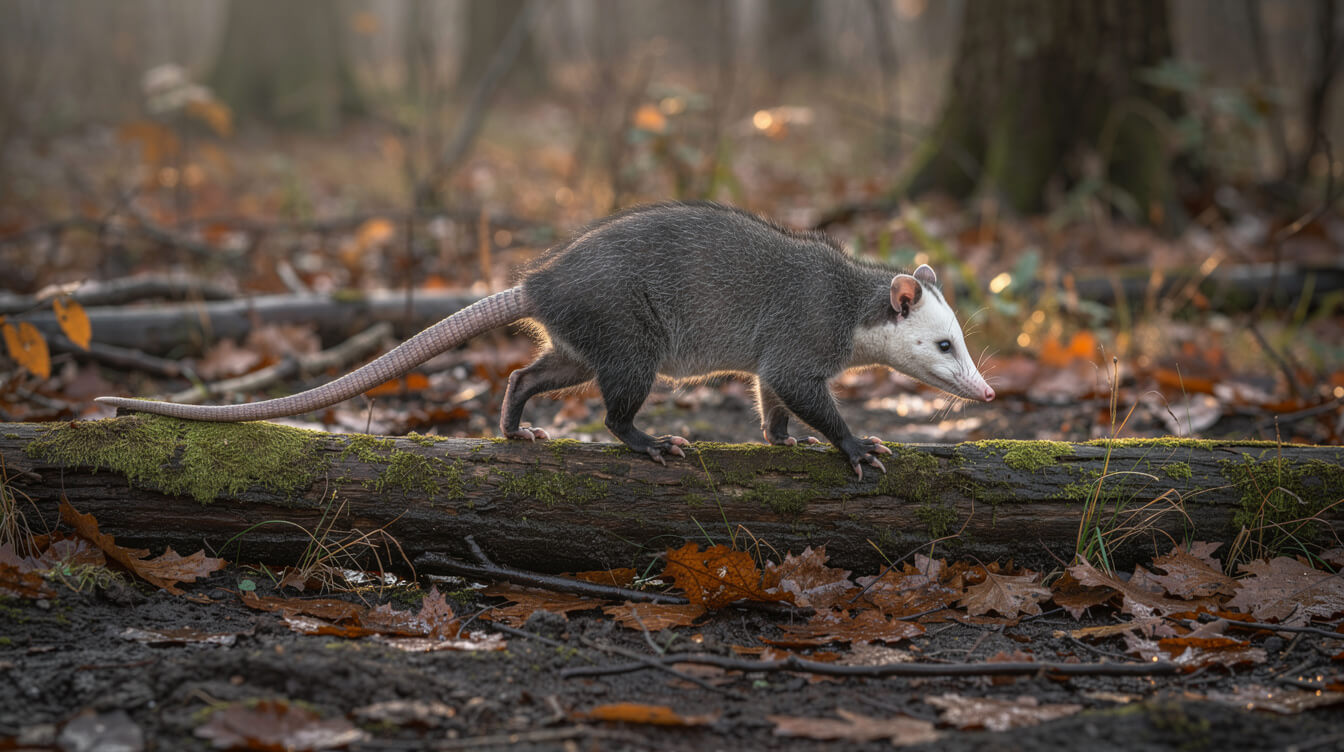
Opossums belong to an order called Didelphimorphia, which holds about 126 species spread across North, Central, and South America. Only one of them lives in the United States and Canada: the Virginia opossum, the gray, white-faced animal most Americans picture. It is the only marsupial north of Mexico.
Australian possums belong to a completely different order, Diprotodontia, alongside kangaroos, koalas, and wombats. Within it, the possums and their gliding relatives make up a group of about 70 species, from the common brushtail possum that lives in suburban roofs to pygmy possums smaller than a mouse. A brushtail possum is more closely related to a kangaroo than it is to the opossum in your backyard.
So is it wrong to call an opossum a possum?
Not in North America. In everyday American English, “possum” is a perfectly normal, dictionary-approved way to say “opossum,” and Merriam-Webster notes that the first “o” can be spoken or silent. The confusion only matters when you cross an ocean. If you are talking about the animal under the porch in Ohio, either word works. If you are talking about the fluffy animal in a Sydney gum tree, only “possum” is right.
The quick rule: opossum means Americas, possum means Australia, and in the United States the short word covers both out of habit.
How two animals on two continents ended up sharing one name

The word came first, and it came from Virginia. When English colonists arrived at Jamestown in 1607, they heard the Powhatan people’s name for the gray, white-faced animal in the woods. Between 1607 and 1611, John Smith wrote it down as opassom and William Strachey wrote it as aposoum. Both trace back to an older Algonquian word usually translated as “white animal,” most likely for that pale face.
Smith’s description from 1608 is still one of the best ever written: “An Opassom hath an head like a Swine, and a taile like a Rat, and is of the bignes of a Cat. Under her belly she hath a bagge, wherein she lodgeth, carrieth, and sucketh her young.” Four hundred years later, that is still a fair field guide.
Why Americans drop the “o”
Here is the quietly funny part. The shortened word “possum” was first recorded in 1613, only a few years after the long one. English speakers have been dropping that first syllable almost as long as they have been saying it. When you say “possum” for an opossum, you are not being lazy. You are carrying on a habit older than most American towns.
How the name traveled to Australia
More than a century and a half later, English-speaking naturalists and settlers reached Australia and met a whole new set of furry, tree-climbing animals with pouches. They did what people always do with something unfamiliar: they reached for the nearest word they already knew. These animals reminded them of the American opossum, so they became “possums,” and the name stuck to dozens of species that are not opossums at all.
That is the whole mix-up. No one was confused about the animals. One word just got borrowed for a lookalike, and then the original animal’s nickname turned out to be the same word.
The difference between possum and opossum, at a glance

If you only have a second (and with these night animals, that is usually all you get), the tail and the face tell you almost everything. Here is the difference between possum and opossum, side by side, using the Virginia opossum and the common brushtail possum, the two you are most likely to meet.
| Virginia opossum | Common brushtail possum | |
|---|---|---|
| Where it lives | North and Central America, from Costa Rica to southern Canada | Australia, and introduced to New Zealand |
| Tail | Long, bare, and scaly, used for gripping and carrying | Thick and bushy, with a bare grip patch underneath |
| Face | White, long, and pointed, with a pink nose and thin black ears | Shorter and rounder, with big dark eyes and larger furry ears |
| Fur | Coarse and grizzled gray, sometimes darker | Soft and dense, silver-gray to brown, sometimes golden |
| Closest relatives | Other American opossums | Other possums, gliders, and more distantly kangaroos and koalas |
| Teeth | 50, more than any other North American land mammal | Far fewer, built for chewing leaves |
| Diet | Almost anything: insects, fruit, worms, snails, carrion | Mostly leaves, flowers, and fruit, with the odd egg |
| When scared | Hisses and drools, then may involuntarily “play dead” | Hisses, growls, and climbs away |
The tail is your best clue
An opossum’s tail looks a little like a rat’s, which is the main reason people find them alarming. It is bare because it is a tool. Opossums use it to steady themselves on branches and to carry small bundles of leaves and grass back to the den. A brushtail possum’s tail is fluffy, like a dark feather duster, with only a small bare strip underneath for grip.
Size will not settle it
Both of the familiar species are roughly house-cat sized, so size is not a reliable tell. Across the whole possum group, the range is enormous: the smallest pygmy possums weigh around 10 grams, while some cuscuses can top 7 kilograms. Location is still the fastest answer. If you are in the United States or Canada, it is an opossum, every time.
The North American opossum, up close
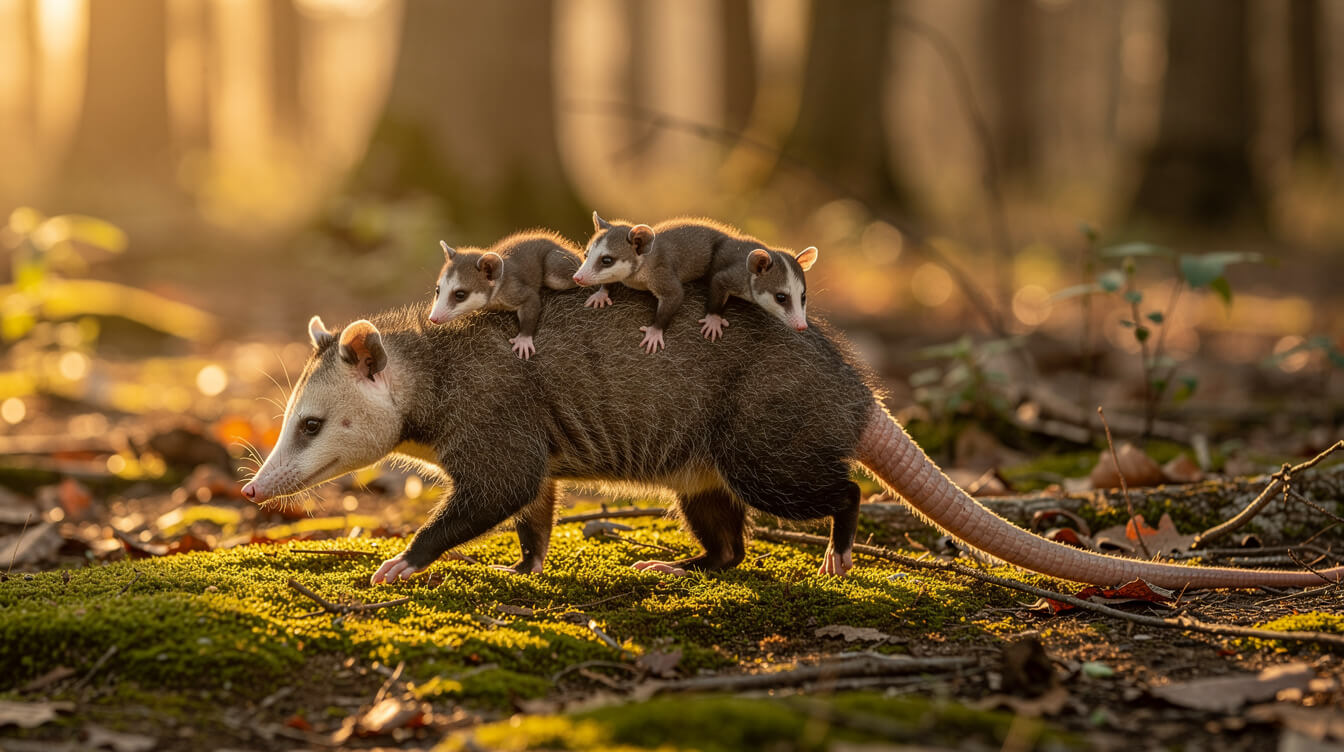
Once you know a few things about the Virginia opossum, it gets very hard to see it as a pest. It is a small, slightly awkward, deeply unusual animal that has been quietly getting on with things in the dark for a very long time. Its ancestors came up from South America after the land bridge at Panama formed, and it has been spreading north ever since, into places that were once too cold or too forested for it.
The pouch, and then the piggyback
Opossum newborns are about the size of a honeybee. After a pregnancy of only 11 to 13 days, they climb into their mother’s pouch and attach to one of her 13 teats, which are arranged in a little circle of 12 with one in the middle. A litter averages eight or nine, so not every newborn finds a place.
The young stay attached for about two months and in the pouch for about two and a half. Then they move outside and ride on their mother’s back, holding on to her fur while she walks, climbs, and forages. It is one of the most charming sights in North American wildlife, a single gray animal wearing a backpack of small white faces.
Fifty teeth and two thumbs
That big open-mouthed hiss shows off 50 teeth, more than any other land mammal in North America. Most of those teeth are for crunching beetles, snails, and fruit, not for fighting. Opossums also have an opposable, clawless thumb on each back foot, which helps them grip branches the way you would grip a railing.
A short life, and the reason for it
Here is the tender part. Virginia opossums live only about two years in the wild, and around four in captivity, which is very short for a mammal their size. Scientists think the reason is that, with so many predators and cars around them, few opossums ever got old enough for long life to matter, so evolution never invested in it. The best support for that idea is a population on Sapelo Island, off the coast of Georgia, that has lived for thousands of years without natural predators. Those island opossums age more slowly and live up to 50 percent longer.
It is a small, sad fact that makes them easier to love. The opossum crossing your yard is probably young, busy, and doing its best with the time it has.
If you like this kind of reveal, the gray hedgehog-shaped version of it is in our piece on why hedgehogs always look a little grumpy, another night animal whose face says one thing and whose personality says another.
The cutemerch letter
A small good thing, once a week
One short, kind email with our coziest posts and new round animals from the shop. No spam. Unsubscribe anytime.
Playing possum is not a choice
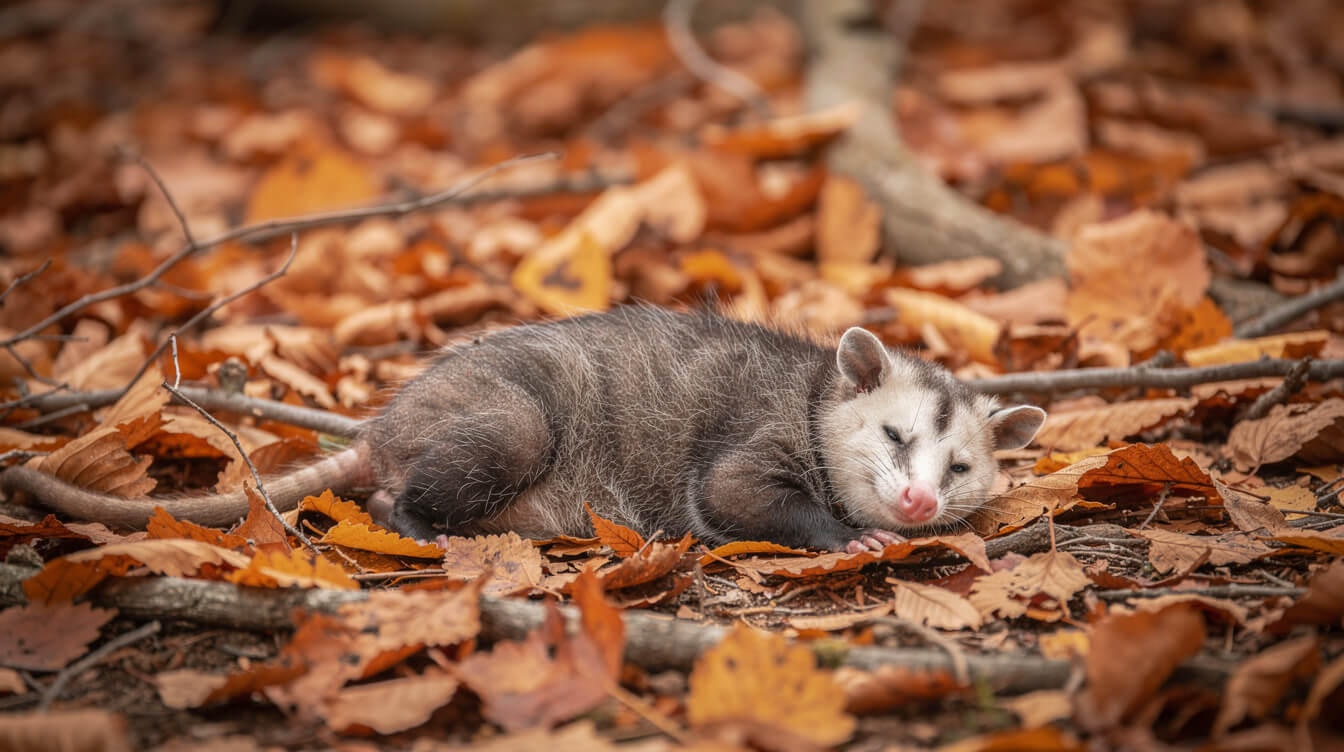
Everyone knows the phrase. “Playing possum” means pretending to be asleep or dead to get out of something. The real behavior is stranger and more touching than the idiom, because the opossum is not really playing at all.
First comes the bluff
When an opossum feels threatened, it usually tries to leave. If it cannot, it puts on a show: it opens its mouth wide, bares all 50 teeth, hisses, drools, and puffs up its fur to look bigger. This is the moment most people photograph, and it is the reason opossums have a scary reputation. It is mostly theater. The opossum is frightened, not furious.
Then comes the faint
If the bluff fails and the fear gets extreme, many opossums go limp. They fall onto their side with their mouth and eyes open, tongue out, and feet clenched. Their heart rate drops by about half and their breathing becomes so slow and shallow it is hard to see. They can also release a strong, unpleasant smell that tells a predator this meal is spoiled.
This is an involuntary response, more like fainting than acting. The opossum cannot simply decide to stop. It usually comes back once the threat has gone, and the state can last anywhere from a few minutes to several hours. It works well on predators that want live prey. It works badly on roads, which is one of the reasons so many opossums are hit by cars.
What to do if you find one “playing dead”
Leave it alone and give it space. Bring dogs and cats inside, step back, and check again later. In most cases the opossum will quietly wake up and walk off once the coast is clear. If it is in a road or has an obvious injury, call your local wildlife rehabilitator rather than handling it.
There is something we recognize in an animal whose biggest defense is a dramatic hiss followed by a faint. It is the same reason we have a soft spot for every creature people are afraid of at first sight. We do not make an opossum shirt, but our Free Spood Hugs Cute Jumping Spider T-Shirt is made for exactly that feeling, the friend everyone flinched at who turned out to be the sweetest one in the room. If you want the long version of that idea, our piece on whether jumping spiders are friendly tells it beautifully.
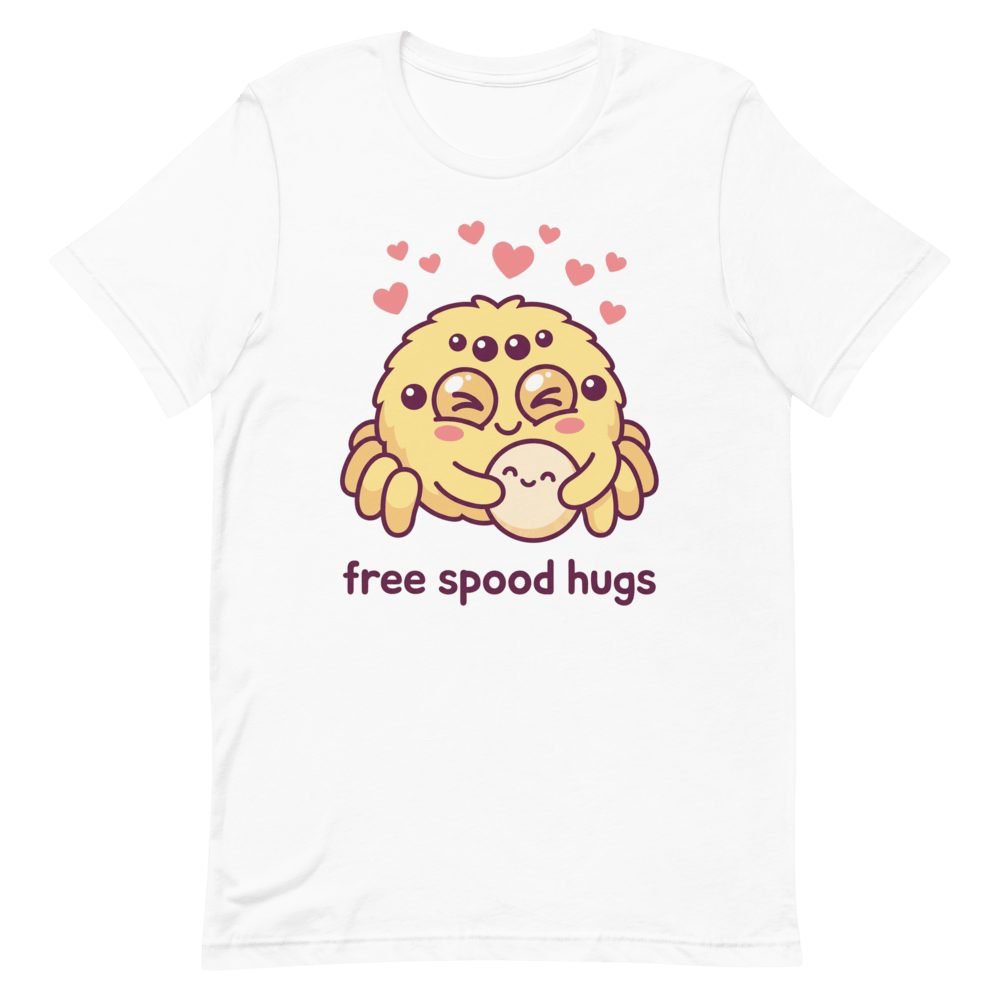
For the creature everyone misjudged
A round, golden jumping spider holding a tiny friend under a little cloud of hearts. Free Spood Hugs is for anyone who has ever stopped to look twice at an animal the world flinches at, and found something sweet there.
Australia’s possums: brushtails, ringtails, and gliders

Now for the other half of the name. Australia’s possums are a big, varied family of mostly nocturnal, mostly tree-dwelling marsupials, and many of them are among the softest-looking animals on the planet.
The common brushtail possum
This is the “possum” most Australians mean. It is about cat-sized, with silver-gray fur, big ears, large dark eyes, and that famous bushy tail. Brushtails have adapted happily to towns and suburbs, where they raid fruit trees and sometimes move into roof spaces, which makes them the closest thing Australia has to the American opossum’s reputation as a backyard regular. In New Zealand, where brushtails were introduced in the 1850s to start a fur trade, they have no natural predators and are treated as a serious pest. The same animal is a protected native in one country and an invader in the next.
Ringtails, pygmy possums, and gliders
Common ringtail possums are smaller, with a thin, white-tipped tail they curl around branches like a hook. They build round leafy nests called dreys. Pygmy possums are tiny, round-eyed, and small enough to curl up in a cupped palm. And the gliders, including the sugar glider, belong to the same broad possum group. They have a thin fold of skin stretched between their front and back legs, which lets them sail from tree to tree in the dark.
If the Australian side of this story is your favorite, you might also like our guide to what a quokka actually is, another small Australian marsupial with a face that has won over the internet. And for a whole parade of animals that are lovable precisely because they are a little strange, our piece on weird cute animals is the place to start.
If you see an opossum in your yard
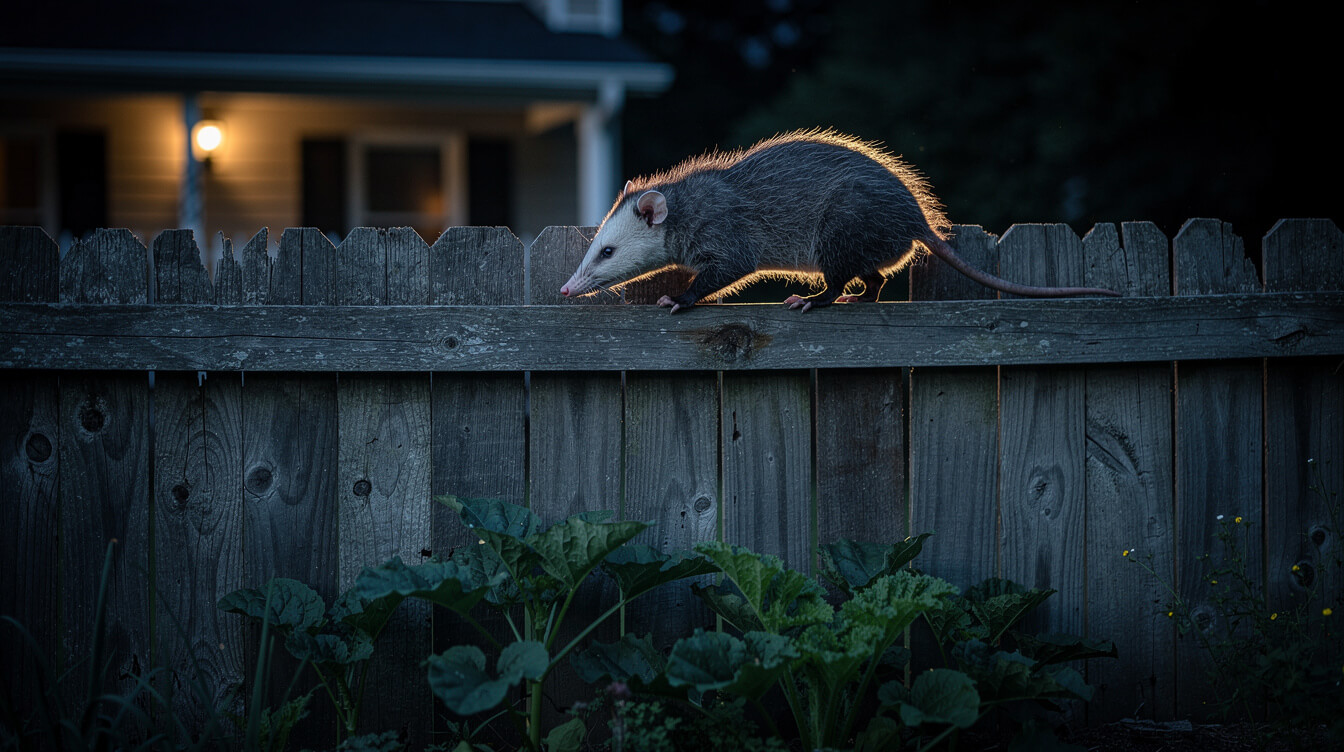
This is the question that sends most people searching in the first place, usually late at night with a flashlight. The kind answer and the practical answer are the same: leave it be.
Should I be worried?
Usually not. Opossums are shy, solitary, and almost always passing through. They are nomadic, moving from den to den rather than settling in one place for long, so the one you saw tonight may be gone in a few days. They are not aggressive animals. The hiss is a bluff, and an opossum given an exit will take it.
Do opossums carry rabies?
Opossums are rarely found with rabies, far less often than raccoons, skunks, or bats. A lower body temperature is often given as the reason, though that explanation is still more of a theory than a settled fact. Rare is not never, and like any wild animal they can carry other diseases and parasites. So the simple rule holds: do not touch, feed, or try to handle a wild opossum. If one seems sick, injured, or stuck, call a licensed wildlife rehabilitator.
Do opossums really eat 5,000 ticks a season?
This is the internet’s favorite opossum fact, and it is probably not true. The number came from a 2009 lab study in which opossums groomed off many of the ticks placed on them, and the estimate was then stretched to a whole season in the wild. When researchers looked at the stomach contents of wild opossums in a 2021 study, they found no ticks at all. Opossums do eat plenty of insects, snails, and slugs, and they clean up fallen fruit and carrion. They earn their place in the yard without the tick myth.
Are they immune to snake venom?
Partly, and it is one of their most remarkable traits. Virginia opossums are highly resistant to the venom of many North American snakes, thanks to a protein in their blood that neutralizes certain toxins. Resistant is not the same as immune to everything, but it is impressive for an animal that looks like it is mostly made of worry.
A few gentle ways to share space
- Bring pet food and water bowls in at night, and keep trash cans closed.
- Pick up fallen fruit if you would rather not host a late-night snack bar.
- Block gaps under decks and sheds once you are sure no one is home inside.
- Keep dogs on a leash in the evening during spring, when mothers are carrying young.
- Drive a little slower on wooded roads after dark.
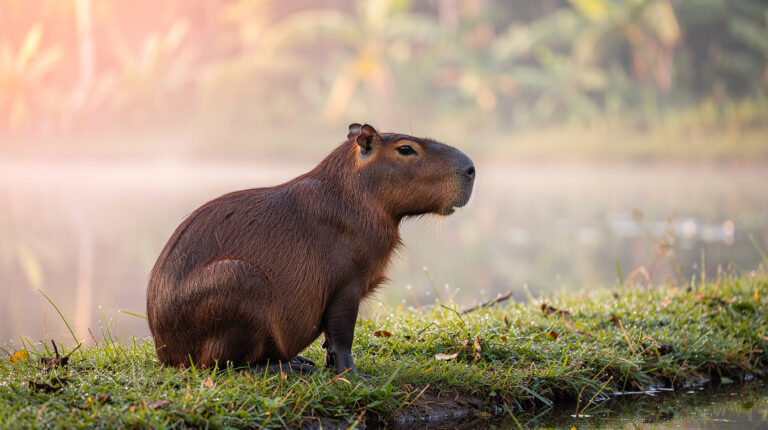
And if you get to watch one waddle across the grass in the porch light, take a moment. It is the only marsupial in your part of the world, it has 50 teeth and two thumbs, and it is having a very short, very busy life. That is worth a quiet look. For more animals people misread at first glance, our gentle guide to what an isopod is makes a lovely companion read, and if you would like a calmer animal entirely, there is always the famously unbothered capybara.
Final thoughts
The opossum and the possum are not cousins and not the same animal. One is an American original with a bare tail, a white face, and a fainting spell for a defense. The other is a whole family of soft, bushy-tailed Australian tree dwellers who borrowed its name. The words got tangled because people met something new and reached for something familiar, which is a very human thing to do.
What we hope you take away is a little more kindness for the one you are most likely to meet. The gray animal under the porch light is not a rat, not a threat, and not a villain. It is a shy, short-lived marsupial with a pouch full of honeybee-sized babies and a hiss that is mostly nerves. Give it room, keep the dog inside for a few minutes, and let it get on with its night.
Before you go
Want the next one in your inbox?
We write something soft every day. The best of it lands in one gentle weekly note, for you or for the friend who needs it.