Cottagecore Aesthetic Outfits: A Soft, Wearable Guide
Cottagecore aesthetic outfits are less of a costume and more of a mood: soft cotton, a bit of lace at the collar, a color palette that looks like it was dipped in weak tea. If you have ever pictured yourself gathering eggs in a linen dress or drinking chamomile on a porch step, you already know the look before you know the name. The good news is that cottagecore aesthetic outfits are some of the easiest to build gently, a few pieces at a time, without buying out a whole new closet in one weekend.
This guide covers what the aesthetic actually looks like on a body (not just a mood board), the colors and fabrics that carry it, how to build outfits from what you likely already own, how the look shifts through the seasons, and the small accents that finish it off. If you want the fuller story of where cottagecore came from and the lifestyle around it, we wrote about that in our guide to the cottagecore aesthetic. Here, we are staying close to the closet.
What cottagecore aesthetic outfits actually look like
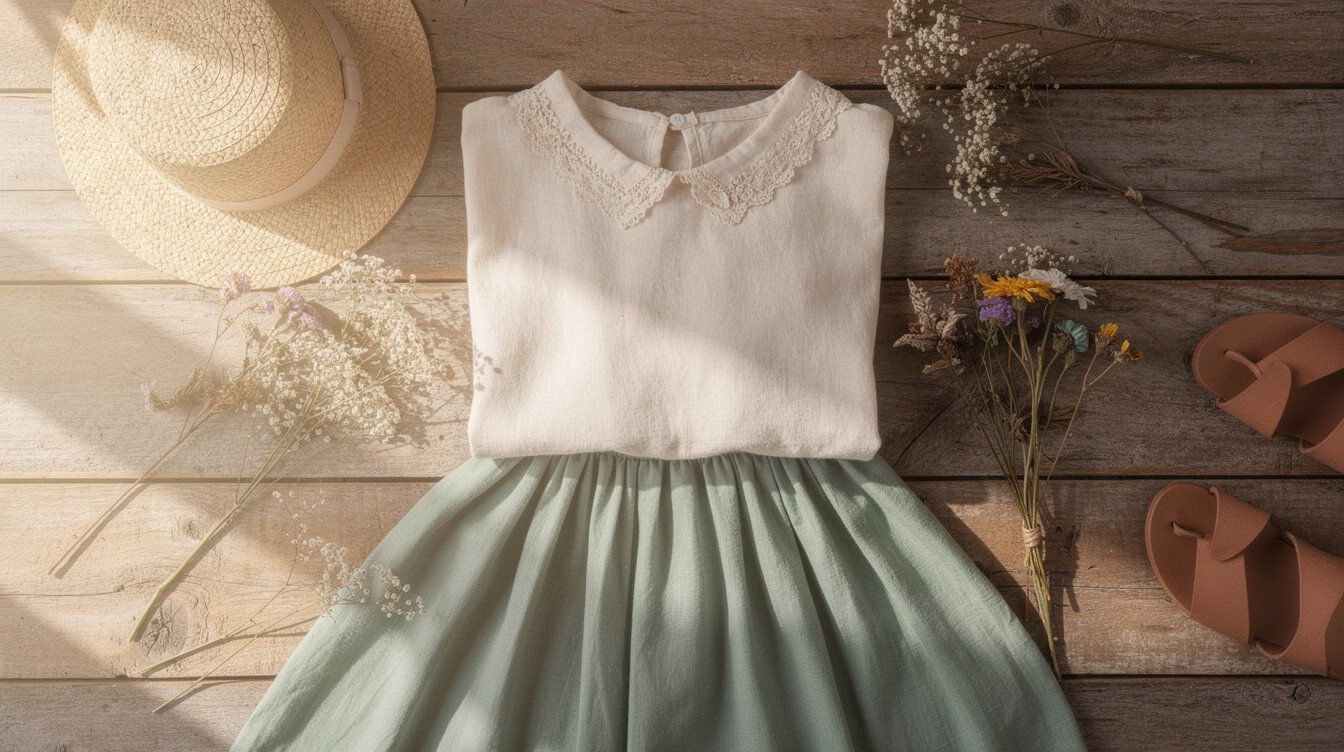
Strip away the pastoral daydream and cottagecore aesthetic outfits come down to a few honest rules. Natural fabrics over synthetic ones. Loose, comfortable silhouettes over anything structured or stiff. Small romantic details, a ruffled hem, a puffed sleeve, a row of tiny buttons, used sparingly rather than piled on. And a color story that reads like a pressed flower: faded, soft, a little sun bleached.
What it is not is a single dress or a single brand. A cottagecore aesthetic outfit can be a linen sundress and sandals on a warm afternoon, or it can be your favorite oversized cardigan over a plain tee and jeans, tucked in loosely, on a Tuesday that needed a little softness. The through line is intention: you are dressing like comfort matters and like the day deserves something gentle.
Silhouette does more work here than any single garment. Cottagecore favors shapes that move with you: a skirt with enough fabric to swish when you walk, a sleeve loose enough to push up without a fight, a waistline that sits softly instead of cinching. Nothing about the look should feel tight, restrictive, or like it needs constant adjusting. If a piece pinches, tugs, or requires you to sit carefully, it is probably not doing the aesthetic any favors, no matter how pretty the print.
The pieces that show up again and again
- Puff sleeve blouses and dresses, usually in a light cotton or linen
- Prairie skirts, midi or maxi length, often with a small floral print
- Knit cardigans in cream, sage, or a soft berry
- Lace trim collars, cuffs, or hems, used as an accent, not the whole garment
- Simple leather or woven flats, and in cooler months, ankle boots
Patterns matter too, though quietly. Small florals, gingham checks, and subtle stripes all belong. Large, bold, high-contrast prints tend to fight the softness the aesthetic depends on, so if you are choosing between two florals, the smaller and more faded one is usually the better fit. The same goes for logos and text on clothing: cottagecore aesthetic outfits are almost entirely free of branding, since the whole point is that the garment looks like it belongs to a person, a season, or a place, not to a label.
The cottagecore color palette and fabric story
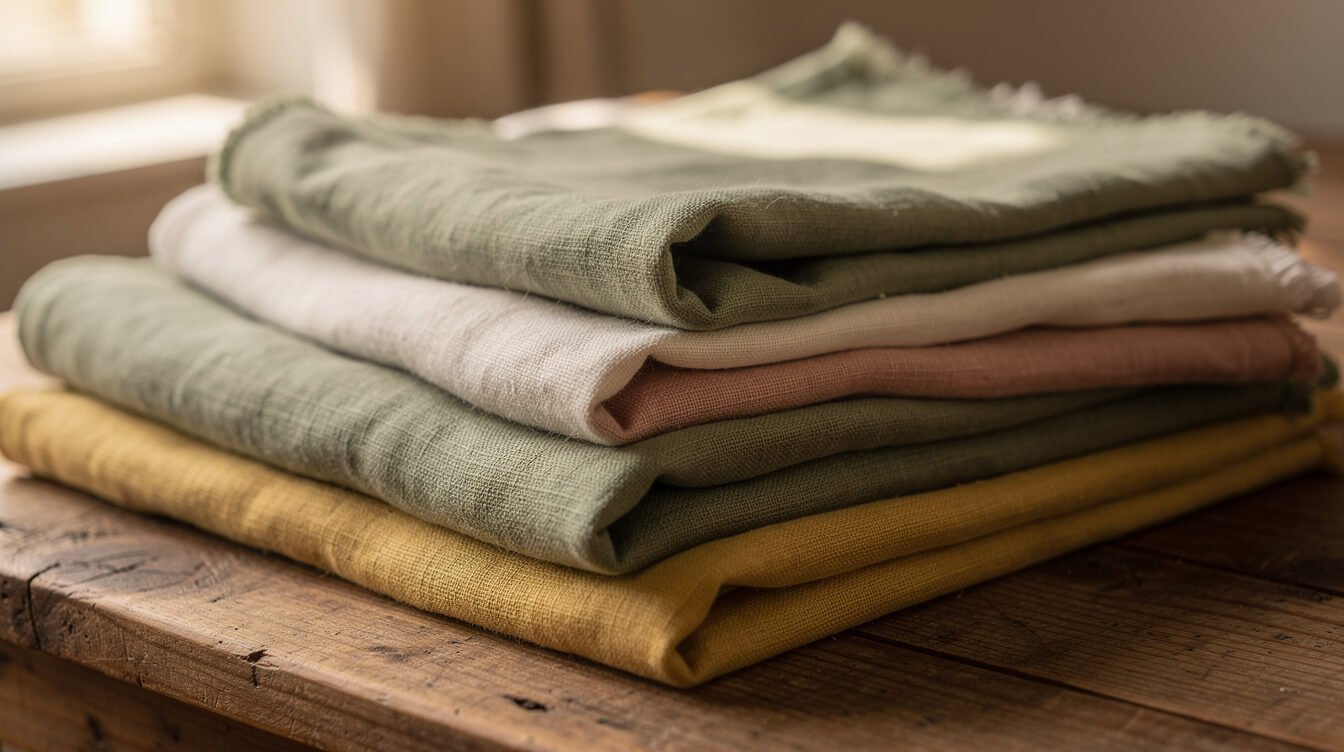
If you take one thing from this section, take the palette. Cottagecore leans on colors that occur in nature and fade a little in the wash: sage and moss green, cream and oatmeal, dusty rose, butter yellow, soft rust, and a muted lavender. These colors mix easily with each other, which is exactly why the aesthetic feels so calm. You are rarely fighting a clashing print.
Fabric matters just as much as color. Cotton and linen are the backbone of the look because they breathe, soften with age, and hold a slightly rumpled texture that reads as lived-in rather than sloppy. Wool and knits carry the aesthetic into cooler months. What you want to avoid, at least for the core pieces, is anything shiny, stretchy, or overly structured. A linen dress that wrinkles when you sit down is doing its job. A stiff, glossy synthetic one is fighting the whole point.
The aesthetic is not about looking untouched. It is about looking touched gently, by sun, by wear, by time spent outside.
A practical note on care: natural fibers ask a little more of you than synthetics do. Linen wrinkles by design, so pressing it flat defeats the purpose, a light shake after the dryer is usually enough. Wool knits do best with cold water and flat drying rather than a hot wash and a hanger, which will stretch a cardigan out of shape within a season. None of this is high maintenance, it is just different maintenance, and it is part of why pieces in these fabrics tend to last years instead of one washing cycle.
Building cottagecore aesthetic outfits from what you already own
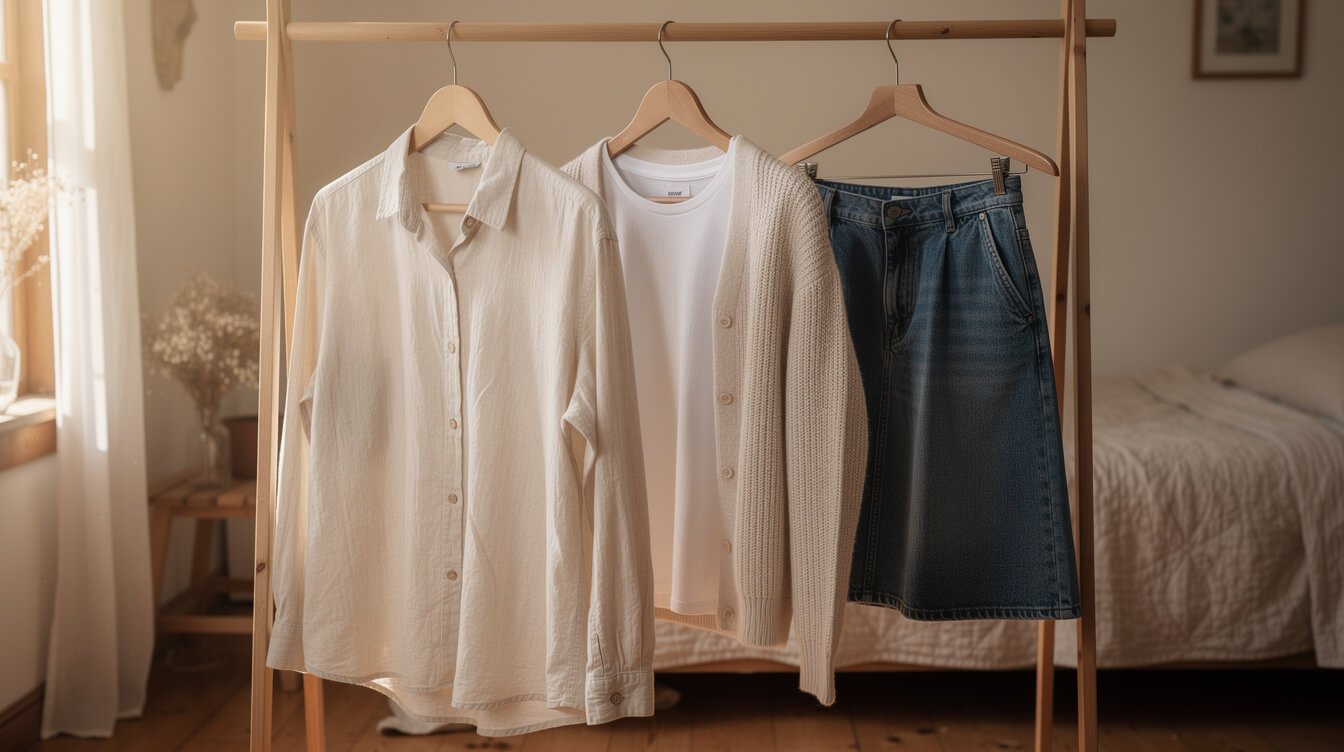
This is the part most guides skip, and it is the part that actually matters if you are not planning to replace your whole wardrobe. You almost certainly own two or three pieces that already lean cottagecore without knowing it. An oversized button-down shirt. A plain cream or white tee. A knit cardigan you reach for on cold mornings. A denim or corduroy skirt. None of these are costume pieces, and all of them can anchor a cottagecore aesthetic outfit with the right styling.
Three ways to style what is already in your closet
- Tuck loosely, not tightly. A soft, loose tuck of a plain tee into a midi skirt reads cottagecore. A tight, structured tuck reads office. The difference is entirely in how relaxed the silhouette stays.
- Layer a cardigan over almost anything. A knit cardigan, buttoned only at the top or left open, softens even a very ordinary outfit and adds the texture the aesthetic depends on.
- Roll up sleeves and cuffs. A rolled cuff on a button-down or a pushed-up cardigan sleeve reads as unfussy in a way that matches the whole cottagecore mood: put together, but not trying too hard.
If you do want to add one or two new pieces, spend on the ones that will not need replacing: a well-made cardigan in a natural fiber, or a simple cotton dress cut generously enough to layer under. Thrifted and secondhand pieces work beautifully here too. A little wear on a linen shirt only helps the look.
A five-piece starter list, if you are building from nothing
If your closet genuinely has none of the above, five pieces will get you further than you would expect. In order of how often you will reach for them: a cream or oatmeal knit cardigan, a loose cotton button-down in a light color, a midi skirt in a small print or a solid neutral, a plain cotton tee in cream or white, and a pair of flat shoes you can walk a mile in without thinking about them. Every combination of those five pieces reads as cottagecore, which means five items can realistically produce a week of outfits.
Common mistakes that quietly break the cottagecore look
A few habits pull an outfit out of cottagecore territory even when every individual piece is right. Knowing them is often more useful than another list of things to buy.
- Ironing everything flat. A crisp, pressed linen dress reads more like office wear than meadow wear. Some visible texture and softness is part of the point.
- Cinching too tightly. A wide belt pulled snug at the waist shifts the silhouette toward a different, more structured aesthetic. Let the waistline sit where it naturally falls, or skip the belt.
- Mixing in one loud, synthetic piece. A single shiny or brightly colored item, a puffer jacket, a graphic tee with a bold logo, can undo an otherwise soft outfit. Save those pieces for a different day.
- Overdoing the accessories. One or two small, meaningful touches read as intentional. A flower crown, a basket bag, a lace choker, and a ribbon all at once reads as costume.
Dressing cottagecore through the seasons

Cottagecore aesthetic outfits are not a warm-weather-only look. The palette and the fabrics shift with the calendar, but the mood carries through all four seasons.
Spring
Light florals, a puff sleeve blouse with a denim skirt, a cardigan for the cooler mornings. This is the season the aesthetic is most associated with, and for good reason, the palette matches the actual world outside your window. It is also the easiest season to experiment in, since a spring wardrobe forgives a slightly mismatched print or an unexpected color pairing more than a winter one does.
A good spring habit is to keep one lightweight cardigan in your bag most days. Mornings run cool and afternoons warm up fast, and a cardigan you can tie around your waist or drape over your shoulders solves that without breaking the outfit.
Summer
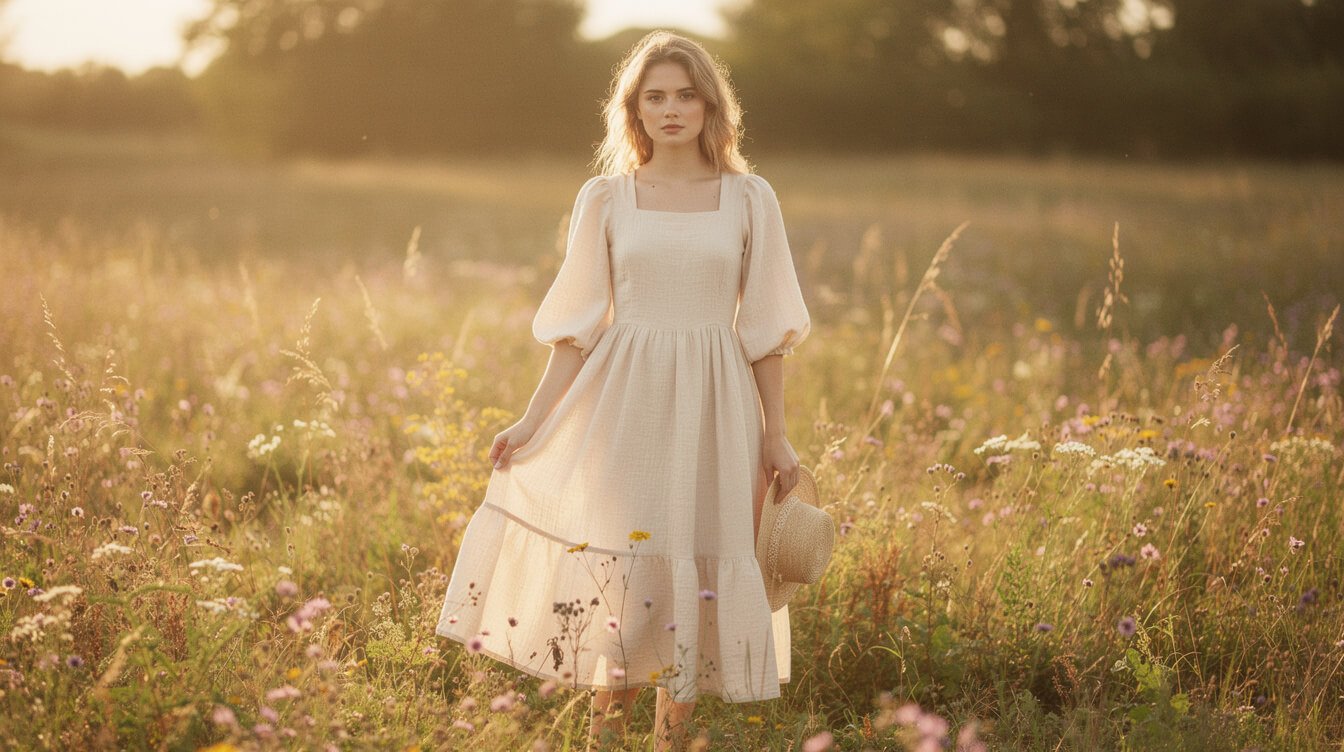
Lightweight linen and cotton dresses, sandals, a straw hat if you have one. Keep sleeves loose and fabrics breathable. This is the easiest season to shop secondhand for, since linen dresses show up often at thrift stores, and the wrinkled, sun-softened texture that linen develops over a summer is genuinely part of the look rather than a flaw to fight.
If you are prone to overheating, look for cotton gauze or a looser linen weave over anything blended with synthetic fiber. The breathability difference is noticeable within an afternoon, and it is the difference between an outfit that feels romantic and one that feels like a costume you are enduring.
Autumn
Chunky knits, corduroy skirts, boots, and a heavier cardigan layered over a linen dress instead of retiring it. Rust, moss, and deep cream take over the palette. This is arguably the season where cottagecore aesthetic outfits feel most natural, since the actual color of the outside world, turning leaves, harvest tones, matches the wardrobe almost exactly.
Layering is the whole skill in autumn. A thin cotton dress from summer does not need to be packed away, it just needs a heavier cardigan, a pair of tights, and boots to carry it another three months.
Winter
Wool coats, thick tights under skirts and dresses, and knit accessories like a soft scarf. The silhouette stays loose, but the fabrics get warmer and heavier without losing the same gentle color story. A wool coat in cream or a soft camel does more for a winter cottagecore outfit than almost any other single purchase, since it sits over everything else and sets the tone for the whole look.
Do not be afraid to add a knit hat or mittens even if they feel more practical than aesthetic. Cottagecore has never been about suffering for the look, and a genuinely warm winter outfit in the right palette reads exactly as intended.
The small accents that make an outfit feel cottagecore
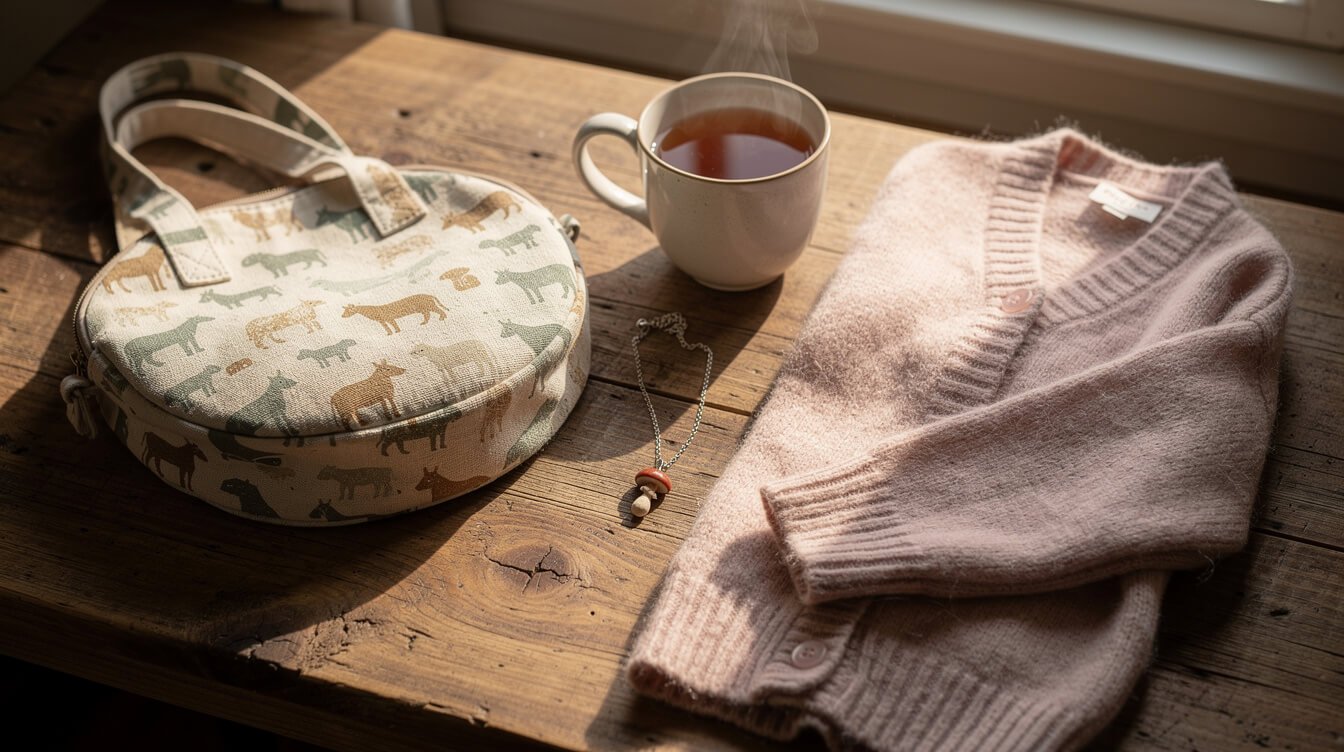
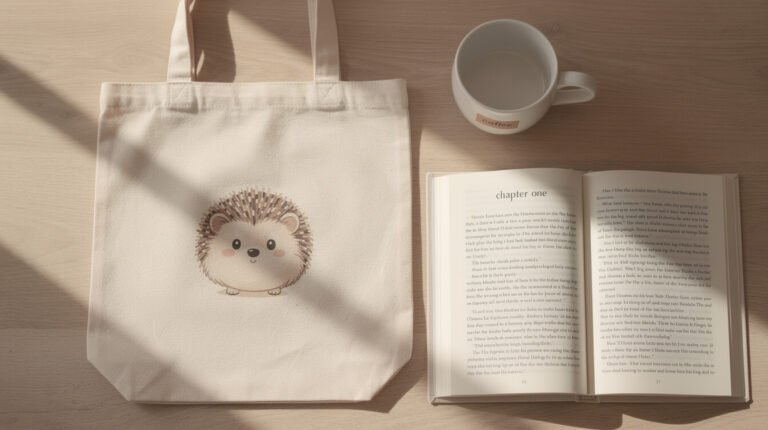
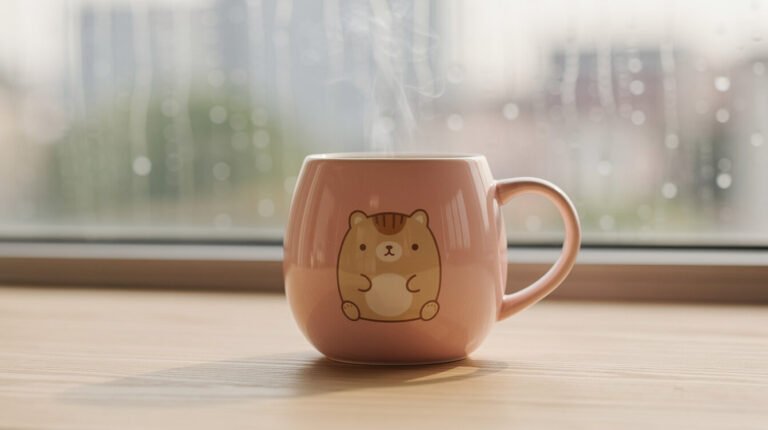
Clothes carry most of the aesthetic, but the small things you carry and use finish it. A woven or canvas tote instead of a structured handbag. A little charm, a mushroom or a pressed flower, on a simple chain. A journal or a good pen tucked into your bag for slow afternoons. Even the mug you drink your tea from at home before you head out plays a part in the mood you are building, which is a habit we think about a lot: we wrote a longer piece on choosing a cute mug that actually lasts if that side of the aesthetic interests you too.
If you want a piece that carries a bit of that same round-animal, soft-and-sincere spirit into your actual outfit, that is exactly the lane we live in. A soft round-animal tee layered under a cardigan, or a canvas tote with a small mushroom print for carrying your library books, does the same quiet work as any of the pieces above. You can shop the current designs here when you are ready, no rush.
Hair and jewelry follow the same “less, chosen well” rule as the rest of the aesthetic. A loose braid, a few soft waves, or hair simply left down does more for the look than an elaborate style. For jewelry, one small piece with a story, a pressed flower pendant, a tiny mushroom or acorn charm, a ring passed down from someone, carries more weight than a full stack of trendy pieces. The aesthetic rewards restraint almost everywhere except warmth, and warmth you can never overdo.
Cottagecore for everyday life versus special occasions
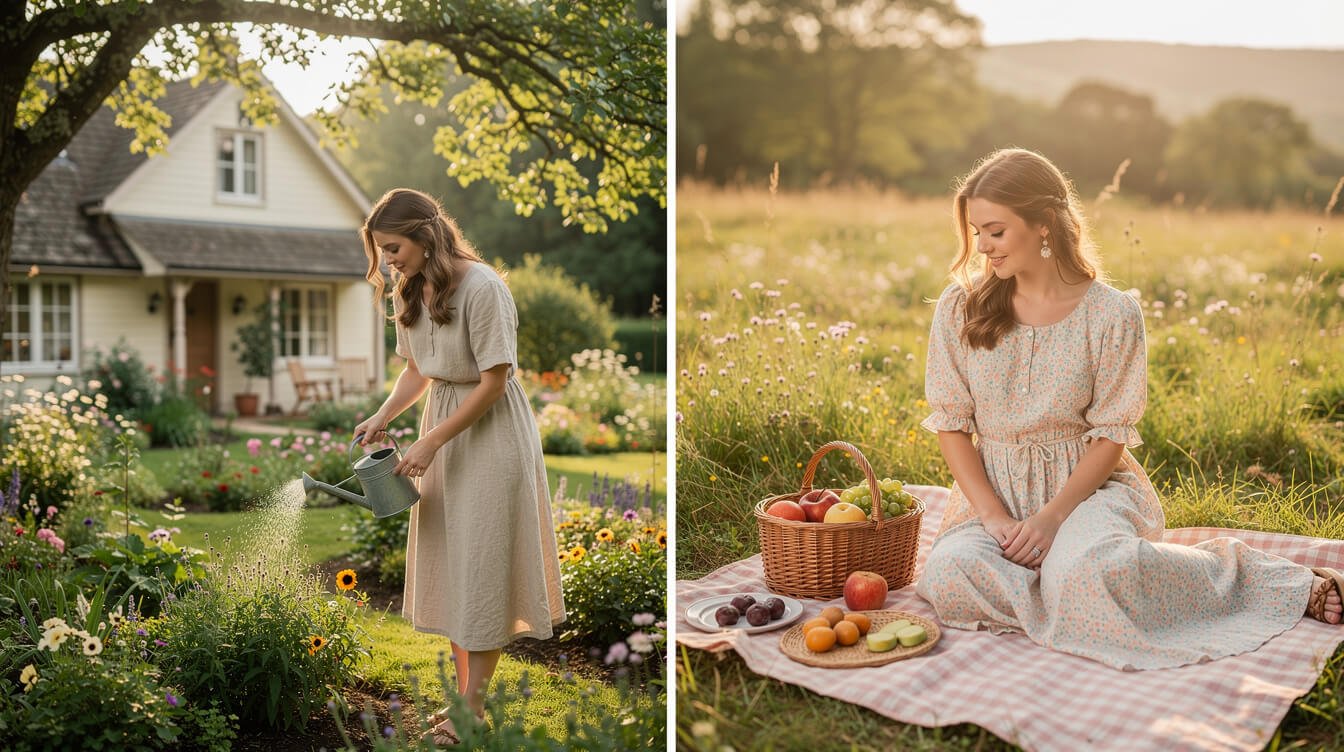
Everyday cottagecore aesthetic outfits are meant to be worn doing ordinary things: grocery runs, garden chores, a slow morning at a coffee shop. Keep the pieces practical. A simple dress with pockets, a cardigan you do not worry about snagging, flats you can actually walk in.
Dressier occasions, a garden party, a picnic with friends, a wedding with an outdoor setting, are where you can lean further into the romantic details. A fuller skirt, a blouse with more lace, a proper sun hat. The rules do not change, only the volume. You are still choosing natural fabrics and a soft palette, just with a bit more polish layered on top.
A useful test when you are unsure which direction to go: think about what the outfit needs to survive. An everyday outfit needs to survive errands, a commute, maybe a spill. A special-occasion outfit mostly needs to survive photographs and a few hours of standing and sitting gracefully. Let that practical question guide how much lace, how full a skirt, and how impractical a shoe you are willing to wear, rather than trying to guess from photos alone.
Frequently asked questions
Do you need a whole new wardrobe to wear cottagecore aesthetic outfits?
No. Most people already own a cardigan, a loose button-down, or a plain cotton dress that can anchor the look. Styling, loose tucks, rolled sleeves, layered cardigans, does more work than buying new pieces.
Is cottagecore still popular in 2026?
The aesthetic has settled into something quieter and steadier than its pandemic-era peak, but it has not gone anywhere. Soft, comfortable, nature-leaning style tends to hold up because it is genuinely wearable, not just photogenic.
Can you wear cottagecore aesthetic outfits in a city?
Yes. The pieces themselves, cardigans, midi skirts, cotton dresses, are ordinary enough to wear anywhere. The aesthetic is about fabric and palette, not about living somewhere rural.
What is the difference between cottagecore and coquette?
Cottagecore leans rustic and natural: linen, wildflowers, a slower pace. Coquette leans more feminine and polished, with bows, ribbons, and a dollier silhouette. The two overlap at the edges but come from different moods.
What shoes work with cottagecore aesthetic outfits?
Flats, mary janes, and simple leather sandals in warmer months, ankle boots or clogs in cooler ones. Anything with a soft, rounded toe fits better than a sharp point, and low heels or no heel at all keep the whole outfit feeling as unfussy as the clothes above it.
How do you start if the whole aesthetic feels overwhelming?
Pick one piece, usually a cardigan, and wear it with clothes you already own for a week. Notice what you reach for alongside it. That single piece will teach you more about your own version of the look than any list, including this one.
Final thoughts
Cottagecore aesthetic outfits reward patience more than shopping sprees. Start with the cardigan you already reach for on cold mornings, add a loose tuck instead of a tight one, and let the palette guide anything new you bring in. The look is meant to feel like an exhale, not a performance, and it is genuinely hard to get wrong once you know what you are reaching for.
If you want a small, soft piece to carry the mood into your everyday bag or closet, take a look at what we have made. Otherwise, we hope this made getting dressed tomorrow morning a little gentler.