
Fairycore, explained: small things and soft light
Fairycore is one of those words that arrives on a saved pin and then quietly follows you around. You see a photograph of a dandelion seedhead lit from behind, or a snail on a wet leaf, or a jar of dried grasses on a windowsill, and something in you goes soft. Then you go looking for the word that explains the feeling, and what you find is mostly a list of skirts.
This is the other version. Fairycore is not a wardrobe, and it is not a costume you have to earn the right to wear. It is a way of looking, and it comes down to two things: scale and light. Small living things, and the way light falls on them. Everything else, the dresses and the pressed flowers and the little lamps, is downstream of those two ideas.
So let us define it plainly, name what actually separates it from cottagecore, and then talk about how it fits into an ordinary day in an ordinary apartment, which is where most of us live.
What fairycore actually is, and the two ideas that hold it together

Most definitions of fairycore start with a list: mushrooms, moss, butterflies, lace, dried flowers, warm string lights, anything iridescent. The list is not wrong. It is just the symptom rather than the cause. If you only learn the list, you can assemble every item on it and still end up with something that does not feel like fairycore at all.
The cause is two ideas working together.
The first is scale. Fairycore is interested in things that are small, and specifically in things that are small and alive. A seedhead. A snail. A single mushroom pushing up through moss. A moth on a screen door. The aesthetic takes the smallest thing in the frame and treats it as the most important thing in the frame. That is a quiet act of attention, and it is the whole move.
The second is light. Not brightness, light. Fairycore images are almost always lit from behind or from the side, so that something thin and translucent glows: a petal, a wing, a filament of a seedhead, a drop of water holding the sun for a second. Front lighting shows you what a thing looks like. Back lighting shows you that it is thin enough for light to pass through, which is a completely different and much tenderer piece of information.
Put those together and you have a working definition. Fairycore is the aesthetic of small living things and the light that passes through them. It is the feeling of crouching down to look at something nobody else stopped for.
This is why fairycore photographs so well and explains so badly. The feeling lives in a shift of attention, and a bulleted inventory of lace and mushrooms cannot carry a shift of attention. If you want the wider map of where this sits, our guide to cute aesthetics and how to find the one that is yours lays out the whole family and how they relate.
Scale and light: what makes fairycore different from cottagecore

Every article on the internet compares fairycore and cottagecore, and nearly all of them do it with two feature lists side by side. Cottagecore: bread, gingham, aprons, a kitchen. Fairycore: mushrooms, wings, moss, glitter. True, and useless, because you still cannot tell which one a given photograph belongs to.
Here is the actual difference, in one sentence. Cottagecore is human-sized and warm. Fairycore is smaller than human-sized and luminous.
Cottagecore is an aesthetic of domestic labor and the comfort that comes out of it. Somebody baked that loaf. Somebody hung that laundry. The scale is the scale of a kitchen table, a doorway, a person. The light is usually warm, generous, and ordinary: afternoon sun across a counter. It is a picture of a life you could live, and that is exactly its appeal. Our full guide to what cottagecore really is goes deep on that if you want it.
Fairycore shrinks the frame until the person is out of it. There is no table, there is the underside of a leaf. There is no window, there is the one beam coming through the window and the dust moving in it. Nobody made the thing you are looking at. It grew, and you noticed. That is the shift: cottagecore is about tending, and fairycore is about finding.
The light follows the same logic. Cottagecore light fills a room. Fairycore light picks one small thing out of a dim background and makes it glow. You can test this on any image. Ask yourself whether the picture is the size of a room or the size of a thumbnail of moss, and whether the light is filling the frame or threading through one object in it. The answer sorts the two almost every time.
They overlap constantly, of course, and plenty of people love both. If you want a third point of comparison, goblincore sits next door to fairycore and shares the mushrooms and the moss, but it sorts on tone and tidiness rather than on scale and light. The three of them are cousins who grew up in the same woods.
The fairycore palette, described in light instead of color names
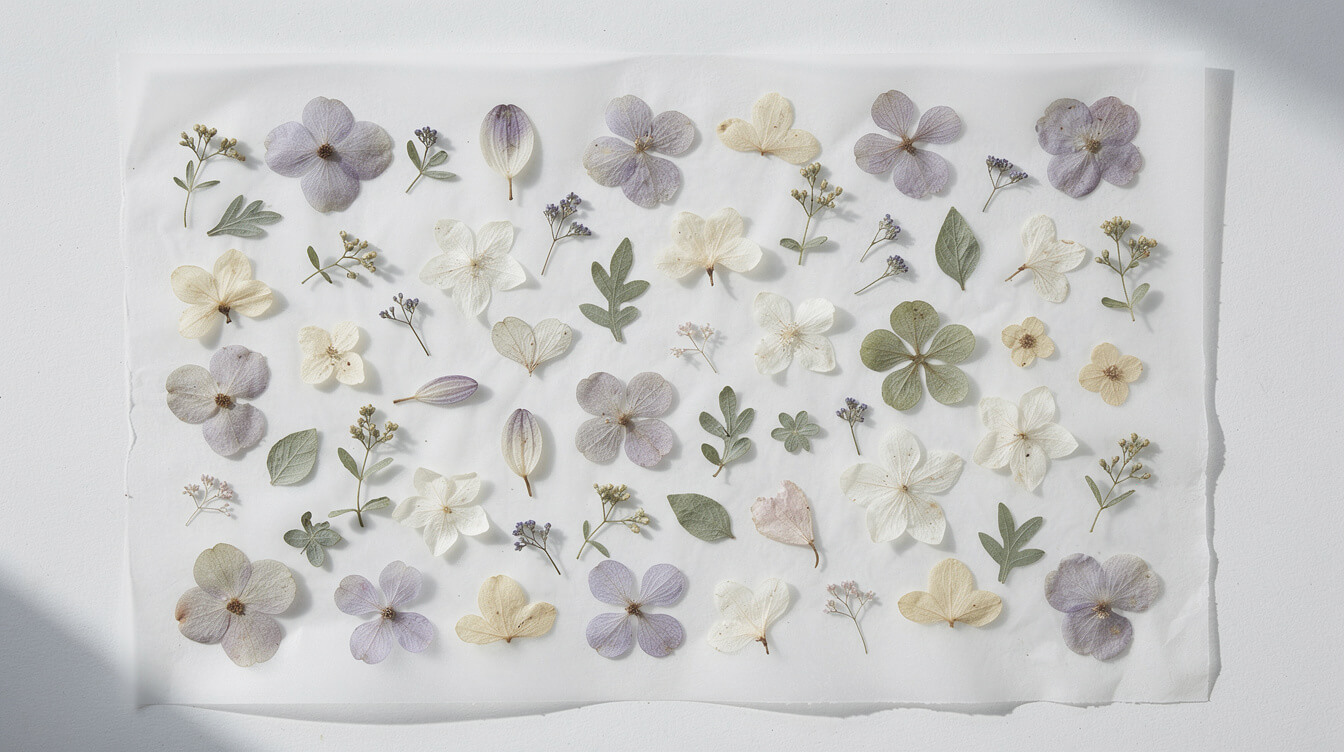
Ask the internet for the fairycore palette and you get a row of hex codes: sage, lilac, cream, dusty rose, a pale butter yellow, a soft moss green. Accurate. Also the reason so many fairycore rooms come out looking like a stationery display instead of a glade.
The palette is not really a set of colors. It is a set of colors seen in a particular light, and the light is doing most of the work. Sage green in flat overhead lighting is institutional. The same sage with sun coming through it from behind is the inside of a leaf. Same color, different world.
Three things to carry out of this if you are picking colors for a room, an outfit, or a photograph.
Choose colors that look good when light goes through them, not just when light bounces off them. This is why fairycore loves thin cotton, loose linen, gauze, glass, dried petals, and anything slightly translucent, and why it tends to look wrong in heavy, opaque, saturated fabric. The material has to let the light do its job.
Keep the values close together. Fairycore palettes are low-contrast. Everything sits in a narrow band of lightness, which is what makes the single bright thing, the lit petal or the glint on a dewdrop, read as special. Introduce a hard black or a pure white and that one bright thing stops being the brightest thing in the frame.
Let one color be slightly off. The palette gets flat if it is all sage and cream. A thread of faded lilac, a browning edge on a dried flower, a bit of rust on a tin: that is the note that makes it feel found rather than bought. Nature is never perfectly coordinated, and the imperfect note is what keeps the whole thing from looking like a set.
If palettes are the part of this you most enjoy, we wrote a whole piece on what the pastel aesthetic actually means and why soft color feels so good, and most of it applies here with the lighting turned down a stop.
The quiet part: fairycore teaches you to notice small living things

There is a reason fairycore feels restful rather than just pretty, and it is worth saying plainly because nobody else seems to.
To see a snail, you have to stop walking. To photograph a seedhead backlit, you have to get down low and wait for the light. To notice moss on a wall you have been passing for two years, you have to be moving slowly enough to look at a wall. The aesthetic has a behavior built into it, and the behavior is attention at a small scale and a slow speed.
That is unusually good for a person. Not in a prescriptive, wellness-plan way, just mechanically. A thing you can only see by slowing down is a thing that makes you slow down. The mushrooms are the excuse. The pause is the gift.
It also asks very little of you, which matters. Plenty of aesthetics come with a shopping list before you are allowed to participate. Fairycore does not. Crouching to look at a snail costs nothing, and the fairycore version of a good afternoon is genuinely available to someone with no money, no garden, and ten free minutes near a patch of weeds growing through a sidewalk.
And it is forgiving about what counts. The small living thing does not have to be photogenic. A woodlouse under a plant pot is as fairycore as a butterfly if you stop for it with the same attention. This is the part the outfit guides cannot sell you, and it is the part that lasts after the trend moves on. Once you have learned to look down, you keep the habit.
So if you have been feeling like you like fairycore but do not qualify for it, that is the wrong frame. You already qualified the first time you stopped for something small.
The cutemerch letter
A small good thing, once a week
One short, kind email with our coziest posts and new round animals from the shop. No spam. Unsubscribe anytime.
Fairycore in a rented room, with no costume involved

Most fairycore advice assumes you want to dress as a fairy, and a great many people who love fairycore have no such plan. They live in a rented room with white walls and a lease that says no nails. Here is the version for them.
Fix the light first, before you buy anything. This is the highest-leverage change by a wide margin and it is nearly free. Swap cool-white bulbs for warm ones, turn off the ceiling light, and use one or two low lamps instead. A single lamp on the floor behind a plant will do more for the mood of a room than every mushroom ornament on the internet. Fairycore is a lighting aesthetic that happens to involve mushrooms, not the other way around.
Then add one thing that is small and alive. One. A little pot of moss, a cutting rooting in a jam jar, a single stem of something from a walk. It is the only object in the room that does what fairycore is actually about, and it is the one people reach out and touch.
Give it a shelf, not a theme. One surface, kept slightly under-filled: a jar of dried grasses, two books, a stone you liked, a candle. A corner that reads as found rather than a whole room that reads as themed. Our guide to making a room cozy instead of cluttered is built on the same restraint.
And for the wearable part, go sideways. You do not need a tiered dress and a flower crown. Soft fabric, a quiet palette, and one gentle creature is plenty. Our Emotional Support Axolotl shirt is not a fairycore product and we are not going to pretend it is, but a pale, frilly, faintly otherworldly little animal in blush pink and plum turns out to sit very comfortably in this palette, and it reads soft without reading costume. If you have never met the animal itself, it is worth knowing: the axolotl is real, it keeps its feathery gills for life, and it looks exactly as improbable as it sounds.
If you want the fuller outfit version with more structure, our cottagecore outfit guide covers the human-sized end of the same wardrobe.
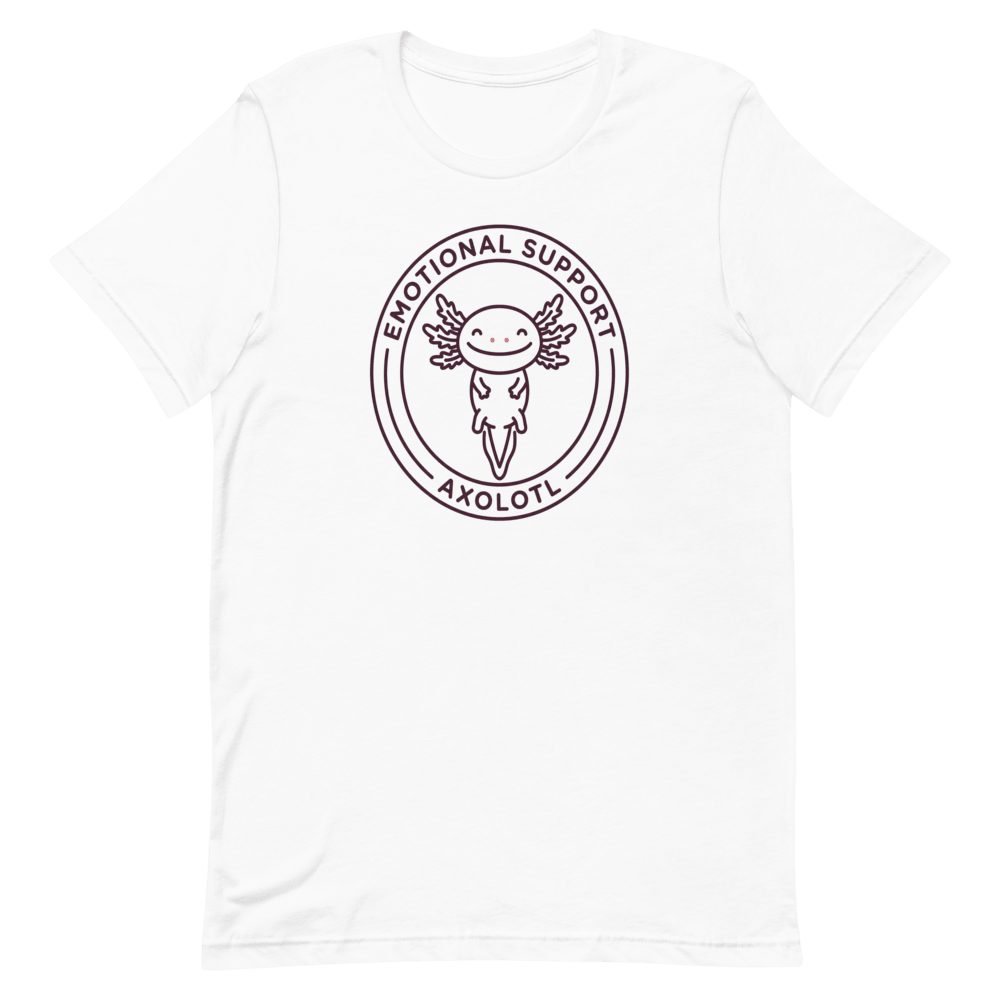
A soft, pale creature for the same mood
This is not a fairycore shirt and we would not pretend it is. It is a small frilled animal in blush pink and plum that happens to land right in this palette, printed on a tee soft enough to wear on the days you want a quiet one.
Gift ideas for the friend who photographs every mushroom she passes
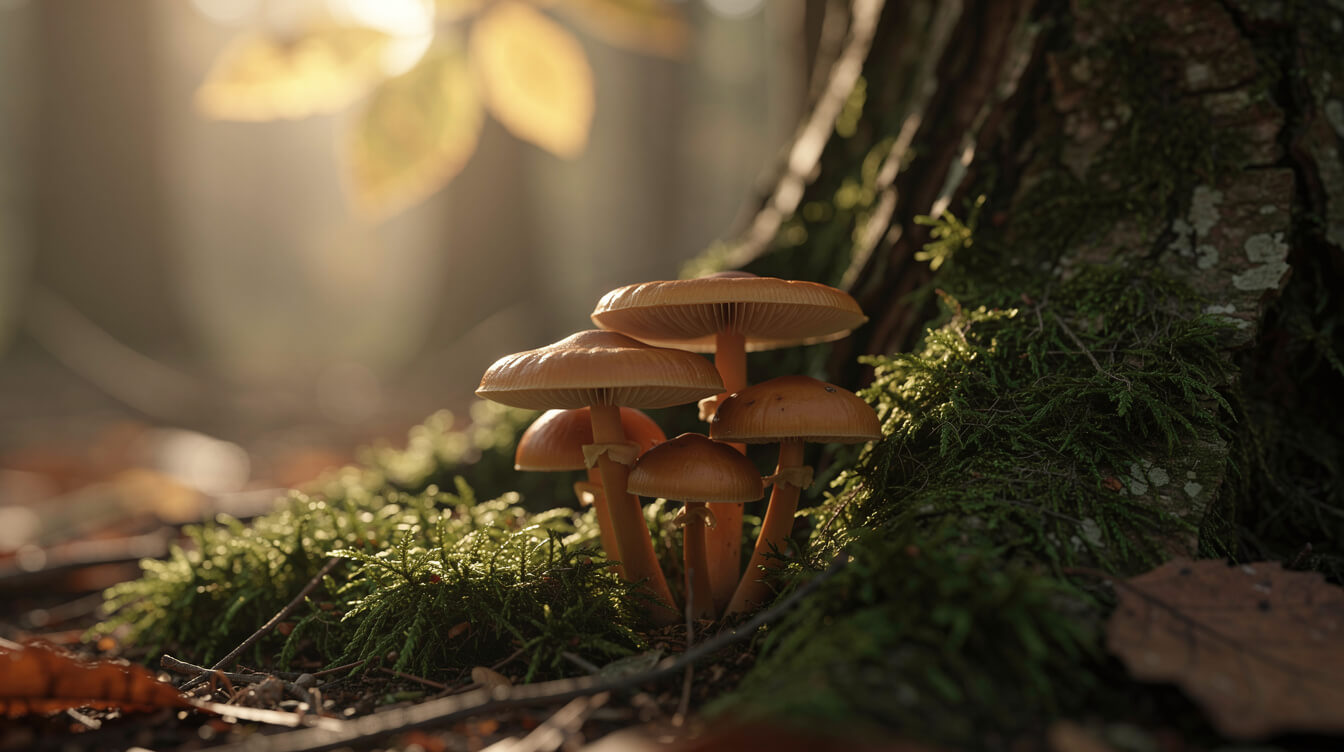
You know the one. The walk takes twice as long because she keeps crouching. Her camera roll is nine hundred photographs of fungus and four of people. Fairycore gifts for her are easy to get right and easy to get wrong, and the difference is whether the gift supports the noticing or just decorates it.
Anything that helps her look closer. A cheap clip-on macro lens for a phone, or a small hand lens. This is the single best fairycore gift there is, because it gives her more of the thing she already loves rather than an object about the thing she loves.
A field guide to something small and local. Mosses, lichens, snails, or the mushrooms of wherever she lives. A guide turns a nice photograph into a name, and names are enormously satisfying. Local beats comprehensive every time.
A flower press, or a heavy book and some blotting paper. It keeps the thing she found, and it produces the translucent, backlit material the fairycore palette is made of. Pressed petals on a windowpane are the most fairycore object in existence and they cost nothing.
Warm light. A small lamp with a warm bulb, or a short string of soft bulb lights. Unromantic as a gift and transformative in a room, which is a combination worth knowing about.
Something to carry the finds home in. A tote with a bit of charm beats a plastic bag for a pocketful of acorns and a sprig of something. Our piece on why the mushroom tote is having a cottagecore moment explains why this particular object keeps turning up in this particular corner of the internet.
A good jar. Not a joke. A clear glass jar is a vase, a terrarium, a propagation station, and a display case for one feather, and it is the most-used object in most fairycore rooms.
If you want the broader cozy-gift version of this list, our cottagecore gift ideas guide sorts by the kind of cozy person rather than by the kind of find.
Fairycore: frequently asked questions
Where did fairycore come from?
Honestly, no one can point at a single origin, and anybody who gives you a precise birthdate is guessing. Fairycore grew out of the broader cottagecore wave on image-sharing platforms in the late 2010s, and it picked up speed around 2020 when a great many people were taking long local walks and photographing whatever they found. The underlying taste is much older than the word. Pressed-flower albums, close botanical drawing, and a long tradition of painting small woodland things carefully are all the same instinct with different tools. The hashtag is new. Stopping for a mushroom is not.
Is fairycore the same as cottagecore?
No, though they overlap a lot and many people love both. Cottagecore is human-sized, domestic, and warm, and it is about tending. Fairycore is smaller than human-sized, outdoors-facing, and luminous, and it is about finding. Scale and light are the test.
Do I have to dress like a fairy to be into fairycore?
No. Most people who love fairycore never wear a single tiered dress. The aesthetic is a way of noticing, and the clothes are optional. Soft fabric and a quiet palette will carry it fine if you want it on your body at all.
What colors are fairycore?
Sage and moss greens, cream, pale lilac, dusty rose, faded butter yellow, and soft browns, all kept close together in lightness with nothing hard or saturated. The more useful rule is to pick colors that look good with light coming through them rather than bouncing off them.
Can you do fairycore in a city apartment with no garden?
Yes, and quite a lot of people do. Warm bulbs, one low lamp, one living thing in a jar, and a single under-filled shelf will get you most of the way. The outdoor half of it is satisfied by a slow walk and a willingness to look at a wall.
Is fairycore just for teenagers?
No. Cute is for everybody, at every age, and the core behavior here, stopping to look closely at a small living thing, gets more valuable the busier your life gets, not less.
What is the difference between fairycore and whimsigoth or goblincore?
Goblincore shares the mushrooms and the moss but likes them mossy, cluttered, and a little grubby, and it sorts on tone rather than on scale. Whimsigoth takes a similar love of the uncanny somewhere darker and more velvet. Fairycore stays pale, thin, and lit from behind.
A small, well-lit place to come back to
If you remember one thing from all of this, make it the test. Scale and light. Fairycore is the smallest living thing in the frame, lit so that you can see it is thin enough for light to pass through. That is the whole aesthetic, and everything else is an accessory to it.
What we like about it, genuinely, is how little it asks. There is no entry fee and no outfit requirement. You do not have to live somewhere beautiful. You need a patch of weeds, a slow ten minutes, and the willingness to crouch down in public, which is the only real cost and a very small one.
So go and find your snail. Put a warm bulb in the lamp. Keep the one pot of moss alive. It is a soft way to move through a week, and on the days when everything else is loud and gray, having trained yourself to notice small good things turns out to be worth more than it sounds.
Before you go
Want the next one in your inbox?
We write something soft every day. The best of it lands in one gentle weekly note, for you or for the friend who needs it.