
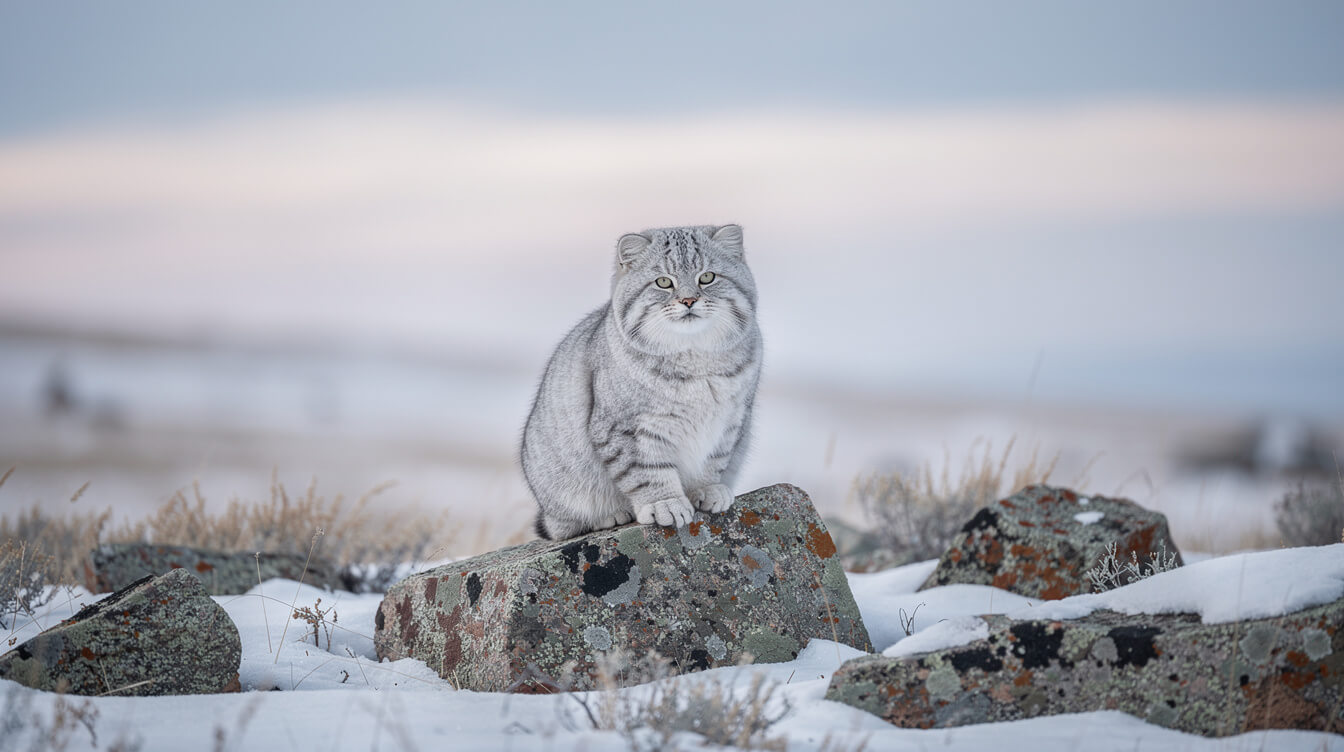
What is a manul? The round, grumpy-looking wild cat you should never try to pet
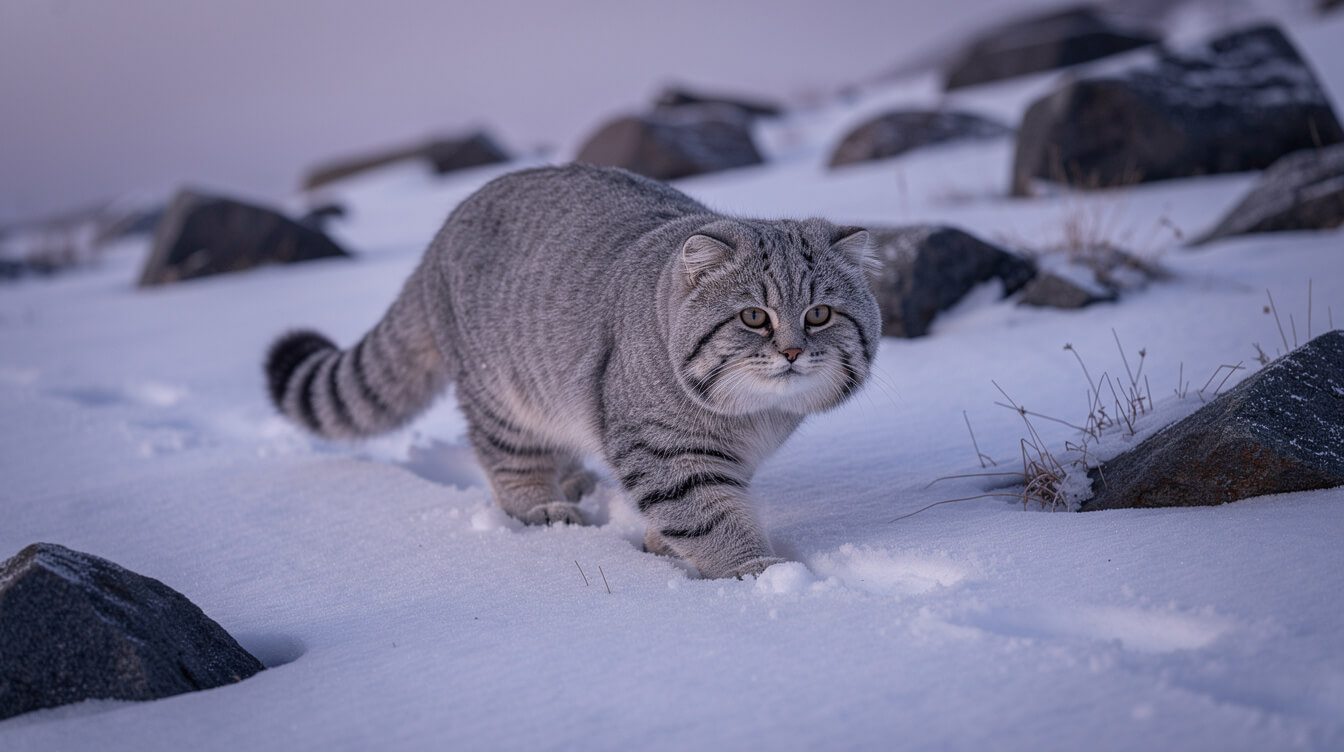
A manul is a small wild cat from the cold, high grasslands of Central Asia, and it is very likely the roundest cat you will ever see. It is about the size of a house cat, but it looks like one that has been gently inflated and then left out in the snow to think about what it has done. If you came here because a photo of a fluffy, flat-faced, deeply unimpressed cat stopped your scroll, you are in good company. The manul has been doing that to people for a long time.
Most pages about the manul read like an encyclopedia entry, and the encyclopedias are good at that. What they rarely answer is the thing you actually wanted to know when you looked it up: why does it look like that? So this is a slower, friendlier walk through the animal. Why it is so round, why its face seems permanently cross, where it lives, and why the internet’s favorite manul joke, the one that invites you to pet it, has a very gentle “please don’t” for an answer.
What is a manul, and why is it also called Pallas’s cat?

The manul is a wild cat species, Otocolobus manul, and it is not a breed, a hybrid, or a very fluffy house cat that wandered off. It has lived its own separate evolutionary life for a long time, and it is the only living member of its genus. Adults weigh roughly 2.5 to 4.5 kilograms, about 5.5 to 10 pounds, and measure around 46 to 65 centimeters from nose to the base of the tail, with a thick ringed tail adding another 21 to 31 centimeters. So in raw numbers it really is house-cat sized. It just does not look it.
The two names come from two different directions. Manul is simply the cat’s name in Mongolian, which is a lovely thing to know: the word most people use for it comes from the people who have shared its landscape the longest. In Kyrgyz it is “manol.” The other name, Pallas’s cat, honors Peter Simon Pallas, a German naturalist who described the species in 1776 while traveling through Siberia and the steppes. You will see both names used interchangeably, often in the same sentence, and both are correct.
So, what does manul mean?
This is one of the most searched questions about the animal, and the honest answer is a little anticlimactic: “manul” is the cat’s own name in Mongolian, not a translation of something descriptive like “round one” or “grumpy cat.” We find that rather sweet. It is not a nickname or a joke. It is just what the cat is called where it lives.
The scientific name is a bit more descriptive. Otocolobus loosely refers to its ears, which are unusual for a cat and turn out to be the key to that famous expression. We will get there in a moment.
Why the manul looks so round (it is the coat, not the cat)
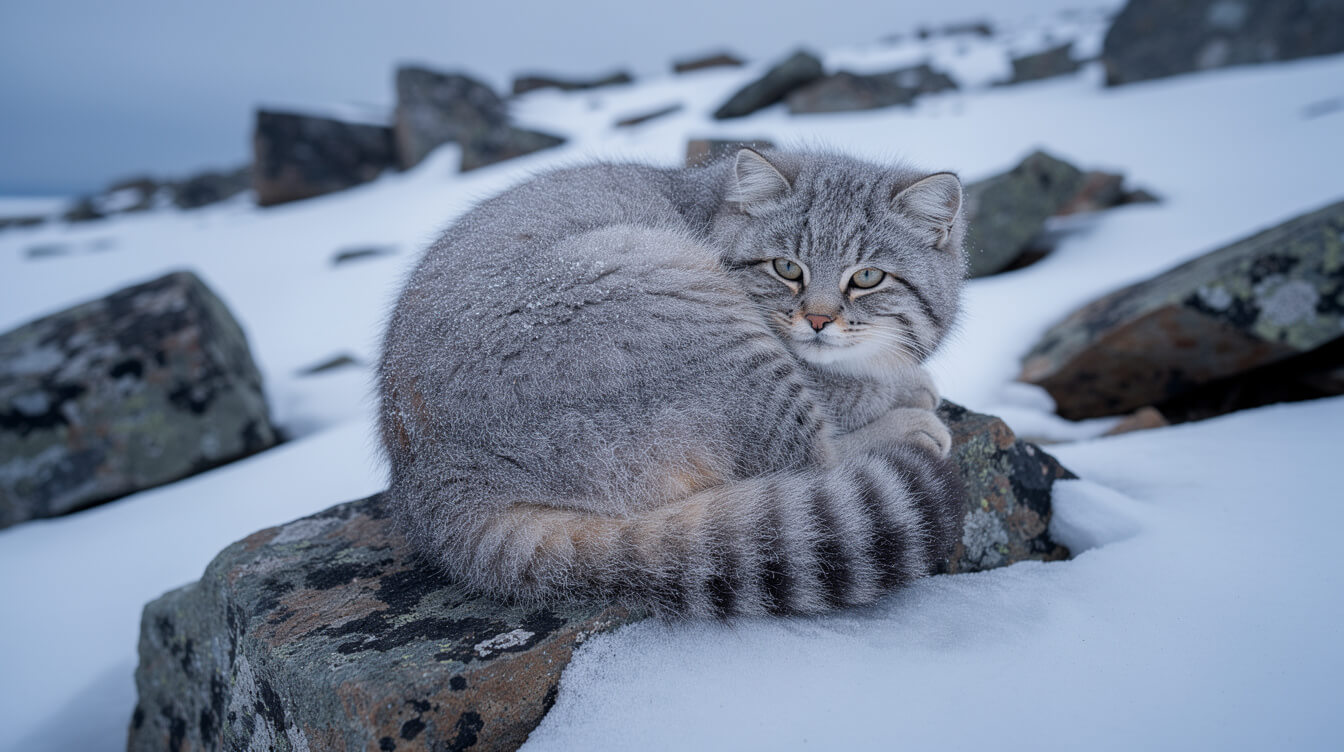
The first thing everyone notices about the manul is the shape. It looks less like a cat and more like a soft gray loaf with opinions. But underneath, the body is fairly ordinary for a small wild cat: stocky, short-legged, built low to the ground. The roundness is almost entirely fur.
And what fur it is. The manul has one of the densest coats of any cat, with up to about 9,000 hairs per square centimeter. For comparison, that is many times denser than the hair on a human head. The soft underfur alone can be around 4 centimeters long, and the outer guard hairs on the back reach roughly 7 centimeters. Put that over a short-legged, compact body and you get the silhouette of a cat wearing a very good winter coat, because that is exactly what it is.
Why a cat would need a coat like that
The manul lives in some of the harshest weather any cat deals with. In parts of its range, the gap between the hottest summer day and the coldest winter night can be around 80 degrees Celsius, with winter lows dropping to about minus 50. There are very few trees to shelter under and a lot of open wind. A thin coat would not get a small cat through that. A thick, layered one, plus a bushy tail it can wrap around itself while it rests, does.
The coat also changes with the seasons. In winter it grows grayer, longer, and denser, with fewer visible markings. In summer it is a little thinner and shows more of its pale ochre and reddish tones. So if you have ever seen two manul photos where one looks like a cloud and the other looks merely very fluffy, you were probably looking at a winter manul and a summer one.
The short legs help the round look along, too. They keep the body low, which matters for an animal that hunts by creeping and hiding rather than sprinting. Low and round is not a cute accident. It is a design for staying warm and staying unseen, and it happens to also be one of the most charming shapes in the animal world.
Why the manul looks so grumpy

Here is the face. Broad, flat, with a firm little frown and eyes that seem to be quietly judging your choices. It is the reason the manul became a meme. But the grumpy look is not a mood. It is a set of physical features, and every one of them has a job.
The ears are set low, on purpose
Most cats have tall ears near the top of the head. The manul’s are small, rounded, and set low on the sides. That placement means it can peer over a rock or a ridge and show only a sliver of its head above the eyes, without flattening its ears at all. On open steppe, where there is nothing tall to hide behind, being able to look over the edge of a boulder without poking two pointy triangles into the sky is a real advantage, both for sneaking up on dinner and for not becoming someone else’s. Zoologists have noted for over a century that this ear placement gives the face what one described as a look of “ferocity.” It is not ferocity. It is camouflage.
The eyes have round pupils
House cats have vertical, slit-shaped pupils. The manul’s pupils contract to small round dots in bright light, more like a person’s or a puma’s. Round pupils in a broad, flat face read to us as a steady, serious stare. A slit-pupil cat looks sly. A round-pupil cat looks like it is about to ask whether you have finished your homework.
The markings draw on a frown
The last piece is the paint job. The manul has two thin black zigzag lines running from the corner of each eye down toward the jaw, white fur around the eyes and on the chin and lips, and small dark spots on the forehead. Those lines sit right where a frown would sit on a human face, so our brains fill in the expression. We are very good at reading faces, and very bad at stopping ourselves from reading faces on animals that are not making any.
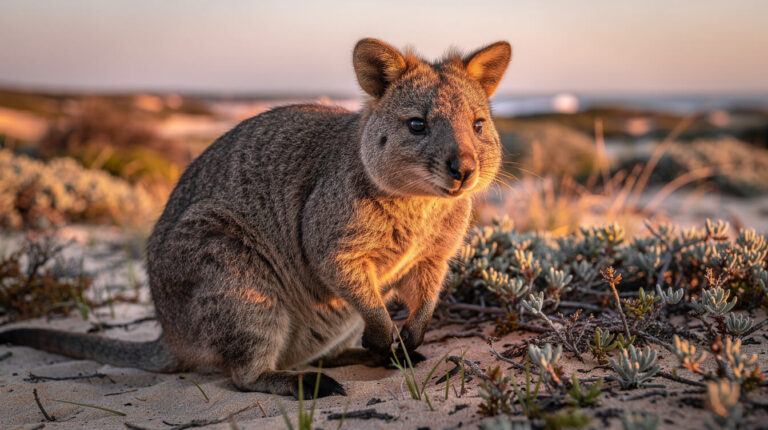
If this sounds familiar, it should. We wrote about the same trick in why hedgehogs always look a little grumpy, and its sunnier opposite in the quokka, which only looks like it is smiling. The manul’s version is its own thing, though: a face built for hiding on open ground, which happens to look like a face that would rather not be bothered. In fairness, it would rather not.
Where manuls live, and what a manul’s day looks like

The manul’s range stretches across a huge sweep of Central Asia, from the Caucasus and Iran in the west to Mongolia and the Tibetan Plateau in the east, touching 16 countries in all. The core populations are in Mongolia and China. Its favorite places are rocky: montane grasslands, scrubby steppe, scree slopes, ravines, and outcrops where there are cracks and caves to slip into. It has been recorded remarkably high, too, with traces found above 5,000 meters in the Himalayas.
One thing it avoids is deep snow. For all that magnificent fur, those short legs are not built for wading, so the manul tends to stick to areas where the snow stays shallow. A round cat with short legs knows its limits.
A day in the life
The manul is solitary and quiet. It is most active around dawn and dusk, though in some seasons it hunts during the day as well. Its main food is the pika, a small, round, tailless relative of rabbits that lives among rocks and makes a little squeaking call. The manul also eats voles, gerbils, ground squirrels, small birds, and the occasional beetle or grasshopper. Its hunting style is the opposite of a cheetah’s. It creeps, waits, watches from behind a rock with only those low-set ears and serious eyes showing, and then pounces a short distance. Sometimes it simply waits by a burrow entrance, or reaches in with a paw.
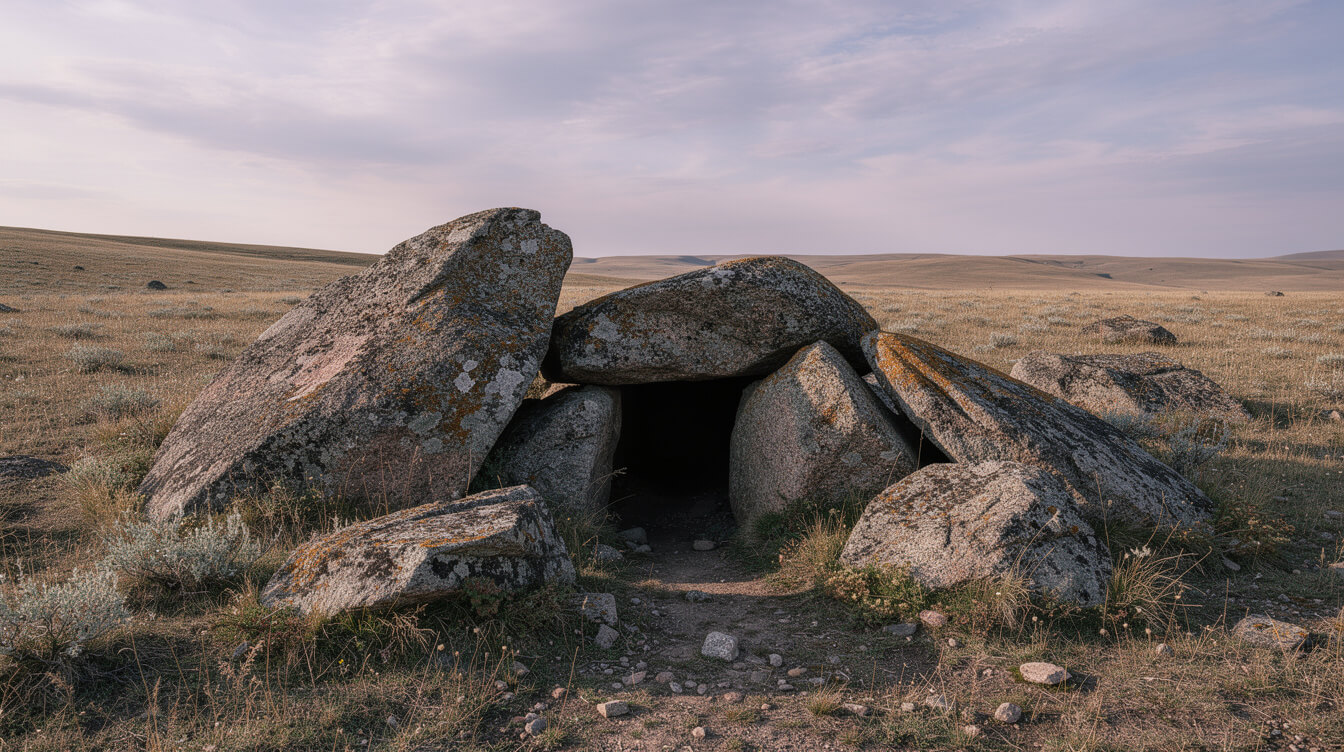
When it is not hunting, it is resting in a den, usually a rock crevice, a small cave, or an old marmot burrow. A tracking study in central Mongolia followed 29 manuls and found they used over a hundred different dens across about two years, switching between summer dens, winter dens, and special dens for raising kittens. It is a life of small, careful routines in a big, open, unforgiving place.
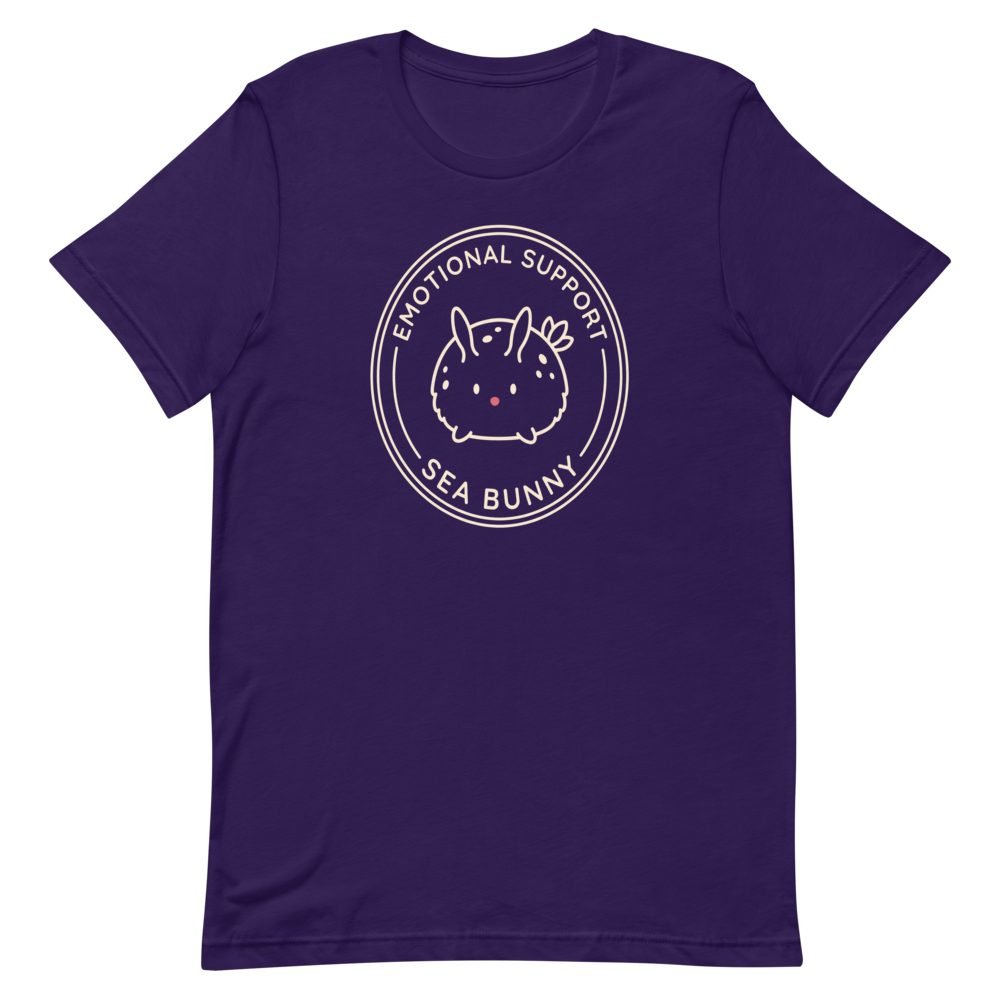
It is a long way from the warm, shallow, sunlit water where our other favorite round creature lives. We do not make a manul design, and we would not pretend a different animal is one. But if the manul’s particular kind of round, soft, faintly offended charm is your thing, our Emotional Support Sea Bunny T-Shirt is the closest thing in the shop: a small, round, fluffy-looking animal that the internet also fell for, and one you are very much allowed to keep close.
The cutemerch letter
A small good thing, once a week
One short, kind email with our coziest posts and new round animals from the shop. No spam. Unsubscribe anytime.
Can you have a Pallas cat as a pet? Why the answer is no
This is the question that matters most, so we will answer it plainly. No, a Pallas cat is not a pet, and it cannot become one. It is a wild animal that is protected across most of its range, it is listed under international wildlife trade rules (CITES Appendix II), and it does not do well even in the care of experienced professionals. This is not a case of “only if you have the right permits.” It is a case of loving it from a distance.
There is a gentle irony here. One of the best known pieces of manul culture is an old Russian internet meme, going back to 2008, that shows a manul and cheerfully invites you to pet it. The joke works precisely because everyone looking at that face knows it would not go well. The cat is not a soft toy, whatever the fur suggests. It is a small, powerful predator with sharp claws and a strong bite for its size, and it would very much prefer you stayed on your side of the rock.
Even zoos find manuls hard to keep
The more striking reason is how fragile they are outside their own world. Zoos have been trying to care for and breed manuls for decades, and it has been genuinely difficult. In zoos taking part in a long-running North American breeding program, almost half of the kittens born died within their first 30 days, the highest early mortality in captivity of any small wild cat. Zoo vets often point to the manul’s home as part of the reason: high, dry, cold, and thinly populated, a place where these cats rarely met many of the infections common at lower altitudes, so their young can be unusually vulnerable when they do. Toxoplasmosis is the one most often named.
Breeding is tricky too. Manuls have a short, strongly seasonal breeding window tied to the natural length of the day, and they are sensitive to stress. Some individuals in good zoo care have lived long, comfortable lives, well beyond the five or six years a wild manul usually manages. But that takes specialist keepers, careful conditions, and international coordination. It is not something a home, however loving, can offer.
How to love a manul properly
The kindest way to love a manul is to enjoy it exactly where it is. Follow the conservation groups that study them. Watch the wildlife footage. Visit a zoo that is part of a recognized breeding program if you are lucky enough to live near one. Share the photos, tell people the fact about the ears. And please do not share or engage with anything that looks like someone selling a “Pallas kitten.” That is not a pet listing. That is a wild animal that should not be there.
We said something similar about the quokka and the selfie problem, and it holds here as well: the cutest animals are often the ones that most need us to keep our hands to ourselves.
A round creature you are allowed to love up close
We do not make a manul shirt, and we would not pass another animal off as one. This soft, round sea bunny is the closest in spirit: a small animal the internet fell for, on a well-made tee you can actually keep.
Are manuls rare?

The short answer is: harder to see than they are rare, but rarer in some places than the global numbers suggest. Since 2020, the manul has been listed as Least Concern on the IUCN Red List, mostly because its range is so large and its total population is thought to be sizable. That is good news, and worth saying clearly.
The fuller picture is more delicate. The manul’s distribution is wide but patchy. Its strongholds are in Mongolia and China, and the further west you go, the more scattered and isolated the populations become. Nationally, the picture varies a lot: it is listed as Near Threatened in Mongolia, Endangered in China, and has been proposed as Critically Endangered in Turkmenistan because so few have been recorded there in recent years. Many local populations are small and declining.
What makes life hard for a manul
- Losing its food. The manul depends heavily on pikas and other small rodents. When those are poisoned in pest-control campaigns, the cats lose their prey and can be poisoned too.
- Losing its homes. It needs rocks and old burrows for dens. Fewer burrowing animals and more disturbed land mean fewer safe places to rest and raise kittens.
- Herding dogs and traps. Manuls have been killed by herding dogs and caught in traps set for other animals.
- Hunting. The manul was once hunted for its fur in huge numbers. International trade in its skins stopped in 1988, but some local hunting and trade continue.
- Fragmentation. Mining, roads, and other development split the open grassland it needs into smaller pieces.
The people doing the real work here are field researchers and conservation groups such as the Pallas’s Cat International Conservation Alliance and the Manul Working Group, who study the cats, map where they live, and work with local communities. If the manul has charmed you, their pages are the best next stop.
Frequently asked questions about manuls
Is a manul the same as a Pallas’s cat?
Yes. “Manul” and “Pallas’s cat” are two names for the same species, Otocolobus manul. Manul is its Mongolian name, and Pallas’s cat honors the naturalist Peter Simon Pallas.
Are there Pallas cats in the US?
Not in the wild. The manul is native only to Central Asia. In the US you can only see them in a small number of accredited zoos that take part in managed breeding programs.
How big is a manul?
About the size of a house cat: roughly 2.5 to 4.5 kilograms (5.5 to 10 pounds) and 46 to 65 centimeters long, plus the tail. Its dense fur and stocky build make it look much bigger and rounder than it really is.
Why does the manul look so fluffy?
Its coat is one of the densest of any cat, up to about 9,000 hairs per square centimeter, grown to survive very cold, windy winters on open ground. In winter it gets even thicker and grayer.
Are manuls friendly?
They are not unfriendly so much as wild. Manuls are solitary, shy, and easily stressed, and they do not seek out people. They are best admired at a respectful distance.
How long do manuls live?
In the wild, usually up to about five or six years. In good zoo care some have lived noticeably longer.
Can manuls be domesticated?
No. Domestication takes thousands of years of living alongside people, and the manul has never done that. It is a wild species, protected in most of its range, and it is not suited to life in a home.
Final thoughts
The manul is one of those animals that teaches you something about how you look at things. At first glance it is a round, grumpy cat, a meme with a face. Look a little longer and every part of that look turns out to be a quiet answer to a hard place: a coat for the coldest nights, ears for peering over rocks without being seen, round eyes for watching a pika burrow at dawn. The grumpiness is our story about it. The manul’s story is about getting by, carefully, in a big and windy world.
So enjoy the photos. Tell a friend why its ears are where they are. Root for the researchers counting them on the steppe. And if you ever see the old invitation to pet the cat, smile, and leave it be. That is the most loving thing you can do for a manul. If you would like more small, strange, lovable animals in your life, our guide to weird cute animals and our explainer on the sea bunny are good places to wander next.
Before you go
Want the next one in your inbox?
We write something soft every day. The best of it lands in one gentle weekly note, for you or for the friend who needs it.

One Comment