
Angelcore, explained: soft light, small wings, and where the cherub really came from
Angelcore is the aesthetic of light coming through something soft. A sheer curtain at eight in the morning, a white feather on a windowsill, a sky that looks like someone smudged it with a thumb. If you have ever saved a picture of pale gold sunbeams and pearls without quite knowing why, you have already met it. This is a slow, friendly guide to what angelcore is, where its favorite images actually come from, and how to bring a little of that hush into an ordinary room.
We will go gently, because the aesthetic is built on very old pictures, and a few of them still mean a great deal to a great many people. That turns out to be the most interesting part.
What is angelcore? An aesthetic made mostly of light

Angelcore is an internet aesthetic that borrows the look of angels from European art: clouds, halos, wings, gold ornament, doves, white roses, and above all a particular kind of glowing, hazy light. It grew up on Tumblr in the late 2010s and found a much bigger audience on TikTok around 2020 and 2021, when a lot of people were stuck indoors and wanted something that felt weightless.
The palette is easy to recognize. White and cream do most of the work, with pale gold for warmth and small touches of powder blue, butter yellow, and blush pink. The textures are the kind you can almost see through: tulle, organza, lace, fine cotton, a little silk. Nothing is heavy. Nothing is loud.
What makes angelcore different from simply “a pretty white outfit” is that it is about a feeling first and objects second. The people who love it tend to describe the same thing in different words: calm, safe, held, a bit like being above the weather for a minute. The angels in the pictures are, almost always, gentle ones. Messengers, guardians, small comforting figures at the edge of a painting. Angelcore keeps that mood and mostly leaves the doctrine where it found it.
Secular, mostly, and that is fine
Most people who use the word are not making a religious statement, and the aesthetic is usually approached secularly, as a visual language rather than a belief. Some angelcore fans are people of faith, some are not, and the look works for both. The one thing worth holding onto is that its source images came from somewhere real and sacred, which we will come back to when we talk about what to wear.
The cherub is not who you think it is
Here is the small surprise at the center of angelcore. The chubby winged child floating in the corner of a painting, the one everybody calls a cherub, is not really a cherub at all.
The word angel comes from the Greek angelos, which simply means messenger. In the Hebrew Bible, the beings called cherubim are something else entirely. They guard the way back to the garden after Adam and Eve leave it. Two golden cherubim spread their wings over the cover of the Ark of the Covenant. When the prophet Ezekiel describes them, they have four faces and four wings each. The seraphim in Isaiah have six wings. None of these are round little babies. They are closer to awe than to cute.
The round baby with wings has a different family tree. Its ancestor is the Greek Eros, the Roman Cupid, and the crowds of small winged boys carved onto Roman sarcophagi and painted on villa walls. Italian Renaissance artists rediscovered those carvings in the fifteenth century and fell for them completely. They called the figures putti, from an old word for little boy, and the sculptor Donatello is often credited with bringing them back into fashion in Florence. Within a generation they were everywhere: holding up garlands, tumbling around saints, peeking over the bottom edge of altarpieces.
The most famous pair sits at the bottom of Raphael’s Sistine Madonna, painted around 1512. Two putti lean on a ledge with their chins propped up, gazing upward with an expression somewhere between wonder and boredom, and they have since been reproduced on postcards, gift wrap, and practically everything else a picture can be printed on. By the Rococo period in eighteenth century France, painters like Boucher were filling pastel skies with dozens of them. Somewhere along the way, in everyday English, the sacred word cherub got attached to the pagan baby, and the two have stayed glued together ever since.
So angelcore’s favorite figure is really a meeting of two traditions: holy guardians who were never meant to be sweet, and a classical love god who was always a bit of a rascal. Knowing that does not spoil the pictures. If anything it makes them more fun to look at, because now you can spot which is which.
Why angelcore light looks the way it does

If the cherub is angelcore’s mascot, light is its real subject. Take the figures out of the pictures and you still have the aesthetic, as long as the light is right. A few very specific kinds of light do most of the work.
Sunbeams you can see
Those fans of light pouring down from behind a cloud have a proper name: crepuscular rays. People also call them god rays or Jacob’s ladder. They show up when the sun sits behind a cloud with gaps in it, and the air below holds enough dust, haze, or water droplets to scatter the light toward your eyes. The odd thing is that the beams are very nearly parallel. They only look like they spread out from one point for the same reason railway tracks seem to meet at the horizon: perspective. Painters loved them because they make a sky feel like it is opening.
The indoor version is the sunbeam crossing a quiet room with dust floating in it. Same physics, smaller scale, and much easier to get. A sheer curtain, a bright morning, and a room that has not been dusted in a day or two will do it.
Gold that glows instead of shines
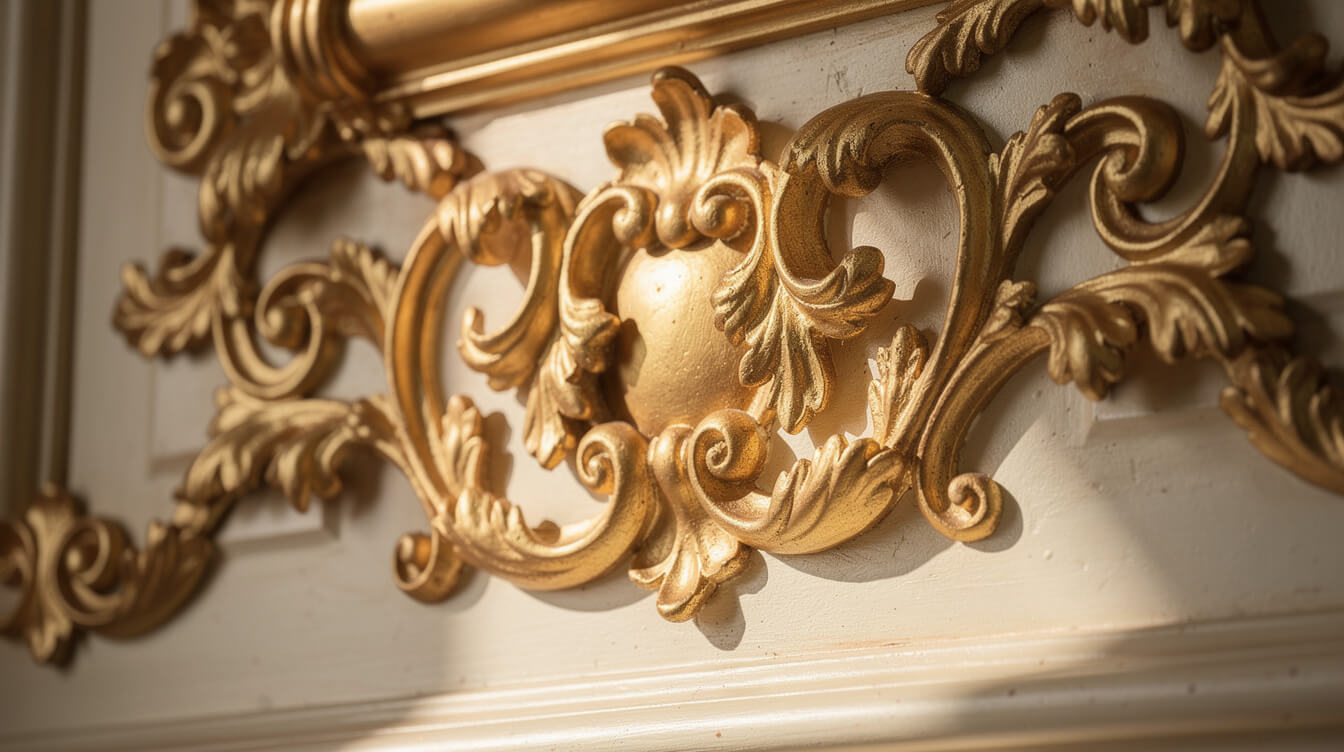
The other angelcore light is gold. In Byzantine icons and early Italian panel paintings, halos and backgrounds were made with real gold leaf laid over a smooth ground, then tooled and punched so the surface would catch candlelight and seem to glow from inside. That is the warm gold angelcore keeps reaching for. Not bright, not brassy, more like late afternoon on an old picture frame.
Haze, which is the whole secret
The last ingredient is softness at the edges. Angelcore photos are almost never crisp. The light blooms, the whites run into the creams, and the shadows are pale instead of black. If you take pictures, the cheapest way to get the look is to shoot toward a window with the light behind your subject and let it wash a little. A slightly overexposed photo is more angelcore than a perfect one.
The angelcore palette, and where to keep it gentle

The fun part of angelcore is that most of it is made of very ordinary things. White lace trim. A strand of pearls, real or not. A pale blue ribbon. A white rose from the grocery store. A feather you found on a walk. A sheer scarf that does nothing practical except catch the light. Put five of those together on a cream background and you have something that looks like it fell out of a cloud.
For clothes, the shapes are loose and easy: slip dresses, long skirts that move, nightgown-style cotton dresses, a cardigan in cream or the palest pink, tights with a little shine. White sneakers or soft ballet flats keep it wearable on a Tuesday. If you already own pieces from a cottagecore wardrobe, the lighter half of it will cross over almost entirely. Angelcore just turns the brightness up and the earth tones down.
The part no one else seems to mention
Some of the classic angelcore accessories are not just pretty objects. A rosary is a prayer, counted on beads. A cross pendant can be the most personal thing someone owns. A lot of angelcore mood boards drop both in as decoration, and plenty of people who pray with them would rather they were not worn as a costume piece.
There is a simple, kind way through this. If a symbol is sacred to you, wear it, it is yours. If it is sacred to someone else and only decorative to you, leave it for them. You lose nothing, because the aesthetic was never really carried by those objects anyway. Feathers, pearls, clouds, doves, white flowers, gold ribbon, and light do the job beautifully, and none of them ask anything of anyone.
The same goes for wings and halos. A pair of costume wings at a party is lighthearted and nobody minds. As everyday style, a small feather charm or a halo of white flowers says it more softly.
And the guardian idea, the oldest one in the whole tradition, shows up in odd places once you start looking. The closest thing we make to a guardian angel is a round, coral pink spider holding two sleeping spiderlings, on our Protect the Spoods Cute Jumping Spider T-Shirt. It is not an angelcore shirt, and we would not pretend it is. But it is about the same feeling: something small, keeping watch over something smaller.
The cutemerch letter
A small good thing, once a week
One short, kind email with our coziest posts and new round animals from the shop. No spam. Unsubscribe anytime.
Angelcore at home: one window and a few white things

You do not need a gilded ceiling to live with angelcore. You need one good window. Everything else is arranged around the light that comes through it.
Start with the curtain
If you change only one thing, swap a heavy curtain for a sheer white or cream one. It is the single biggest move, because it turns harsh daylight into the soft glowing kind and makes every sunbeam visible. Inexpensive voile panels work just as well as fancy ones.
Make a small altar to nothing in particular
A windowsill or a shelf near the window becomes the angelcore corner. A small clear vase with one white flower, a feather, a little white dish holding a few pearls or shells. Keep it to three or four things so it stays airy. When the flowers fade, let them dry and keep them there a while. Pale dried roses are very much on theme.
Choose white bedding and let it be a little rumpled
White or cream bedding, a light blanket, a pillow in powder blue. A perfectly made bed looks like a hotel. A soft, slightly undone one in morning light looks like a painting. This is the one aesthetic where not making your bed counts as styling.
Add gold in small doses
An old picture frame from a thrift shop, a little brass candle holder, a gold ribbon tied around a jar. One or two warm gold accents keep all that white from feeling clinical. If you add candles, an LED pillar candle gives the same glow next to sheer fabric without the worry.
Put on the soundtrack
Angelcore has a music side too, and streaming services have whole playlists tagged with the word: dreamy vocals, slow tempos, lots of reverb. It is the sound version of the hazy light. Put one on while you water a plant on that windowsill and you will see why people get attached.

A small guardian, keeping watch
Not an angel, but the oldest angel job there is. A round coral pink jumping spider holds two sleeping spiderlings close, printed on a soft heather mint tee. For anyone who quietly looks after the small things.
Angelcore, fairycore, cottagecore: how to tell the soft siblings apart
Angelcore sits in a family of gentle aesthetics, and they borrow from each other constantly. A quick way to tell them apart is to ask where each one wants to be.
- Cottagecore wants to be in a kitchen garden. Linen, bread, jam jars, warm earth tones, and a life with chores in it. Its light is practical afternoon sun.
- Fairycore wants to be at ground level in a wood. It is about scale and noticing small living things: moss, snails, seedheads, dew. Its light is dappled and green.
- Goblincore wants to be under a log, happily. Mushrooms, frogs, pocket treasures, and the comfort of a little mess. Its light is overcast.
- Angelcore wants to be in the sky. It looks up instead of down, and its light comes from above, filtered through cloud or curtain.
That direction of the gaze is the real difference. Fairycore and goblincore are about the earth and its small creatures. Angelcore is about air and brightness. The palettes follow naturally: green and brown on the ground, white and gold up high. If you are still working out which of these feels most like you, our guide to cute aesthetics and how to find yours is a gentle place to start, and grandmacore is worth a look too if the lace and pearls are what you love most.
The animals of angelcore
If angelcore has a favorite real animal, it is the white dove, which has stood for peace and gentleness across so many traditions that it barely needs explaining. White doves kept by people are usually domestic rock doves or ring-necked doves bred for pale feathers, and they are round, soft, and very calm to watch. Swans show up a lot as well, and so does anything fluffy and white. It is a good aesthetic for anyone who likes animals that look like clouds.
Angelcore: frequently asked questions
Is angelcore religious?
Usually not. Angelcore borrows the imagery of angels from European art and is generally enjoyed as a visual and emotional style rather than a statement of faith. People of any belief, or none, wear it. The kindest approach is to enjoy the light, the clouds, and the softness, and to treat genuinely sacred objects like rosaries with care.
What colors are angelcore?
White and cream first, then pale gold, with small touches of powder blue, butter yellow, and blush pink. Black is rare, and when it appears it usually belongs to a darker cousin of the style rather than angelcore itself.
What is the difference between angelcore and ethereal style?
They overlap a lot. “Ethereal” describes a quality: light, airy, otherworldly. Angelcore is one specific way of getting there, using the imagery of clouds, wings, halos, doves, and gold ornament drawn from old paintings.
Is angelcore the same as cherubs?
Cherubs are part of it, but angelcore is wider than any one figure. And the round winged babies most people call cherubs are, in art history terms, putti, descended from Cupid. The cherubim of the Bible were imposing guardian beings with several wings and faces.
How do I get into angelcore without buying a whole new wardrobe?
Start with what you have: anything white, cream, or pale. Add one soft texture, like lace or a sheer layer, and one small detail, like pearls or a feather charm. At home, a sheer curtain and one white flower on the windowsill will change a room more than anything you could order.
Is angelcore still popular?
It is a steady, quieter aesthetic rather than a brand new trend. People keep searching for it every month, and it keeps finding new fans who want something calm. Soft aesthetics tend to last, because the need for a little calm does not go out of style.
Final thoughts
Angelcore is, at heart, a way of paying attention to light. It asks you to notice the sunbeam on the floor, the way a white curtain glows, the gold on an old frame, and the small figures painters tucked into the corners of their pictures so that heaven would feel a little less far away. You can enjoy all of it without a single costume wing.
If you take one thing from this, let it be the window. Hang something sheer in front of it, put one white thing on the sill, and wait for a bright morning. That is the whole aesthetic, really. The rest is just a little gold and a lot of softness, and you already have most of it. Look up once in a while. The sky is doing angelcore for free.
Before you go
Want the next one in your inbox?
We write something soft every day. The best of it lands in one gentle weekly note, for you or for the friend who needs it.