What is an isopod? The gentle armored crustacean under your flowerpot
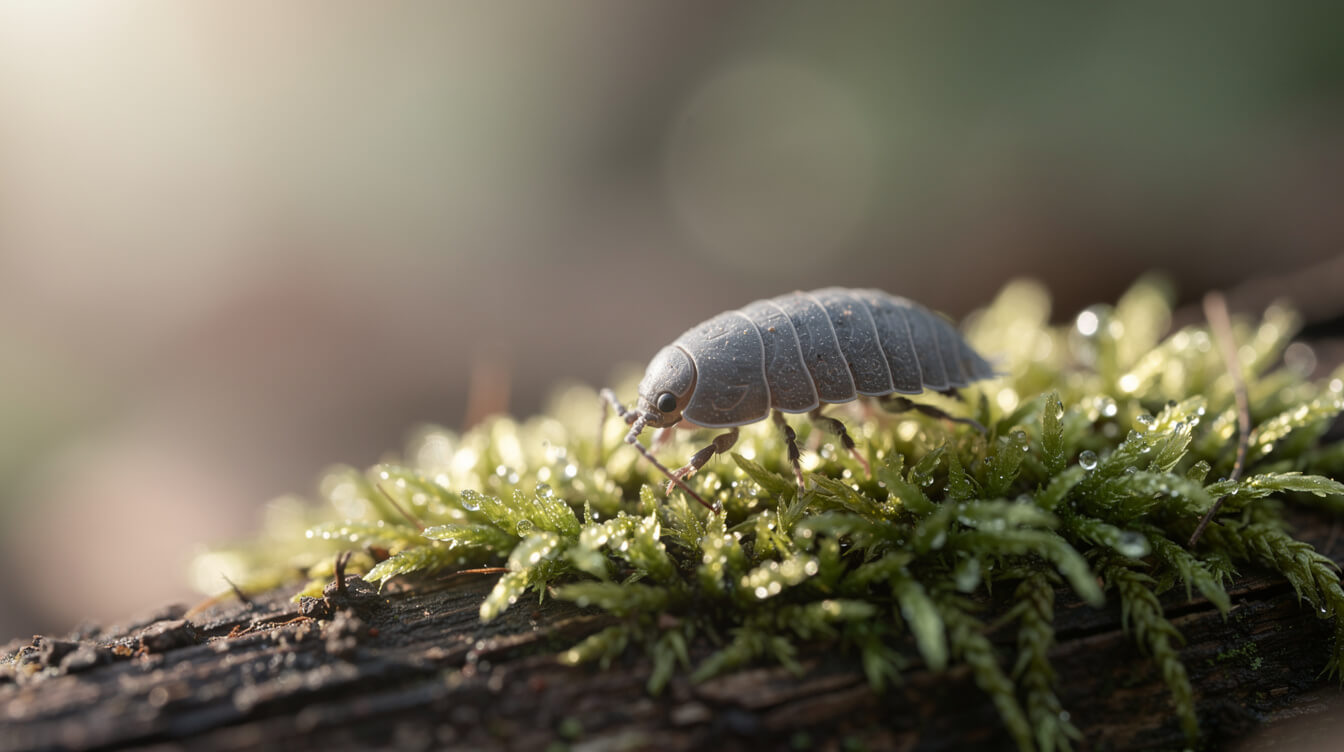
If you have ever lifted a flowerpot and watched a few small grey armored things wander off at an unhurried pace, you have met an isopod. So, what is an isopod, exactly? It is a crustacean, a close cousin of crabs and shrimp, that happens to live under your garden stones instead of in the sea. That one fact changes how the little roly poly looks to you, and it is the start of a much better story.
This is a gentle field guide to what an isopod is, why it is not a bug, why it rolls into a ball, and why so many people have quietly fallen for it. We will meet the roly poly from your childhood, the patterned ones with names like rubber ducky and dairy cow, and the giant cousin that lives in the deep ocean and is, honestly, a lot to take in. No care sheets here, just the animal, seen kindly.
What is an isopod? The short, honest answer
An isopod is a crustacean in the order Isopoda. The name comes from Greek: isos means equal and pous means foot, so isopod roughly means “equal feet.” It is a fair description. Where a crab has big claws and a shrimp has a fan of very different limbs, an isopod has a neat row of walking legs that all look more or less alike.
There are more than ten thousand known isopod species, and they live almost everywhere water does. Most of them are marine. Some live in rivers, lakes, and caves. A few thousand species made the very rare crustacean move onto dry land, and those are the ones you know: the woodlouse, the pill bug, the sow bug, the roly poly. Biologists group the land dwellers together as Oniscidea, but you do not need the Latin to love them.
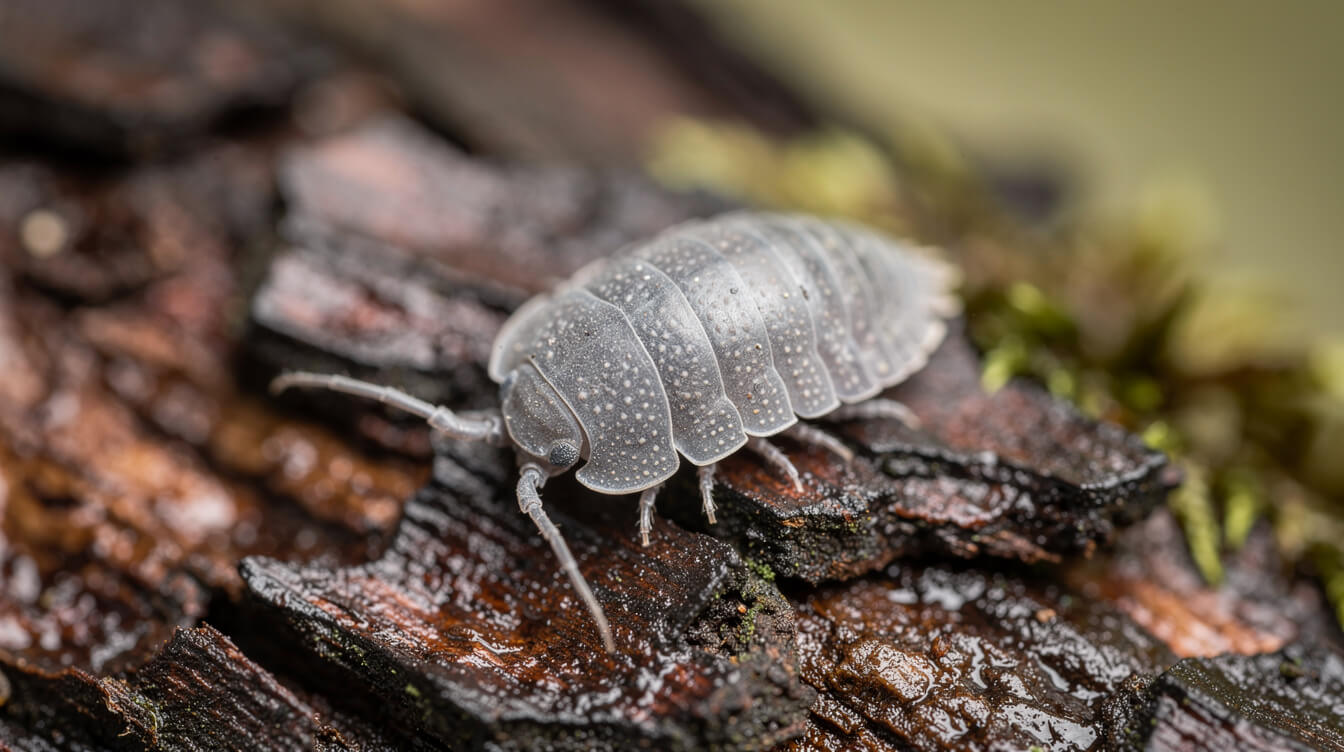
Here is the shape of a typical land isopod. A flattened or domed body made of overlapping armored plates, like a tiny suit of armor or a row of roof tiles. Seven pairs of legs. Two pairs of antennae, though one pair is so small you will almost never notice it. Small dark eyes on the sides of the head. Two little prongs at the tail end on many species. Nothing about it is in a hurry.
And here is what it does all day: it eats dead things. Fallen leaves, rotting wood, bits of fungus, the soft remains of whatever the garden was finished with. Isopods are detritivores, part of the quiet cleanup crew that helps turn last autumn’s leaves into next spring’s soil. It is unglamorous, steady work, and it is a big reason they are worth a second look.
Why an isopod is a crustacean, not a bug
The most common question about isopods is whether they are insects. They are not, and once you know what to look for, you cannot unsee it.
Count the legs
Insects have six legs. Spiders have eight. An adult isopod has fourteen, seven matching pairs down the length of its body. If you ever want to settle the question on a garden path, a slow count does it. Fourteen legs means crustacean.
They still breathe a little like sea creatures
Crustaceans are overwhelmingly animals of the water, and land isopods never fully left that history behind. They breathe through structures on the underside of the body that developed from gills. Many land species have small air-filled breathing organs there, sometimes called pseudotracheae, but they still need damp air to work well. That is why you find isopods under stones, logs, and pots, and never sunbathing on a dry patio. A dry afternoon in the open is genuinely dangerous for them.
A few species can even take up water through those little tail prongs, wicking moisture from a damp surface. It is a very crustacean solution to a very land-animal problem.
The babies ride in a pouch
Isopods do not leave their eggs in the soil. A mother carries them in a fluid-filled brood pouch on the underside of her body, called a marsupium. The young hatch inside the pouch and walk out as tiny, pale copies of the adults. One sweet detail: newborn isopods have only six pairs of legs. The seventh pair arrives after their first molt.
They molt in two halves
Like all crustaceans, isopods grow by shedding their outer shell. Most animals that molt do it all at once. Isopods molt the back half first, and then, often a day or so later, the front half. For a little while a growing isopod can look half new and half old, which is about as relatable as an animal gets.
Their blood is a little blue
Instead of iron-based hemoglobin, isopods carry oxygen with a copper-based protein called hemocyanin, the same one crabs and lobsters use. It gives their blood a faint blue tint when it is carrying oxygen. You will never see it, and that is fine, but it is a nice thing to know about the small grey animal under your doormat.
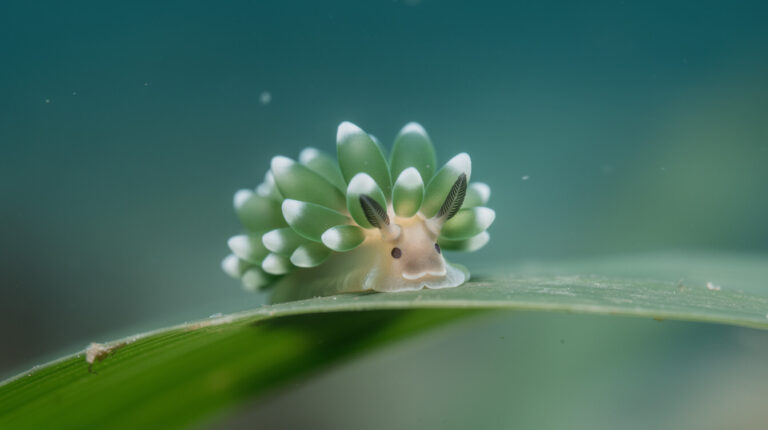
If you have read our piece on the sea bunny, this will feel familiar. A lot of the internet’s favorite small animals turn out to be something other than what they look like at first.
Roly poly, pill bug, woodlouse: the names, sorted

Land isopods have collected more nicknames than almost any small animal. Woodlouse, pill bug, sow bug, roly poly, slater, doodlebug, cheesy bug. Most of these are regional, and many people use them interchangeably. There is one real distinction worth knowing, though, and it comes down to a single move.
The ones that roll
Pill bugs can roll themselves into a nearly perfect sealed ball. The behavior has a lovely technical name, conglobation. The armored plates on the back fit together so neatly that, when the animal curls up, the soft underside and legs are tucked completely inside. This is the classic roly poly of childhood, and the most familiar one in North American gardens, Armadillidium vulgare, is actually a European animal that arrived here long ago and settled in comfortably.
The ones that run
Sow bugs and many woodlice cannot close into a ball. Their bodies are flatter, they often have those two visible tail prongs, and when disturbed they simply scurry away. So a pill bug is a kind of woodlouse, but not every woodlouse is a pill bug. A gentle test, if you ever need one: if it curls into a tidy sphere, it is very likely a pill bug. If it runs for the nearest dark gap, it is probably a sow bug.
Why the ball matters
Rolling up does two jobs at once. It presents a smooth armored surface to a predator like an ant or a small spider, and it slows water loss by tucking away the soft breathing surfaces underneath. A pill bug curled on a dry leaf is protecting itself from being eaten and from drying out in the same small gesture. That is a lot of thought packed into a pea-sized ball.
It is also the reason so many of us met isopods first as children. They are slow, they are harmless, and they do something delightful when you are patient with them. For many people the roly poly was their first gentle lesson in watching a small animal without hurting it.
Why an isopod is cute, even though it is a crustacean
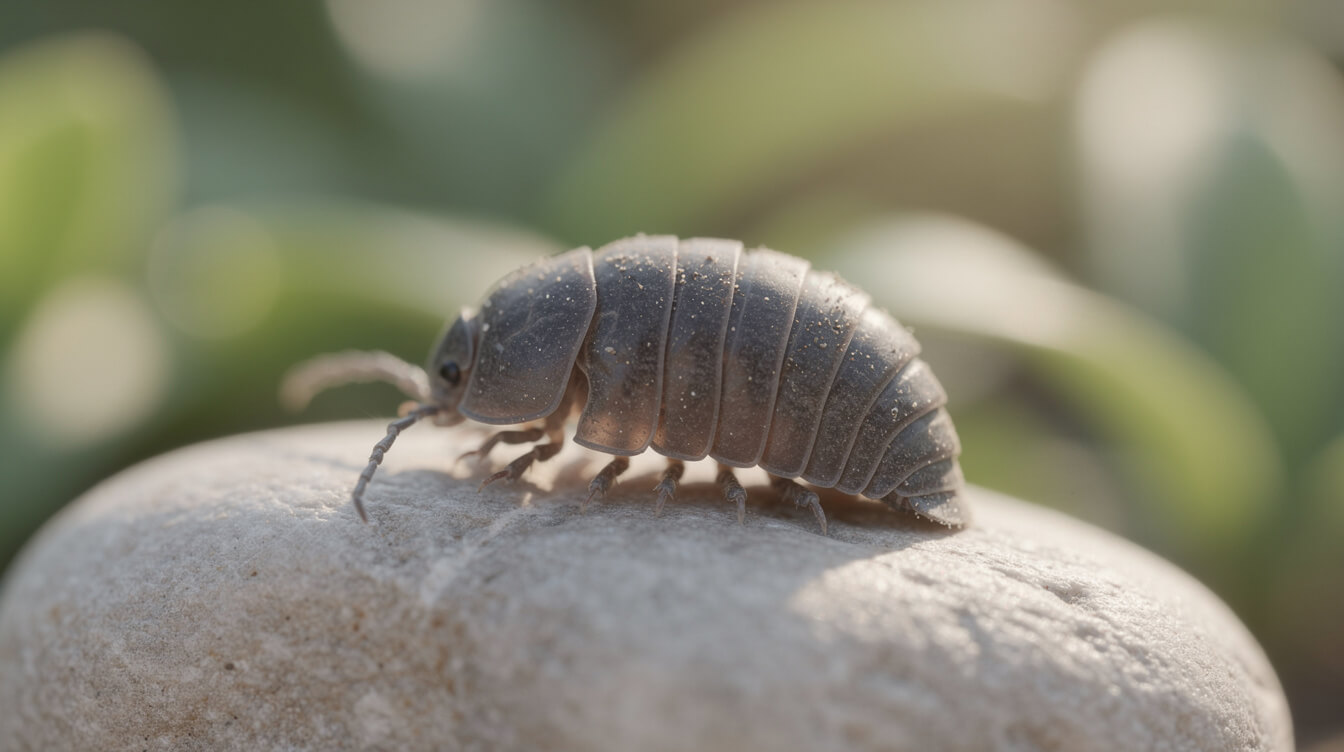
Isopods are not cute in the way a kitten is cute. They do not have big eyes or a soft round face. And yet, ask anyone who has spent ten minutes watching one, and the word comes up. We think there are a few honest reasons.
The round, smooth shape
A curled pill bug is almost a perfect sphere, and an uncurled one is a smooth, rounded dome. Our brains go soft on round things. We wrote about why in our guide to weird cute animals, and the short version is that rounded, compact shapes read as gentle and safe. An isopod is basically a pebble that walks.
The slow, careful pace
Isopods are not frantic. They amble. Their antennae tap the ground ahead of them like someone feeling for a light switch in the dark. Watching one feels calm in a way that watching a fast-moving insect does not.
The tiny armor
There is something endearing about a very small animal wearing a full set of armor and using it so politely. It does not bite. It does not sting. Its whole defense plan is to curl up and wait for you to be kind. That combination of armor and harmlessness is a big part of the charm.
They are humble helpers
A lot of cute culture is about appreciating the small, overlooked thing. That is the heart of goblincore, and it is why isopods show up so often next to moss, mushrooms, and snails on those boards. They are a creature that does real work in a forgotten corner and never asks for credit.
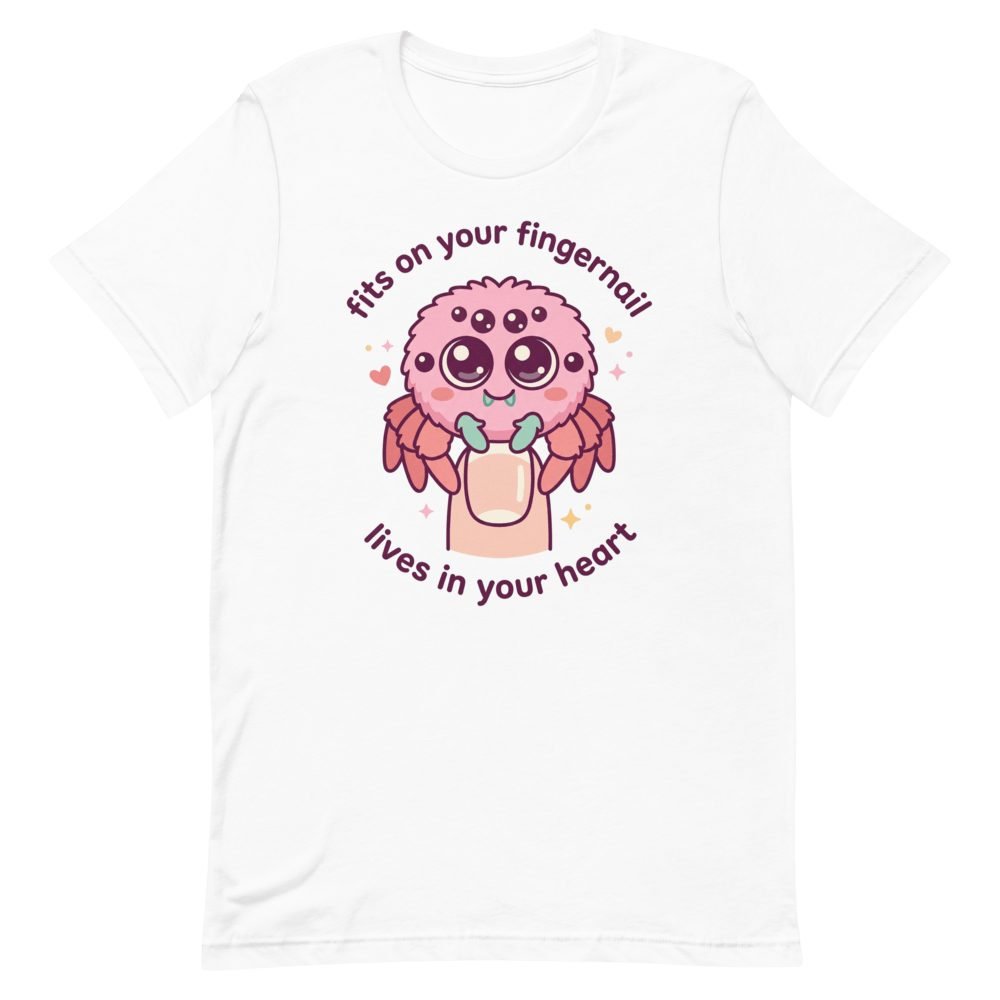
We do not make an isopod shirt. The closest thing in our shop is the Fits On Your Fingernail Cute Jumping Spider T-Shirt, which is a different animal with the same idea behind it: a very small creature, taken seriously, drawn with affection. If you are the person who flips over stones to say hello to things, it was made with you in mind.
The cutemerch letter
A small good thing, once a week
One short, kind email with our coziest posts and new round animals from the shop. No spam. Unsubscribe anytime.
Isopods that look like toys: rubber ducky, dairy cow, and other morphs
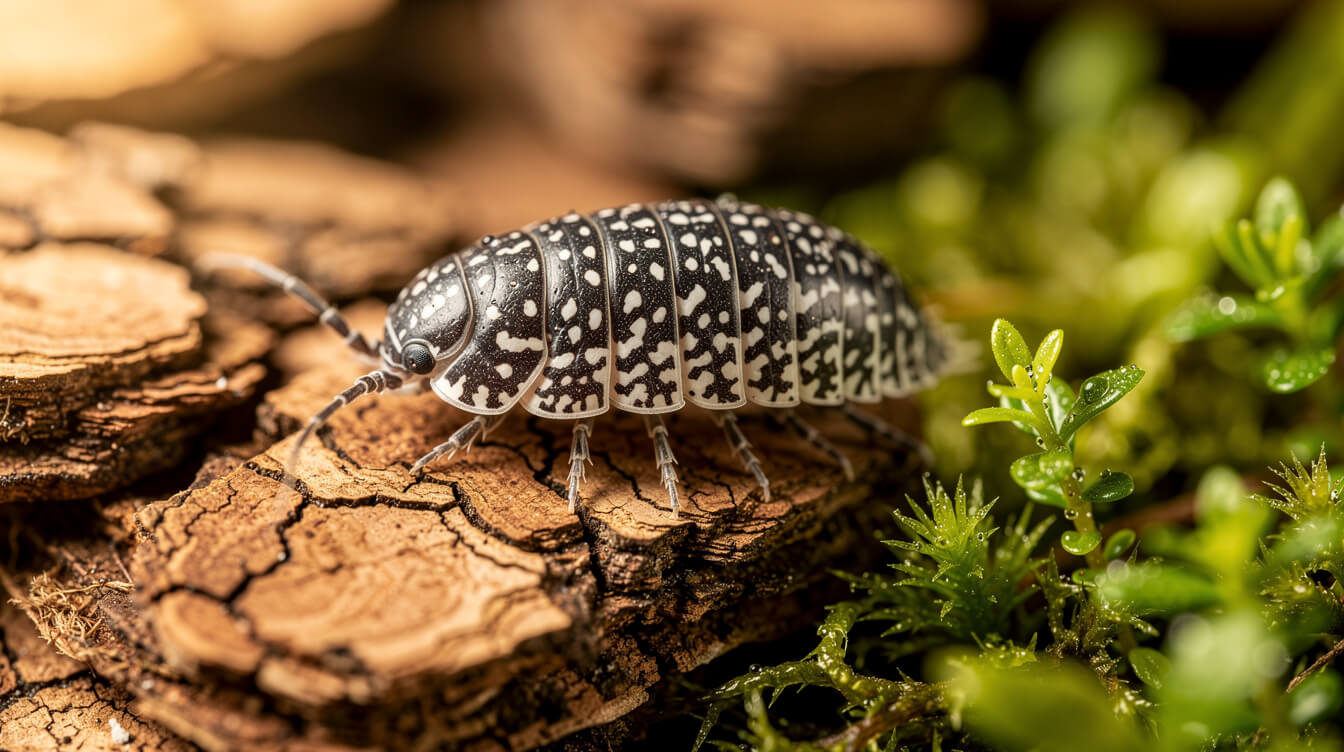
Over the last decade or so, isopods have become one of the more surprising small-animal hobbies. Keepers have collected and selectively bred species from around the world, and some of the results look nothing like the grey roly poly in your garden. This is a big part of why searches for cute isopods have climbed so quickly.
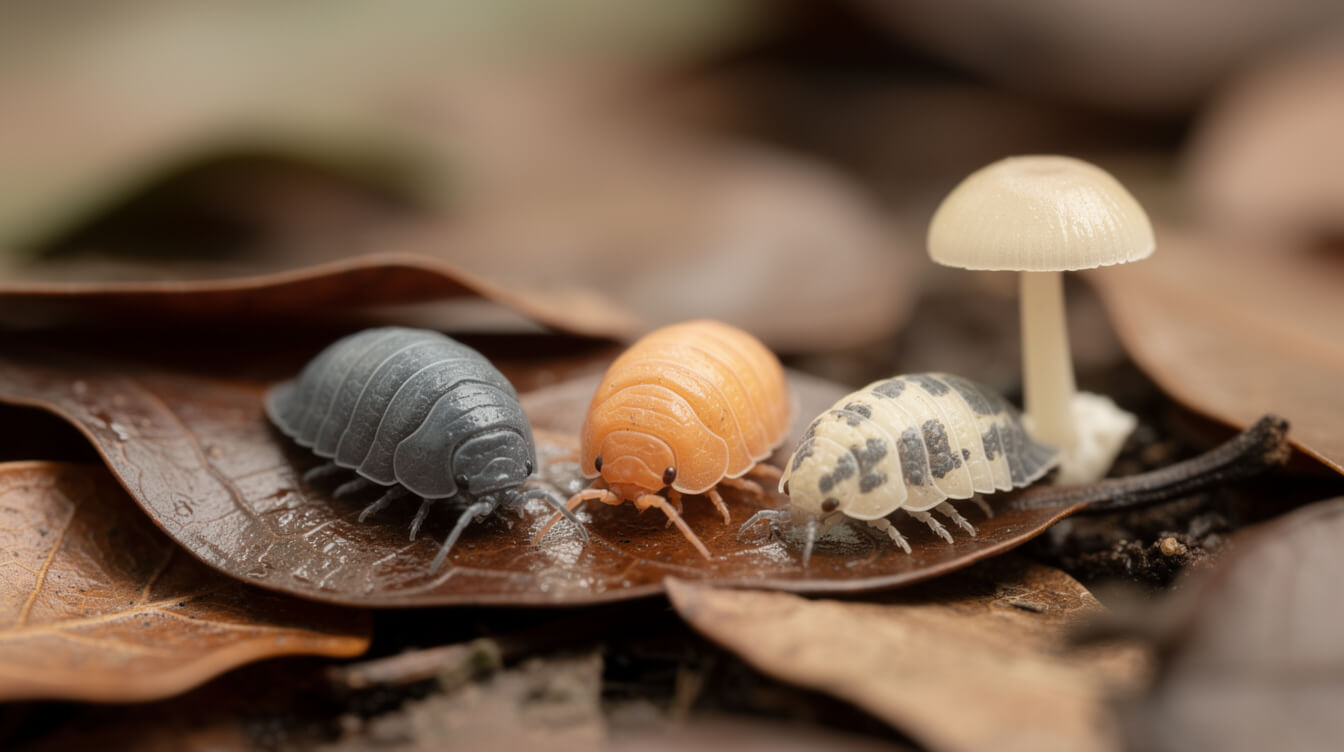
The rubber ducky isopod
The famous one is a small species from the genus Cubaris, from Southeast Asia, known in the hobby as the rubber ducky. Seen from above, the pattern and shape of its head end can look a little like the face of a yellow bath toy, and that resemblance did the rest. It is one of the most shared isopods online, and also one of the slower ones to breed, which is part of its reputation.
The dairy cow isopod
Dairy cow is the hobby name for a patterned form of Porcellio laevis, a larger, faster species. Its back is splashed with black and white patches, very much like a tiny cow. It is an easy one to love on sight.
Other names worth knowing
Keepers give their animals wonderfully cozy names. You will see oranges, creams, purples, and stripes. You will see names borrowed from food and toys and cartoons. Some are distinct species, and many are color forms of one species kept separate by careful breeding. A good rule if you are browsing: the hobby name tells you what someone thought it looked like, not what the animal actually is.
One honest note. We are not going to tell you how to keep isopods, and if you are curious about doing it, the people to ask are experienced keepers and local hobby groups who know your climate and the species in front of you. What we will say is that the cuteness here is real, and it comes from the same place as the garden roly poly: a gentle, armored, slow little animal, just wearing a fancier coat.
Very small, taken seriously
A cotton candy pink peacock spider, one of the tiniest jumping spiders, perched on the tip of a fingertip and printed on a soft ring-spun cotton tee. Not an isopod, but made for the same people: the ones who lift a flowerpot just to say hello.
The giant isopod, and the deep-sea side of the family
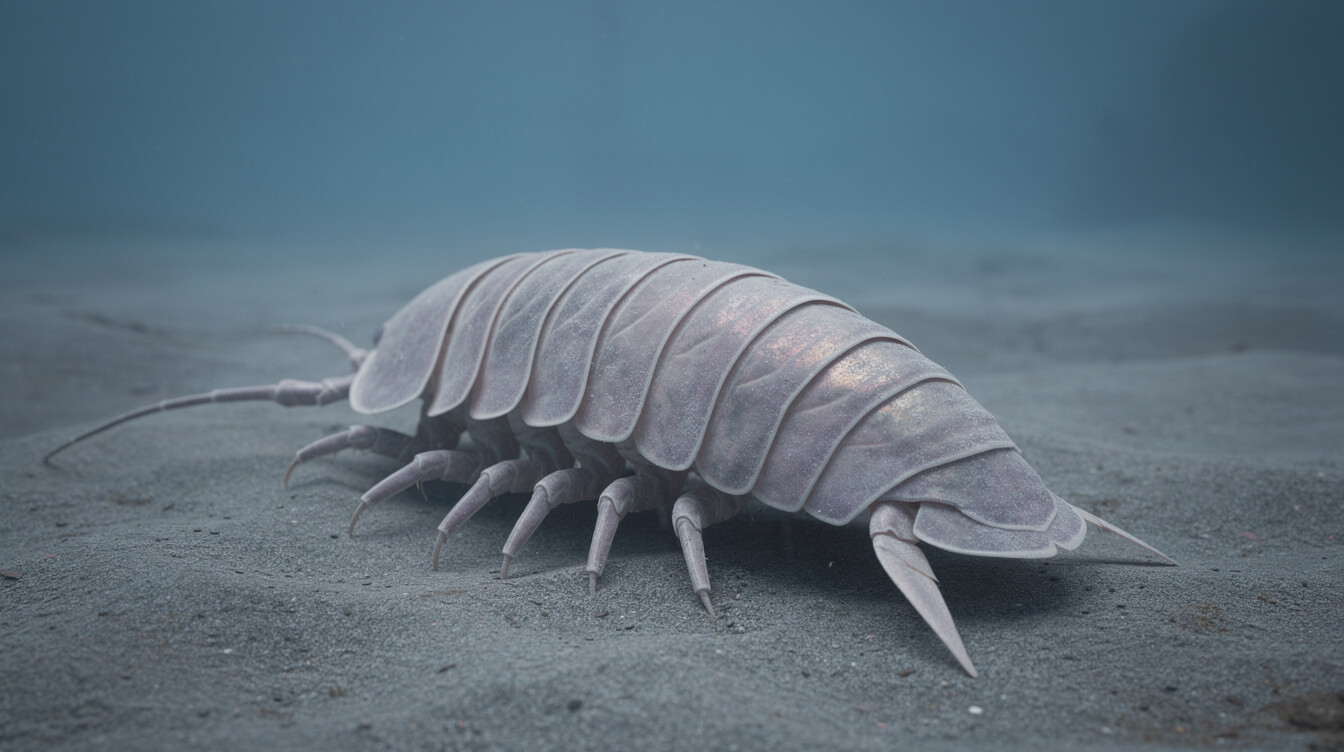
If the garden isopod is the cozy end of the family, the giant isopod is the dramatic end. Bathynomus giganteus lives on the deep, cold ocean floor, and adults can grow longer than a foot. It looks exactly like a pill bug that has been scaled up past the point of comfort, and that is more or less what it is: a distant relative with the same basic body plan.
Giant isopods are scavengers. In the deep sea, food is scarce and arrives unpredictably, usually as something that sank from far above. They are built for long waits. One giant isopod at an aquarium in Japan became briefly famous for going around five years without eating, which tells you something about how slowly life moves down there.
Are giant isopods cute? Opinions differ, and both sides are reasonable. Their big compound eyes and calm, armored bulk have won them a real fan base online. Plenty of people find them a little unsettling too. We land somewhere in the middle: they are not cute in the round, soft way, but there is something gentle about a large, slow animal living patiently in the dark.
The rest of the water-dwelling relatives
Most isopods are marine and most are tiny. Some graze on algae along docks and seagrass. Some, like the gribble, bore into wood in the water. And yes, a few are parasites, including one that lives in the mouths of certain fish. That one is genuinely strange, and it is harmless to people, but it is not going on a shirt. We mention it only because an honest field guide should, and because it shows just how varied one family of “equal feet” animals can be.
If deep-sea and odd-shaped animals are your favorite kind, our post on the axolotl is a good next read. It is another animal whose real story is better than the meme.
How to say hello to an isopod you find outside
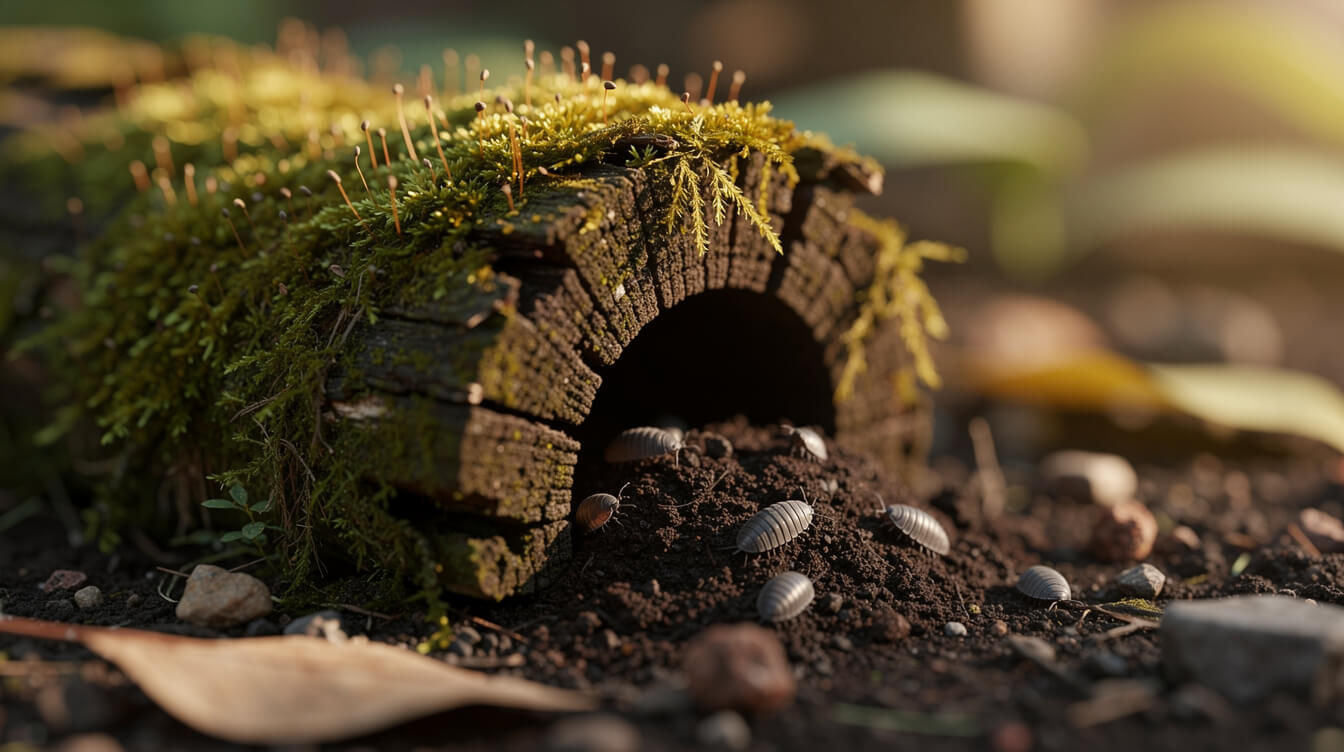
You do not need to keep isopods to enjoy them. A garden, a park, or even a damp corner by a back door is usually enough. Here is a gentle way to meet them without hurting anything.
- Look in the damp places. Under a flowerpot, a flat stone, a fallen log, or a thick layer of leaves. Early morning and after rain are good times.
- Lift slowly, and put it back the way you found it. The underside of a stone is someone’s home. When you are done looking, lower it gently so the isopods underneath are not crushed, and so the damp stays in.
- Watch rather than handle. If you do pick one up, let it walk onto a leaf or a card rather than pinching it. Never squeeze a curled pill bug to open it. It will uncurl by itself when it feels safe.
- Keep them damp and shaded. A few minutes in the sun on dry ground is hard on them. Short visits are the kind ones.
- Try a slow count. Fourteen legs, two antennae you can see, a little tail fan on many species. It is a lovely thing to do with a child, too.
If you enjoy this kind of quiet noticing, you may like our guide to fairycore, which is mostly about paying attention to small things in soft light. Isopods would fit right in.
Frequently asked questions: what is an isopod, and is it safe?
Is an isopod an insect?
No. An isopod is a crustacean, related to crabs, lobsters, and shrimp. It has fourteen legs where an insect has six, two pairs of antennae where an insect has one, and it never has wings.
Do isopods bite?
Not in any way a person would notice. Their mouthparts are made for chewing soft, decaying plant matter. They have no venom and no sting. Their defenses are running away, rolling up, and in some species releasing a chemical deterrent aimed at small predators.
Are isopods harmful to my house or garden?
To people and buildings, no. In the garden they mostly eat dead material, though they may nibble very young seedlings or soft fruit sitting on damp soil. If you find them indoors, it usually just means somewhere is damp. They are a sign of moisture, not the cause of any damage.
How many legs does an isopod have?
An adult has fourteen, in seven pairs. Newborns start with twelve and gain the last pair after their first molt.
How long do isopods live?
It varies by species. Many common garden isopods live a couple of years, and some live longer in good conditions.
Is a roly poly an isopod?
Yes. Roly poly, pill bug, woodlouse, and sow bug are all common names for land isopods. The ones that roll into a full ball are the pill bugs.
Why do isopods like dark, damp places?
Because they lose water easily. Their breathing surfaces developed from gills and need moisture, so they shelter where the air is humid and the light is low. Much of their waste even leaves the body as ammonia gas through the shell, another quiet trick for living on land without a lot of water to spare.
Final thoughts
An isopod is a small crustacean that walked out of the water a very long time ago and has been quietly tidying the world ever since. It wears armor and never uses it to fight. It carries its babies in a pouch. It molts in two halves. It rolls into a ball when it is nervous, and it uncurls again when you are patient.
That is the whole answer to what an isopod is, and also the reason it is cute. Not because it looks like a cartoon, but because it is a gentle, unhurried animal doing honest work in a damp corner, and it is happy to be noticed if you are kind about it. The next time you lift a flowerpot, say hello, and then put it back softly.
Before you go
Want the next one in your inbox?
We write something soft every day. The best of it lands in one gentle weekly note, for you or for the friend who needs it.