
Can you have a pet otter? The honest answer for people who love otters
If you have ever watched a video of an otter juggling a pebble, napping on its back, or squeaking for a snack, you have probably had the thought. It is a very reasonable thought. Could I have a pet otter? Could one live with me, sleep at the foot of the bed, and make that little chirp every morning?
We love otters at the cutemerch desk, quite a lot, so we wanted to answer this one properly and kindly. The short version is that a pet otter is almost never legal, almost never kind to the otter, and much harder to live with than the videos suggest. The longer version is more interesting, because it explains what otters actually need, where the otters in those videos come from, and how to love them in a way that is good for them too. Make a cup of something warm. This one is worth the read.
Can you have a pet otter? The short answer

For most people reading this in the US, no. In most places, keeping a pet otter is either illegal outright or locked behind wildlife permits that are meant for zoos, rehabilitators, and licensed facilities rather than households. And even where a permit is technically possible, the people who know otters best, the biologists and rescue workers who care for them, say they make poor pets.
That is not because otters are mean. It is because they are wild animals in every way that matters. Otters have never been domesticated. There is no otter equivalent of the long, slow partnership that turned wolves into dogs. An otter raised by people is still an otter: a fast, clever, semi-aquatic hunter with a strong bite, a powerful smell, and a deep need for water and for other otters.
Nicole Duplaix, who chairs the IUCN otter specialist group, put it plainly to National Geographic: “A wolf cub might be very sweet, but it’s going to grow up as a wolf. Same thing with an otter.” We think that sentence is the whole answer, said gently.
So if the honest answer is no, why does the question keep coming up? Mostly because of the internet. Short videos of tame-looking otters in apartments and cafes have made otters feel like the next small, cuddly house pet. The rest of this post is about the gap between that feeling and the real animal.
Is a pet otter legal where you live?

Otter law is layered, and it changes, so we will keep this general and point you to the people who can give you the definitive answer for your address.
In the United States
Exotic pet rules are mostly set state by state, and sometimes county by county or city by city on top of that. Most states either ban private ownership of otters or require special wildlife permits. A small number allow certain non-native species with a license, but those rules are narrow, they come with inspection and housing requirements, and they shift over time. Native North American river otters are generally managed as protected wildlife, so taking one from the wild or keeping one without authorization is off the table nearly everywhere.
Sea otters are their own case. They are protected under the federal Marine Mammal Protection Act, and the southern sea otter of the California coast is listed as threatened under the Endangered Species Act. Nobody is keeping a pet sea otter.
If you want a definitive answer for where you live, ask your state fish and wildlife agency directly. Lists online that claim to show “the states where you can own an otter” go out of date quickly, and a local ordinance can forbid what the state allows.
Around the world
Internationally, otters are covered by CITES, the treaty that governs trade in wild animals across borders. In 2019, the Asian small-clawed otter and the smooth-coated otter, the two species most often sold as pets, were moved to Appendix I. That is the highest level of protection, and it effectively bans international commercial trade in both. The Eurasian otter has been on Appendix I since 1977. The North American river otter sits on Appendix II, which means trade across borders needs permits.
In plain words: the otters most people picture when they imagine a pet otter are the very otters the world agreed to stop trading.
What living with a pet otter is actually like
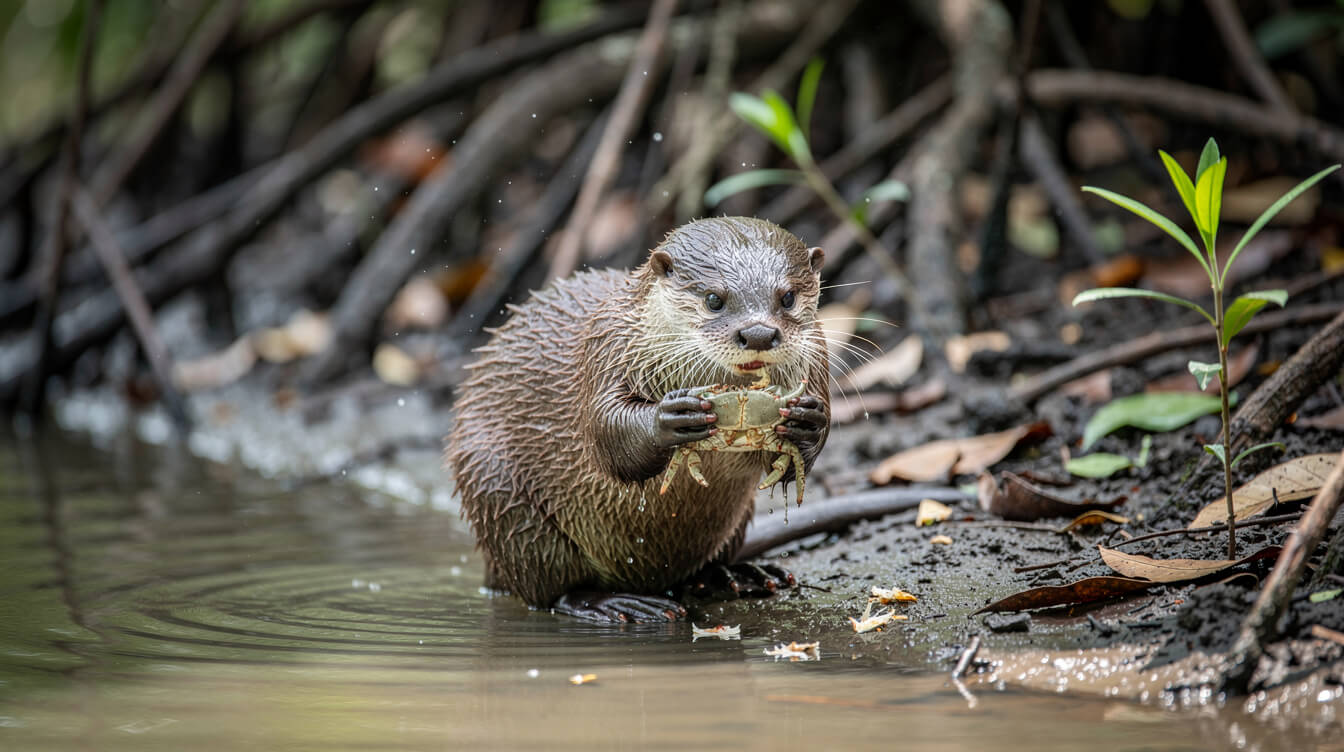
Set the law aside for a moment and picture the day to day. This is where the videos and the reality drift furthest apart.
Otters need water, a lot of it, all the time
Otters are built for water. They hunt in it, groom in it, play in it, and cool off in it. A bathtub visit is not the same as living near a stream. An otter kept away from enough clean water to swim, dive, and wash is an otter that cannot do most of what its body is designed for.
The smell is real
Otters communicate with scent. Their droppings, called spraint, are part of how they say “I live here.” Wild Asian small-clawed otters return to latrine sites and smear their spraint with their feet and tails, and river otters scent-mark favorite spots along their territory. That is lovely behavior on a riverbank. In a living room, it is a strong, musky, fishy smell that does not wash out of the rug.
Teeth, energy, and noise
Otters are mustelids, the same family as weasels, badgers, and mink. They are curious and busy, and they test everything with their mouths and paws. Duplaix told National Geographic that pet otters are destructive, make loud whistling noises, and can turn aggressive when they do not get what they want. She compared their bite to a sewing machine needle going through fabric. That is a very specific image, and we believe her.
The diet and the vet
Otters eat fish, crabs, crayfish, and shellfish, and they eat a lot of it. A river otter can get through one to one and a half kilograms of fish a day. They need a carefully balanced diet, and the experts National Geographic spoke to stressed that captive otters also need vaccinations, such as against distemper. One rescued otter fed on dog food in a small cage became obese. Finding a vet who will even see an otter can be its own adventure.
And they live a long time
North American river otters live around 8 to 13 years in the wild and can reach 21 to 25 years in captivity. That is longer than most dogs. A pet otter is not a phase. It is a commitment that could outlast a lease, a move, a job, and a few big life changes.
As one rescue worker put it, “there’s no such thing as otter mills.” Otters do not breed easily in homes, and that matters for the next part of the story.
One otter alone is a lonely otter
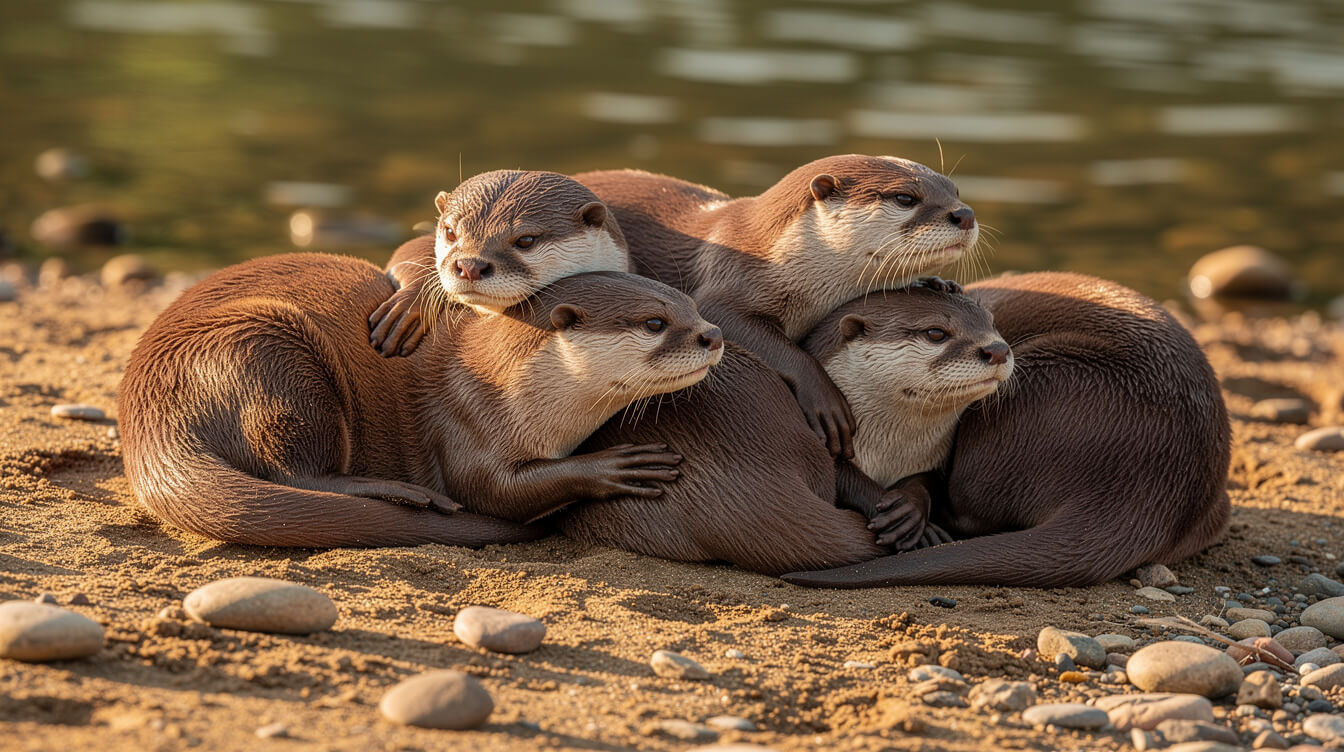
This is the part we find most moving, and the part the cute videos leave out.
Many otters are deeply social. The Asian small-clawed otter, the species most often sold as a pet, lives in family groups that can reach about 15 animals. Group members use at least twelve distinct calls to talk to each other, from chirps to yelps to whimpers, and when one is disturbed it screams to bring the others running. They sleep in piles, groom each other, and raise their young together.
Now picture one of those otters alone in an apartment. It is not that it misses a friend the way we might. It is that its whole social world, the calls, the grooming, the family it would have learned from, simply is not there. Rescue groups in Southeast Asia describe the contrast directly: in the wild these otters live in families, and in homes they are isolated from other otters.
Sea otters are social in a different way. Each adult forages alone, but they rest together in groups called rafts, which typically hold anywhere from ten to a hundred animals, sorted by sex. To keep from drifting while they sleep, they sometimes wrap themselves in kelp, and resting sea otters are occasionally seen holding paws. It is not a rule that they always hold hands, as the internet sometimes says, but it does happen, and it is every bit as sweet as it sounds.
River otters are a little more flexible. They are social and famously playful, but they can survive on their own. Even so, play is how they bond and learn, and a human is a poor substitute for another otter to wrestle in the shallows.
The cutemerch letter
A small good thing, once a week
One short, kind email with our coziest posts and new round animals from the shop. No spam. Unsubscribe anytime.
Where pet otters come from

Every cute otter video has a backstory, and too often it starts in a mangrove or a rice field in Southeast Asia.
The wildlife trade monitoring group Traffic counted at least 700 otters for sale on Facebook in five Southeast Asian countries between January and mid-May of 2018, most of them young small-clawed otters. Its report named the pet trade as the most pressing threat to these otters in the wild. Because otters are hard to breed in captivity, researchers believe many of the young ones offered for sale are taken from the wild.
Demand for those otters was fed in part by fans in other countries, including Japan, where pet otters and otter cafes became very popular. In one widely reported case, a traveler was stopped at a Bangkok airport trying to smuggle ten young otters to Japan. Rescue centers in the region have said they cannot keep up with the number of unwanted pet otters handed to them once the novelty wears off.
We do not say this to make anyone feel bad for loving an otter video. We love them too. We say it because the most caring thing a fan can do is know the cost of the clip. When a video makes keeping an otter look easy, it quietly makes buying one look reasonable, and that pressure lands on wild otters a long way away.
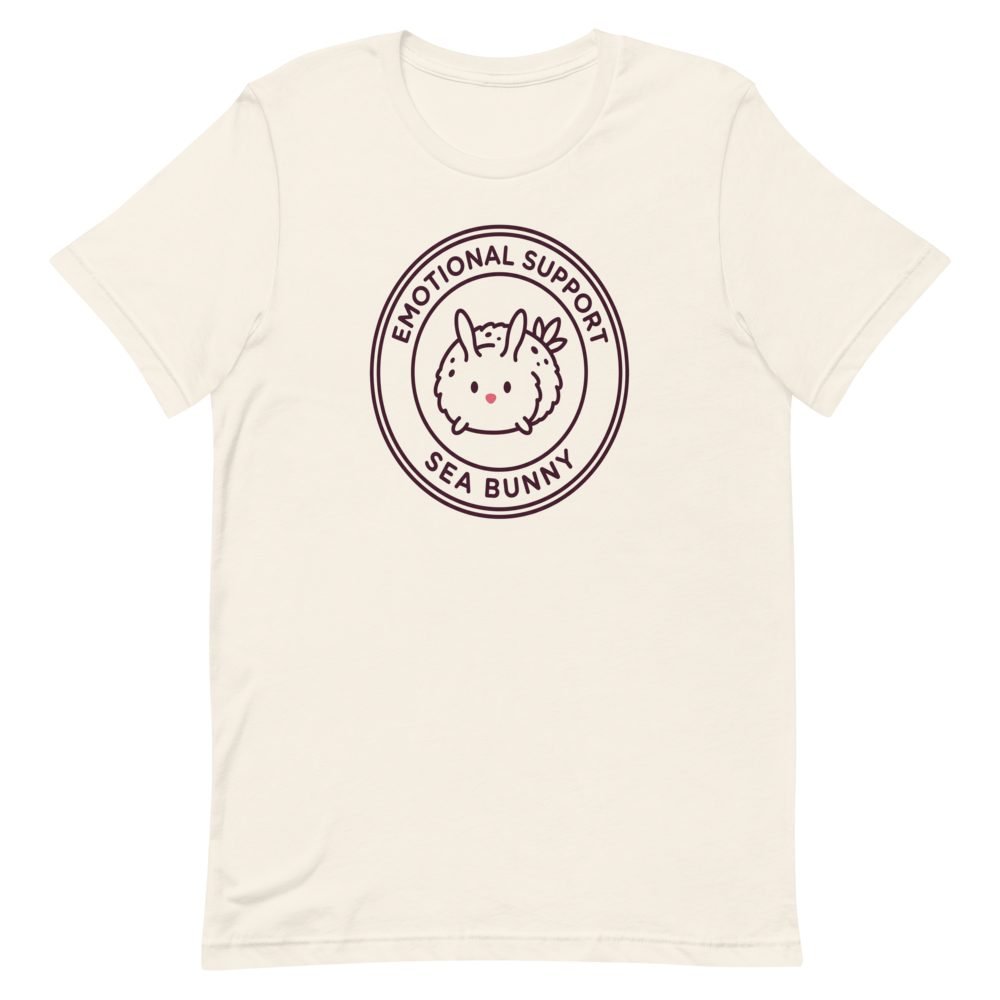
The only water animal we would send home with you
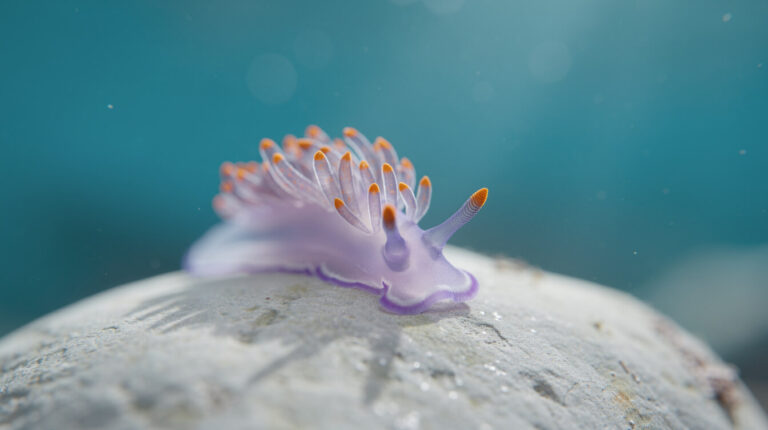
Our Sea Bunny Emotional Support Tee: one tiny, round ocean slug in a clean plum badge, printed on soft preshrunk cotton. No pond, no permits, and nobody left lonely.
Otter cafes and otter encounters: what to know before you go

If you cannot keep a pet otter, an otter cafe can seem like a happy middle ground. You get the cuddle, the otter gets a home, everyone goes home smiling. We understand the pull. Here is what is worth knowing before you book.
Researchers have looked closely at these places, and the findings are hard to read. A study supported by the welfare group Wild Welfare, carried out with Nippon Life Sciences University and Nottingham Trent University, assessed almost 80 exotic animal cafes across Japanese cities. It found animal welfare consistently low across every kind of animal it looked at, otters included, with too little space, little choice, and constant handling.
Separate research by WWF and Hokkaido University, reported by Reuters, looked at 25 exotic animal cafes and found more than 1,700 animals on display. About 27 percent of them were threatened species. Of roughly 80 registered wildlife cafes in Tokyo and Osaka, about three quarters were also registered to sell animals, and samples from four cafes tested positive for a dangerous strain of E. coli. In September 2026, Japan’s Environment Ministry began its first nationwide survey of animal cafes, looking at how many there are, what animals they keep, and how visitors interact with them.
Not every place that houses otters is the same. Some take in rescued animals and are honest about it, and some people working in the industry have welcomed tighter rules. But as a visitor it is hard to tell the difference from the outside, so a few gentle questions help:
- Do the otters have real water? Enough to swim and dive in, not a tray or a tub.
- Are they kept in a group? A single otter on its own is a red flag for a social species.
- Is touching the main event? Places built around holding, feeding by hand, and photos put the visitor first.
- Can the animals get away? A good space gives an otter somewhere to retreat when it has had enough.
- Is anything for sale? If the cafe also sells animals, the cuddle is part of a shop window.
If the honest answers make you hesitate, trust that feeling. An accredited zoo or aquarium with a proper otter habitat, or a real wild otter on a riverbank, will give you a better memory and leave the otter better off.
How to love otters without owning one

Here is the good news, and there is a lot of it. Loving otters well is easier, and frankly more fun, than keeping one.
Go and see a wild one
North American river otters have made a real comeback. By the early 1900s they had declined across large parts of their old range, but cleaner water and careful reintroduction projects changed that. Since 1976, more than 4,000 otters have been reintroduced in 21 US states. Today they live along rivers, lakes, marshes, and coastlines across much of the country. Quiet mornings near clean water, especially at wildlife refuges and state parks, are your best chance. Bring binoculars, keep your distance, and let them be otters. Watching a family slide down a muddy bank on their own terms is a small joy that stays with you.
On the Pacific coast, sea otters can sometimes be spotted from shore, floating in kelp beds. Watch from land, never approach, and if you are on the water, give them plenty of room. A sea otter that has to keep diving away from people is burning energy it needs to stay warm.
Watch them from your couch
Several aquariums and conservation groups run live cameras on their otter habitats, and a sleepy sea otter cam on a gray afternoon is about as cozy as screen time gets. Choose cameras from accredited aquariums and real rescue or research programs over accounts built around a single pet otter in a house.
Support the people doing the work
Otter specialist groups, rescue centers in Southeast Asia, and local river and wetland groups all do quiet, steady work that keeps otters wild. A small donation, a clean-up morning at a local creek, or simply sharing good information instead of a “where can I buy one” comment all help. The quokka has the same problem with selfies, and the answer is the same: love the animal enough to give it space.
Choose cute that does not need a cage
If what you really want is a little bit of water-animal joy at home, there are kinder ways to bring it in. A good book, a framed print of a wild otter, a cozy sea otter cam playlist, or something to wear. Our Sea Bunny Emotional Support Tee is the only water animal we would ever suggest you bring home, and it will never need a pond. It is part of a whole small trend that we wrote about in why emotional support animal shirts work: the feeling of a soft creature in your corner, without asking a wild one to give anything up.
We have had this same honest conversation about other animals people fall for online, from the endlessly calm capybara to the squeaky, round African rain frog. The pattern is always the same. The creatures that make us go “aw” are often the wild, unusual ones that do best when we admire them from a little way off.
Pet otter FAQ
How much does a pet otter cost?
More than any price tag says. National Geographic reported that people in Southeast Asia and Japan pay thousands of dollars for a single otter, and that is before water, food, vet care, and decades of looking after it. The bigger cost is the one the otter pays, since many are taken from the wild. We would not put a number on it, because we would not want anyone shopping for one.
Do baby otters make good pets?
No. A young otter looks small and sweet, but it grows into a strong, noisy, scent-marking adult with sharp teeth. Rescue centers in Southeast Asia say they cannot keep up with unwanted pet otters, and young otters on sale are often taken from the wild.
Are river otters friendly to humans?
Wild river otters are usually shy and will keep their distance, which is exactly what you want. They are not aggressive by nature, but like any wild animal they will defend themselves, their young, or their food if they feel cornered. Watch from a distance and never feed them.
How smart are otters?
Very. Sea otters are famous for using rocks as tools to crack open shellfish, and they are the only marine animal known to lift and turn over rocks to find prey. Small-clawed otters have nimble paws and a big vocabulary of calls. That intelligence is part of why they get bored and destructive in a home.
What is the smallest otter?
The Asian small-clawed otter. Adults weigh up to about 3.5 kilograms, roughly 7 or 8 pounds, which is a big reason it is the most sought-after species in the pet trade, and a big reason it needs protecting.
Are otters monogamous?
Mostly not. Sea otters are polygynous, meaning males have several partners. The Asian small-clawed otter is the gentle exception: pairs kept in zoos stay together, and in the wild they are usually seen as a pair or a family group. So the romantic idea of otters as partners for life is true for some, not all.
Final thoughts
Wanting a pet otter comes from a good place. It is the same soft feeling that makes you save a video, send it to a friend, and smile at it on a gray day. That feeling is worth keeping. It just works best pointed at otters living their own lives, in rivers and kelp beds and family piles on a sunny bank.
So the honest answer is no, please do not get a pet otter. But you can still have otters in your life. Go looking for a wild one on a quiet morning. Leave a sea otter cam on while you work. Support the people keeping their rivers clean. And when you see a clip of an otter alone in an apartment, you will know what it is missing, which is the first step toward a world where fewer otters end up there.
Love them loudly. Let them stay wild.
Before you go
Want the next one in your inbox?
We write something soft every day. The best of it lands in one gentle weekly note, for you or for the friend who needs it.