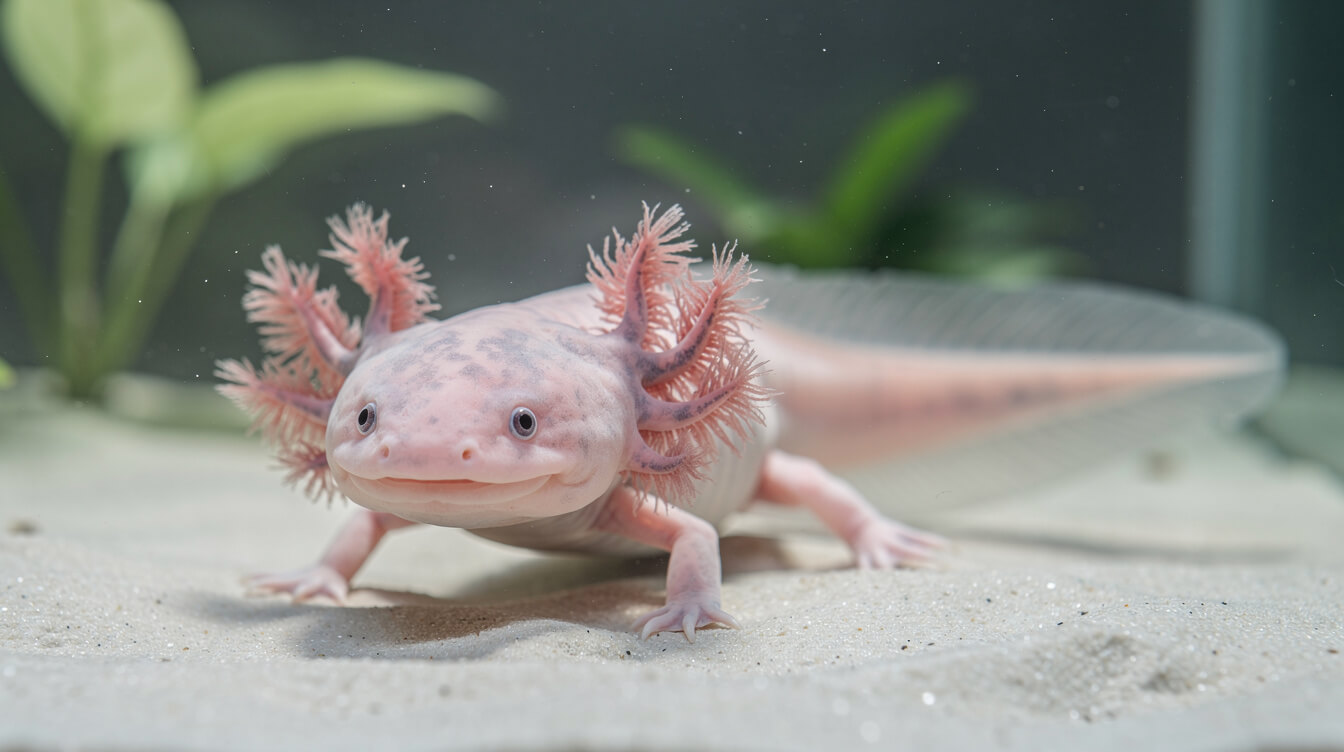
How long does an axolotl live? The real answer, and what makes the years count
How long does an axolotl live? Usually somewhere between ten and fifteen years, which surprises almost everyone the first time they hear it. An animal that looks like a pink, permanently pleased little sketch of a salamander turns out to be a long-term companion, the kind you might still be looking after when today’s teenagers are paying their own rent.
Most pages give you that one number and move straight on to tank sizes. We wanted to sit with the number a bit longer, because it hides three different answers (wild, kept, and the stories people tell about record holders), and a genuinely interesting reason why a small, soft amphibian gets so many years in the first place. This is the gentle version: what the years look like, what quietly takes them away, and why that same smiling face greets you for a decade.
How long does an axolotl live? The short answer
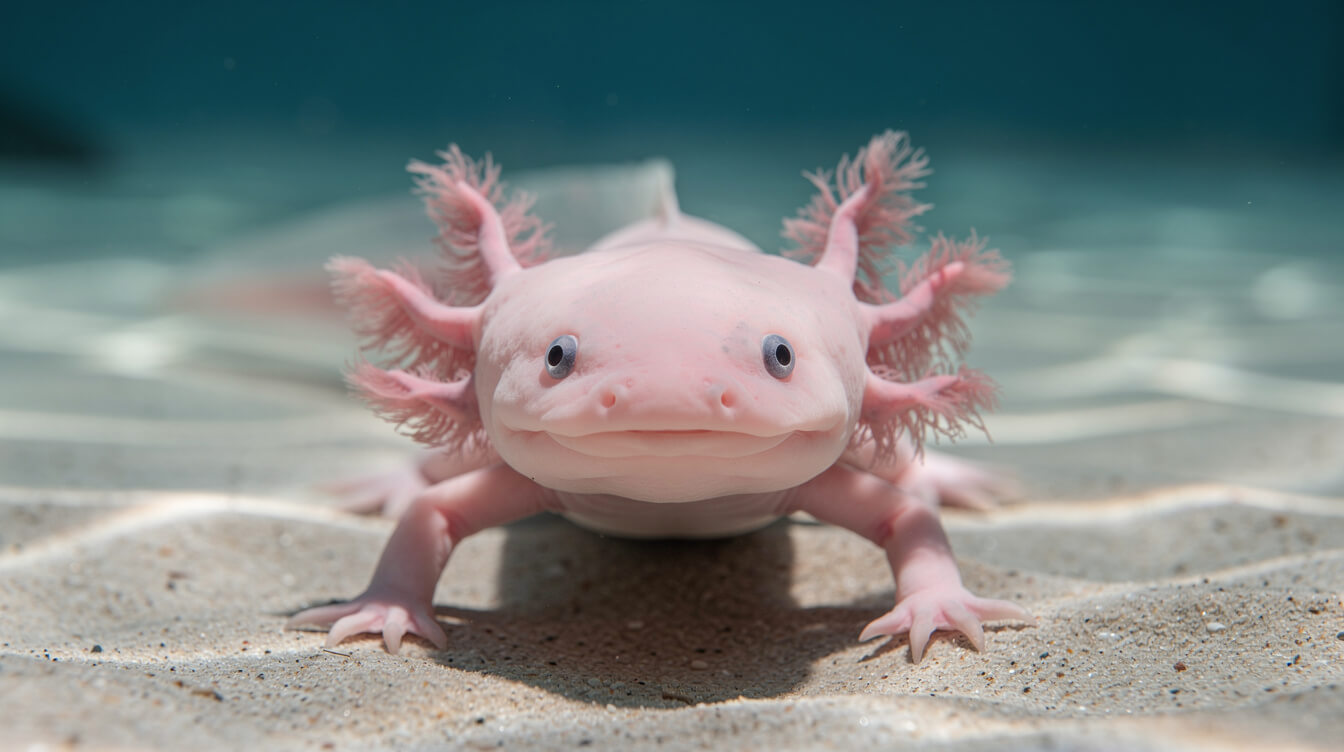
The figure you will see most often, from veterinary references and from the scientific literature alike, is ten to fifteen years. An axolotl kept in cool, clean water with sensible food has every chance of landing inside that range, and plenty do.
A few care guides quote a lower ceiling, around ten years, and that is worth knowing too. The difference is not really a disagreement about the animal. It is a difference in how forgiving the writer expects your setup to be. Ten to fifteen is what the species is capable of. Whether a particular axolotl reaches it depends almost entirely on the conditions it lives in, which is the good news buried in this whole topic: most of what shortens an axolotl’s life is something a person can control.
The quick numbers
- Typical lifespan: about 10 to 15 years
- Sexual maturity: roughly 1 to 1.5 years
- Typical adult length: around 23 cm (9 inches); over 30 cm (12 inches) is rare
- Comfortable water: about 16 to 18°C (61 to 64°F)
- Wild status: Critically Endangered
What about the really old ones?
You will find people online describing axolotls that reached seventeen, twenty, or older. Some of those are probably true. The trouble is that none of the claims we could find traced back to a source we would stand behind, like a zoo record or a published study, so we are not going to repeat a specific “oldest axolotl” number here. Think of fifteen as a healthy, well-documented upper end, and anything beyond it as a lovely story that deserves a little friendly doubt. (We took the same approach with the record claims in our jumping spider lifespan guide, a sister post about an animal on a very different clock.)
Axolotl lifespan in the wild vs in a tank: same number, different odds
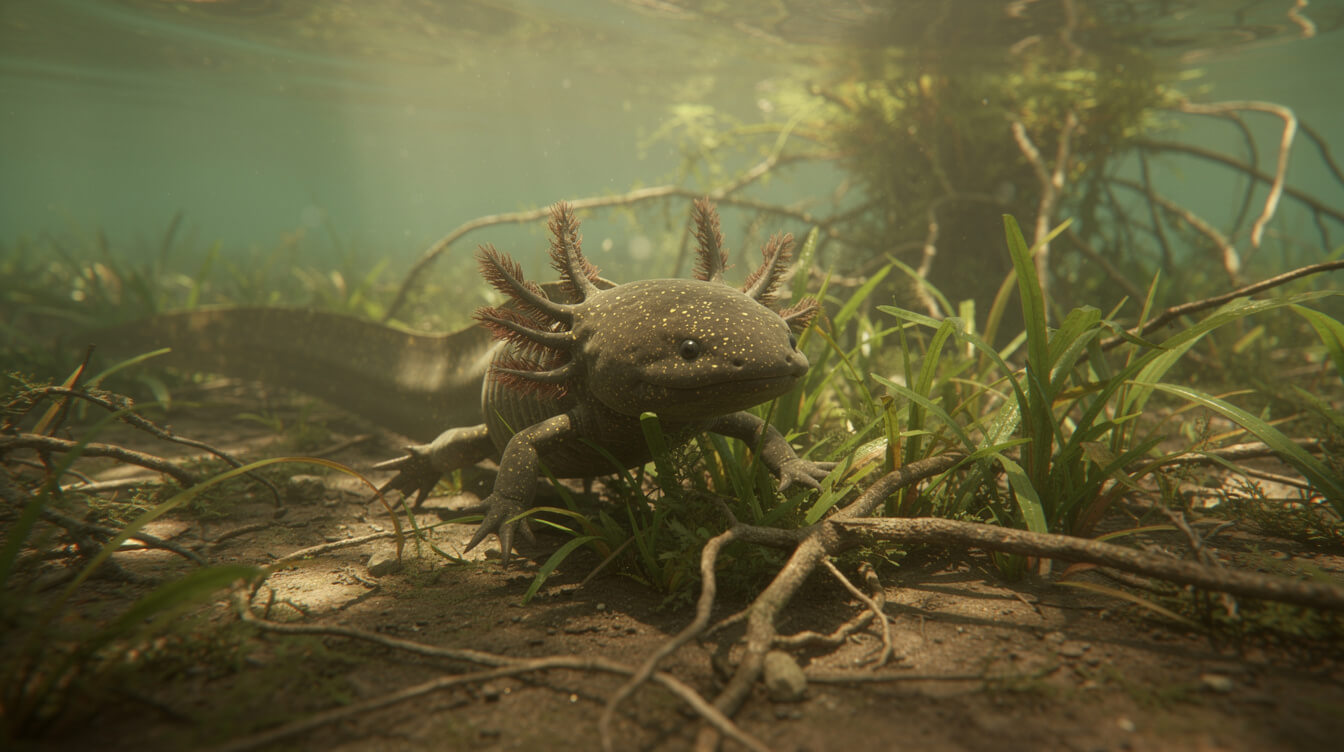
Here is the part that most lifespan pages get backwards. It is easy to assume that wild axolotls live short, hard lives and pampered aquarium axolotls live long ones. But the life expectancy given for wild axolotls in the species’ conservation assessment is the same ten to fifteen years, and the Natural History Museum in London gives that same figure for axolotls in the wild.
So the axolotl lifespan is not really “short in the wild, long in a tank.” It is closer to this: the number is the same, the odds are not.
Why so few wild axolotls reach it
A wild axolotl that makes it to adulthood in decent water can live a long time. The hard part is making it to adulthood at all. In the canals of Xochimilco, the last real stronghold of the species on the edge of Mexico City, invasive fish such as Nile tilapia and common carp eat young axolotls and compete with the adults for food. Agricultural runoff carries pesticides into the water, and those chemicals sharply raise death rates among axolotl eggs and larvae. The lake itself is fed partly with treated wastewater and tends to be low in oxygen, which is the opposite of what an axolotl needs.
The result is a population that has collapsed. Surveys found around 6,000 axolotls per square kilometer in 1998, about 1,000 in 2003, and roughly 100 in 2008. The species is listed as Critically Endangered. We told that story more fully in our guide to what an axolotl actually is, including the people working to bring the canals back, so we will not repeat it all here. The short version for this question is that a wild axolotl’s potential lifespan has not changed. Its chances of using it have.
Why kept axolotls usually do better
An axolotl in a well-kept tank has no carp, no pesticides, and no shortage of food. Most of the dangers that shape a wild life simply are not there. What replaces them is a short list of human mistakes, which we will get to in a moment. Avoid those, and a kept axolotl has a far better chance of living out the full ten to fifteen years than almost any axolotl hatched in a canal today.
Why a small salamander can live so long
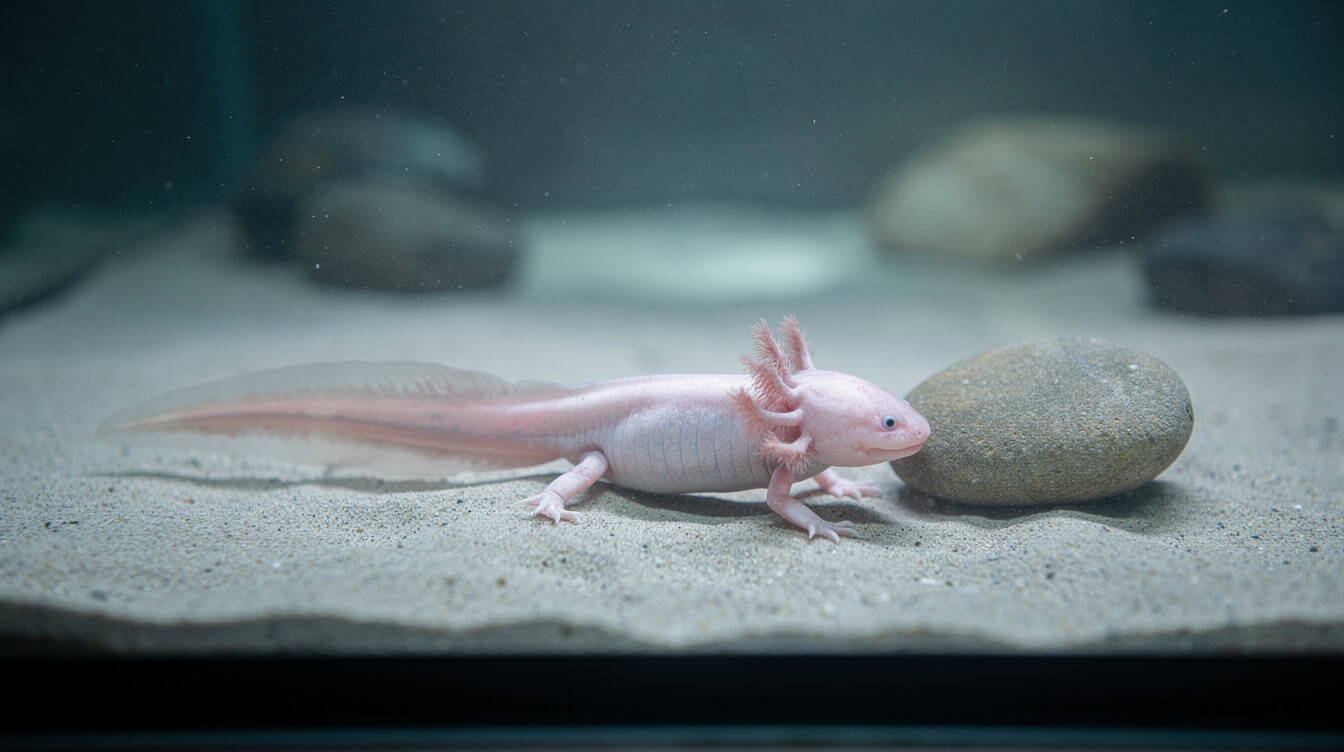
Ten to fifteen years is a long time for an animal you could cup in two hands. A hamster gets two or three. Many small fish get a handful. So what is the axolotl doing differently?
Cool water and a slow pace
Axolotls are cold-blooded, so their body temperature follows the water around them. Like other cold-blooded animals, they run a slower metabolism and eat less when the water is cooler. Their home lakes in the highlands of central Mexico sit at high altitude and stay fairly cool, and captive axolotls are kept at around 16 to 18°C (61 to 64°F) for the same reason.
Biologists have long noticed that across many cold-blooded animals, a slower pace of life tends to go with a longer one. That is a general pattern rather than a law written specifically about axolotls, so we hold it loosely. But it fits what you see in a tank: an axolotl spends a great deal of its day resting on the bottom, moving in short, unhurried bursts, and saving its energy for the next worm that drifts by. It is not a frantic animal, and it does not seem to live like one.
A body built to keep going
Two other quirks help. First, axolotls have what scientists call indeterminate growth, meaning they keep growing slowly throughout their lives rather than stopping at a fixed adult size. Second, they famously regenerate: limbs, parts of the spinal cord, and more can regrow without scarring. That ability declines with age but does not disappear completely, which is part of why an older axolotl can recover from injuries that would end a smaller animal’s life.
And then there is the trick behind the face. Axolotls are neotenic, which means they reach adulthood without going through the metamorphosis that turns most salamanders into land animals. They keep their feathery gills, their finned tails, and that wide, young-looking face for their whole lives. We explain how that works in the neoteny section of our axolotl guide. For lifespan, the important part is simple: the axolotl stays in the water it was built for, and as we will see, forcing it out of that state is one of the surest ways to cut its life short.
A year-by-year axolotl life
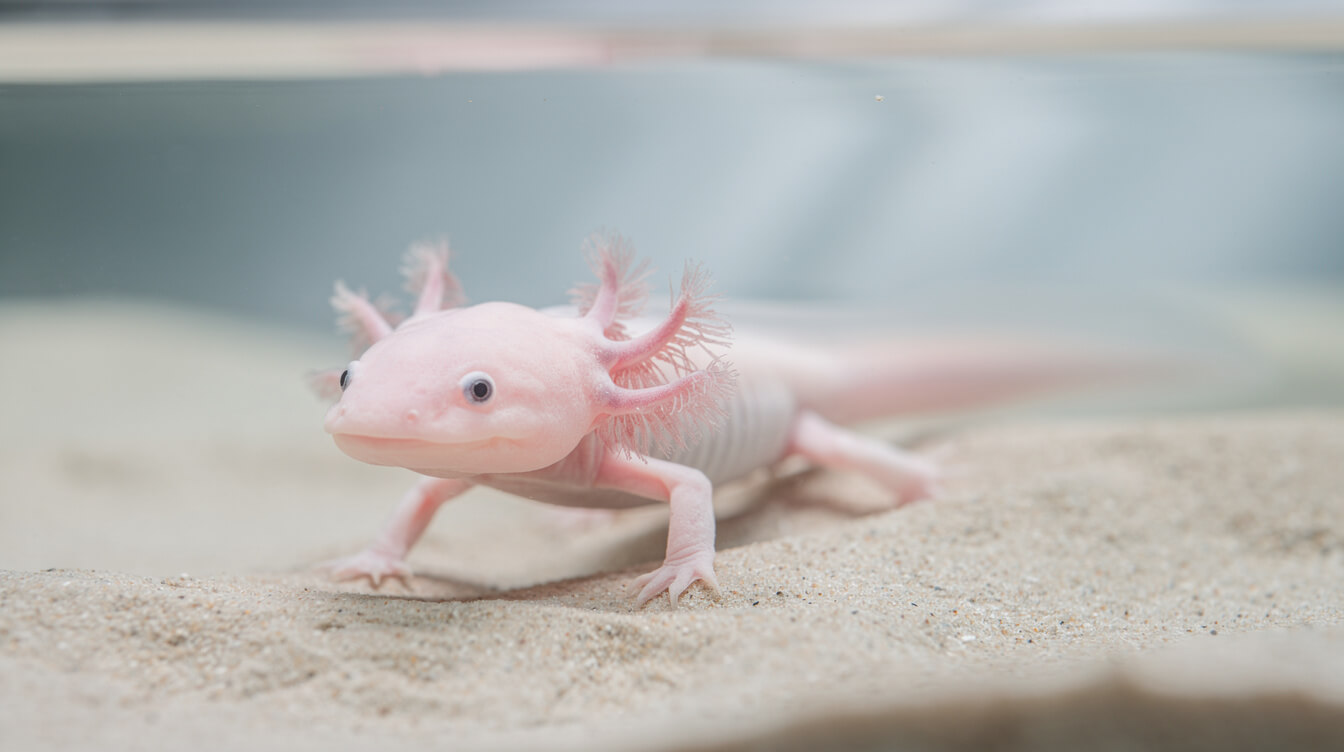
Because an axolotl looks more or less the same from its first year to its fifteenth, it can be hard to picture its life as having stages. It does, though. They are just quieter than a caterpillar’s.
Eggs and hatchlings
Axolotls lay their eggs on plants in the water, one at a time, attached to stems and leaves. After a couple of weeks, depending on temperature, tiny larvae hatch. At first they are little more than a head, a tail, and a pair of gill tufts, with no legs at all. This is the most dangerous stage of the whole life, in the wild especially, and it is the stage where fish and polluted water do the most harm.
The first months
Young axolotls grow quickly. Their front legs appear first and their back legs follow, which is the opposite order to a tadpole turning into a frog. They eat constantly and can grow fast enough that small youngsters kept together will sometimes nip at each other’s limbs and gills. Happily, this is the stage where regeneration is most impressive, and a nipped foot usually grows back.
Growing up, around one to one and a half
Somewhere between their first birthday and eighteen months, axolotls reach sexual maturity. The Natural History Museum puts it at about a year; the species’ conservation assessment says about a year and a half for wild axolotls. Adult size arrives over the next stretch, with most adults settling at around 23 cm (9 inches) long.
The long middle
Then comes the part that makes up most of an axolotl’s life: years of slow, steady adulthood. An adult eats less often than a youngster, grows very slowly, and spends a lot of time resting. If you have ever wondered why axolotl people get so attached, this is it. You get to know one animal’s habits, its favorite corner, its way of tilting toward the glass at feeding time, for a decade or more.
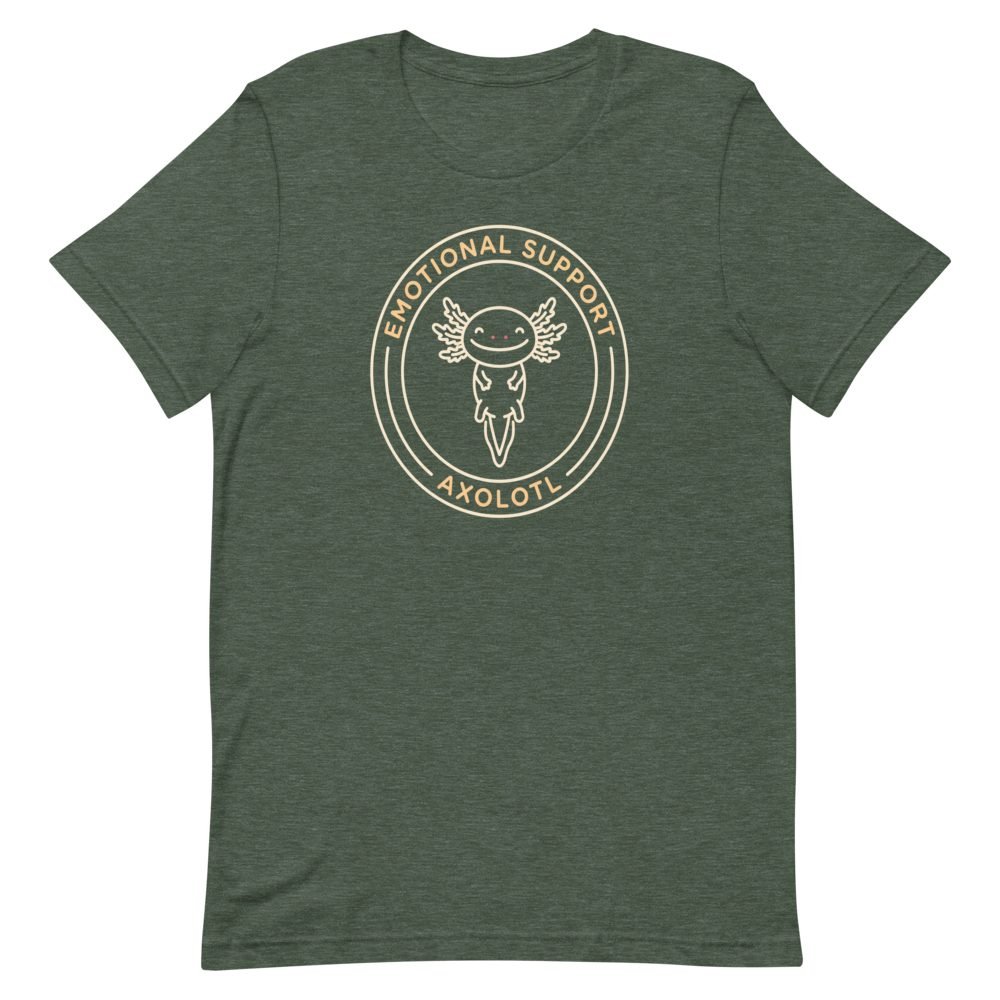
It is also, we think, a big part of why the axolotl became an emotional support mascot in the first place. A companion that stays calm, looks quietly pleased, and is still there years later is a good thing to have in your corner. Our Emotional Support Axolotl Badge T-Shirt is a small tribute to exactly that, and we wrote more about why the idea resonates in our piece on the emotional support animal shirt trend.
Old age
There is not much published science on what an elderly axolotl looks like, so we will be careful here. Keepers commonly describe older axolotls as slower, a little less interested in food, and sometimes a bit less full in the gills. Those same changes can also be signs of water that is too warm or not clean enough, at any age. If an axolotl seems to be slowing down, it is kinder to test the water first than to assume it is simply getting old.
The cutemerch letter
A small good thing, once a week
One short, kind email with our coziest posts and new round animals from the shop. No spam. Unsubscribe anytime.
What shortens an axolotl lifespan
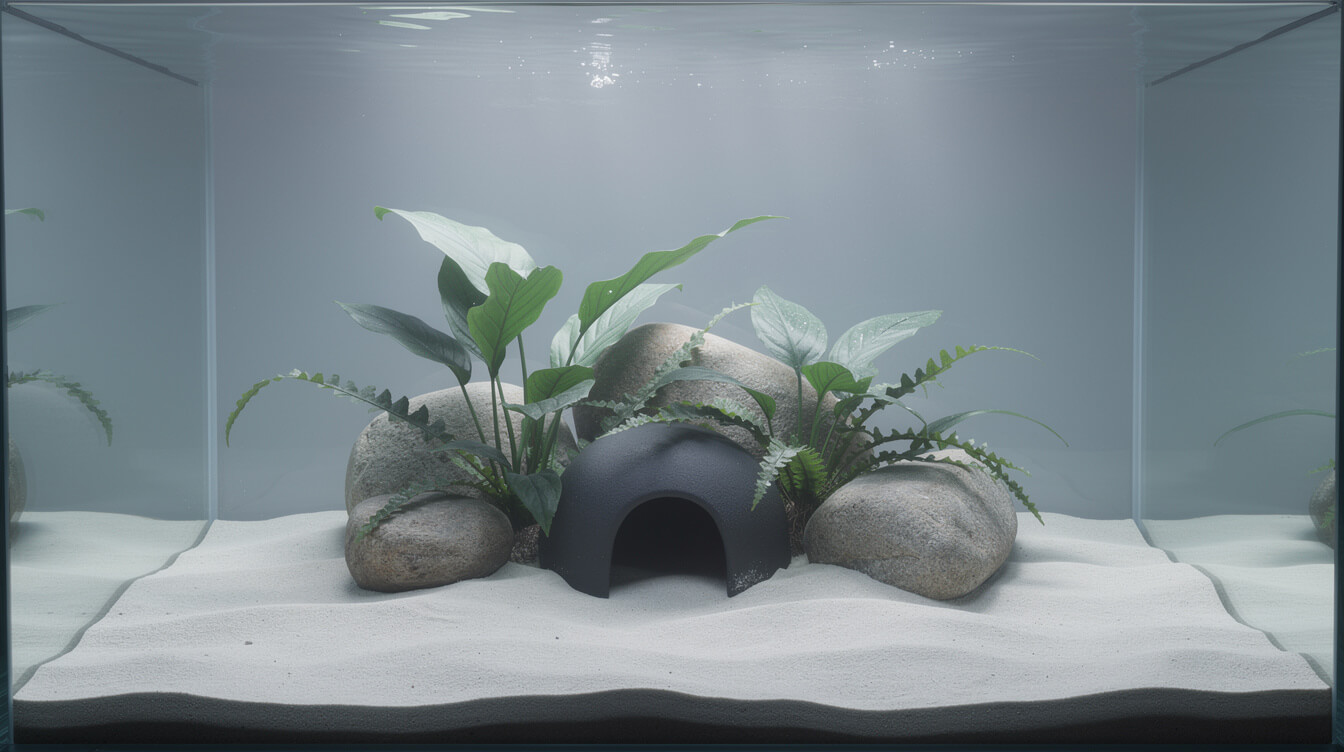
This is not a full care sheet, and if you are thinking of keeping an axolotl, please read a dedicated one and talk to an exotic animal vet. But nearly every early axolotl death comes back to one of a handful of causes, and they are worth knowing even if you never own one, because they explain so much about the animal.
Warm water
This is the big one. Axolotls do best at around 16 to 18°C (61 to 64°F). Above about 24°C (75°F), their metabolism speeds up, they become stressed, and prolonged heat can eventually kill them. For many homes, the hardest month of an axolotl’s year is not winter but the hottest week of summer, which is why keepers so often end up with a thermometer on the tank and, sometimes, a chiller.
Dirty or chlorinated water
Axolotls breathe partly through their gills and skin, so they live in very close contact with whatever is in their water. Waste breaks down into ammonia, which needs a properly established filter to process. Chlorine, which is commonly added to tap water, is harmful to axolotls and needs to be removed before the water goes in the tank. Gills that shrink or curl forward are often a first visible hint that something in the water is wrong.
Gravel and small objects
Axolotls feed by suction: they open their mouths wide and pull in food along with whatever happens to be next to it. That makes gravel genuinely dangerous. Swallowed stones can cause blockages, and one laboratory care guide notes that bowel obstructions are a common cause of death, recommending that nothing smaller than about the size of the axolotl’s head be within reach. Bare floors or very fine, smooth sand are the usual answers.
Forced metamorphosis
With hormones or iodine, an axolotl can be pushed through the metamorphosis it would never undergo on its own, turning into a land-walking salamander. It happens in laboratories. Among hobbyists, though, the process often ends in death, either during the change or afterward, and the animals that survive tend to live shorter lives. Casual keepers are strongly discouraged from trying it. The axolotl’s young-looking form is not a phase to be finished. It is the animal.
Stress and the wrong tank mates
Fish are a common mistake. Small fish get eaten, and some fish will nibble at an axolotl’s soft gills, which is a slow, miserable kind of stress. Bright light, sharp decorations, and a crowded tank all add up too. A calm, dim, uncluttered space with somewhere to hide suits an axolotl best.
A calm companion for the long haul
Our Emotional Support Axolotl Badge T-Shirt is a clean single-line badge of the gentlest face in fresh water. For the person who keeps one, wants one someday, or simply needs a steady little friend in their corner.
Can you tell how old an axolotl is?
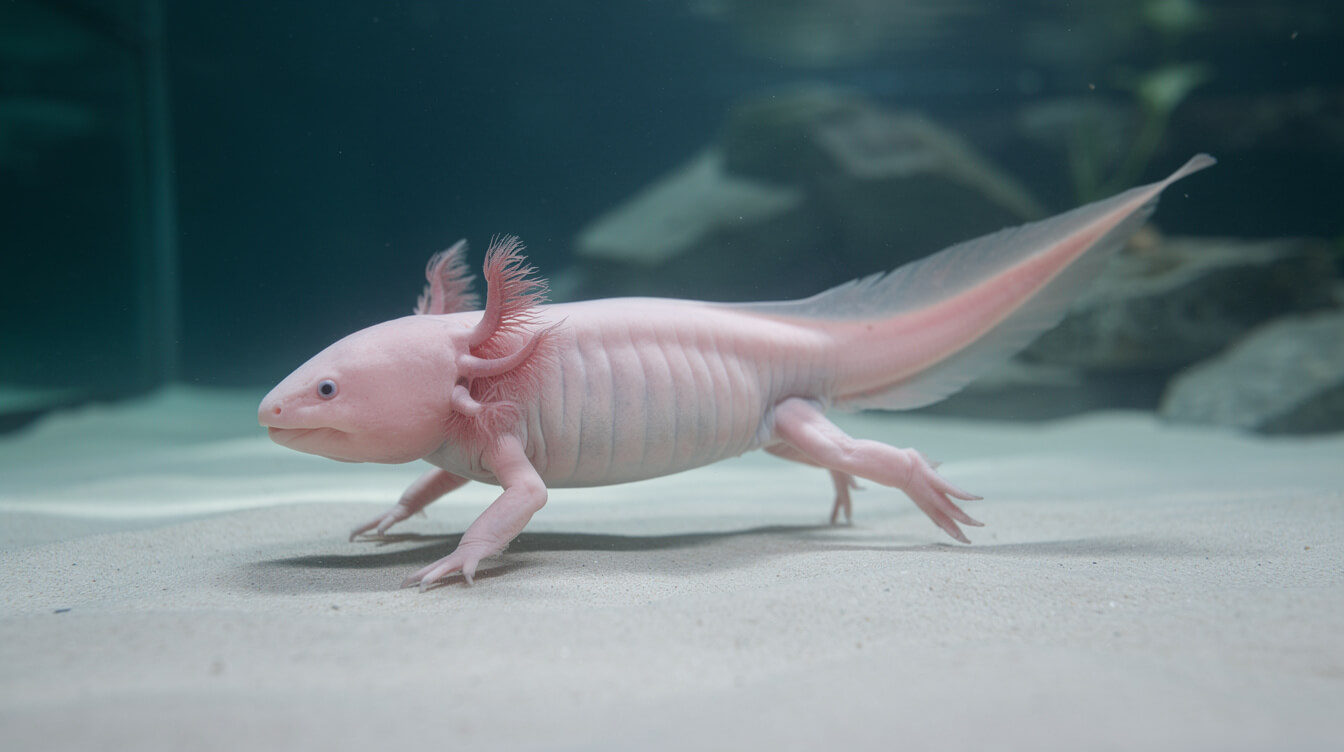
The honest answer is: not precisely. There is no reliable outside feature, like rings on a tree, that tells you an axolotl’s age in years.
What size can tell you
For young axolotls, size is a rough guide. A tiny one with only front legs is very young, a juvenile of a few inches is likely a few months old, and an axolotl at full adult length is probably at least a year or so. Past that point, size stops being much help. Because axolotls keep growing slowly all their lives, a well-fed three-year-old and a modest eight-year-old can look about the same.
What history can tell you
The best way to know an axolotl’s age is to know where it came from. A reputable breeder can usually tell you when a clutch hatched. If you adopt an adult from someone rehoming it, ask how long they have had it and how old it was when they got it. That record is worth far more than any guess from its looks.
There is something sweet in this, if you think about it. The axolotl lifespan is long, but the animal never shows its years the way a dog or cat does. The face you meet on day one is the face you will still know a decade later.
How long does an axolotl live, and other questions people ask
Do some axolotl colors live longer than others?
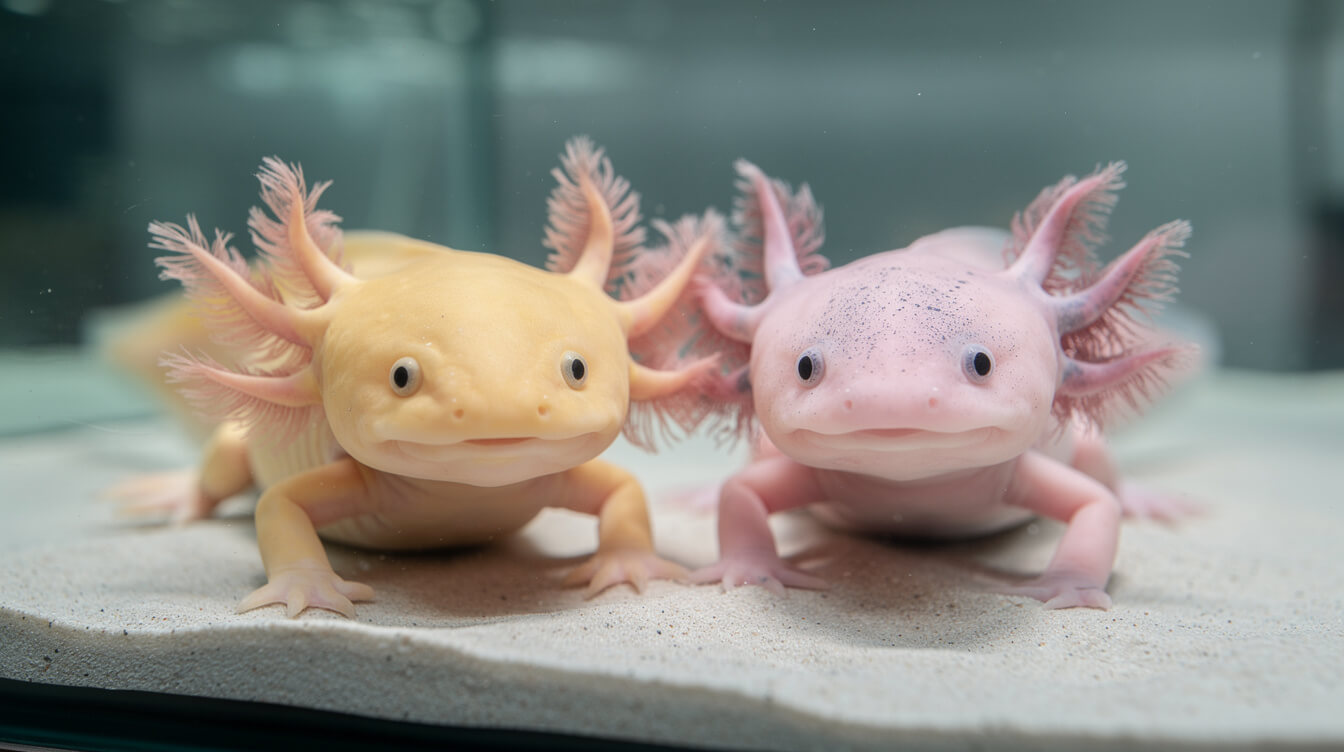
We have not found good evidence that color itself changes how long an axolotl lives. Pink, gold, dark, and the rest are mostly pigment differences, and we explain what each one is made of in our guide to axolotl colors. What matters far more is the care an axolotl gets and the health of the line it was bred from. Most axolotls in homes and labs descend from a very small founding group brought to Europe in the 1800s, so choosing a careful, responsible breeder is a better bet for a long life than choosing a particular color.
How long can an axolotl live in a bag?
Only long enough to get home from wherever it came from. Axolotls are often carried home from a shop or breeder in a bag of water, and that trip should be measured in hours, not days. Keep the bag cool and out of direct sun, get it home promptly, and let the axolotl settle into its tank as soon as you safely can. If you are buying online, a responsible seller will ship with insulation and cold packs and will not ship during a heat wave.
Do axolotls lose their regeneration as they age?
Somewhat. Research suggests the ability declines with age but does not disappear entirely. Axolotls that have been forced through metamorphosis lose much more of it, which is one more reason to let them stay as they are.
Is an axolotl a good pet for a child?
An axolotl can be a wonderful family animal, but it is a ten-to-fifteen-year commitment with real equipment and steady water care, and it should be handled as little as possible because its skin is delicate. It is a better fit for a household where an adult is genuinely the keeper and the child is the delighted assistant.
Do wild axolotls still exist?
Yes, but not many. The species is Critically Endangered, and its future depends on cleaner canals and on conservation work in and around Xochimilco. If the axolotl’s face has won you over, supporting that work is one of the kindest things you can do with the feeling. And if you like animals that are odd, soft, and wonderful all at once, you will find a few more in our guide to weird cute animals.
Final thoughts
So, how long does an axolotl live? Ten to fifteen years is the honest answer, in the wild and in a tank. What changes between the two is not the animal’s potential but its chances, and those come down to cool water, clean water, a safe floor, and being allowed to stay exactly what it is.
We find that quietly moving. The axolotl does not rush, does not change its face, and does not go through a dramatic transformation to become a grown-up. It just keeps going, gently, for years. There are worse ways to live, and worse animals to learn a little patience from.
Before you go
Want the next one in your inbox?
We write something soft every day. The best of it lands in one gentle weekly note, for you or for the friend who needs it.