Opossum as a pet? The honest answer for people who love opossums
It usually starts with a video. An opossum in a little bed, blinking slowly while someone offers it a strawberry. It yawns, shows every one of its teeth, and somehow looks like the gentlest animal on earth. By the end you are wondering about an opossum as a pet, and whether the sweet gray face from the videos could ever live with you.
It is a lovely thing to wonder, and it comes from a good place. So here is the honest answer, told kindly and all in one spot: why the videos look so easy, what an opossum actually needs, what the law says in plain words, what to do if you find a young one alone, and how to keep opossums in your life without keeping one in your house. There is also a small surprise near the end, about the other opossum that people really do keep.
Can you keep an opossum as a pet? The short answer
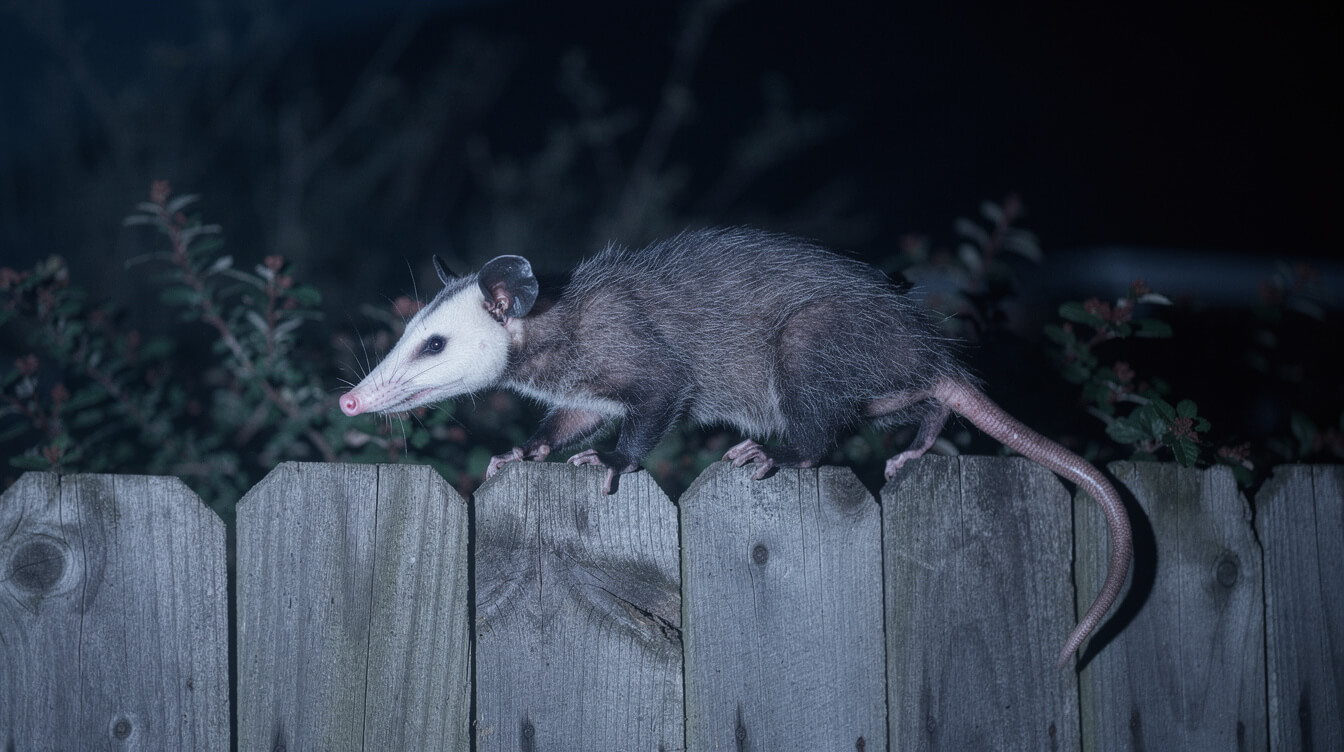
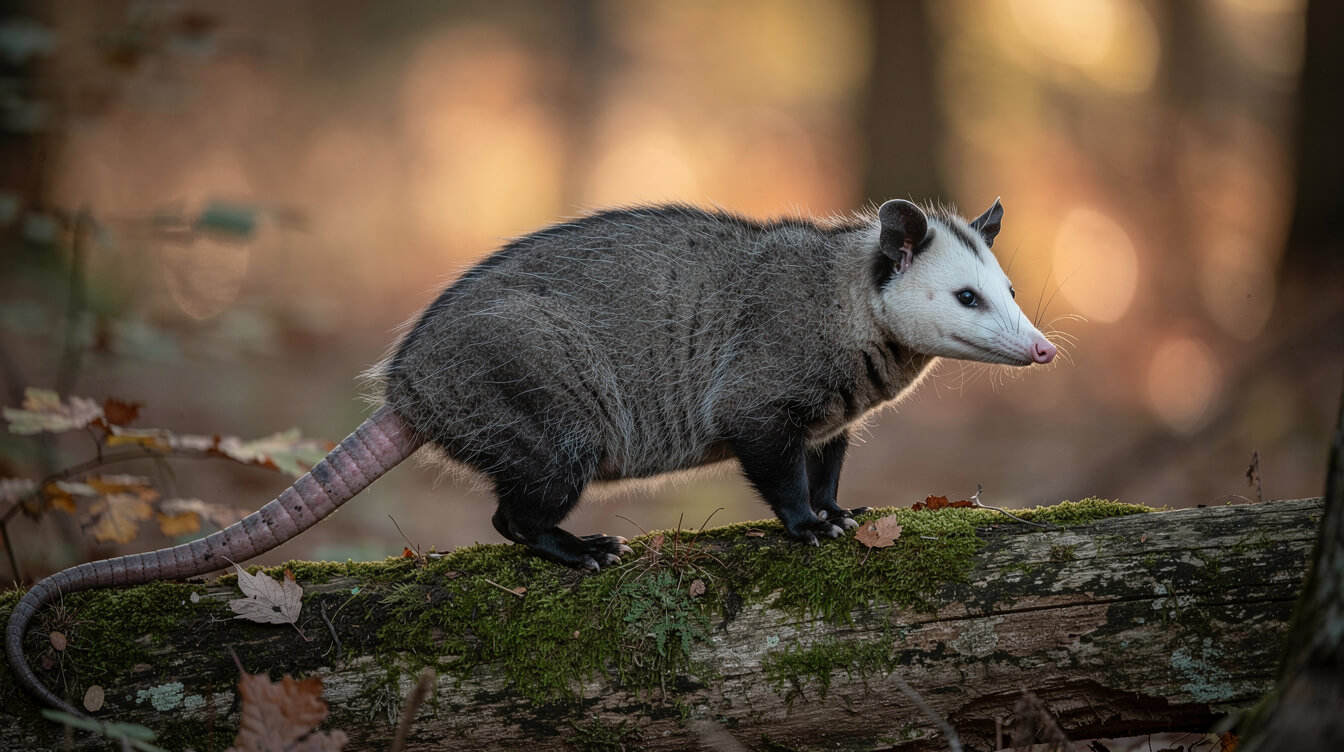
For almost everyone in the United States, the answer is no. The opossum most of us mean is the Virginia opossum, the white-faced, gray-coated animal that crosses your yard at night. It is a wild animal, it has never been domesticated, and in most states you cannot legally keep one without a wildlife permit. Those permits are rarely, if ever, issued so someone can have a pet.
The law is only half the story, though. Even where a permit is possible, opossums are very hard to keep well. The National Opossum Society, a group of people who have spent decades caring for them, puts it bluntly: keeping a captive opossum healthy is “practically impossible.” They are not saying that because they dislike the idea of people loving opossums. They are saying it because they have watched what happens when the love is not enough.
So the short answer to the opossum as a pet question is gentle but clear. Admire them, help them, learn about them, maybe even volunteer with them. But the opossum in your yard is not looking for a home. It already has one, and it is the whole neighborhood.
If you are still a little fuzzy on what an opossum is and how it differs from Australia’s possums, our guide to the difference between an opossum and a possum covers the basics, from the 50 teeth to the famous faint.
Why opossum videos make it look so easy
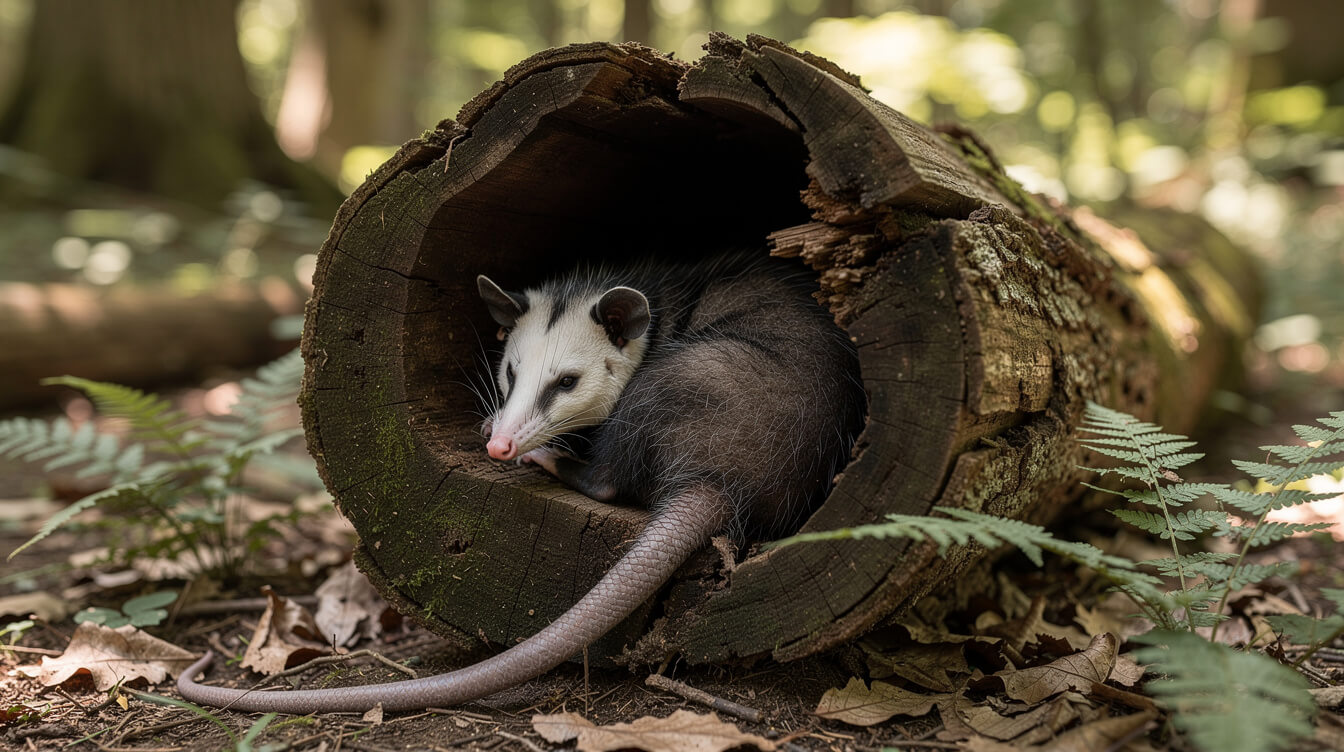
If keeping an opossum is so hard, why are there so many happy opossums on the internet? The answer is kind, and it is worth knowing.
Most of those opossums cannot go home
Many of the opossums you see on camera live with wildlife rehabilitators or at nature centers. They are what rehabbers call non-releasable: an opossum that lost an eye to a car, or a leg to a dog, or that was raised wrong as a baby and never learned to survive outside. For an animal like that, the National Opossum Society explains, there are only two paths, a life in human care or euthanasia. The opossum in the video is often one of the lucky ones. It is not a pet so much as a patient who stayed.
These animals also live with people who are trained, licensed, and connected to vets who know opossums. What you are watching is the visible ten seconds of a very large amount of invisible work.
Calm is not the same as content
Opossums are quiet, slow-moving animals, and they rarely make a fuss. That can look like contentment. The National Opossum Society warns that “his pleasant nature may make him appear to be satisfied,” while the steady stress of captivity quietly wears down the immune system. A cat that is unhappy will tell you. An opossum often will not.
The bond is different too. Many people who have raised a young opossum describe it as closer to a dependency than a friendship. The animal relies on you for food and safety, which is real and touching, but it is not the same as a dog choosing to curl up at your feet. If you love the idea of an opossum that loves you back, that difference matters.
We wrote about the same gap between a sweet face and an animal’s real needs in our piece on whether you can have a pet otter. The pattern is almost identical. The cuter the video, the more work you are not seeing.
What an opossum as a pet actually needs
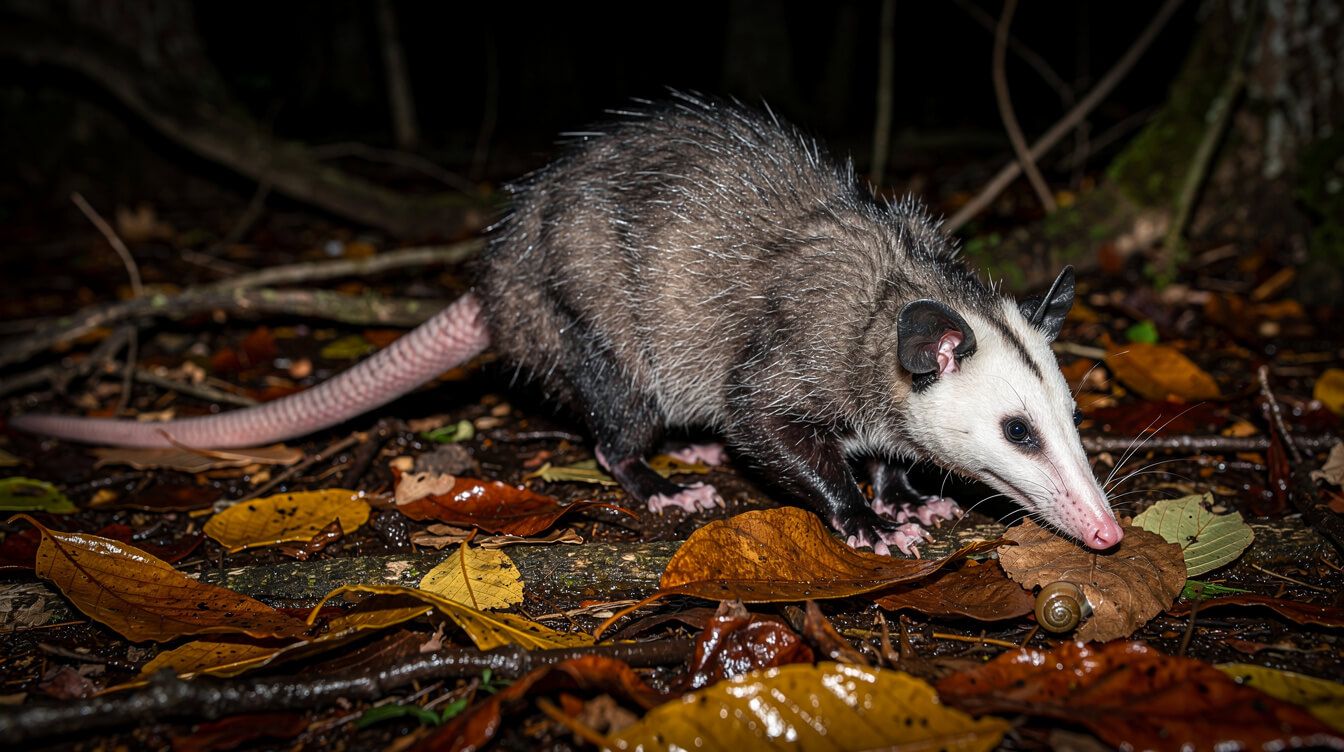
Say you lived somewhere with a permit, and a vet, and plenty of space. Here is what an opossum would need from you, and why each part is harder than it sounds.
A diet that is easy to get wrong
Wild opossums eat almost anything: beetles, snails, worms, fruit, eggs, and carrion. That flexibility makes people assume they are easy to feed. In fact, a captive opossum needs a carefully balanced diet with the right ratio of calcium to phosphorus. Get it wrong and the animal develops metabolic bone disease, which softens the bones and teeth and can damage the internal organs. The Opossum Society of the United States lists the signs: weakness, an inability to grip, a bowlegged or “frog-like” stance, bones that break easily, and a jaw that turns rubbery. It is preventable, but only with knowledge most people do not have. Captive opossums also gain weight very easily, and obesity is common.
Room to walk, a lot
Opossums are walkers. The National Opossum Society notes they can travel up to half a mile in a single night while foraging. Studies of wild Virginia opossums have measured home ranges of many acres, sometimes much more. No house, and no enclosure that fits in a house, gives an animal that kind of night.
A vet who knows marsupials
Most vets are trained on dogs and cats. Opossums are marsupials, with a body that works very differently. Finding a vet who knows opossum physiology, and who is willing to treat one, is hard. The Georgia Department of Natural Resources also points out that vets are often unwilling to treat animals held illegally, for liability reasons. And opossums do get sick. Females in particular are prone to urinary and reproductive infections, according to the National Opossum Society.
Patience with the litter box
Opossums are not reliably litter trained. Some settle on a favorite spot, but they are not tidy the way a cat is, and the Opossum Society of the United States notes they will happily use the water bowl as a toilet. They are also nocturnal, so the busy hours are the hours you are asleep.
A short life, either way
Here is the tender part. According to Animal Diversity Web, wild Virginia opossums usually live only 1.5 to 2 years. Captive opossums typically reach 3 to 4, with rare reports of 8 to 10. So even the best care buys a few years, not a decade. The National Opossum Society describes them as “designed by nature to be short-lived,” and one of its members wrote a heartbreaking letter about spending over a thousand dollars on vet bills for an opossum they raised, who died anyway. They wished they had let him go.
Is a pet opossum legal where you live?
Wildlife law is set state by state, and sometimes city by city, so there is no single answer for the whole country. What we can say is that in most states, keeping a native wild animal like the Virginia opossum without a permit is illegal. Two state wildlife agencies say it plainly on their own sites.
- Virginia: the Department of Wildlife Resources quotes the state’s administrative code: “It is unlawful to take, possess, import, cause to be imported, export, cause to be exported, buy, sell, offer for sale, or liberate within the Commonwealth any wild animals unless otherwise specifically permitted by law or regulation.” The agency’s own list of things its biologists have found includes “an opossum dressed in pajamas, sleeping in a bed.”
- Georgia: the Department of Natural Resources lists the opossum among native species that “may not be held as a pet regardless of its origin.” The permits it does issue for native wildlife “are not issued for the purpose of holding native wildlife as pets.”
Some other states have permit systems for wildlife, but these mostly exist for licensed rehabilitators, educators, and researchers, not for people who want a companion animal. Rules change, and the wording differs everywhere, so if you want to know the exact law where you live, the only reliable source is your state’s fish and wildlife agency. A pet store, a breeder’s website, or a social media post is not.
Why this matters for the opossum, not just for you
This is the part that is easy to miss. When a wild animal is taken from an illegal home, it often cannot be returned to the wild. It has lost its fear of people, and it may carry diseases it picked up in captivity. Virginia’s wildlife agency says many confiscated wild animals have to be euthanized. “These animals did absolutely nothing wrong,” one of its biologists said, “but when people take it upon themselves to keep these animals as pets, the wildlife always loses.” Keeping an opossum is not only a risk for the keeper. It can cost the opossum its life.
The cutemerch letter
A small good thing, once a week
One short, kind email with our coziest posts and new round animals from the shop. No spam. Unsubscribe anytime.
How to love opossums without owning one
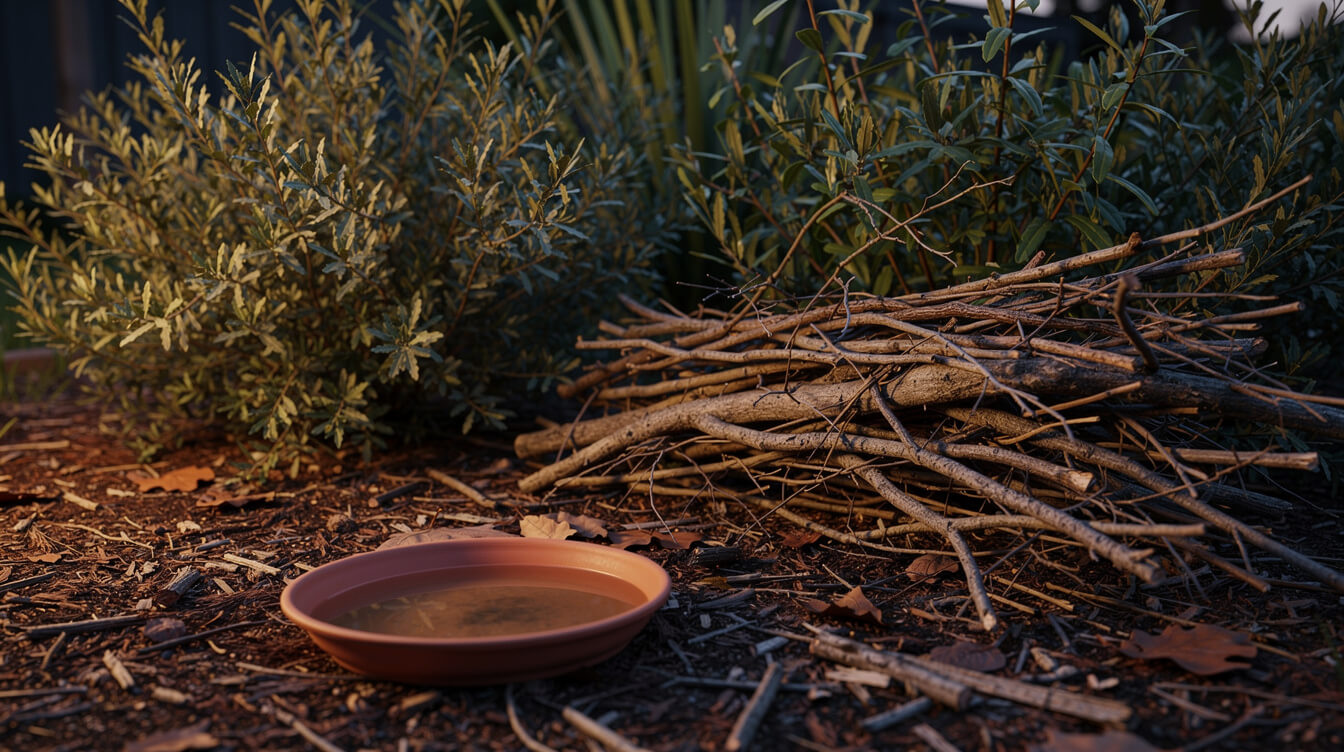
Here is the good news. Almost everything you love about opossums is still yours to enjoy, and some of it you can only have by not keeping one.
Make your yard a gentle stopover
Opossums are nomads. They move from den to den and rarely stay anywhere long, so your yard can be a kind waypoint on a longer walk. Leave a corner a little wild, with leaf litter, a loose pile of branches, and native shrubs. Skip rodenticides and slug pellets, which can poison the animals that eat poisoned prey. Keep dogs inside at night, and bring pet food in after dark so the opossum is not tempted onto the porch. A wild opossum fed by people can come to depend on handouts and lose its caution around them, so let it find its own beetles and snails. It is very good at that.
Volunteer with a wildlife rehabilitator
If what you really want is to hold an opossum and help it, this is the way. Rehabbers raise orphaned opossums, treat injured ones, and care for the non-releasables you see in videos. Many need volunteers for cleaning, feeding, transport, and fundraising. The National Opossum Society says the same thing in its own words: if you can handle the work, the cost, and the heartbreak, give that care to orphans who need it. Over time, people who prove themselves sometimes go on to care for a non-releasable opossum legally.
Meet an ambassador
Many nature centers and wildlife education programs have a non-releasable opossum that visits schools and events. Seeing one up close, with someone who knows it explaining its story, is the closest thing to the videos you can have, and it supports the work behind them.
Wear your soft spot for misunderstood animals
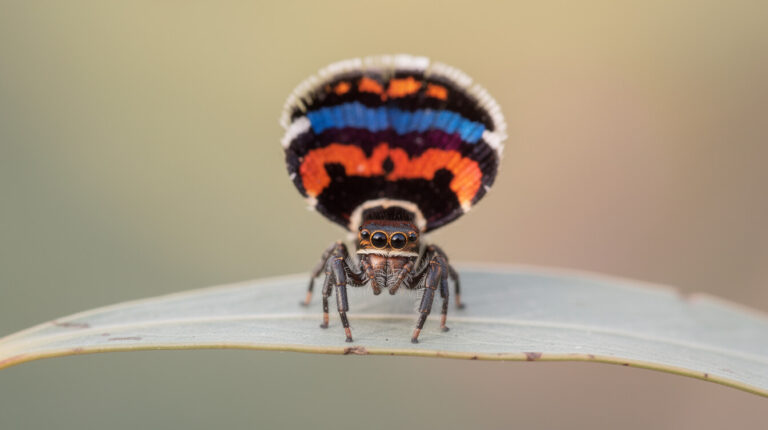
We do not make an opossum shirt. But the feeling behind this whole post, protect the animal everyone flinches at and leave it free, is exactly the one stitched into our Protect the Spoods Cute Jumping Spider T-Shirt. A different small creature with a reputation it does not deserve, and the same quiet promise to look out for it. If you love an animal best by leaving it wild, this is the shirt for that kind of love.
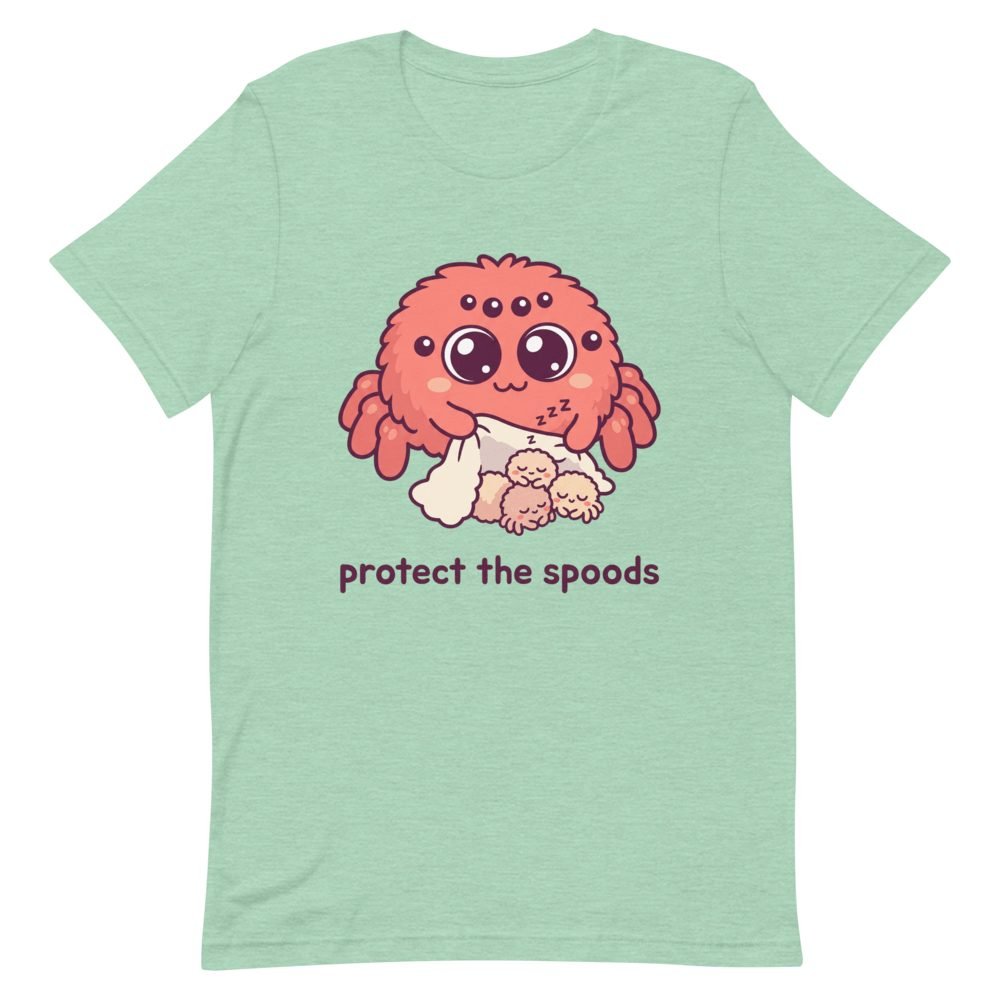
For the animals we love by leaving them wild
A round little jumping spider and a quiet promise to look out for the creatures people misjudge. It is not an opossum, but it is the same soft spot, worn on a tee you will actually reach for.
For more ways to love an animal on its own terms, our piece on what a quokka really is has a whole section on the selfie problem and how to be a good fan of a wild animal. And our love letter to weird cute animals explains why the odd-looking ones win our hearts in the first place.
Found a young opossum? What to do instead of keeping it
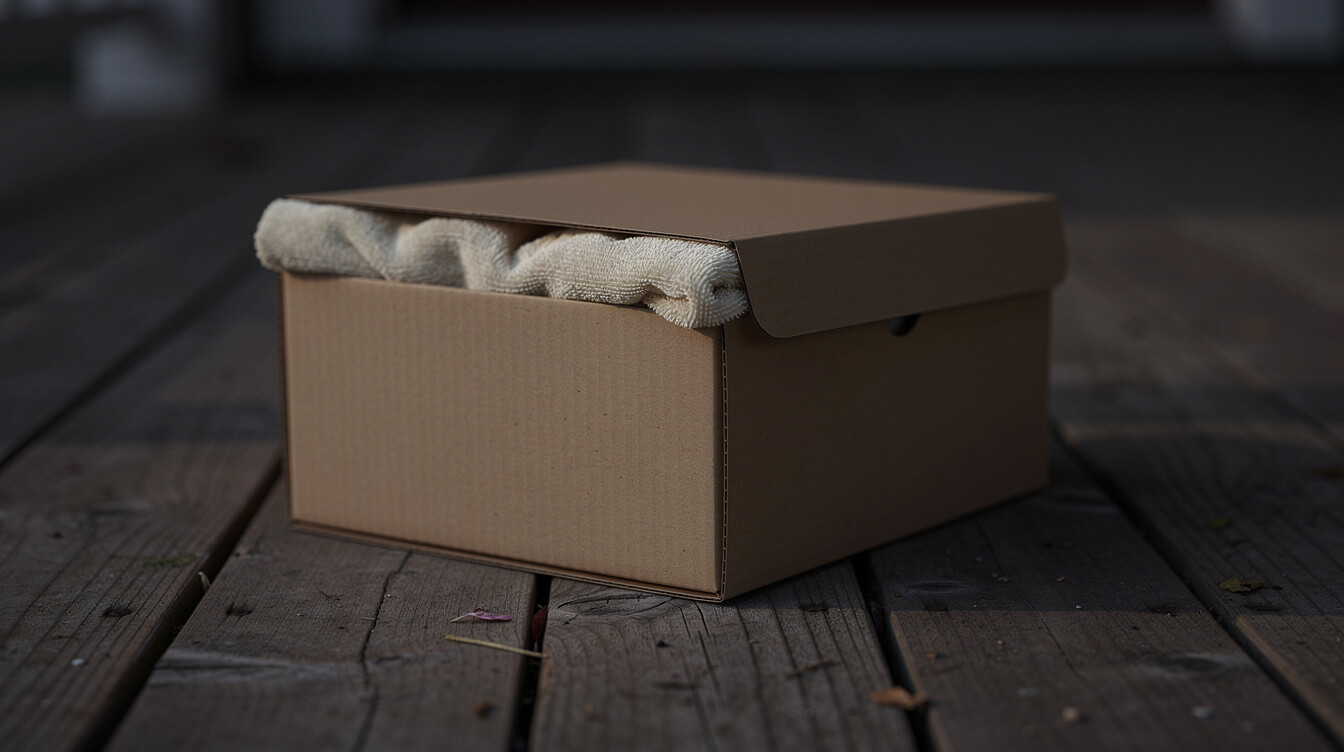
Sometimes the question is not hypothetical. A small opossum is alone on the lawn, or a mother has been hit on the road, and you are standing there wanting to help. This is often how people end up with an opossum they did not plan to keep. Here is what to do instead.
First, check whether it really needs help
Young opossums leave their mother when they are still quite small, and a young opossum on its own is often exactly where it should be. The Opossum Society of the United States gives a simple rule: an opossum needs help if it is sick, injured, or less than 7 inches long from nose to rump, not counting the tail. Bigger than that and healthy, it is probably just out on its own for the first time. Let it be.
If it does need help
- Call first. Contact a licensed wildlife rehabilitator, your state wildlife agency, a vet, or animal control for a referral. The Opossum Society of the United States suggests checking first that the place you call does not euthanize all opossums. Humane World for Animals keeps a guide to finding wildlife help near you.
- Keep it contained, warm, dark, and quiet while you wait, in a box with a soft towel, away from pets and children.
- Do not feed it or give it milk. Cow’s milk is harmful to opossums, and the wrong food is how metabolic bone disease starts. Feeding is the rehabber’s job.
- If a mother has died, and you see movement in her pouch, the society advises bringing her body, with the young still inside, to a rehabber or vet. They have the skills to help.
It can feel like the loving thing is to take it home and raise it yourself. It is not. In most places raising one without a license is illegal, and an opossum raised by an untrained person often cannot be released afterward. The rehabber’s goal is the same as yours, a healthy opossum, and theirs ends with it walking back into the woods.
If an adult opossum has simply moved through your yard, or is lying very still after a scare, the advice is different. Our guide to opossums and possums has a section on what to do if you see an opossum in your yard, including the “playing dead” faint.
The other opossum: the small one people do keep
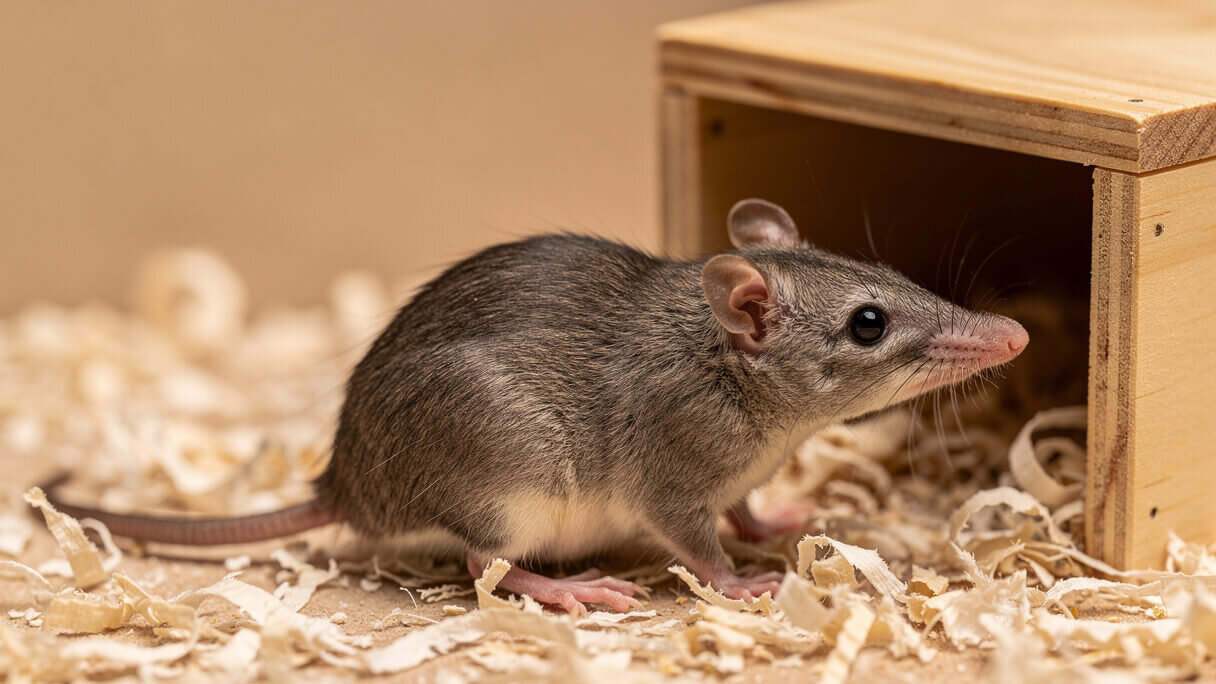
Here is the surprise. When you search for an opossum as a pet, some of what you find is about a completely different animal: the gray short-tailed opossum, Monodelphis domestica. It is a much smaller marsupial from the forests and grasslands of Brazil, Bolivia, Argentina, and Paraguay, with grayish fur, a pointed face, and a thin, mostly bare tail that is shorter than its body.
How small? According to Animal Diversity Web, adult males weigh about 90 to 155 grams and females 80 to 100 grams, closer to a hamster than to a house cat. They have been bred in labs for decades, and in 2007 the species became the first marsupial to have its genome sequenced. Today they are also kept in the exotic pet trade, bred in captivity rather than taken from the wild.
That does not make them easy. Keepers who specialize in them recommend a large enclosure with plenty of hiding places, and describe stress behaviors like pacing and bar biting in animals kept in small cages. They live to about six years at the most in captivity, according to Animal Diversity Web. Legality varies by state and city too, so the same rule applies: check your state’s wildlife or agriculture agency before you buy one.
So if you have your heart set on a small marsupial in your home, this is the opossum that is at least possible. It is a real commitment to a delicate animal with very specific needs, not a little Virginia opossum in a smaller size.
Pet opossum FAQ
Should possums be pets?
Wild Virginia opossums should not. They are illegal to keep without a permit in most states, their needs are very hard to meet at home, and the people who know them best, rehabbers and opossum societies, agree they do best left wild. The gray short-tailed opossum is a different, captive-bred species that some people do keep where it is legal.
How much does a pet opossum cost?
A Virginia opossum is not legally for sale in most states, so the honest cost is the one people find out later: specialist vet bills, a carefully balanced diet, and often a short life anyway. One National Opossum Society member spent over a thousand dollars on vet bills for a single opossum. If someone is selling a wild-born opossum, be careful, because in many places that sale is not legal.
Can possums be potty trained?
Not reliably. Some opossums settle on a favorite corner, but they are not house-trained the way a cat is, and they often use their water bowl as a toilet.
How long do pet opossums live?
Virginia opossums usually live 1.5 to 2 years in the wild and about 3 to 4 years in captivity, with rare reports of 8 to 10, according to Animal Diversity Web. Gray short-tailed opossums live up to about six years in captivity.
Do opossums carry rabies?
Rabies in opossums is extremely rare. The Opossum Society of the United States suggests their low body temperature, around 94 to 97 degrees Fahrenheit, may make it hard for the virus to survive, though that idea is not fully settled. Like any wild animal, they can carry other diseases and parasites, so do not handle a wild opossum.
Could any other unusual animal be a better pet?
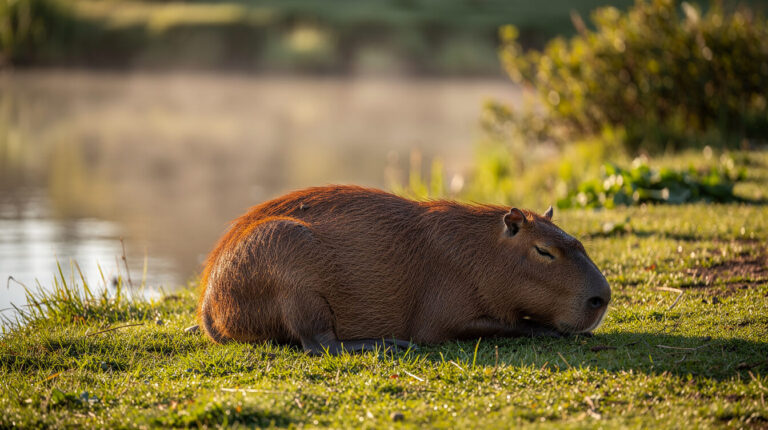
The same questions come up with other internet favorites. We looked honestly at whether a capybara could be a pet and whether an otter could, and the answers rhyme with this one.
Final thoughts
Wanting an opossum as a pet is really a way of saying you see them. You see past the hiss and the bare tail to the small, slightly awkward, deeply gentle animal underneath. That is a rarer thing than it should be, and it is worth keeping.
The best way to keep it is to let the opossum keep its life. Leave a wild corner in your yard. Know the 7-inch rule and the number for your local rehabber. Volunteer, if you can. Watch the videos with new eyes, knowing the opossum on screen is usually a patient who could not go home. And when you see a pale face in the headlights some night, slow down a little. It is probably young, busy, and doing its best with the short time it has. The kindest thing we can give it is the road home.
Before you go
Want the next one in your inbox?
We write something soft every day. The best of it lands in one gentle weekly note, for you or for the friend who needs it.