Mushroom aesthetic: the real fungi behind the softest look in the woods
The mushroom aesthetic is the quiet look you have probably been saving for months without giving it a name: a red cap with white spots on a mug, a cluster of tiny brown toadstools on a tote, a lamp shaped like a fat little bolete glowing on a bookshelf. It is cozy, a little magical, and very easy to love. It is also built on real living things, and the more you know about the actual fungi behind it, the better the whole aesthetic gets.
This is a field guide more than a moodboard. We will look at what the mushroom aesthetic is, why one particular red mushroom became the one everybody draws, which softer species are worth borrowing from, how to take a palette straight off a forest floor, and how to enjoy real mushrooms on an autumn walk without hurting them or yourself. It is late October, which happens to be the best mushroom week of the year in a lot of the country, so the timing is kind.
What the mushroom aesthetic actually is
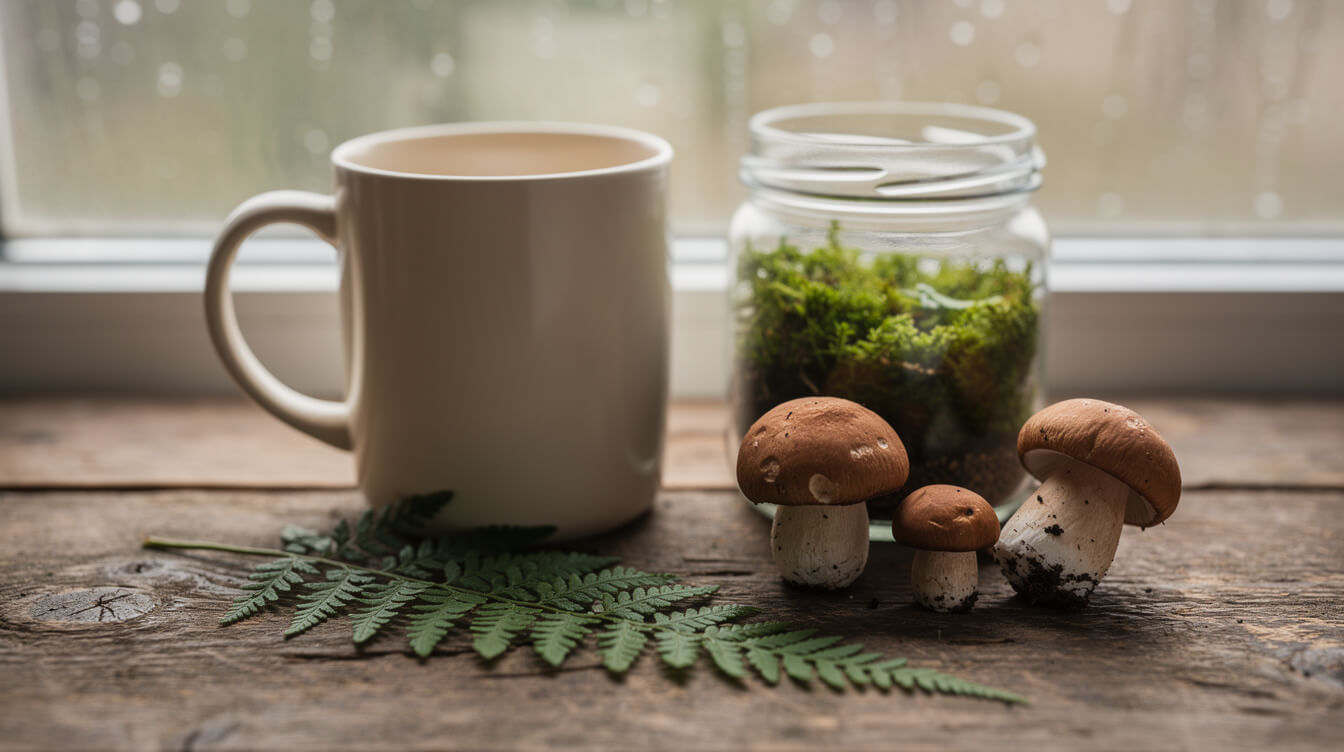
At its simplest, the mushroom aesthetic is a visual style built around fungi as a symbol of slow, small, gentle things. You see it in prints, ceramics, embroidery, lamps, and clothing, usually alongside moss, ferns, acorns, and a frog or two. The palette leans earthy and warm, and the mood leans toward rainy afternoons, forest walks, and old picture books.
It is not really a separate aesthetic so much as a shared motif. Mushrooms show up in cottagecore, where they sit next to gardens and bread; in goblincore, where they sit next to snails and pocketed treasures; and in fairycore, where they are mostly about scale and light. The mushroom is the thing all three agree on. If you want the story of how the motif went from dusty kitchen kitsch to something people actually choose, we told it in our piece on why the cute mushroom tote bag is having a moment, along with what separates a tasteful mushroom design from clip art.
What makes the mushroom work so well as a cute symbol is its shape. A mushroom is basically a round dome on a soft stalk, which is the same shape grammar that makes round animals feel friendly: big rounded top, small body, no sharp edges. Your brain reads it as gentle before you have even decided whether you like it.
But there is a second reason, and it is the one most moodboards skip. A mushroom is not the whole organism. It is the fruit of a much larger, mostly invisible network of threads called mycelium that lives in soil and wood, sometimes for decades. The part you see pops up for a few days after rain, releases its spores, and is gone. A mushroom is, quite literally, a brief and lovely appearance by something that was there all along. That is a very cozy idea to put on a mug.
The fly agaric, the one mushroom everybody draws
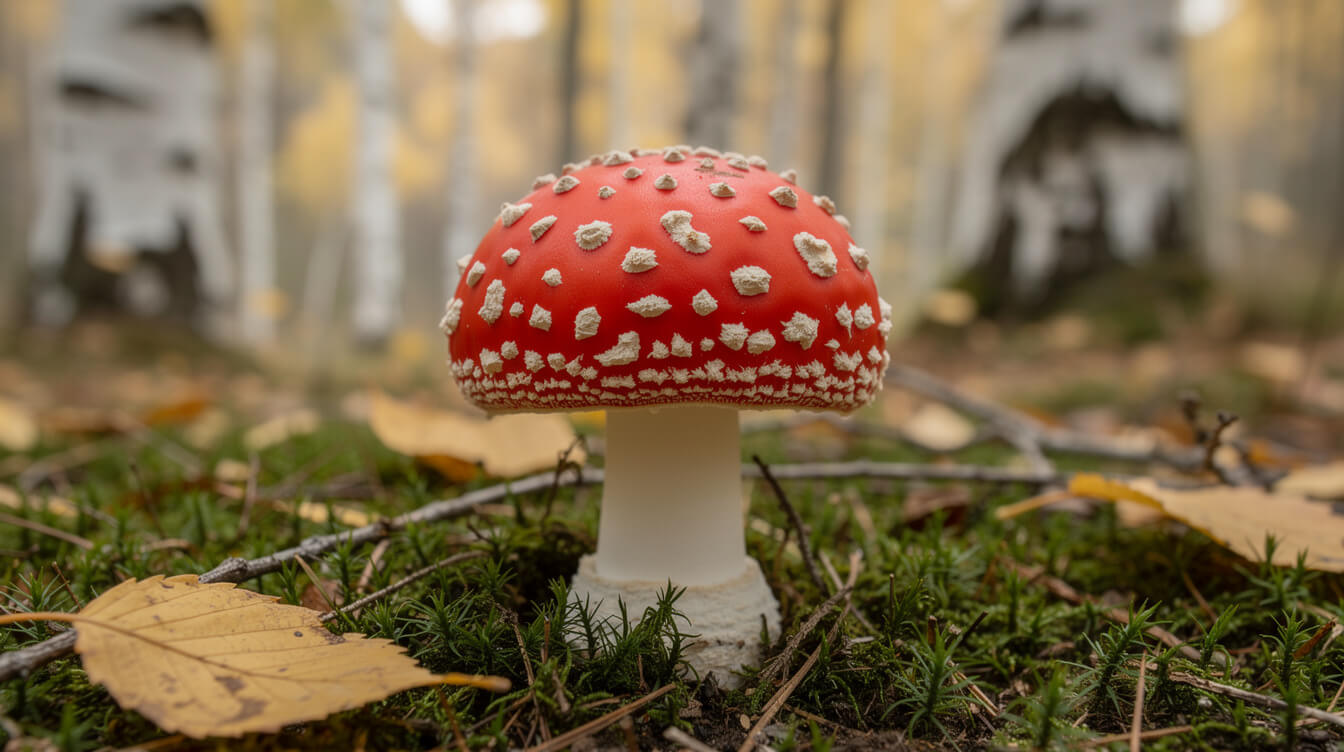
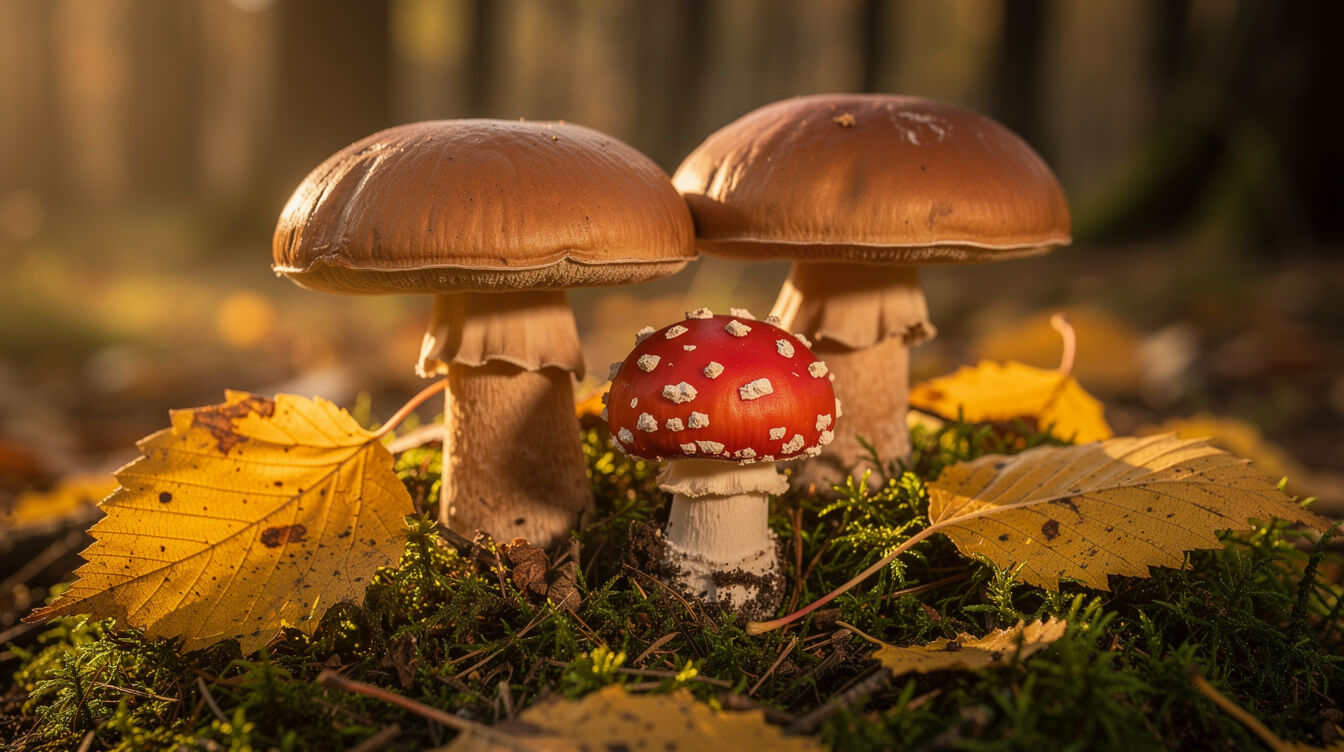
Ask anyone to draw a mushroom and you will almost always get the same one: a red cap with white spots on a pale stem. That is the fly agaric, Amanita muscaria, and it is a real mushroom, not an invention of picture books. It grows across the temperate and northern forests of the Northern Hemisphere, and it lives in partnership with trees like birch, pine, spruce, and fir, trading nutrients with their roots underground. If you have ever seen one under a birch in autumn, you know it looks almost too storybook to be real.
Why the spots are there
The white spots are one of the nicest facts in all of mushroom-dom. When a young fly agaric first pushes up, it is wrapped in a thin white skin called a universal veil, a bit like a mushroom wrapped in tissue paper. As the cap swells, the veil tears into patches, and those patches ride up on the red cap as the little white warts we all draw. Rain and age can wash them off, which is why some real fly agarics look plain red and slightly embarrassed about it.
The cap changes shape as it grows, too. It starts out as a round ball, opens into a dome, and finally flattens into a plate. So the cute rounded mushroom on your tote is a fly agaric in its youth, and the flat one in old illustrations is the same mushroom a few days later.
Why it became the default
Part of the answer is simply color. Red and white is the most legible combination in nature, readable from across a forest clearing and from across a room. The fly agaric has also been showing up in European art for centuries, and by the Victorian era it had become a regular fixture in fairy paintings, which is where much of today’s storybook imagery comes from.
It is also a symbol of luck. In German-speaking countries the fly agaric is a traditional good-luck charm, often given at the New Year alongside four-leaf clovers and little pigs, and the German word Glückspilz, literally “lucky mushroom,” means a lucky person. Nobody knows exactly how the mushroom earned that job, but it is a sweet one to carry.
One honest note, because cute should never mean careless: the fly agaric is poisonous. It is lovely to look at and wonderful to draw, but it is not for eating, and it is worth keeping curious dogs and small children away from it on walks. The aesthetic is about looking, not tasting.
Beyond the red cap: the softer mushrooms worth knowing
If the fly agaric is the mushroom aesthetic’s loud friend, the rest of the forest floor is full of quieter ones. Borrowing from them is the easiest way to make the look feel more personal and less like everyone else’s board.
The bun-shaped boletes
Boletes are the round, chunky mushrooms with a cap like a toasted bread roll and a thick, almost barrel-shaped stem. Instead of gills under the cap, they have a soft spongy surface full of tiny pores. They are the friendliest shape in the whole kingdom, which is why so many mushroom lamps and ceramic jars are secretly boletes. If you want the cute without the red, this is your mushroom.
Puffballs
Puffballs are exactly what the name promises: round white or tan balls sitting right on the ground, with no cap and no stem at all. When an older one is tapped, it releases a little cloud of spores from a hole in the top. They are about as close as a mushroom gets to being a round animal.
Turkey tail and the bracket fungi
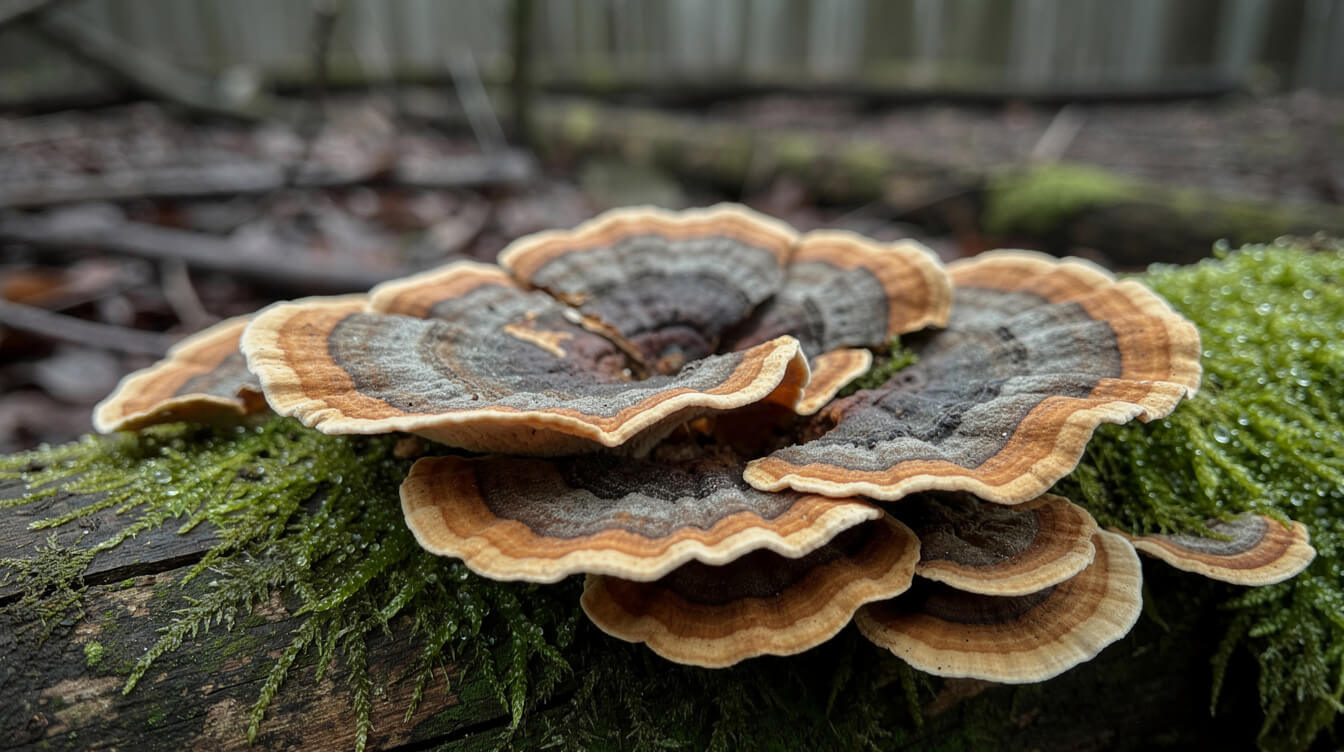
Turkey tail grows in overlapping fans on dead wood, each one striped in concentric bands of rust, cream, gray, and brown, like a tiny tree ring or a folded fan. Bracket fungi in general are wonderful for pattern ideas because they repeat beautifully. A log covered in them looks like it was decorated on purpose.
Fairy rings
Some mushrooms come up in a near-perfect circle on a lawn or in a meadow. The circle happens because the underground mycelium grows outward from a starting point in every direction, and the mushrooms pop up along its leading edge. About sixty species can do it. For centuries European folklore said the rings marked where small woodland spirits had danced, and some rings grow to more than thirty feet across. It is real biology that looks exactly like a story.
Foxfire, the mushrooms that glow
And then there is foxfire, the soft bluish-green light that some fungi give off from decaying wood at night. A few species glow, including a little bracket mushroom called the bitter oyster, and the effect is usually faint, though it can occasionally be bright enough to read by. If your version of the mushroom aesthetic leans toward night lights and dim cozy rooms, this is your science fact, and it pairs nicely with our post on the fluffy moths that keep the night shift.
A mushroom aesthetic palette, borrowed from real fungi
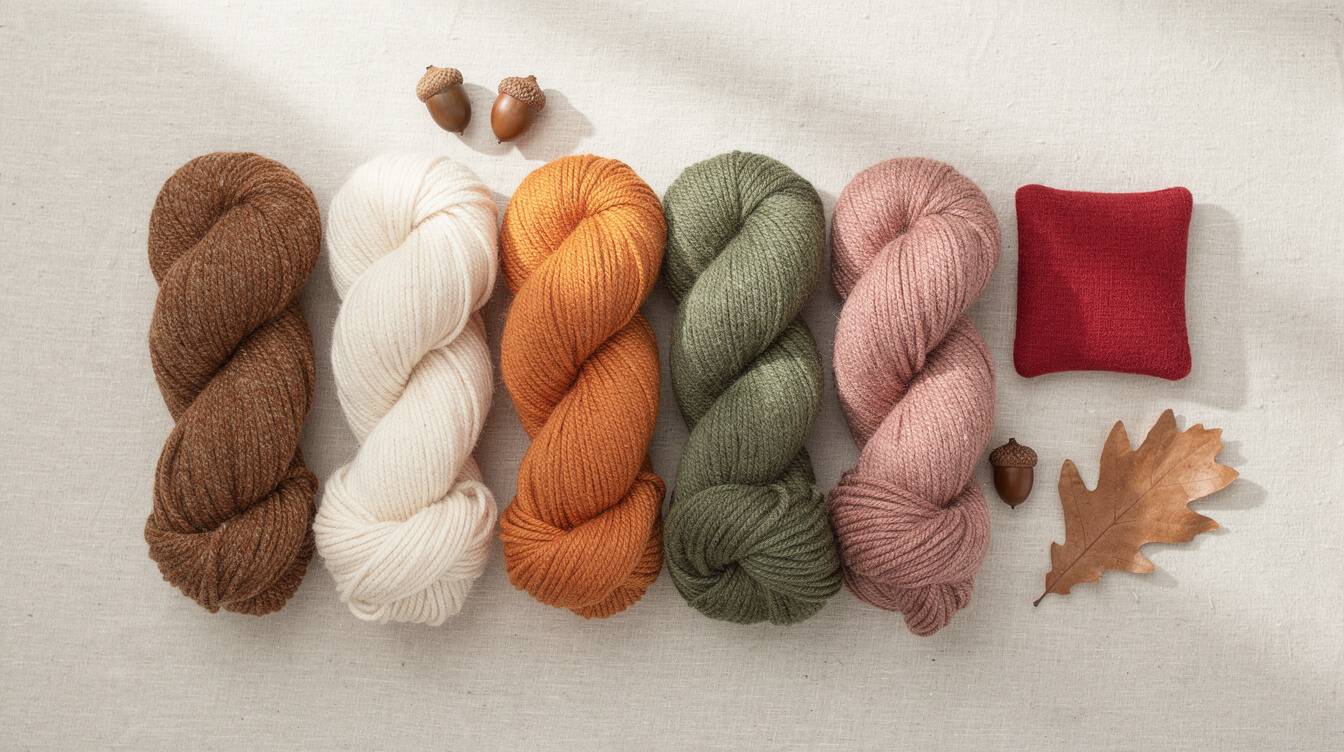
One of the most common questions people ask about this look is which colors go with a mushroom color. “Mushroom” as a paint color usually means a soft grayish beige, a warm taupe with a little brown in it, and it is one of the most forgiving neutrals there is. The best way to build around it is to do what designers have always done and steal from the actual forest floor.
Here is a palette taken straight off real fungi and their neighbors:
- Bolete brown. The warm, toasted-bread color of a bolete cap. This is your anchor, the shade that makes everything else feel grounded.
- Puffball cream. A soft, slightly warm off-white. Use it where you would otherwise use bright white, which can feel cold next to earth tones.
- Chanterelle apricot. Chanterelles are a gentle golden-orange, almost the color of apricot jam. A small amount brings warmth without shouting.
- Moss green. Not a bright leaf green but the soft, slightly yellow green of moss on a stone. It is what keeps the palette from feeling all one temperature.
- Dusty rose. The faded pink of a young mushroom’s gills or an old fly agaric bleached by rain. This is the color that makes the look read as cute rather than rustic.
- One true red. The fly agaric red, used sparingly, as a single accent. One red cap in a room is charming. Ten red caps is a theme restaurant.
The trick with a palette like this is proportion. Let the browns and creams do most of the work, use moss and apricot as supporting colors, and keep the red and rose for small, deliberate moments. That mix is what gives the mushroom aesthetic its storybook-but-grown-up feeling, a little like a well-loved sweater rather than a costume.
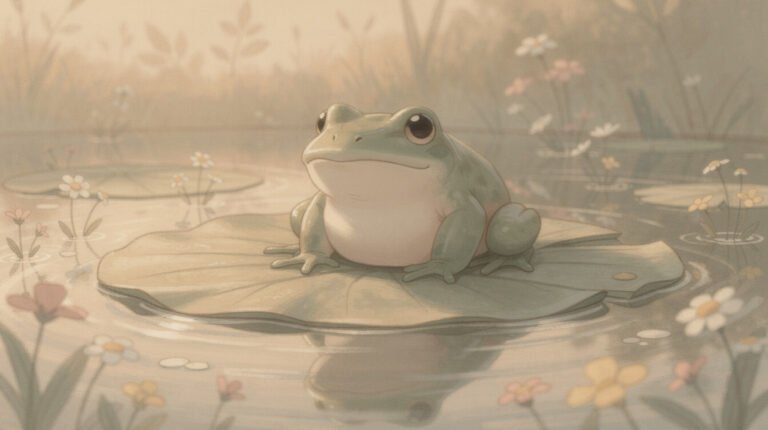
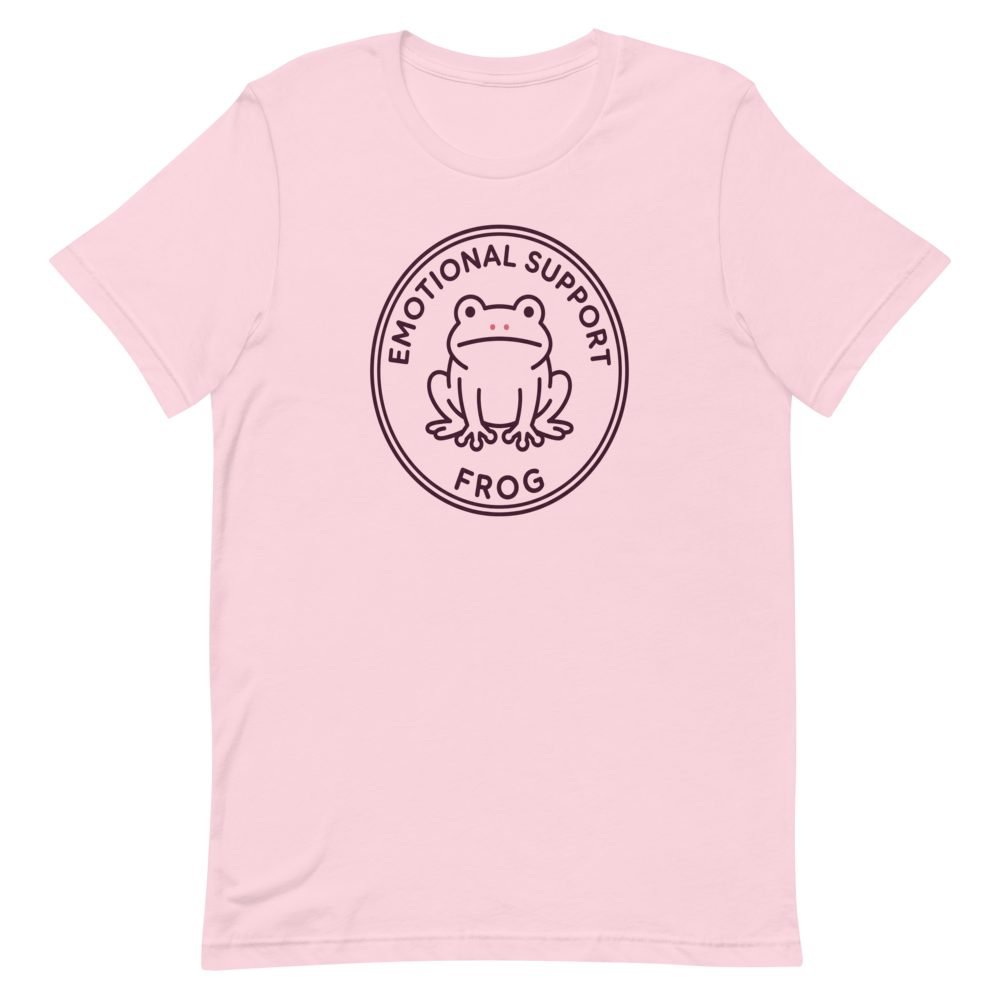
If you would rather wear the palette than decorate with it, the softest place to start is dusty rose and a forest-floor friend. A frog is the mushroom’s oldest companion in every illustration ever made, and our Emotional Support Frog tee is a soft pink shirt with a calm little plum-ink frog on it, which sits right inside this palette next to a brown cardigan or a moss-green jacket. We wrote more about pairing creature tees with earthy layers in our guide to goblincore outfits for people who actually go outside.
The cutemerch letter
A small good thing, once a week
One short, kind email with our coziest posts and new round animals from the shop. No spam. Unsubscribe anytime.
Bringing the mushroom aesthetic home, one small thing at a time
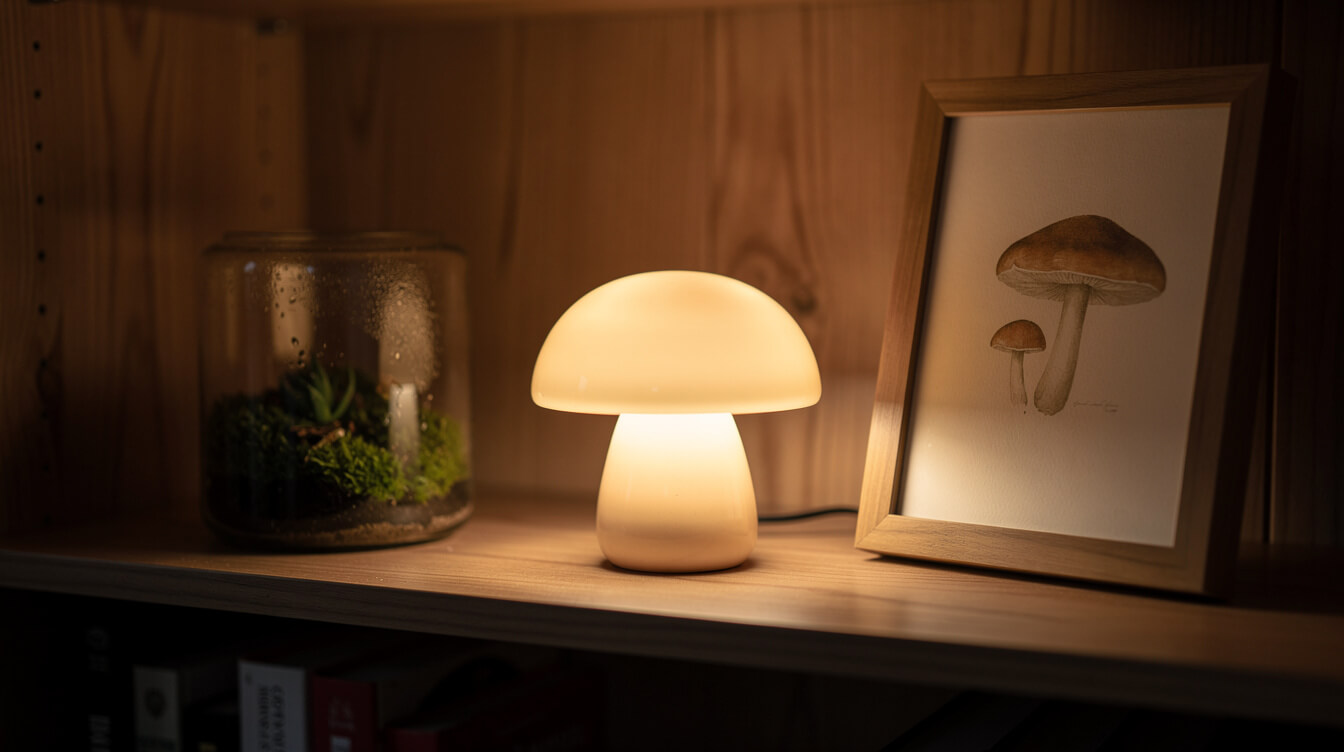
The mushroom aesthetic is unusually good for small spaces, because one well-chosen mushroom piece carries the whole mood. You do not need a forest-themed room. You need one or two things that make you smile when you walk past them.
Start with light
Mushroom lamps are the single most recognizable piece of the look, and they have a real history. The 1970s were a golden age of mushroom shapes in the home, from glass mushroom table lamps to ceramic kitchen canisters with toadstools painted on the side. That is part of why the aesthetic feels nostalgic even to people who were not around for it: a lot of us grew up with one of those lamps or jars at a grandparent’s house, the kind of thing we wrote about in our post on grandmacore and the cozy beauty of things made to last. A small dome lamp with a warm bulb, placed low, does more for the mood than any amount of decor.
Then add one natural thing
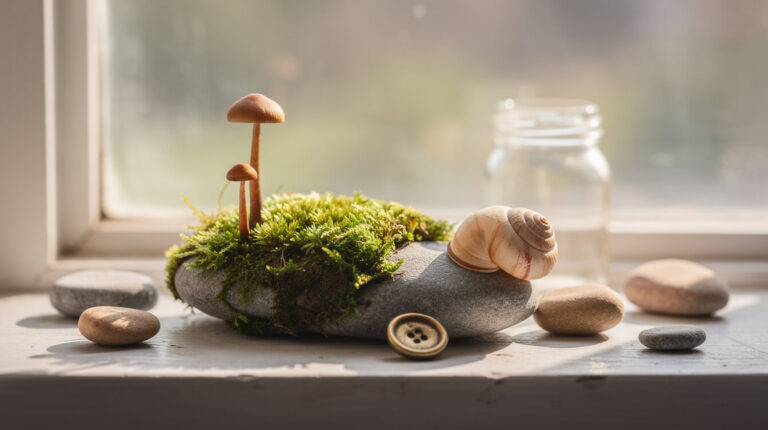
A jar of moss, a small fern, or a bowl of pinecones and acorns from a walk adds the living texture that keeps mushroom decor from feeling like a gift shop. A closed moss terrarium is a lovely low-effort option, and it is the closest thing to keeping a tiny forest floor on a windowsill. If you like the idea of small living things in a jar, the isopods we wrote about in our gentle guide to the creatures under your flowerpot are, for many hobbyists, the next step after moss.
Choose one print, not a pattern flood
Vintage botanical mushroom illustrations are some of the most beautiful scientific art ever made, careful drawings of caps, gills, and cross-sections, often in soft watercolor. A single framed botanical print reads as thoughtful and calm. A whole wall of mushroom pattern reads busy. Pick the one you would look at every day.
What to avoid
Skip anything with a cartoon face drawn on the cap. The best mushroom pieces let the shape carry the charm on its own, and a face pushes the look toward a children’s room rather than a cozy grown-up one. And please do not bring wild mushrooms indoors as decor. They fade within a day or two, they can carry insects, and some of them are toxic enough that you would not want them near pets or a kitchen.
A forest-floor friend for the mushroom palette
Our Emotional Support Frog tee is soft pink with one calm, plum-ink frog in a simple badge. It sits right inside the dusty rose and moss part of the palette, and it looks just as good under a brown cardigan as it does on its own. Preshrunk combed cotton, made to be worn on a lot of rainy walks.
How to enjoy mushrooms kindly on an autumn walk
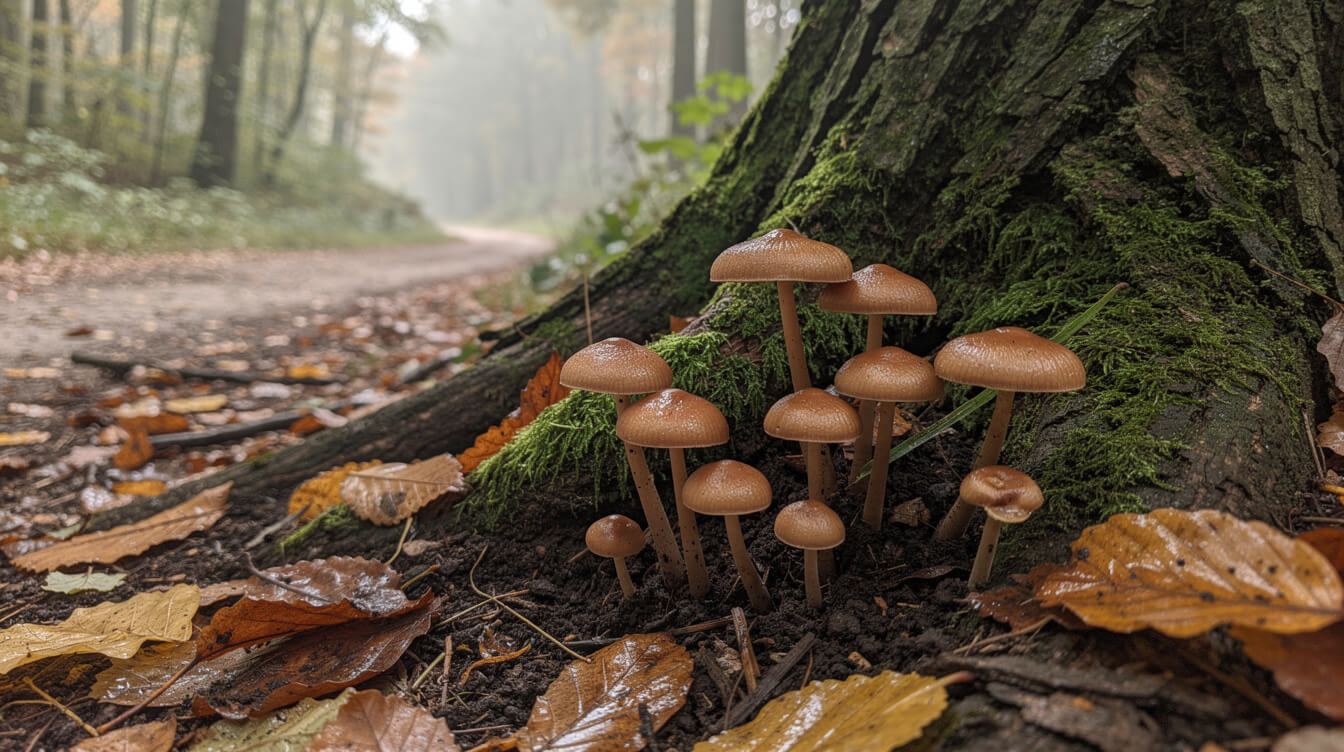
The best part of the mushroom aesthetic is that the source material is free and growing outside right now. A slow mushroom walk after a rainy day is one of the gentlest small joys there is, and it turns the look from something you buy into something you notice. A few habits make it kinder for everyone involved.
Look first, touch gently, leave them be
Most wild mushrooms are fine to look at closely and photograph, and you will see far more if you crouch down and move slowly. If you do touch one, wash your hands afterward, and keep dogs and small children from tasting anything. The mushroom you see is only a few days of a much longer life, and it is busy releasing spores, so leaving it standing lets it finish its job. Taking a photo instead of a souvenir is the whole etiquette in one line.
Never eat a wild mushroom on looks alone
This is the one rule that is not optional. Several of the world’s most dangerous mushrooms look plain and harmless, and many edible species have toxic lookalikes. Identifying a mushroom for eating takes real expertise, several features checked together, and ideally a local mycological society. The aesthetic is a looking hobby. Leave the foraging to people who have trained for it, and buy your dinner mushrooms at the store.
Where and when to look
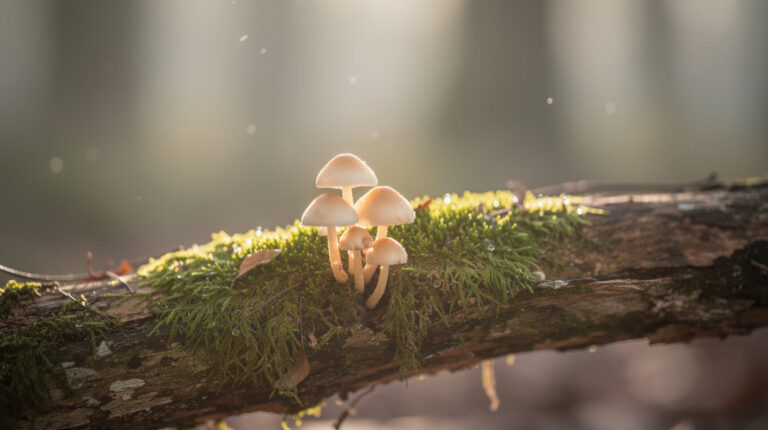
Mushrooms like damp, shaded places: the base of old trees, fallen logs, mossy banks, and lawns a day or two after rain. In much of the US, early to late autumn is peak season, though the timing shifts with your local climate. Bring a small notebook and you may find yourself starting a little mushroom log, which is a very cute thing to have on a shelf by spring. If you enjoy the slow seasonal rhythm of this, our guide to the cozy fall aesthetic for people without a farmhouse has more small autumn rituals in the same spirit.
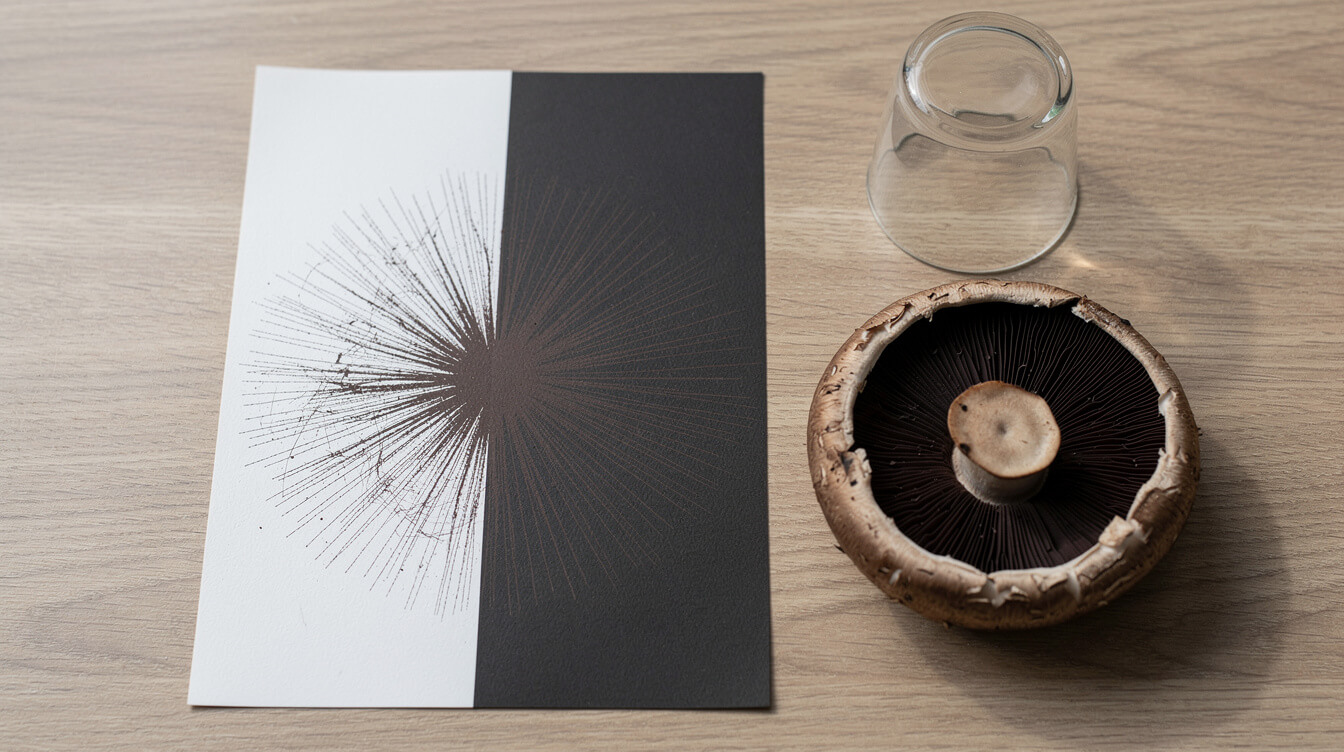
Make a spore print with a store-bought mushroom
If you want something hands-on, a spore print is the loveliest mushroom craft there is, and you can make one entirely from the grocery store, no foraging needed. Here is how:
- Pick up a few fresh, fully opened mushrooms with visible gills. Portobellos and mature cremini work well.
- Gently remove the stem so the cap can sit flat.
- Place the cap gill-side down on a sheet of paper. Using paper that is half white and half dark makes the print easier to see.
- Cover it with a drinking glass or a bowl to keep drafts away.
- Leave it for several hours, or overnight.
- Lift the cap slowly. You will find a delicate starburst pattern made of millions of spores, mapping every gill.
Portobellos leave a rich dark brown print. A light mist of hairspray from a distance can help fix it so you can frame it. It is the mushroom aesthetic made by an actual mushroom, which feels exactly right.
Mushroom aesthetic: frequently asked questions
What is the mushroom aesthetic?
The mushroom aesthetic is a cozy visual style built around fungi as a symbol of slow, small, gentle things. It uses earthy colors, rounded shapes, and woodland companions like moss and frogs, and it overlaps with cottagecore, goblincore, and fairycore rather than standing fully apart from them.
What is a mushroom lover called?
Someone who loves mushrooms is called a mycophile. The opposite, a person who dislikes or fears mushrooms, is a mycophobe. The study of fungi itself is mycology, and people who study them are mycologists.
What is the mushroom shape called?
The top of a mushroom is the cap, which mycologists call the pileus, and the stalk is the stem, or stipe. The classic dome-on-a-stem shape most people draw is often just called a toadstool. “Toadstool” is a folk word rather than a scientific one, and it has traditionally been used for mushrooms people consider inedible or poisonous, like the fly agaric.
What colors go with the mushroom aesthetic?
Warm browns, cream, moss green, soft apricot, and dusty rose are the core, with one small accent of true red. If you are working with “mushroom” as a paint color, a soft taupe, it pairs beautifully with cream, sage, terracotta, and muted ochre.
Is the mushroom aesthetic the same as goblincore?
Not quite. Goblincore is a broader aesthetic about loving the overlooked parts of nature, including snails, moss, bugs, and found treasures, and mushrooms are one of its favorite symbols. The mushroom aesthetic is narrower and usually softer, focused on the mushroom itself as a cozy motif. Our explainer on goblincore covers the bigger picture.
Why are mushrooms considered cute?
Mushrooms share the same features that make round animals look cute: a large rounded top, a small body, and no sharp edges. Your brain reads that shape as soft and harmless. Add their habit of appearing suddenly after rain and disappearing a few days later, and they feel like a small surprise every time you see one. We dug into why certain shapes feel so sweet in our piece on the real reasons we cannot stop looking at frogs.
Final thoughts: a small good thing that comes up after rain
The mushroom aesthetic is easy to treat as just a pretty motif, and it is a pretty motif. But underneath the red caps and round lamps is something genuinely lovely: a whole hidden network living quietly under the ground, sending up a brief little hello after every rainy day, then going back to its slow work.
That is a good thing to have around. A mushroom lamp on a gray evening, a spore print on the fridge, a walk where you stop to crouch next to a log. None of it is loud, and none of it needs to be. It is the kind of cute that asks you to slow down and look a little closer, which is maybe the softest thing an aesthetic can do.
So the next time it rains, go outside the day after and look down. There is probably a small round surprise waiting near the base of a tree, and it has been there, in a way, all along.
Before you go
Want the next one in your inbox?
We write something soft every day. The best of it lands in one gentle weekly note, for you or for the friend who needs it.